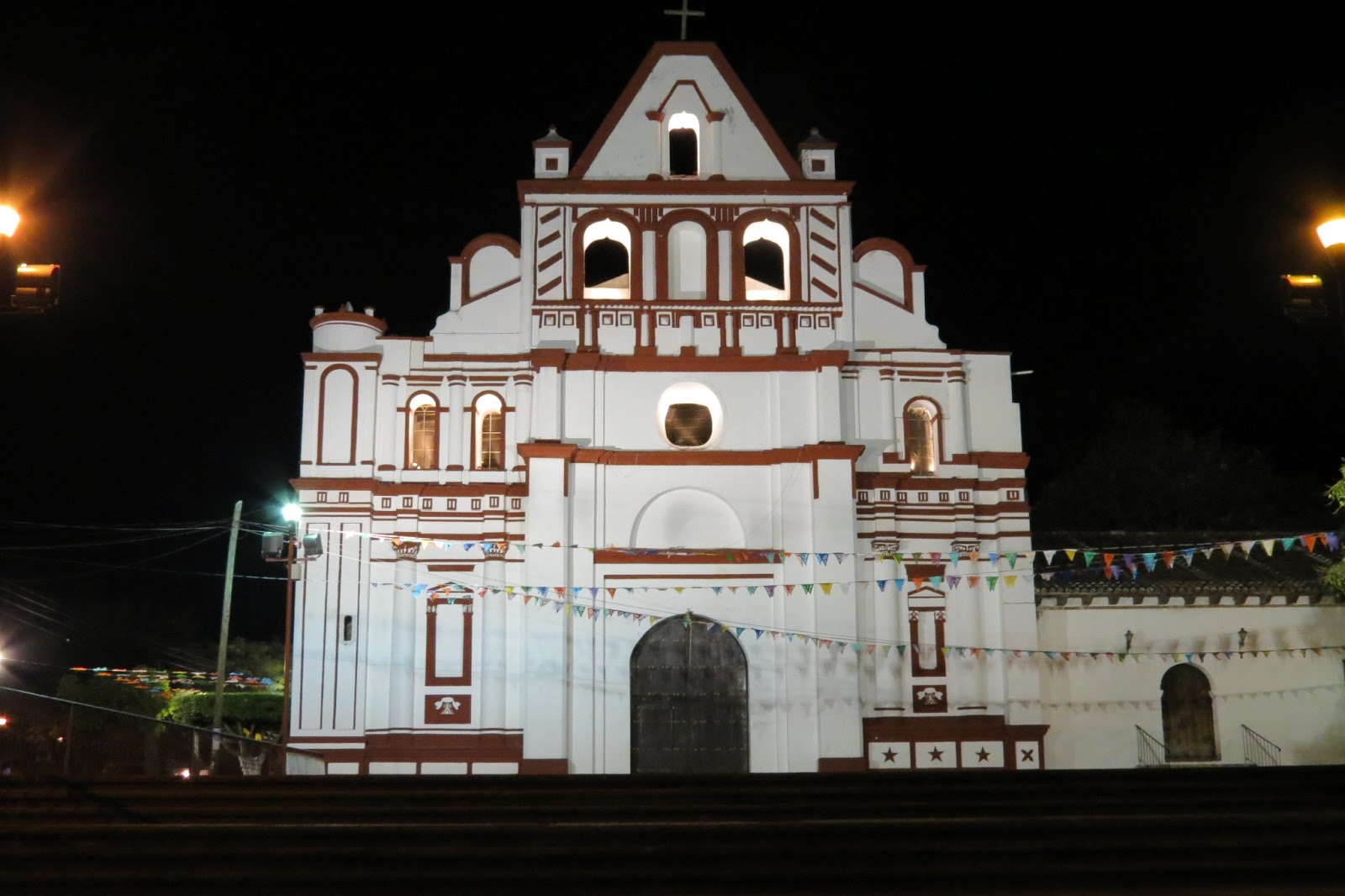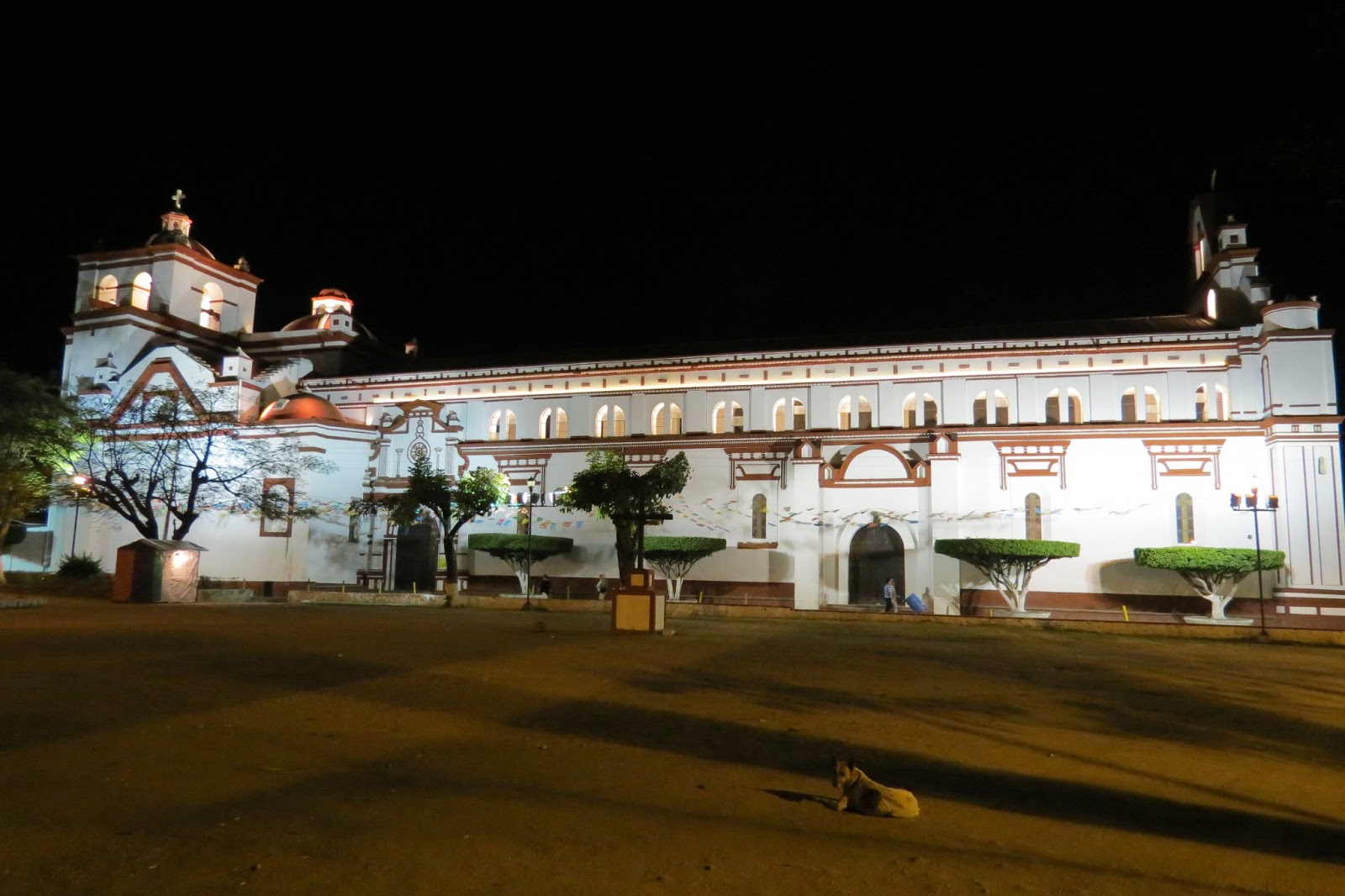
San Cristobal Day 6

Today was a mixed bag of sightseeing and shopping. Great combination! I was happy to have an easier day. Yesterday was wonderful but my brain was on overload with all the information and trying to assimilate the differences in our cultures.

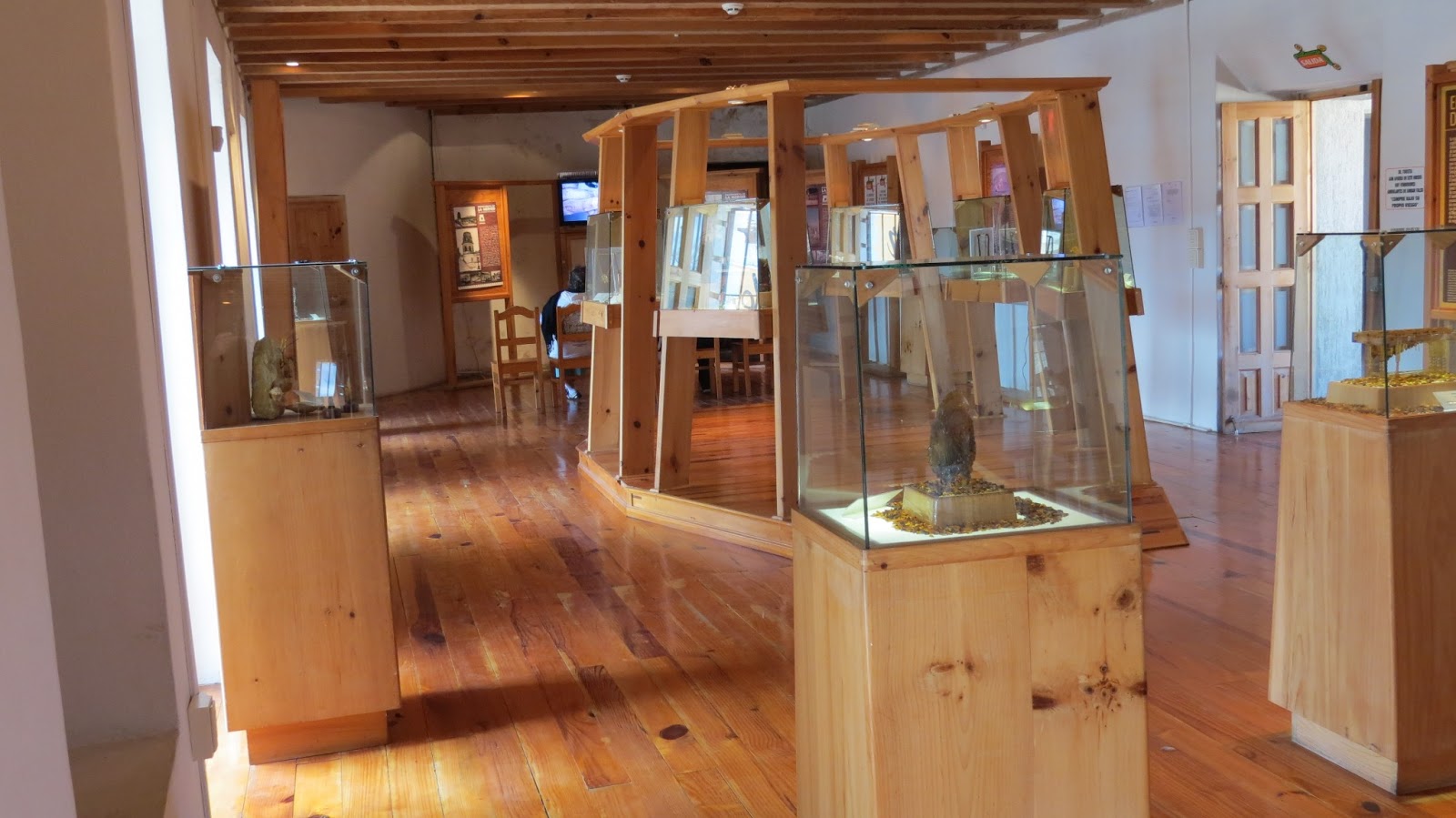
Our first stop was to the Amber Museum. It was a fascinating place. Strange as it may sound, I did not know or care before that amber was not a stone but fossilized pine resin that is twenty-five million years old. That all changed after our tour through the museum.
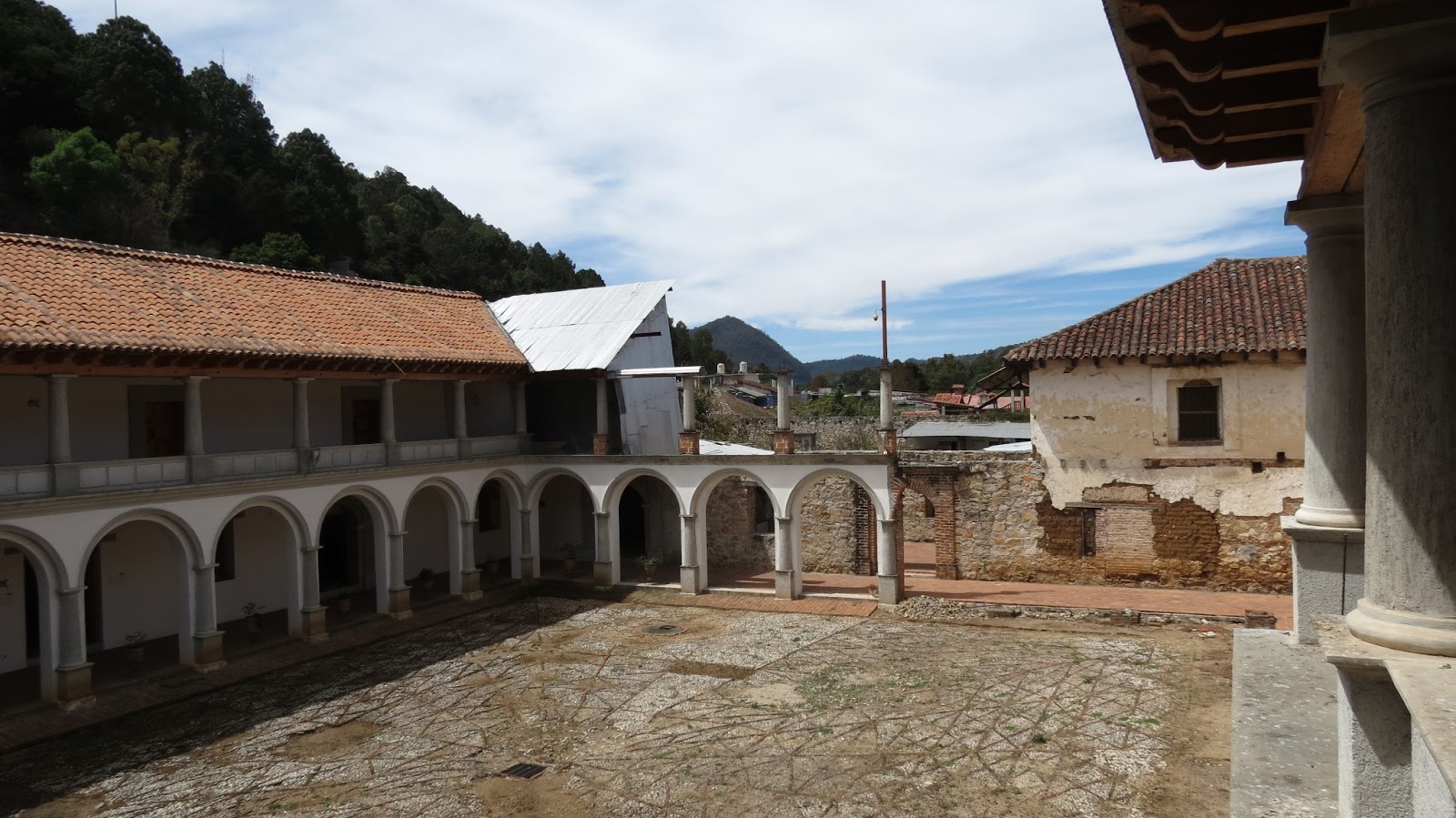
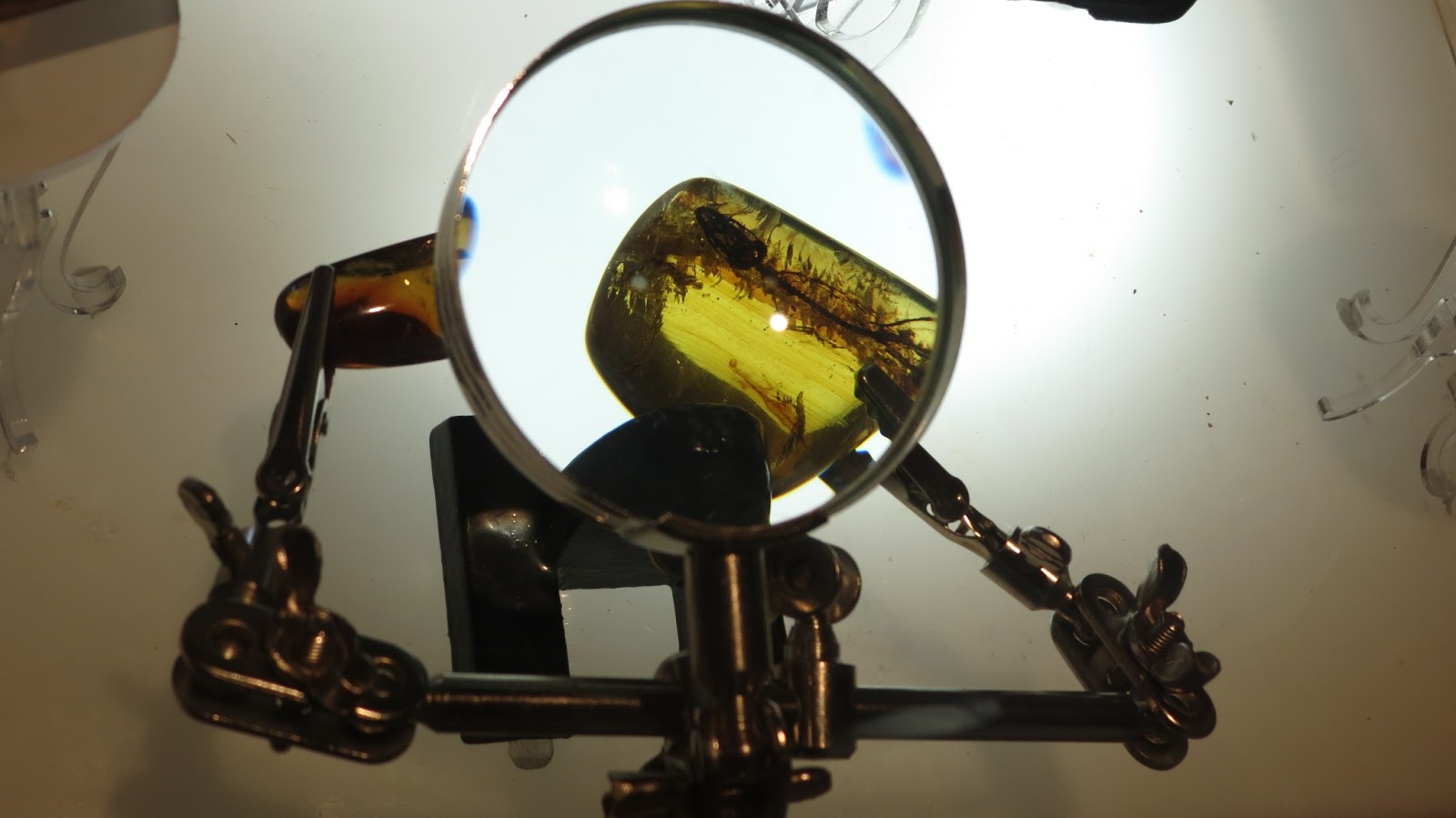
I decided that I wanted not only a piece of amber but a piece that had an insect in it. I wanted to wear history. I found an interesting piece at a local jewellery store. We took it back to the museum to have them verify (under a black light) that it was a genuine piece of amber. It appeared cloudy which shows it was the real thing. Next, we had them put a clasp on it so I could wear it as a pendant. Looking under a microscope showed that there were two insects in my piece. I was one happy camper.
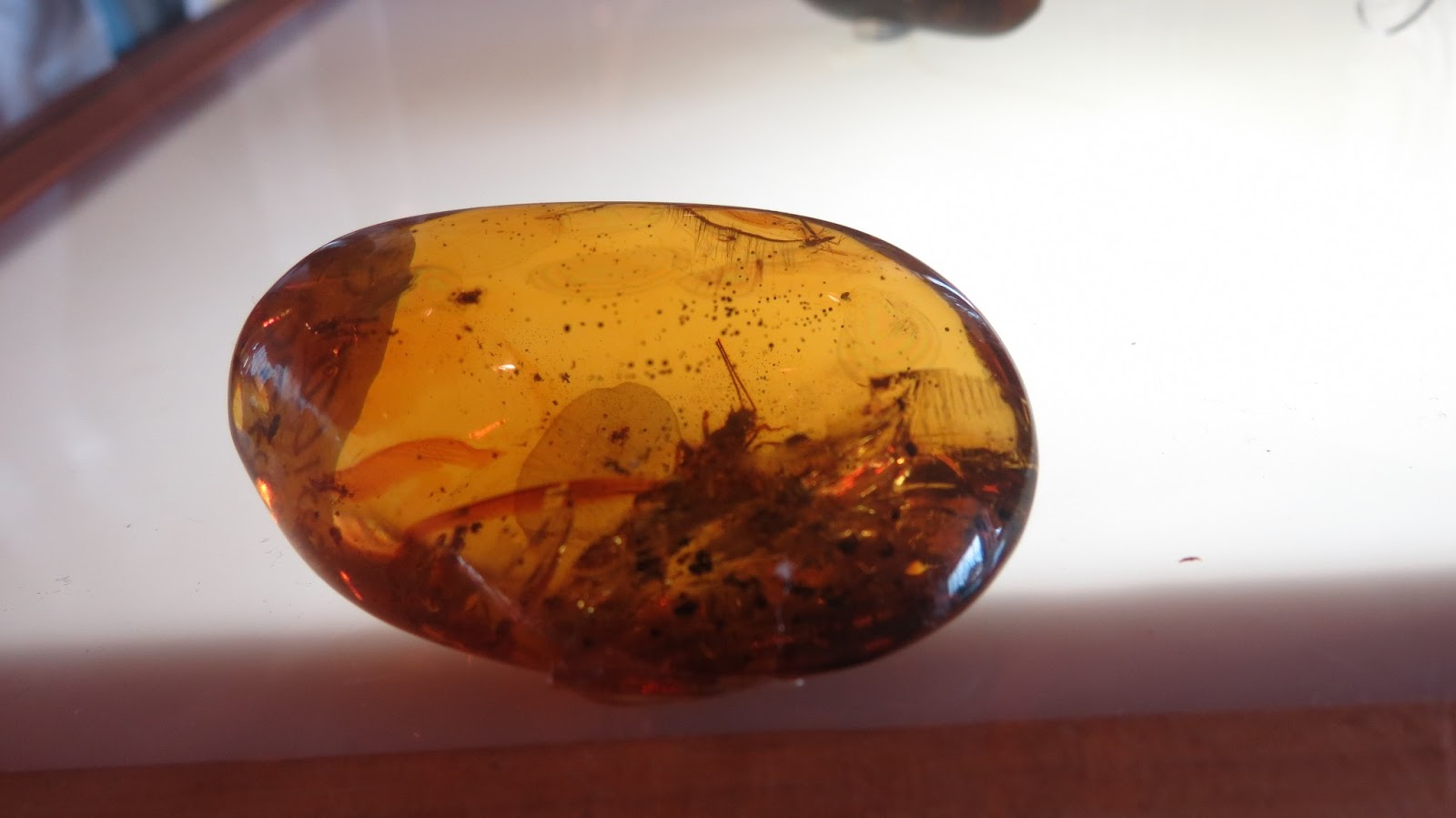
can you see the insect?  This is not my piece of amber.

Some interesting facts I learned:

Amber stores static electricity, named elektron by the ancient Greeks. Elektron evolved into the English term “electricity.”

When rubbed, the gem attracts lint. Amber was used to remove lint by the Phoenicians & Etruscans & was therefore nicknamed “Straw Thief” in Turkey.

Amber is the lightest weight & softest of all gems (a diamond is hardest). It is one of only a handful of gems of vegetative, not mineral, origin. The others are pearl, jet, & coral.
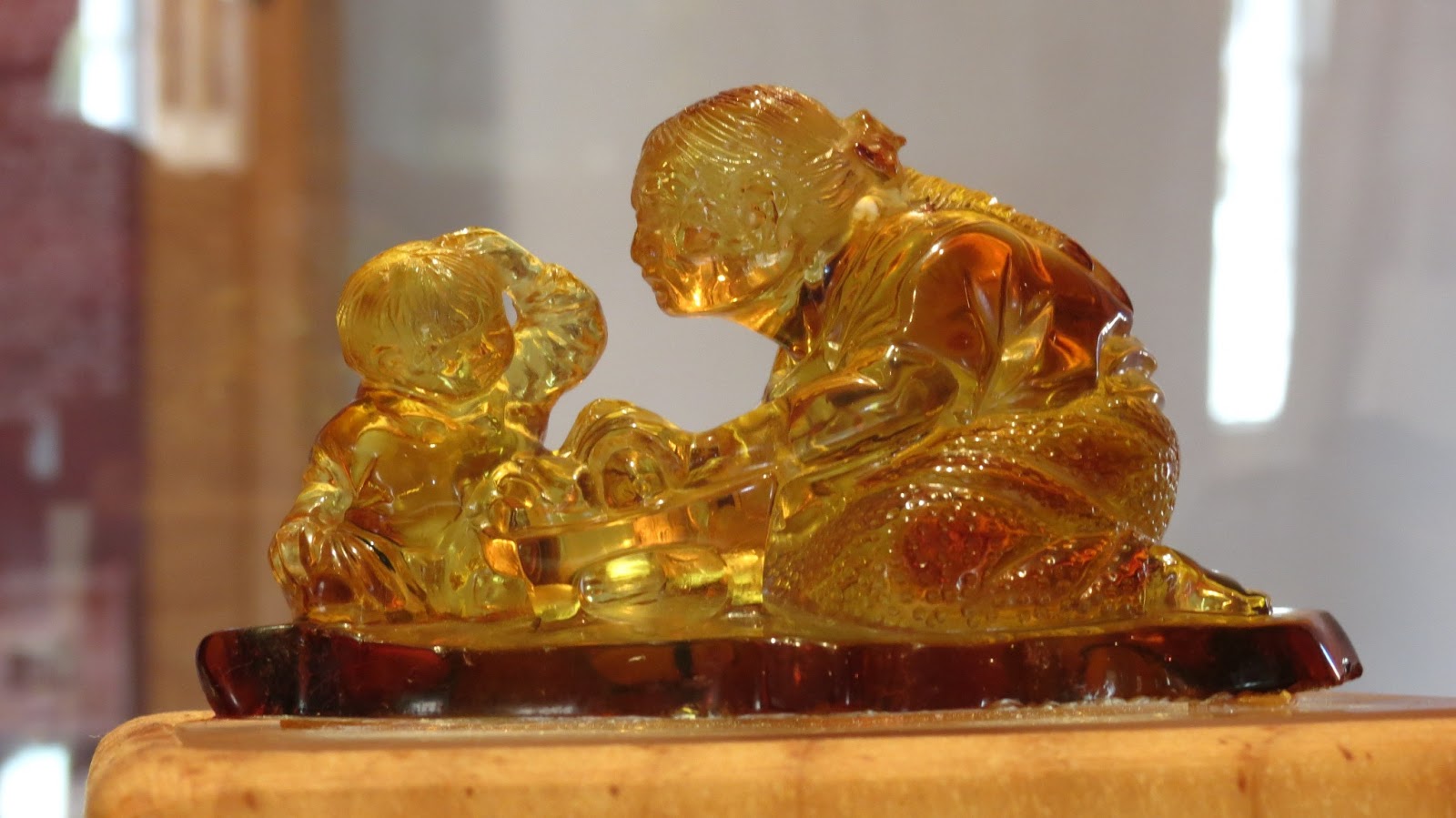
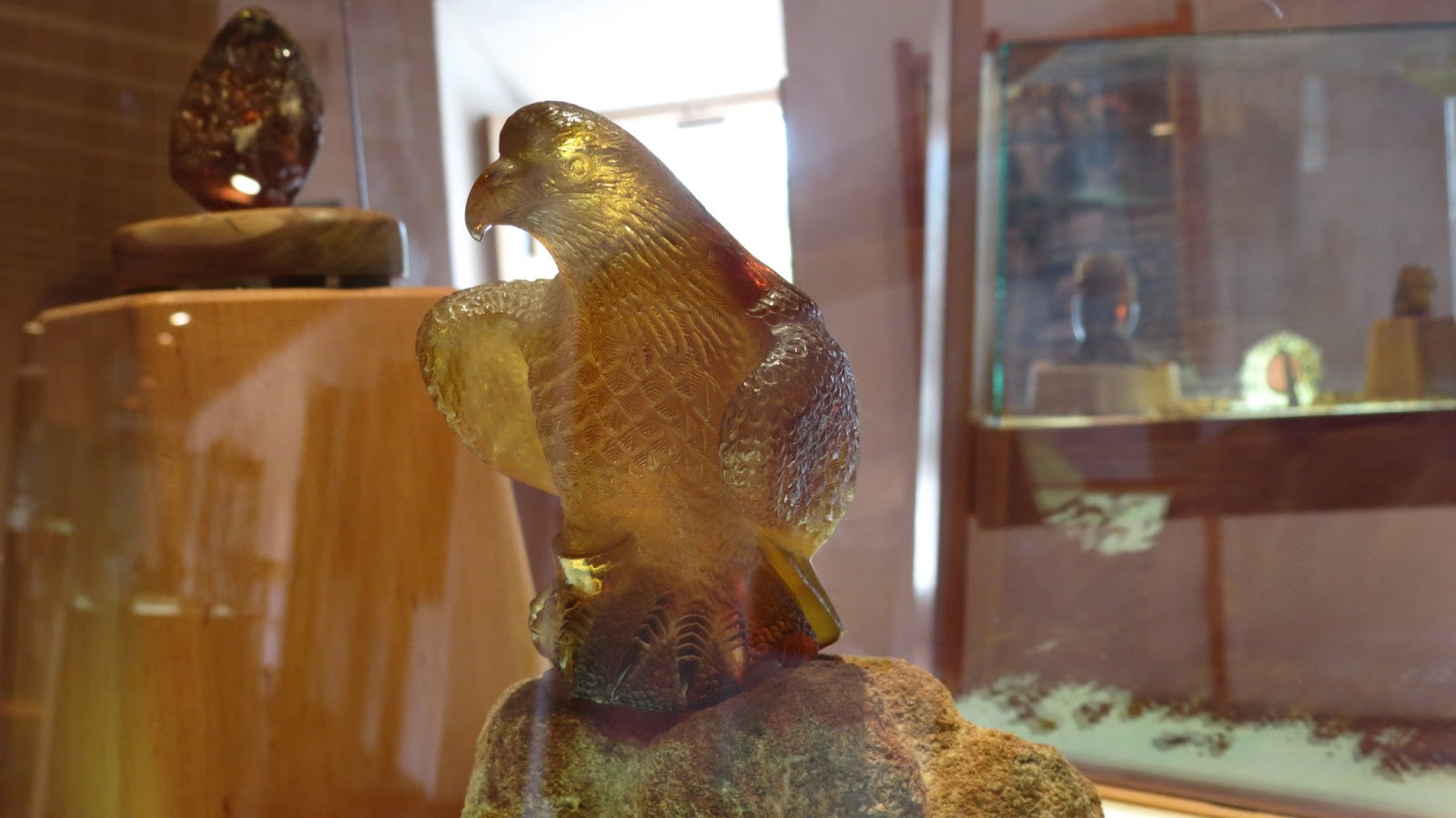
 

Amber is warm against the skin. In contrast, minerals and glass are heavier and cooler than room temperature. Stones like jade, lapis and turquoise feel cool or even cold to the touch, but amber feels warm. This, along with its obvious sunny colour, is why Lithuanians know it as -sunshine-.

True amber is light enough to float in salt water, if not weighed down by other substances (like silver), but it will not float to the top, it floats like soap would in a bathtub.
The Healing Properties of Amber

Amber acid is a bio-stimulant and has been used for ages to promote healing. Amber fights depression, and serves as a magnet to attract joy to the wearer.

Amber allows the body to heal by absorbing and transmuting negative energy into positive energy (ions).

Amber was first worn as a talisman of good luck.

Amber serves as a symbol of renewal in marriage & continued fidelity. It also represents an everlasting bond of eternal love.
Amber is an alternate birthstone for November, replacing topaz.

Amber has always been associated with good luck & general protection, particularly the ability to ward of the evil eye.

Amber is associated with the signs Leo and Aquarius.

In dreams, amber signifies a voyage.

Amber represents the tenth wedding anniversary.

New Age practitioners believe amber opens the 3rd Chakra (solar plexus). This is thought to provide mental clarity, balance moods, & instill confidence in the wearer.
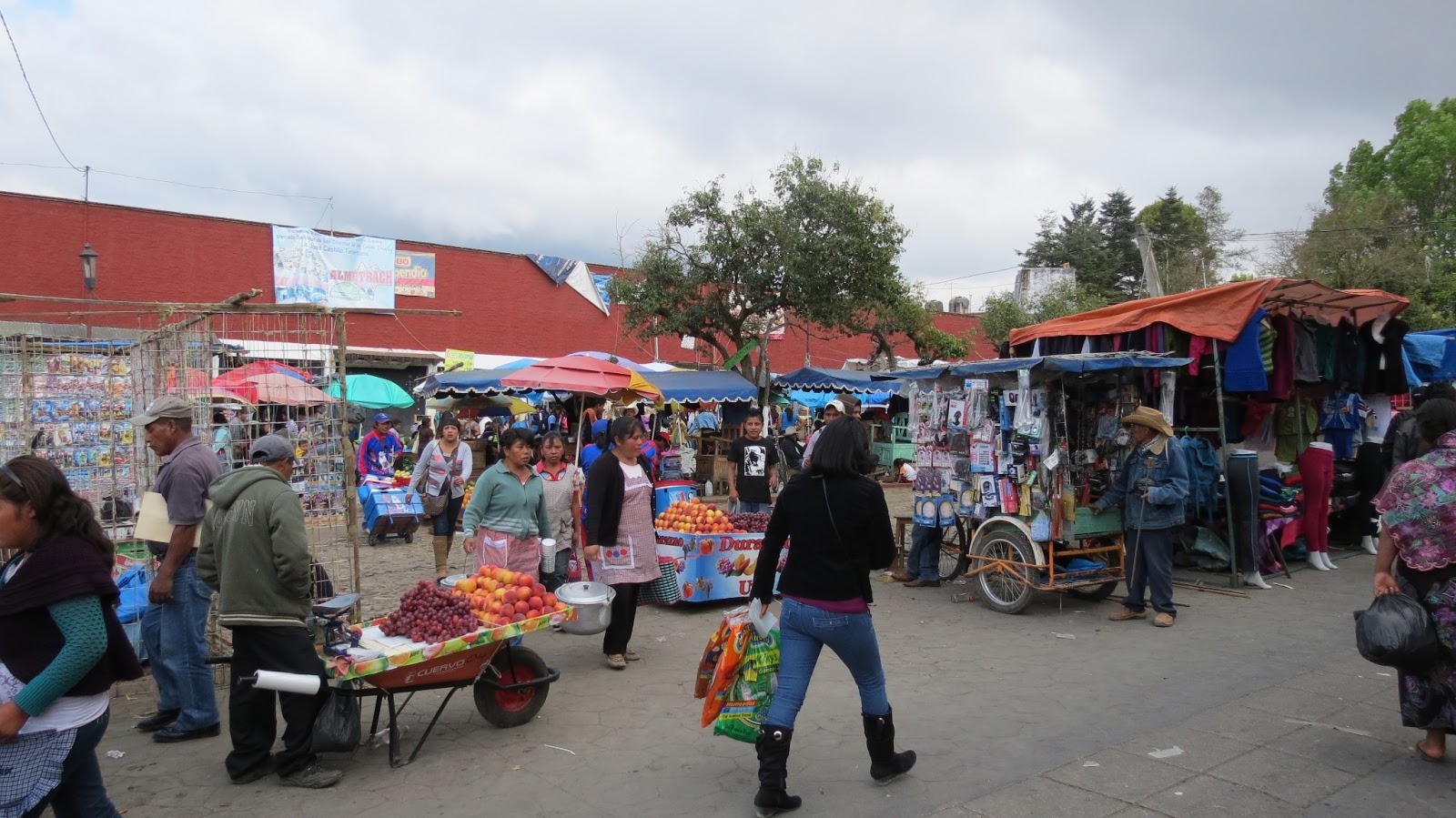
Next on our list was the church market. The market takes up a good portion on one side of the church. It was just about half a city block. This is where merchants from the surrounding villages sell their crafts. We spent quite a bit of time there but I bought very little, as I was always aware of how little room I had left in my luggage! There was so much temptation.
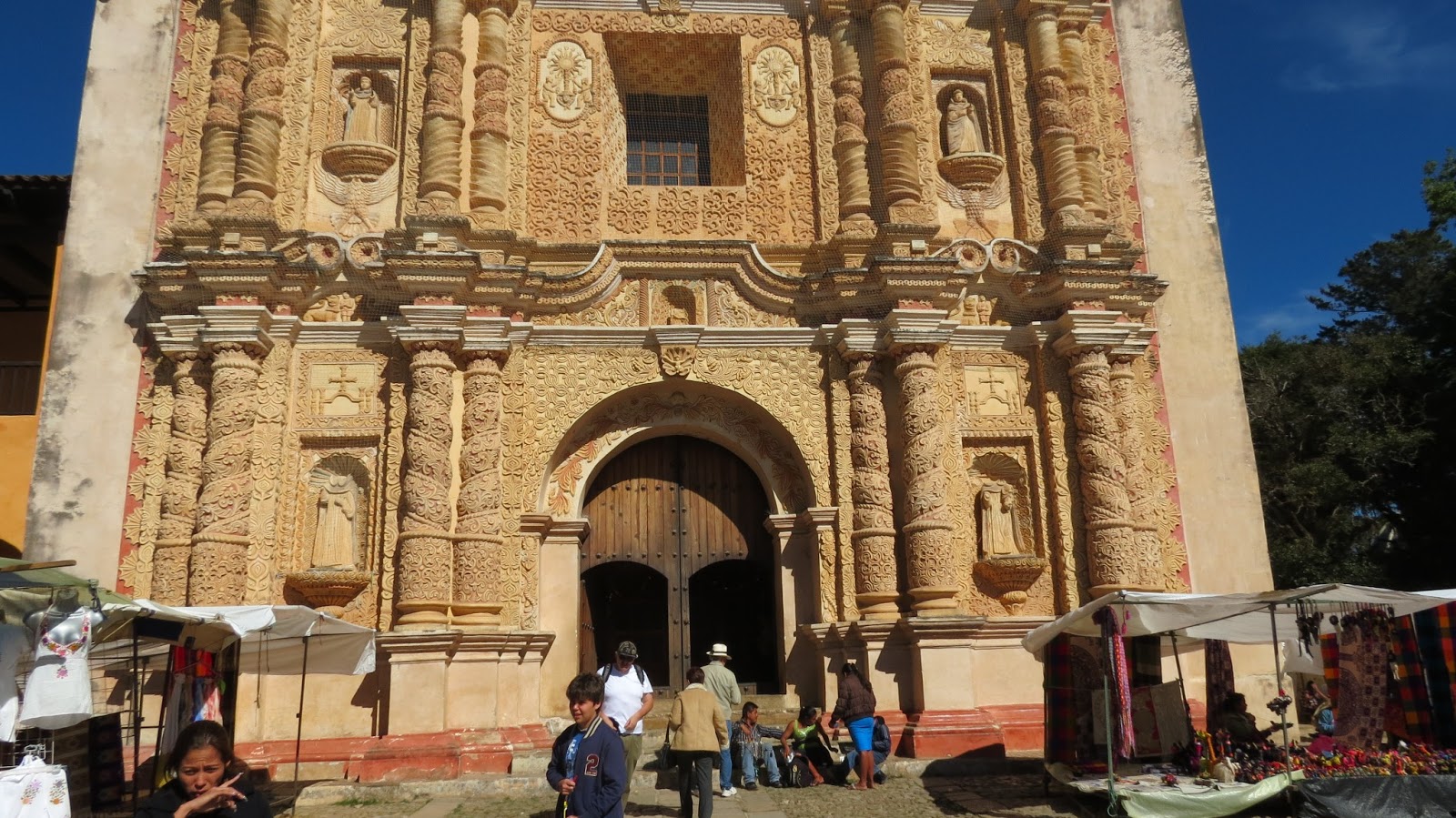
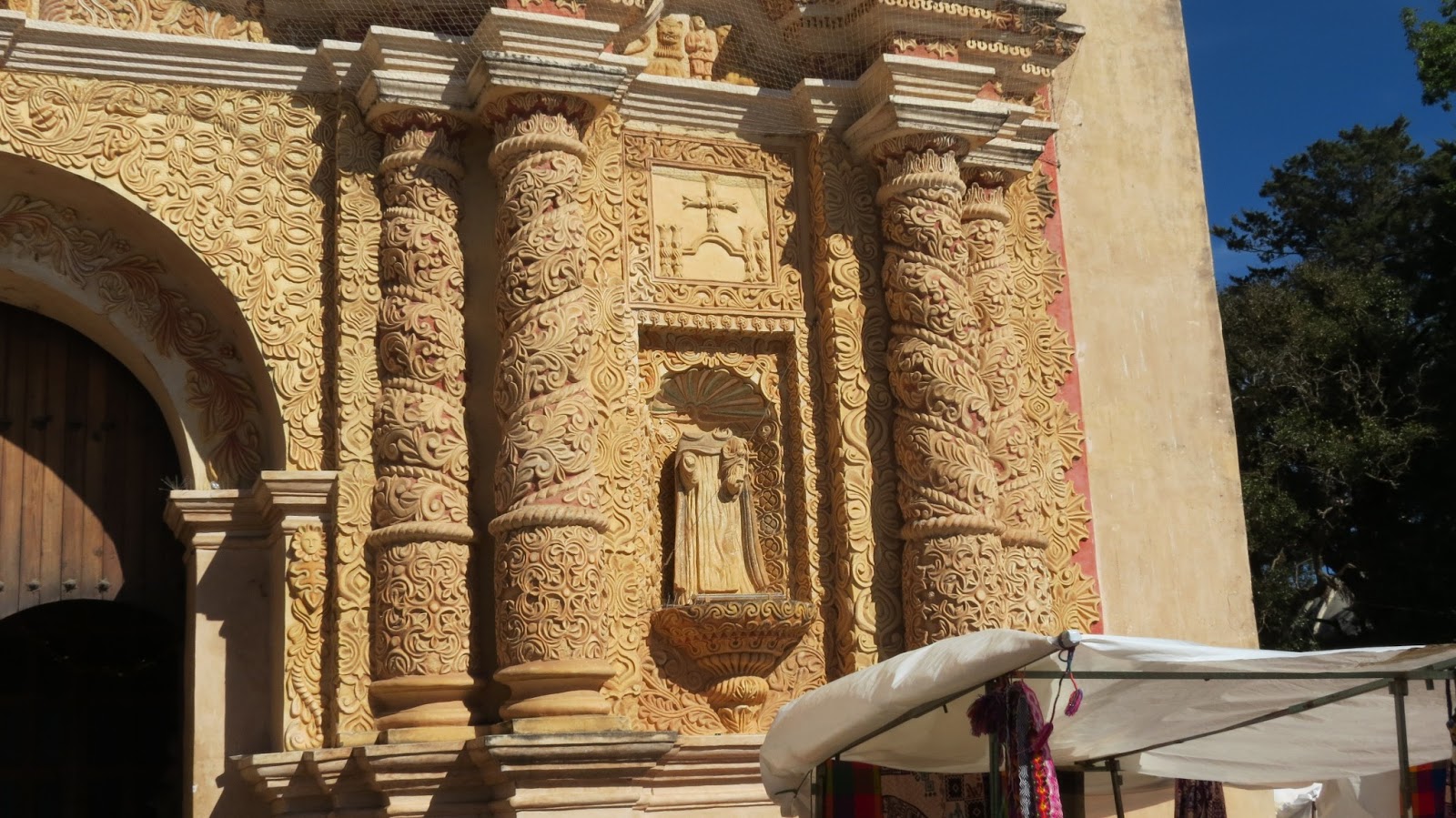
 

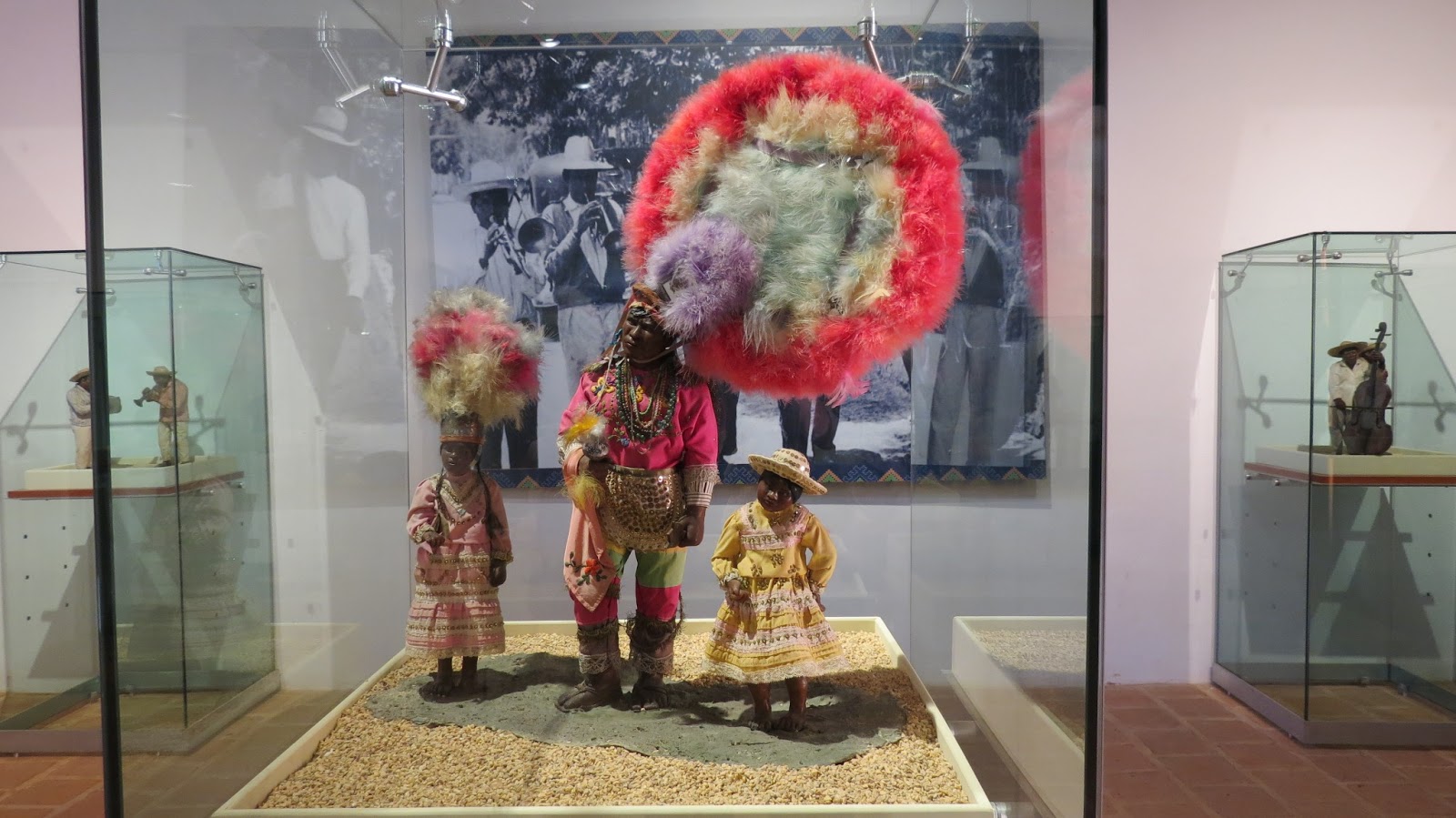
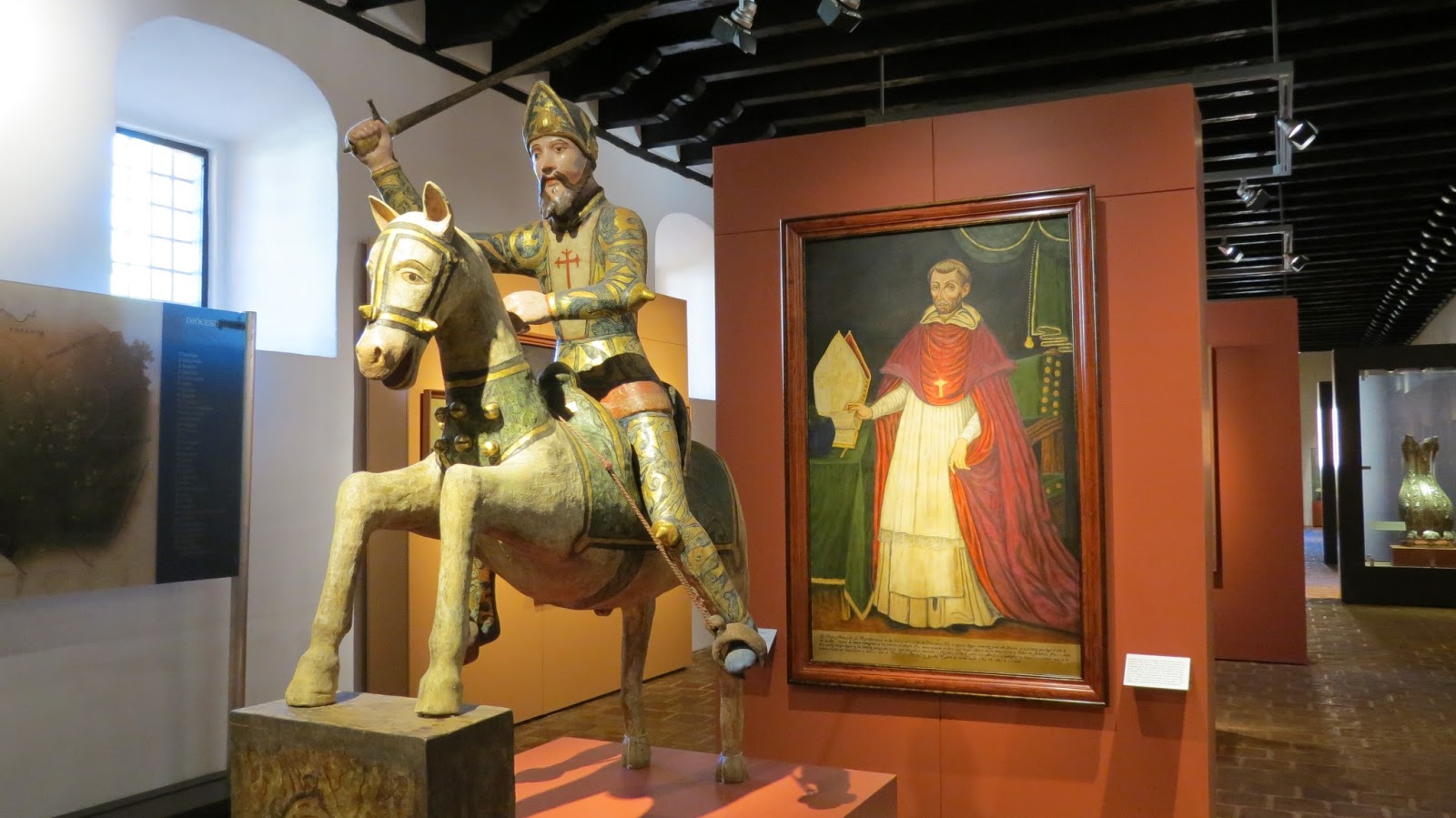
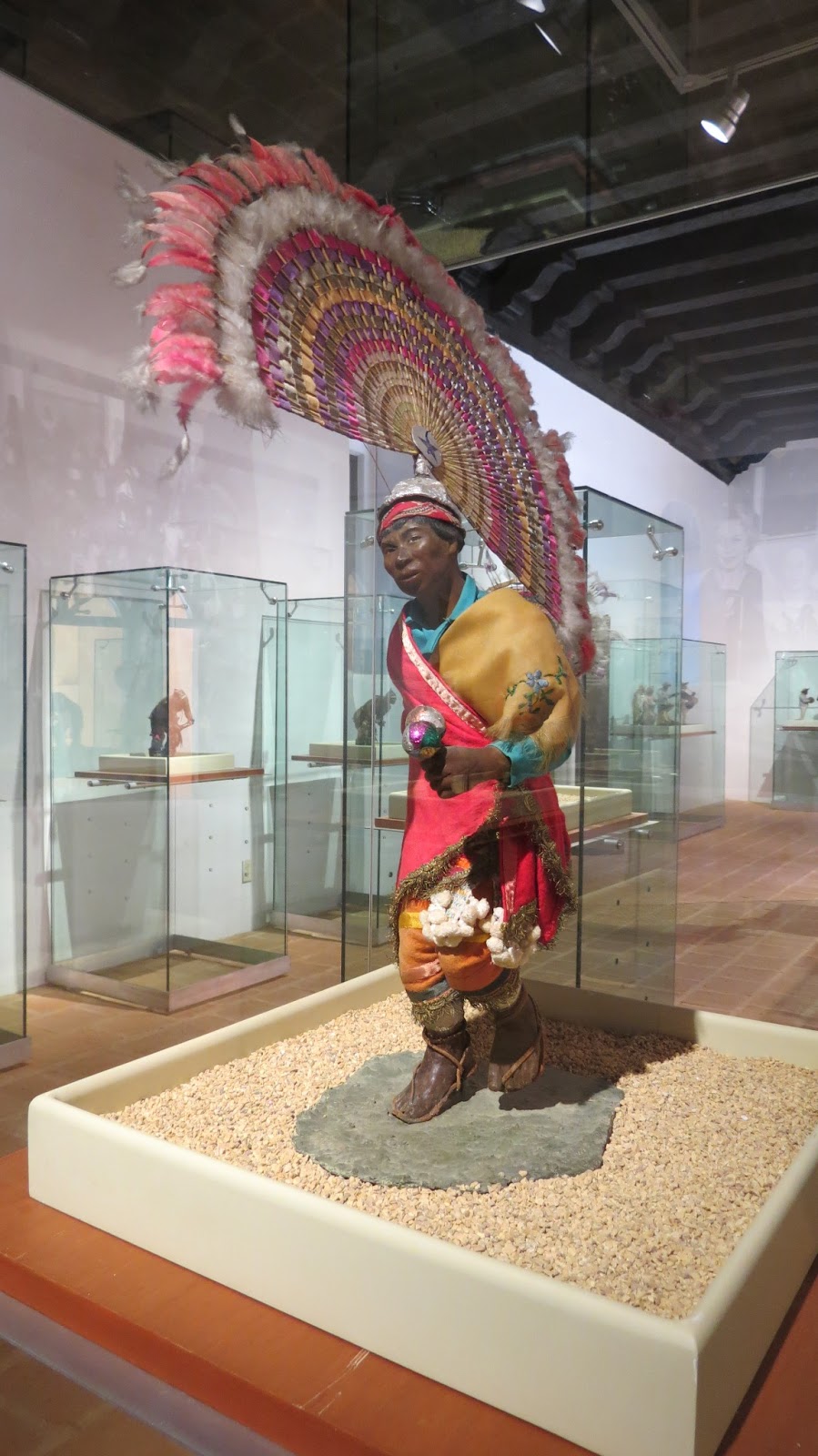
As we walked around the market, we discovered the museum attached to the church. There was a preHispanic section and then another section showing the arrival of the Spaniards.


After another long day of exploring (and shopping), we chose a restaurant whose sign stated that it was a “cultural centre.” There appeared to be many people inside (being inside from the cold was also a factor) and the menu looked interesting. It turned out that this either was run by or supported the Zapatista rebels.
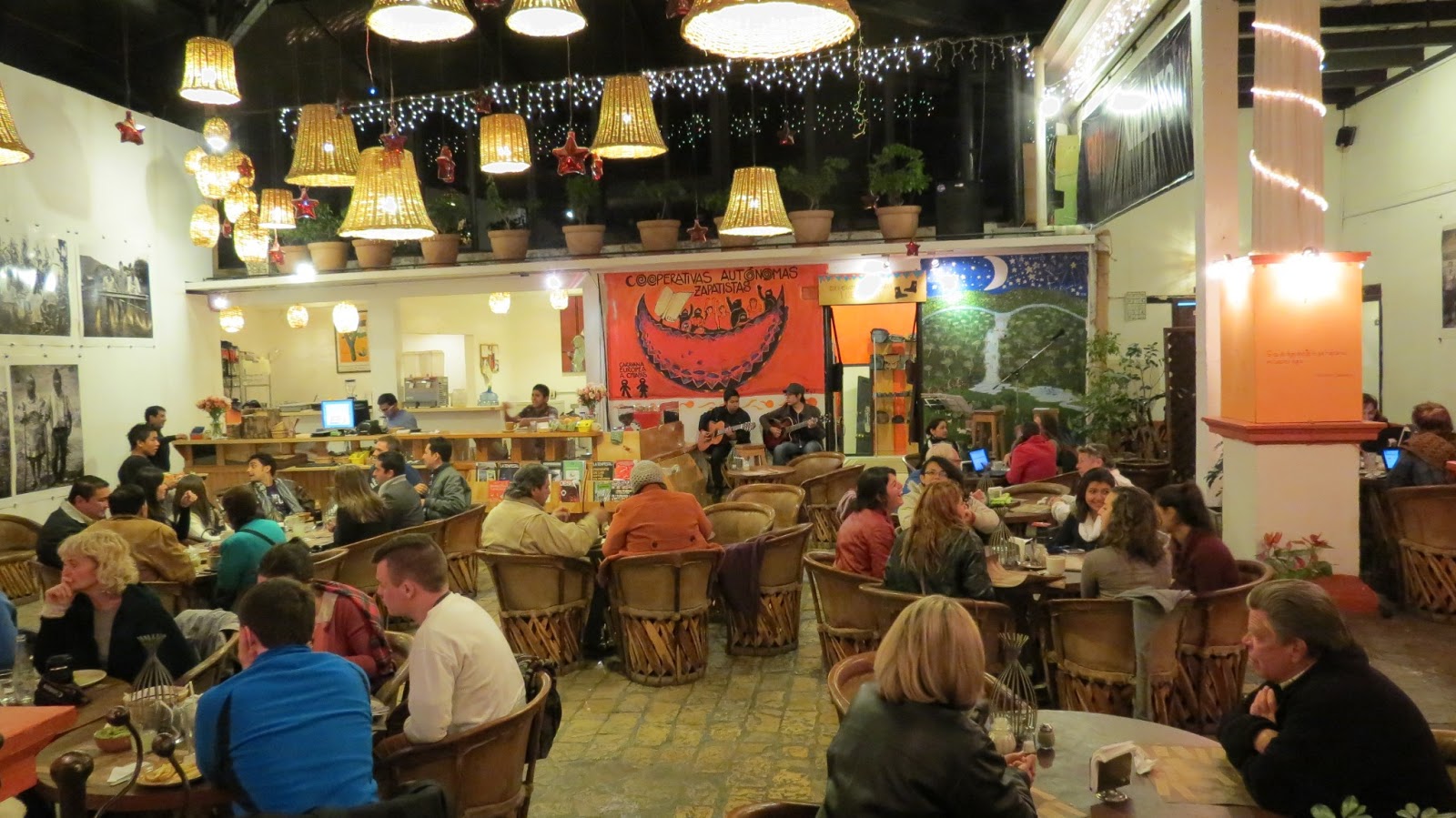
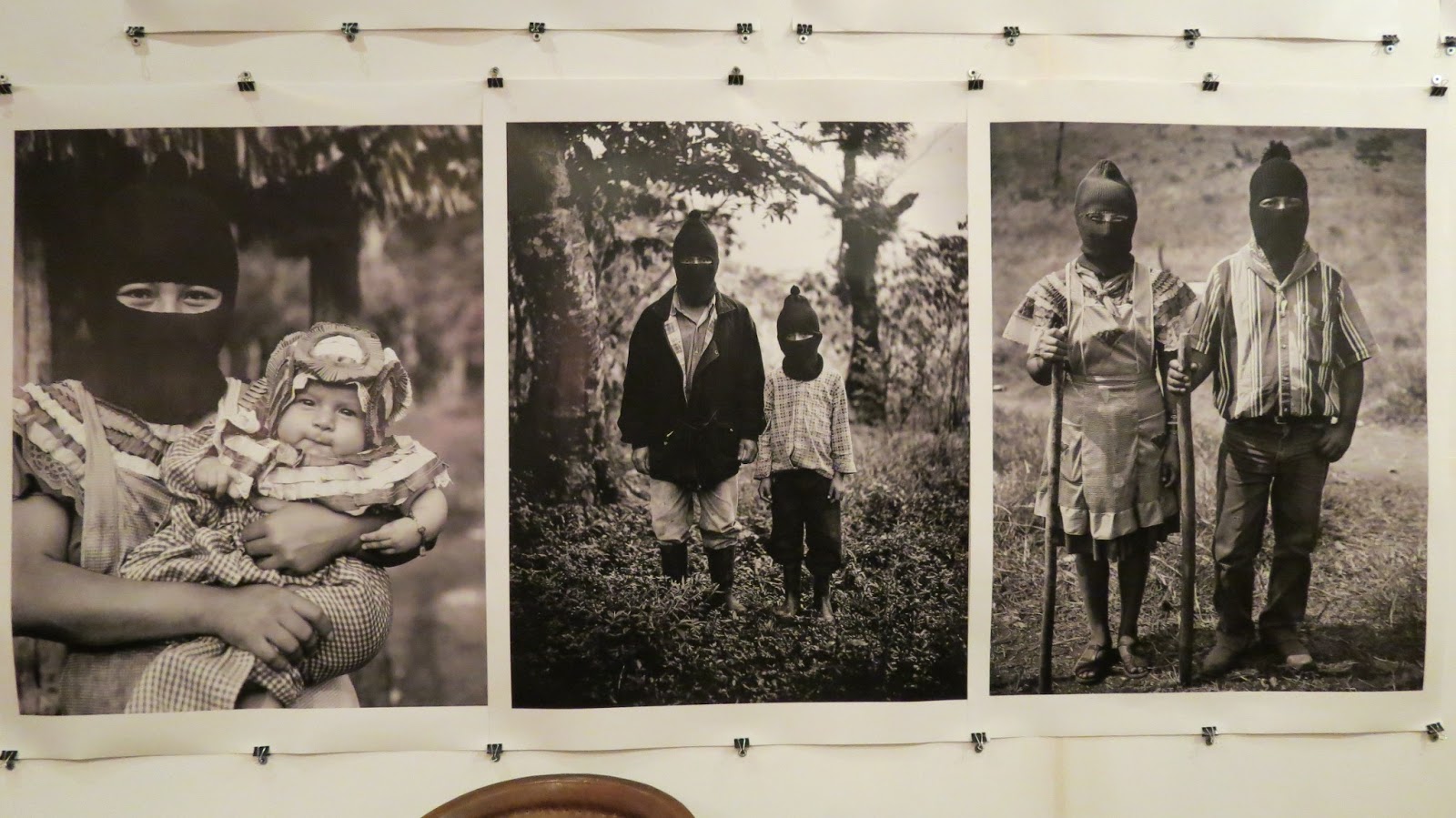


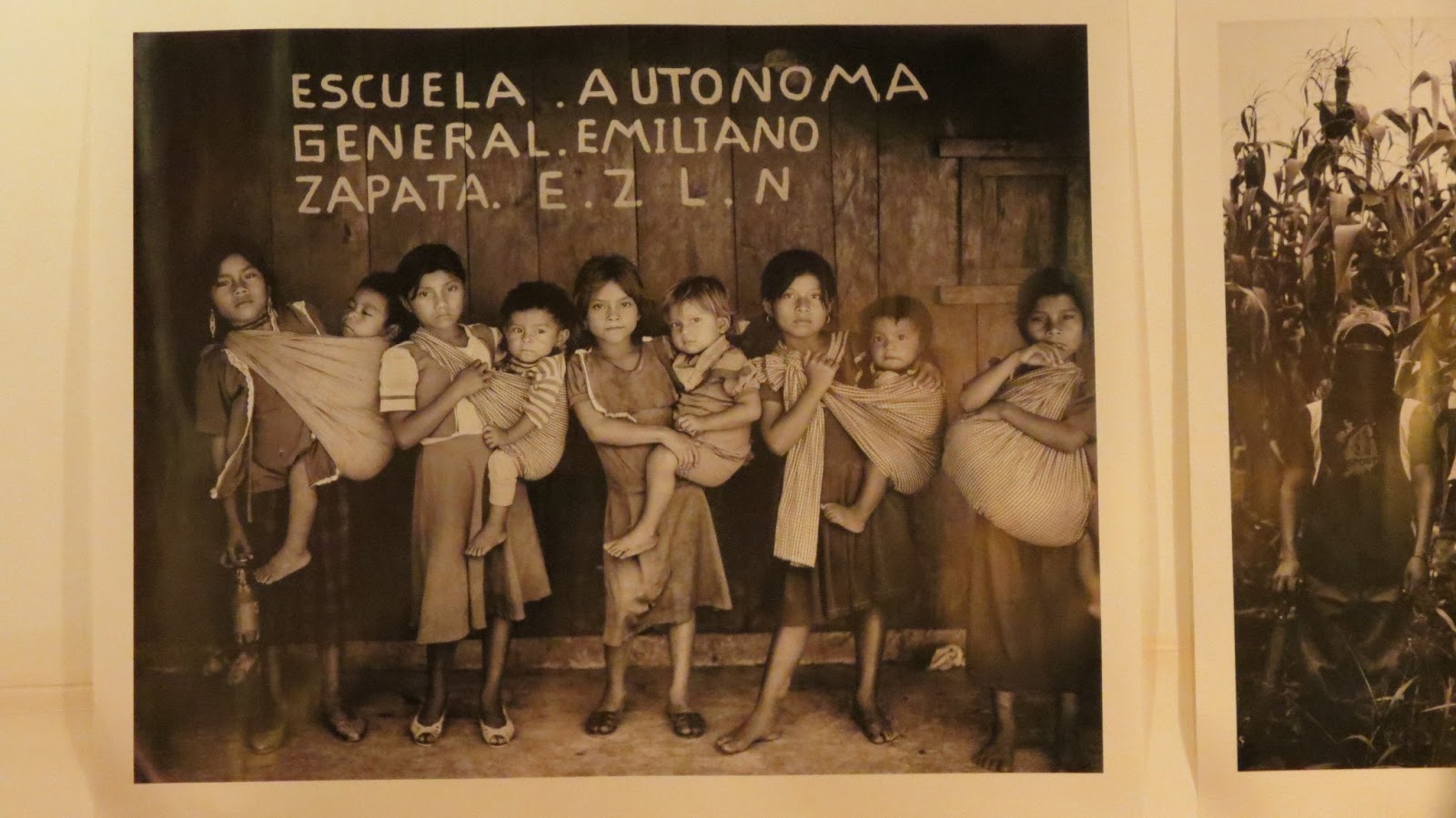
The Zapatista Army of National Liberation (ELZN) was comprised of the many tribes of indigenous population of Chiapas and southern Mexico. They feared that NAFTA would further erode what they see as their inalienable rights to work their own land and self-governance. For this reason, some of the poorest people in Mexico declared war against the Mexican government, to ask that their unique position in Mexican society and their specific grievances be heard. On January 1st, 1994, they took over five cities in southern Mexico, the center of which was San Cristobal. They read their proclamation of revolt to the world and then laid siege to a nearby military base, capturing weapons and releasing many prisoners from the jails. Negotiations lead to the San Andres Accords and ended the rebellion peacefully.
San Cristobal – Chamula, Mexico

I love being able to see other cultures. This trip, so far, has been a very thought provoking, eye-opening experience.

We hired a guide to take us to two villages just outside San Cristobal. The first place was Chamula, home of some of the Tzotzil. The Tzotzil are indigenous Maya people. The Tzotzil means bat people or place of bats.

Wikipedia excerpt:
“The Tzotzil conceive the World as a square, at whose center is the “navel,” a mound of earth located in the ceremonial center. The world rests on the shoulders of Vashak, analogous to the Four-Corner Gods or Sky-Bearers of the ancient Maya. This cosmic model is reflected in the ceremonial circuits around houses and fields performed by priests, who proceed counter clockwise around the four corners and end in the center, where offerings are made to the gods. The Tzotzil underworld is inhabited by a race of dwarfs, created by the gods during their attempts to create mankind.

The sun is “Our Father Heat,” and the Moon is “Our Holy Mother.” The planet Venus is called “Sweeper of the Path” as it precedes the Sun in his path around the world. Local hills and mountains are the homes of the ancestral couples, the Totilme’il or “Fathers-Mothers,” the most important gods. The next most important deity is the Earth Lord. In modern times, he is pictured as a large fat and rich Ladino living underground, who owns all land and its natural resources. A Tzotzil who uses any of those resources – water holes, trees, mud for his home, and limestone for lime – is expected to compensate the Earth Lord with appropriate offerings in a ceremony.

The Tzotzil believe that each human being has two souls, a ch’ulel and a chanul. The ch’ulel is an inner, personal soul, located in the heart and blood, placed in the unborn embryo by the ancestral gods. It is composed of thirteen parts, and a person who loses one or more of these parts must have a curing ceremony performed by a shaman to recover them. “Soul loss” may be caused by fright of falling down or seeing a demon on a dark night; as a punishment by the ancestral gods for misbehaviour; or by sold into slavery to the Earth Lord, through evil witchcraft.

At death, the inner soul leaves the body and goes to Katibak, the world of the dead in the center of the earth. There it will remain for the same length of time it had been in the human world, reliving his life in reverse, younger and younger, until it is assigned by the ancestral gods to another newborn of the opposite sex. Baptized infants and women who die in childbirth go directly to Winajel, located in the Sun. people who have drowned, have been murdered, or struck by lightning do not go to Katibak. Animals and trees too have ch’ulel soul, which goes through the same cycle.

The other soul, the Wayjel, is an animal-spirit companion, shared with a chanul, a wild animal. Throughout each person’s life, whatever happens to the animal spirit also happens to the person and vice versa. These animal-spirit companions, consisting of jaguars, ocelots, coyotes, and smaller animals such as squirrels and opossums, are kept by the ancestral gods in the four corrals inside the “Senior Large Mountain” in the east side of the world. If the animal spirit is let off its corral by the ancestral gods, the person is in mortal danger and must undergo a lengthy ceremony to round up the chanul and return it to its corral. Only human beings have a wayhel soul.

In the centuries since the Conquest, under the influence of Catholicism, the Tzotzil have come to associate the Sun with God the Father or Jesus Christ and the Moon with the Virgin Mary.”


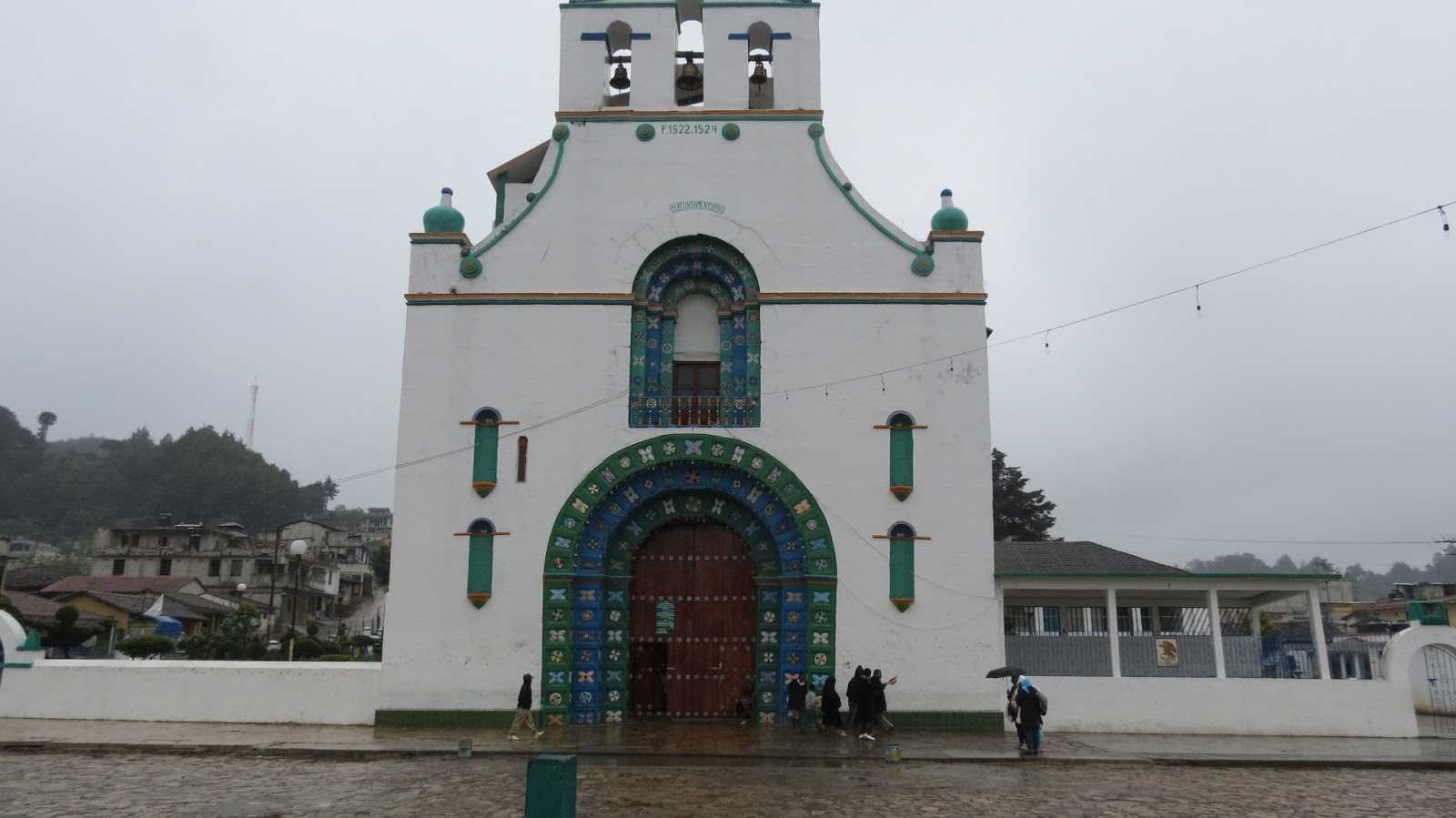
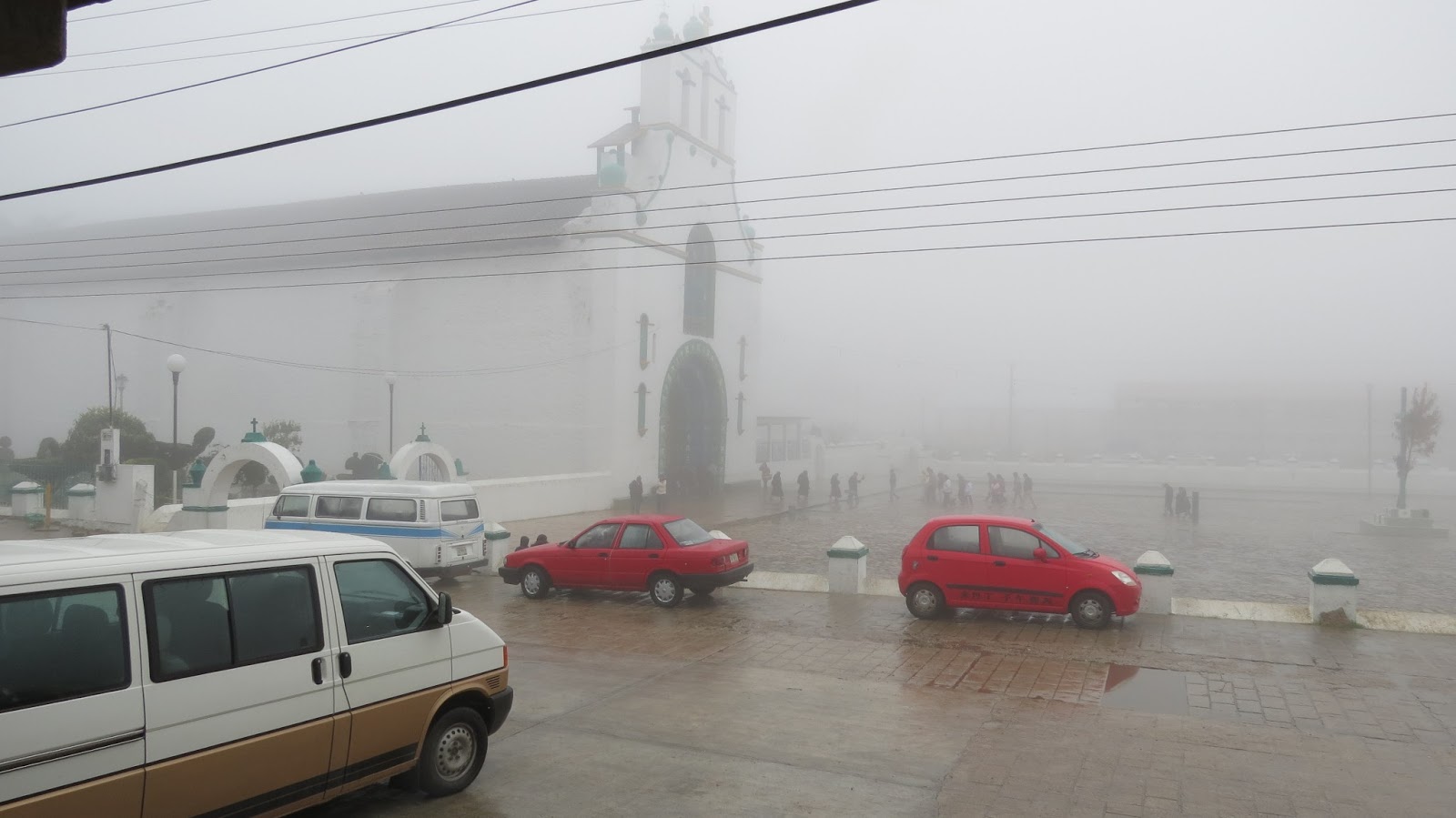
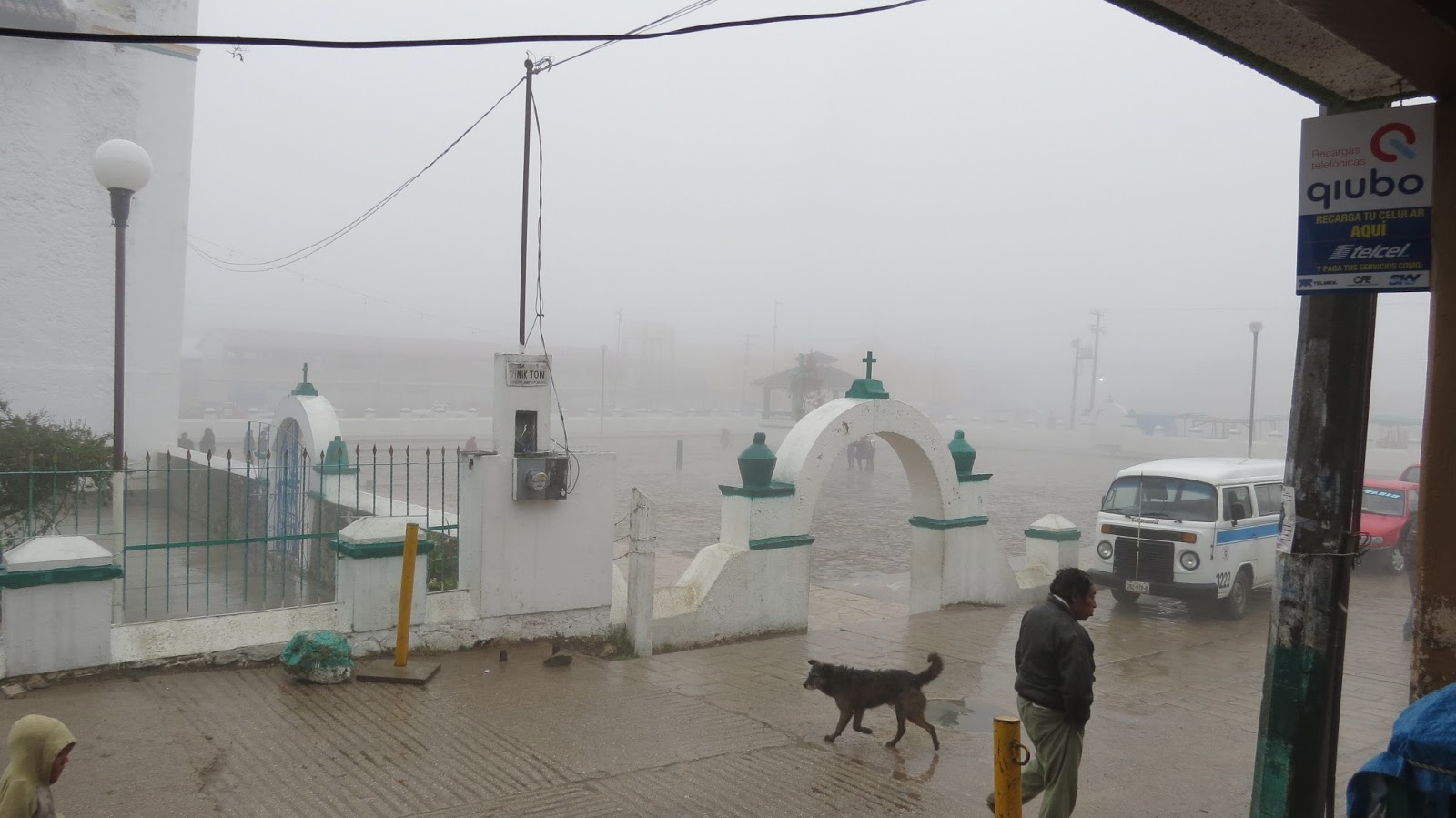
The day we chose to visit the villages was cold and wet but we were anxious to see these villages. Our first stop was at the church, which had been co-opted by the village, and had the Catholic priest expelled in the early 1960’s. The priest is only allowed into the church to baptize children. It was unfortunate that we could not take pictures but the people believe that the photos steal their spirits. What struck me as I walked into the church was the lack of pews, pine needles all over the tiled floor and hundreds of lit candles on the floor and in groups. Each group belonging to a family. The candles were meant to represent tortillas being fed to the saints. There were four other colors of candles, meant to represent the four colors of the corn. Colors were chosen depending on what you wanted or needed; one color represented family while another represented prosperity. Another candle made of animal fat was for an offering to the underworld. There were candles and fresh flowers on the tables as well. In the middle of the room was an altar with flowers and a few crosses. Our guide explained that the crosses were the headstones of graves. There would be a ceremony and a walk to the cemetery to replace the worn crosses with these new and blessed crosses.

As we walked around the church, we noticed a family sitting on the floor, their candles lit, and bottles of soda pop, which are used to induce belching to expel evil spirits. The mother was holding a live chicken that she was passing over and around her daughter. She then killed the chicken by what appeared to be her pulling and twisting its neck. The belief was that the chicken would absorb whatever was ailing the daughter and then killed in order to prevent the ailment going back to the child.

We walked around the village, which at first glance appeared to be a bit more modern than I had envisioned but due to the cold weather, we did not venture further than the village center.

One thing I did notice was the size of the jail. There were cells that were exposed to the outside so that everyone could see who was in jail as part of the punishment. The local police officers wore white wool tunics, sandals, and white shirt and carried a very large stick with a length of leather strap tied at each end to help carry the stick over the shoulder. The justice system in Chamula is very simple. One to three days in jail and exposure to public scrutiny for first offenses. Second offenses could result in up to one year of community service. One of the options for community service is to serve one year as a police officer.

One problem the villages have is alcoholism. Our guide explained that part of the religious ceremony is to drink a local moonshine beverage called posh. This left some of the women as sole wage earners. If the woman decided to leave her husband, she would have to leave the village and her support system of family and friends. The day we visited there was a man passed out on the bench outside the church. Our guide made sure that someone would come and take care of him before we left.

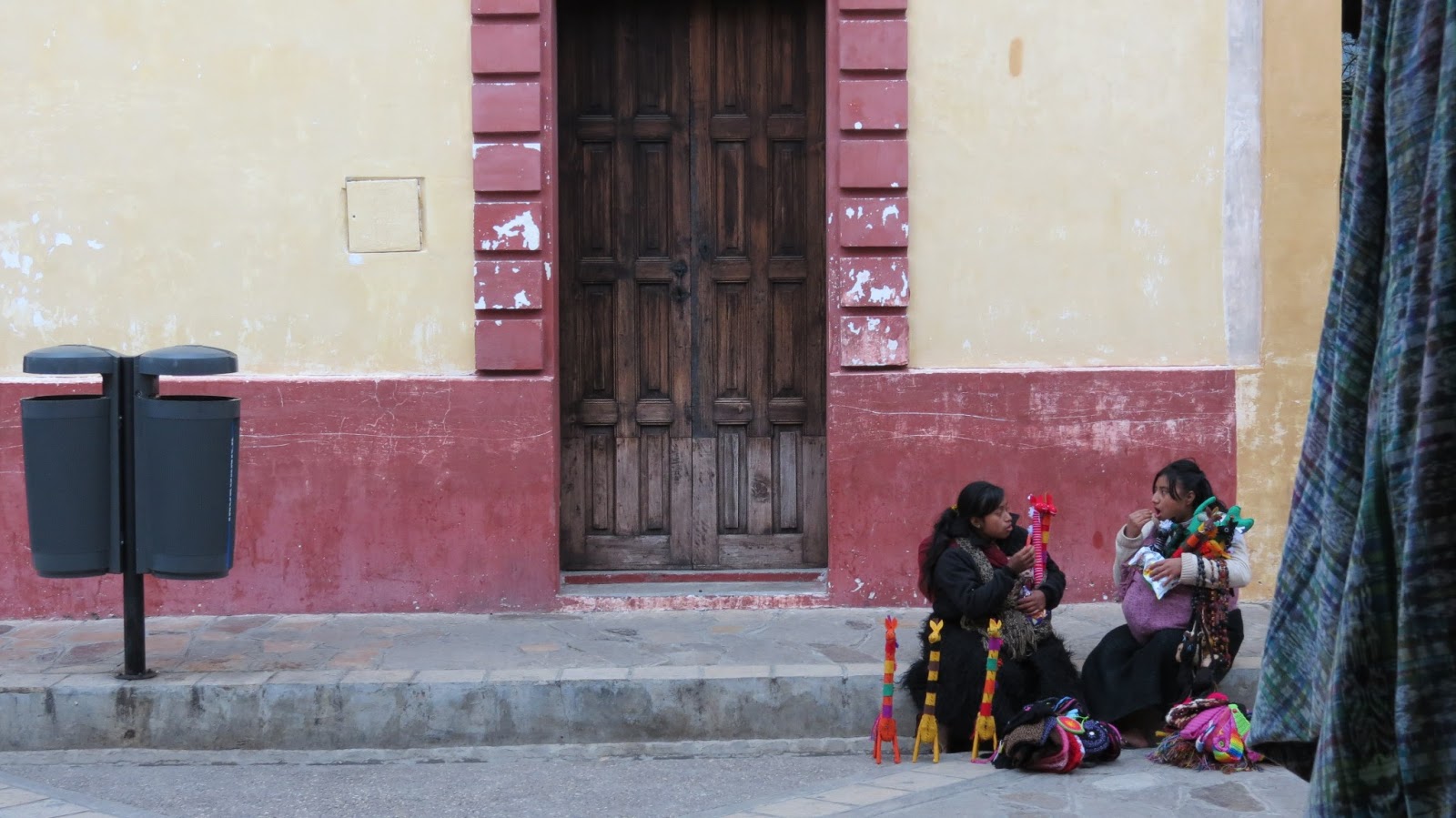
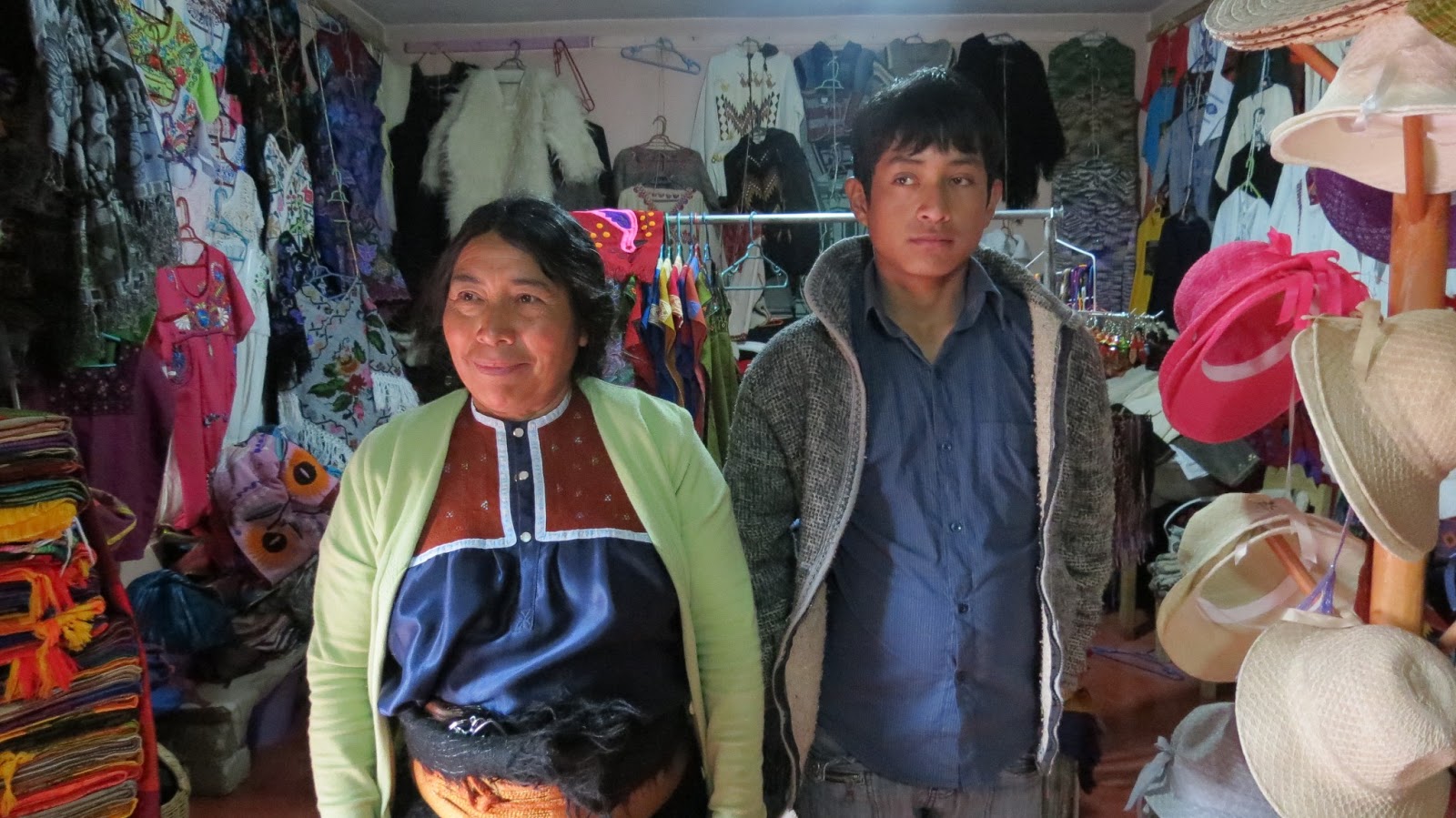
women from Chamula in San Cristobal trying to sell their crafts


our guide looking very cold


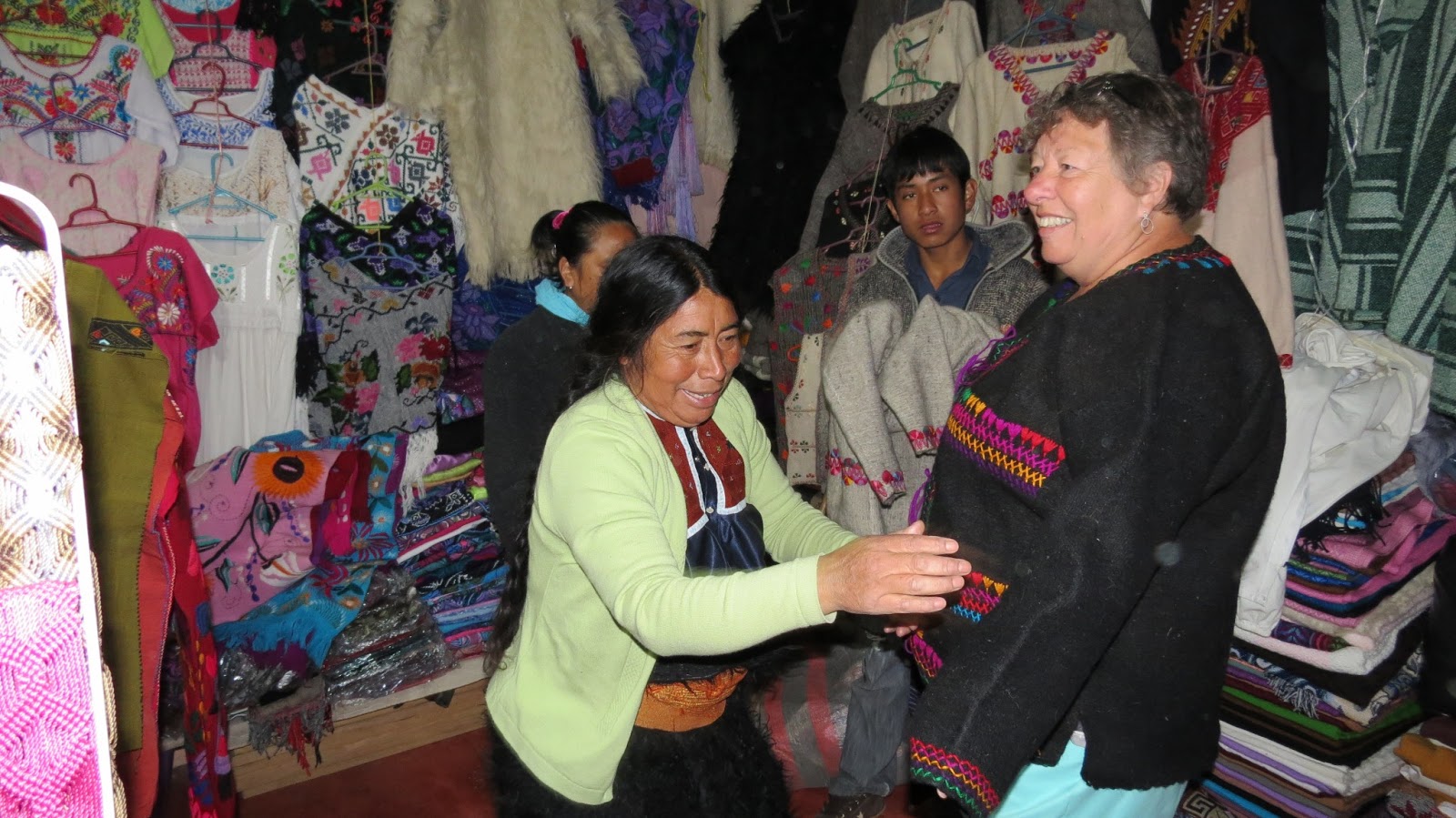
trying to buy something to keep me warm


I guess they didn’t mind losing their souls since I bought a few items from them!

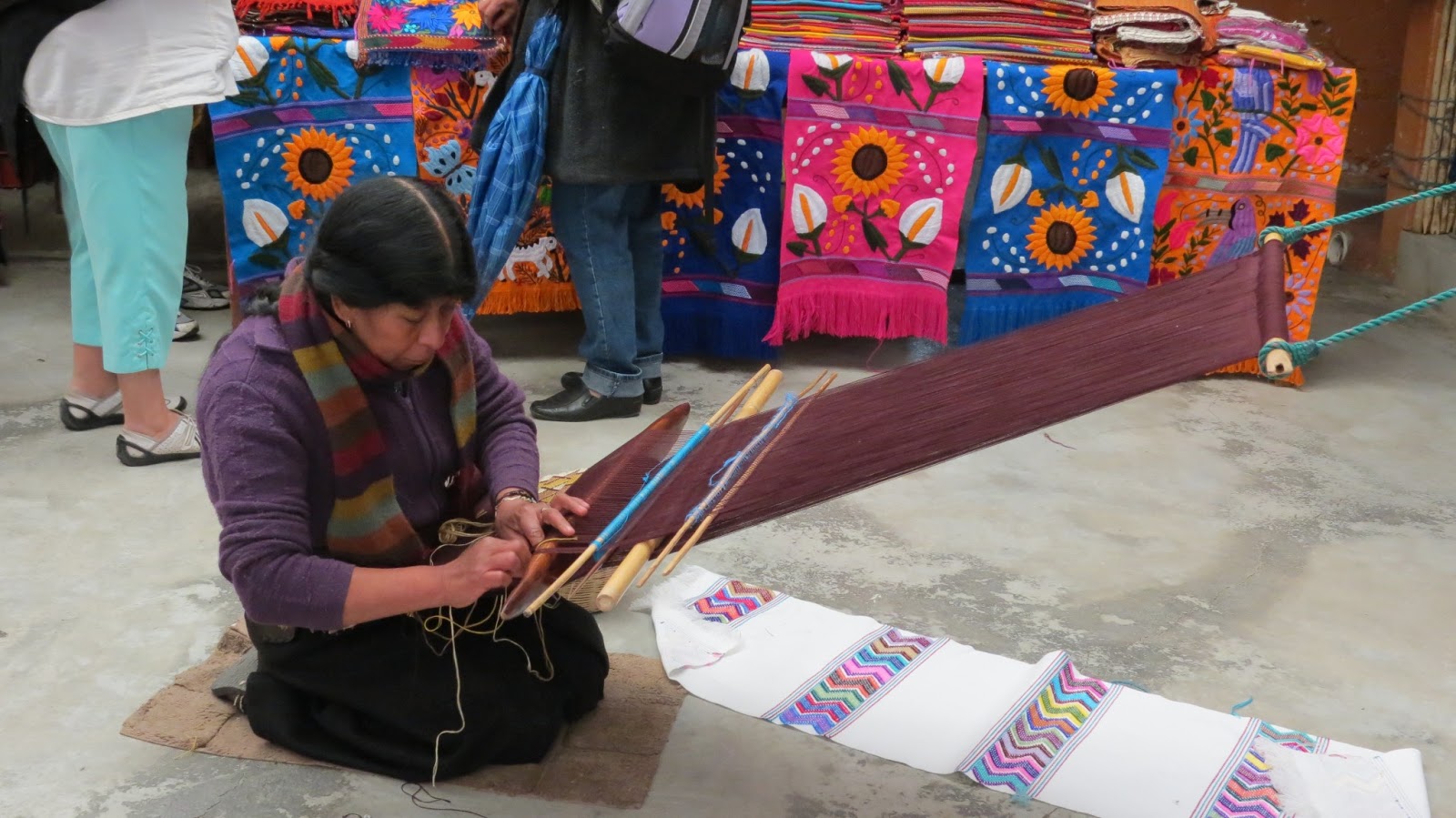
The next village we visited was Zinacantan which was smaller and quieter. The traditional dress was also very different from Chamula. We were taken to a co-op run by a few families. Inside we went into a room that was a typical Zinacantan kitchen. We enjoyed the freshly made tortillas and local coffee. It was a welcome respite from the cold. Their diet is mainly vegetarian, almost vegan, and allows for a life span that is often in excess of modern countries.

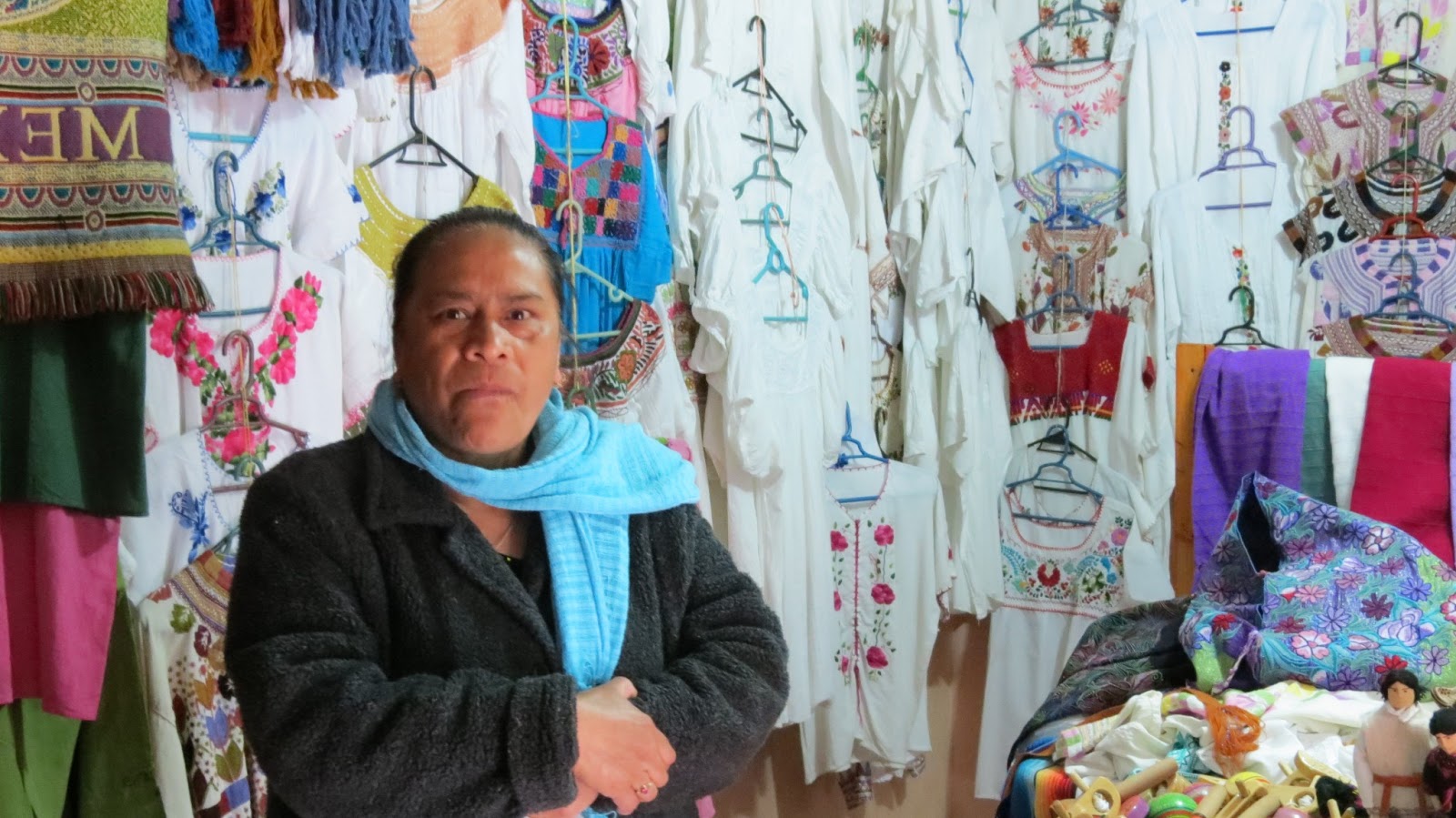
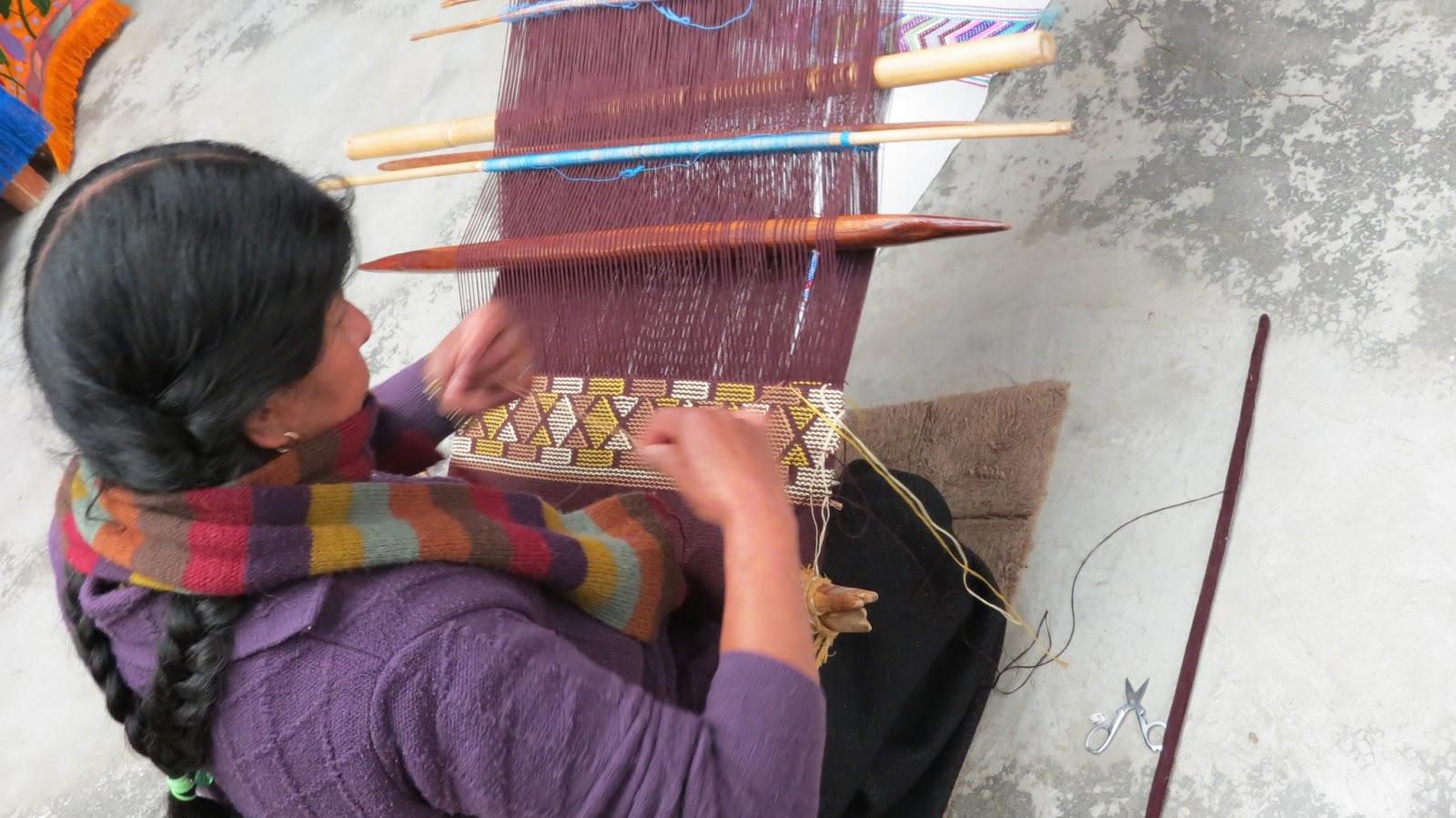
weaving at the co-op. notice the colourful woven items for sale behind her


The following video is from our visit to the Zinacantan kitchen.  Notice the fire but no chimney, nothing for the smoke to escape.

SAN CRISTOBAL – DAY FOUR

It was so cold that I had to buy some socks, gloves and a handmade wool shawl. I should have known better and been more prepared. Lesson well learned for the next trip. There is no heat in the hotels and restaurants. Some restaurants have the gas heater stands. We tried to find any restaurant that had heaters or had tables inside. That was our first consideration, second was the food.

Our first stop was to the Mayan Medicine Museum. We hiked many blocks, which brought us to the outskirts of the city centre to what looked like homes or settlement of the “city indigenous” people. It was very different from the downtown core of San Cristobal.


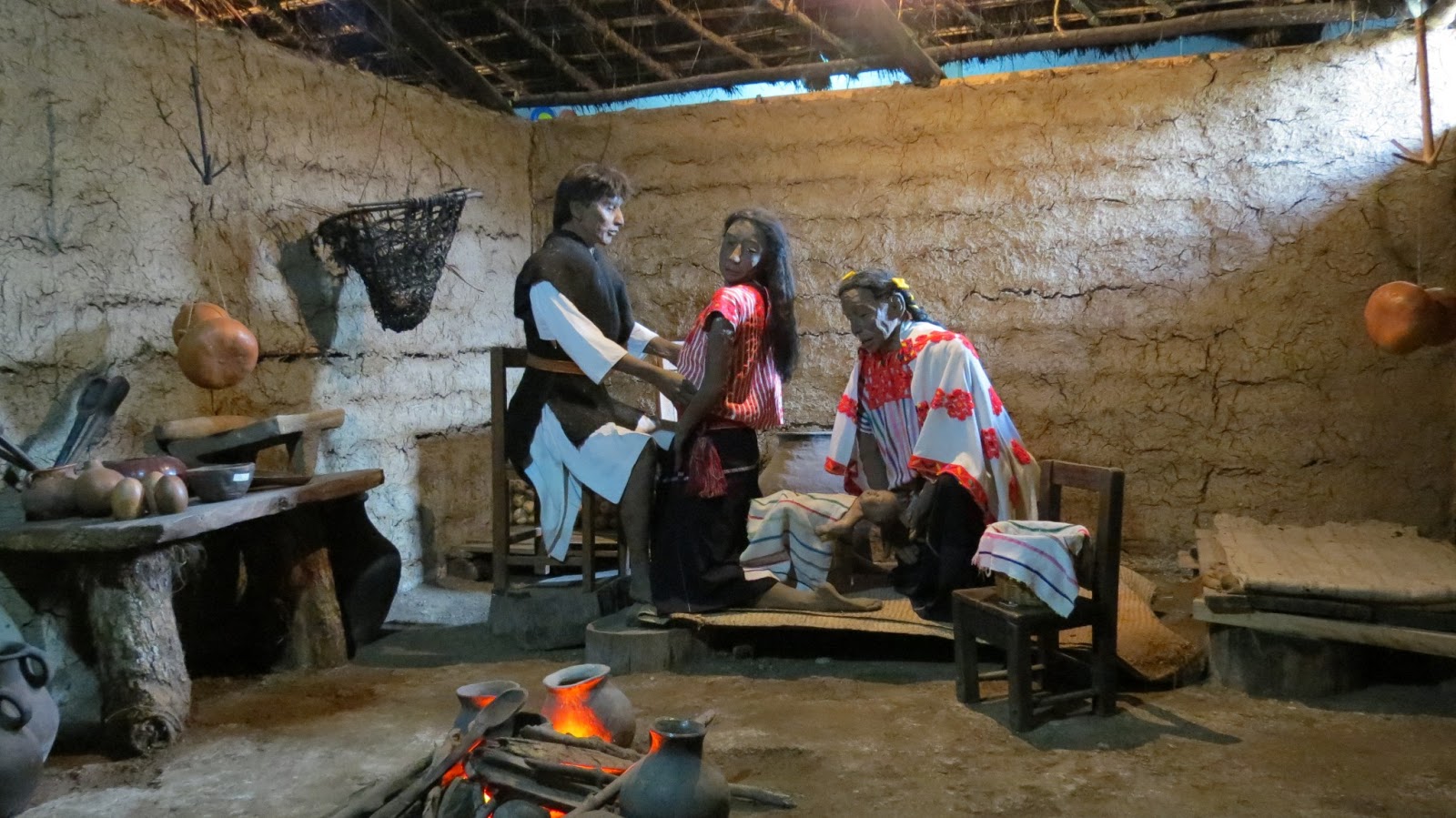
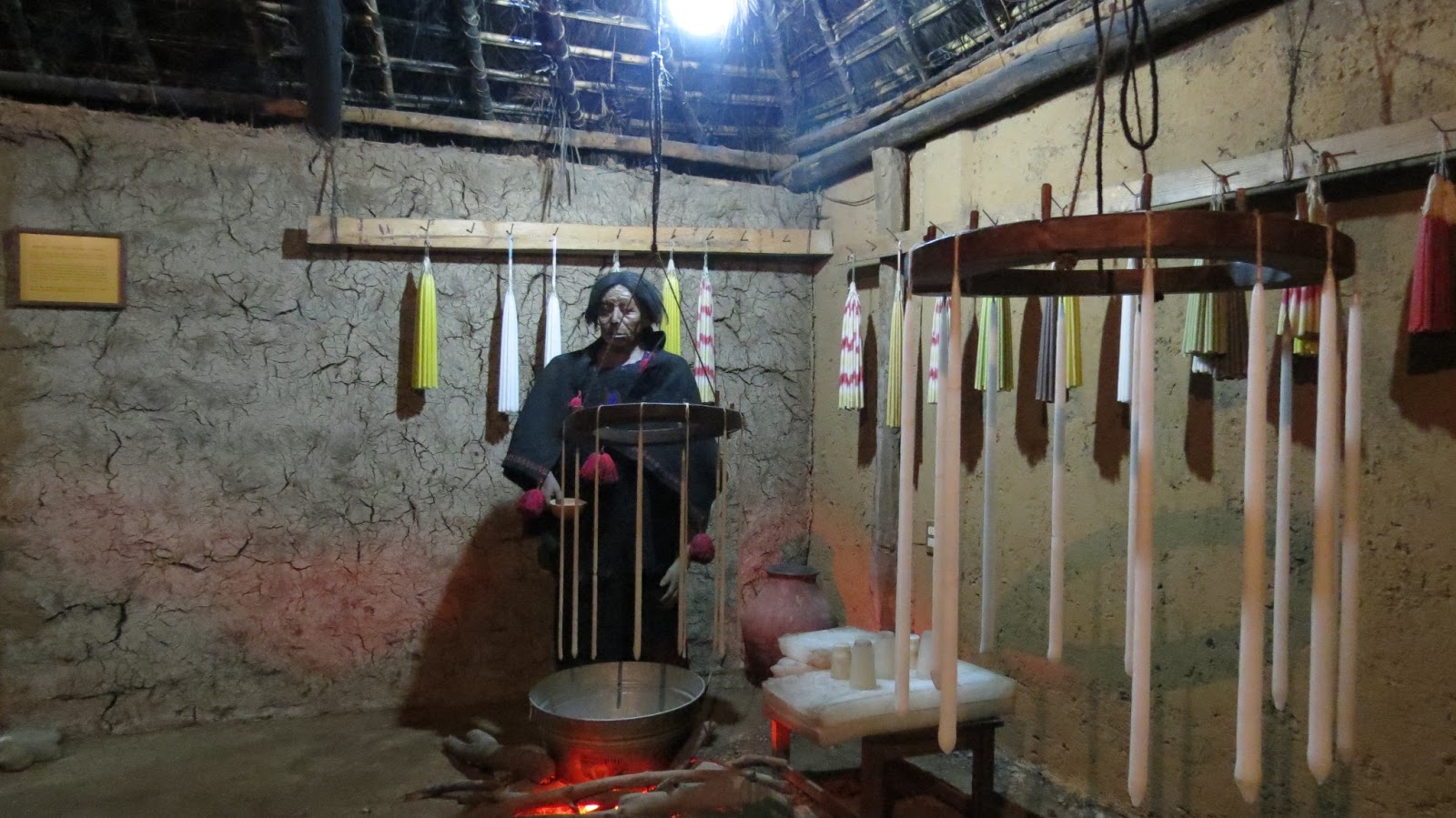
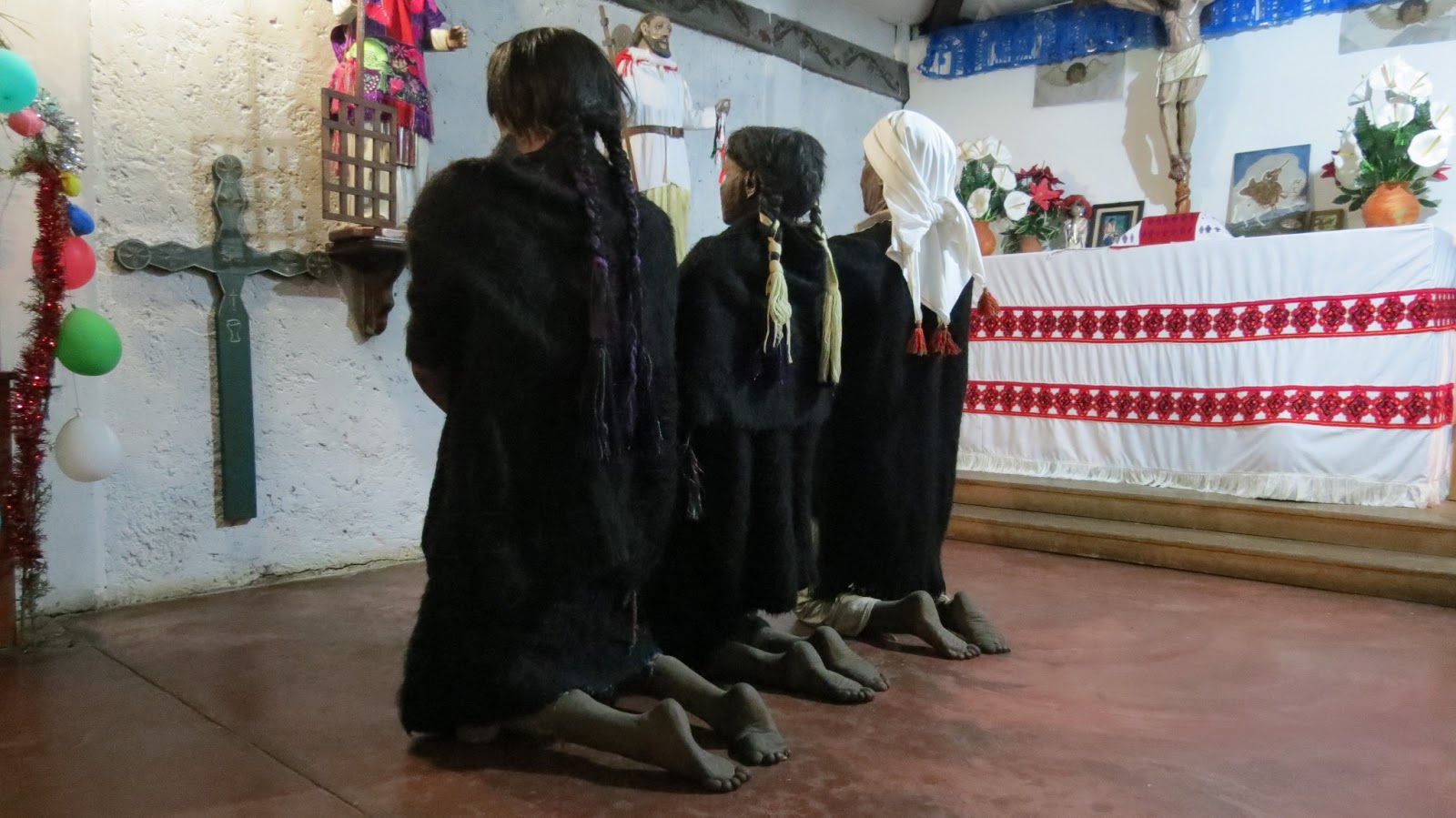
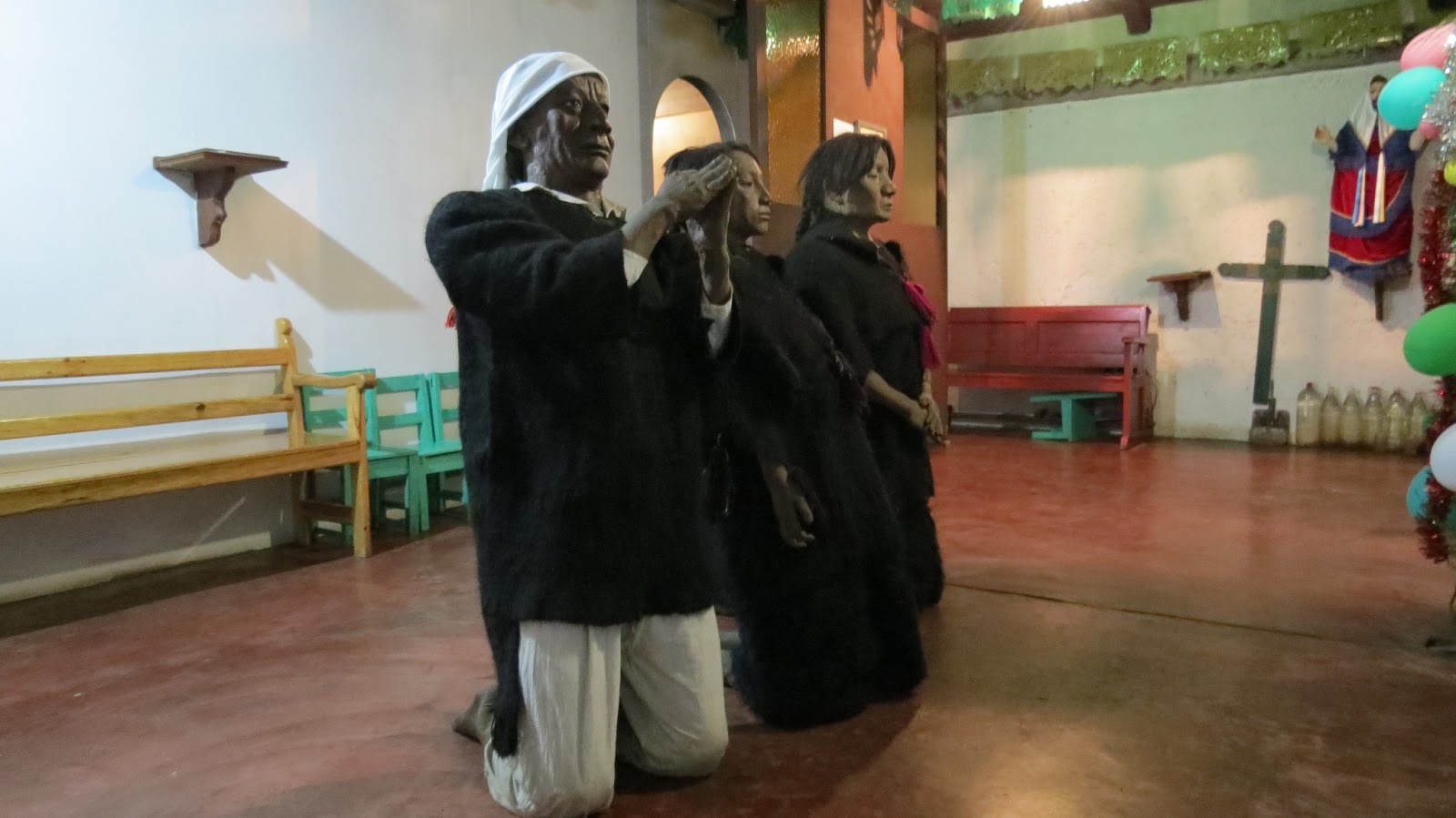
The main objective of the Museo de Medicina May is to preserve a traditional and botanical knowledge of Tzoltzil and Tzeltal healing practices that spans centuries. Inside the compound is the museum, botanical garden, pharmacy with herbs from the garden and a center to treat patients.  Fascinating place. I love being able to see how other cultures live and have lived for centuries. They had displays of a candle maker, people praying to their gods and a woman giving birth with her husband and midwife.

Mayan woman giving birth with help from her husband and


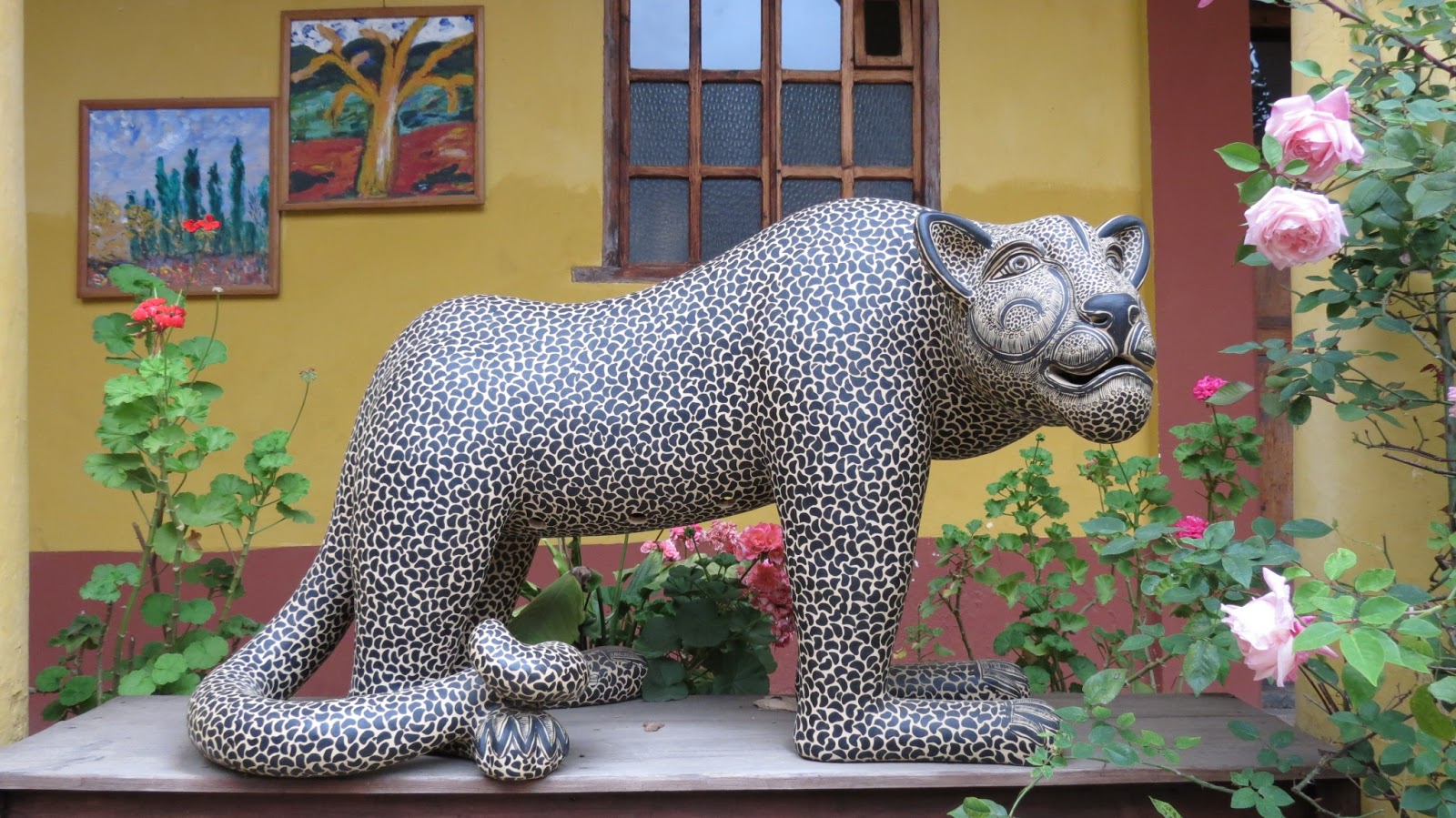
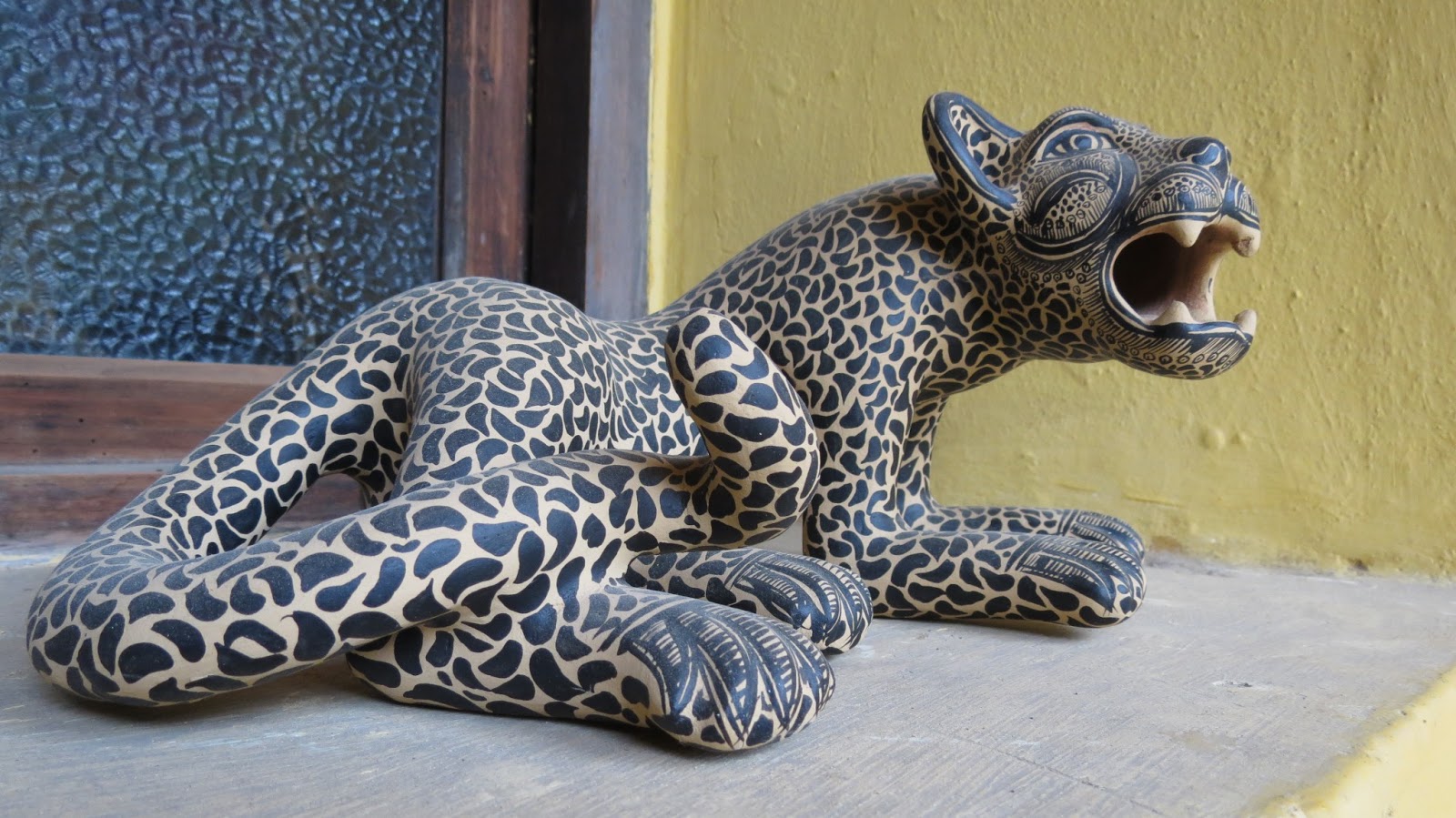
Next on our walk, was Casa Na-Bolom. According to Wikipedia, Casa Na-Bolom was the home of archeologist Frans Blom and his wife, Gertrude Duby Blom, the documentary photographer, journalist, environmental pioneer, and jungle adventurer. The name “Casa Na Bolom” comes from the Mayan word for jaguar, “bolom.” The Bloms chose this name as a play on their own name, Blom. In the jungle, Frans Blom was often known by the nickname, Pancho Bolom, a great compliment comparing him favourably to the sacred jaguar.

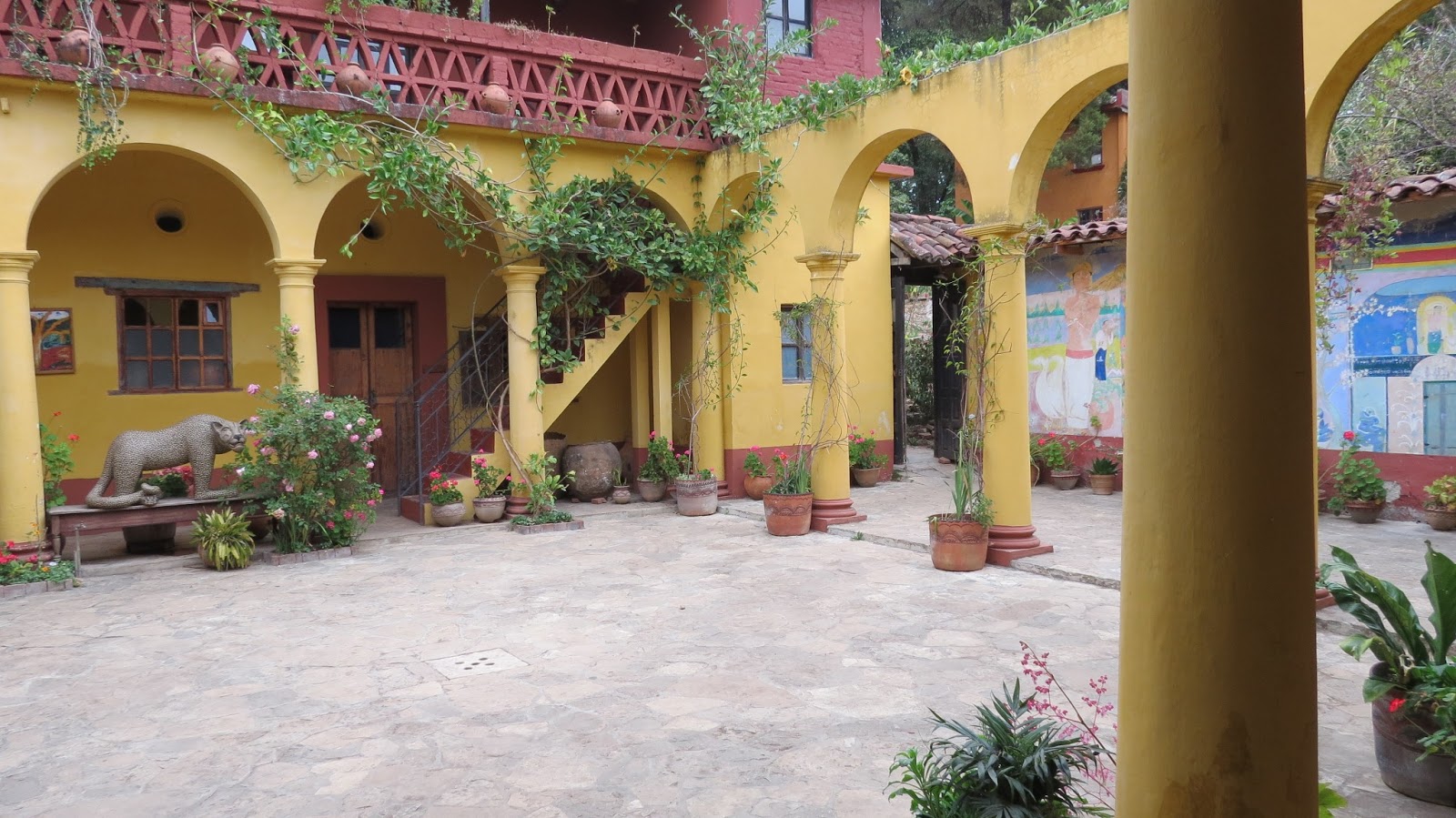
In 1950, the Bloms purchased a monastery in ruin on the outskirts of San Cristobal de las Casas. Frans Blom’s dream was that Casa Na Bolom would function as a cultural, social, and academic center. In order to raise funds for their jungle expeditions, they took in guests who dined at the great long table in the dining room. These guests included tourists, local residents, and archeologists working in the area. Casa Na Bolom evolved into a small hotel, attracting guests as notable as Henry Kissinger and Diego Rivera. However, free rooms were always kept open for the Lacandon Maya who came to San Cristobal for medical reasons. The Lacandon Maya were the only Maya never conquered or converted by the Spanish. Trudi Blom became an environmental activist, gravely concerned about the destruction of the jungle she loved. She expanded Casa Na Bolom to include El Vivero, a tree nursery, which today still supplies free trees for reforestation in Chiapas.  Na Bolom is still open to the public as a museum, hotel, and restaurant. Volunteers continue to run the house and maintain their work in various community projects in the jungle. Today, guests still come and conversation still flows in many languages at the long table of Casa Na Bolom. Mayan Indians sell their tapestries in the shaded patio. The garden pathways are lined with the mescal bottles Trudi blamed for Frans’ death. The Lacandon still come to stay.

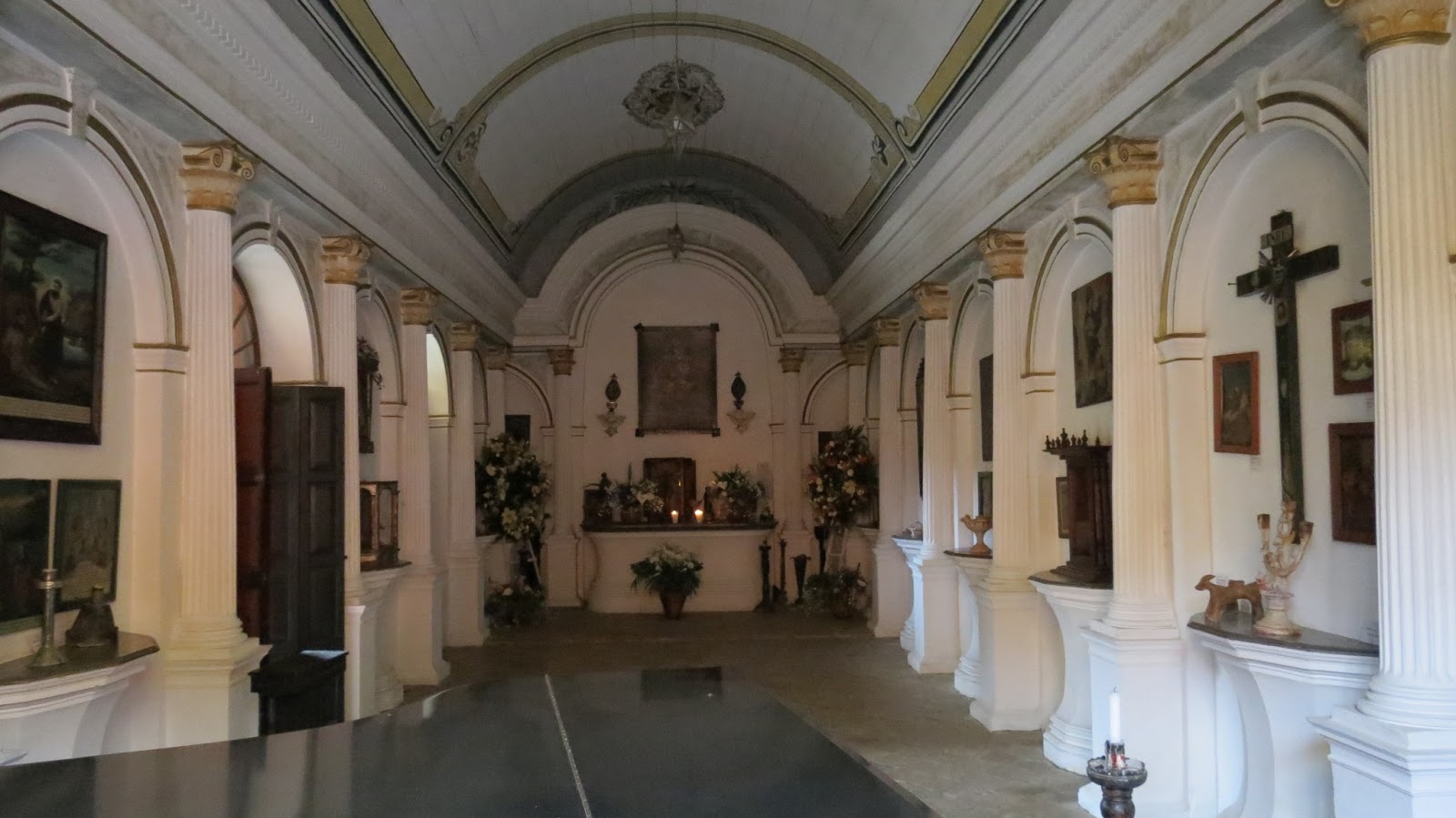
Chapel where a local pianist gives performances three times a week


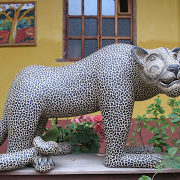
the sacred jaguar


Add caption

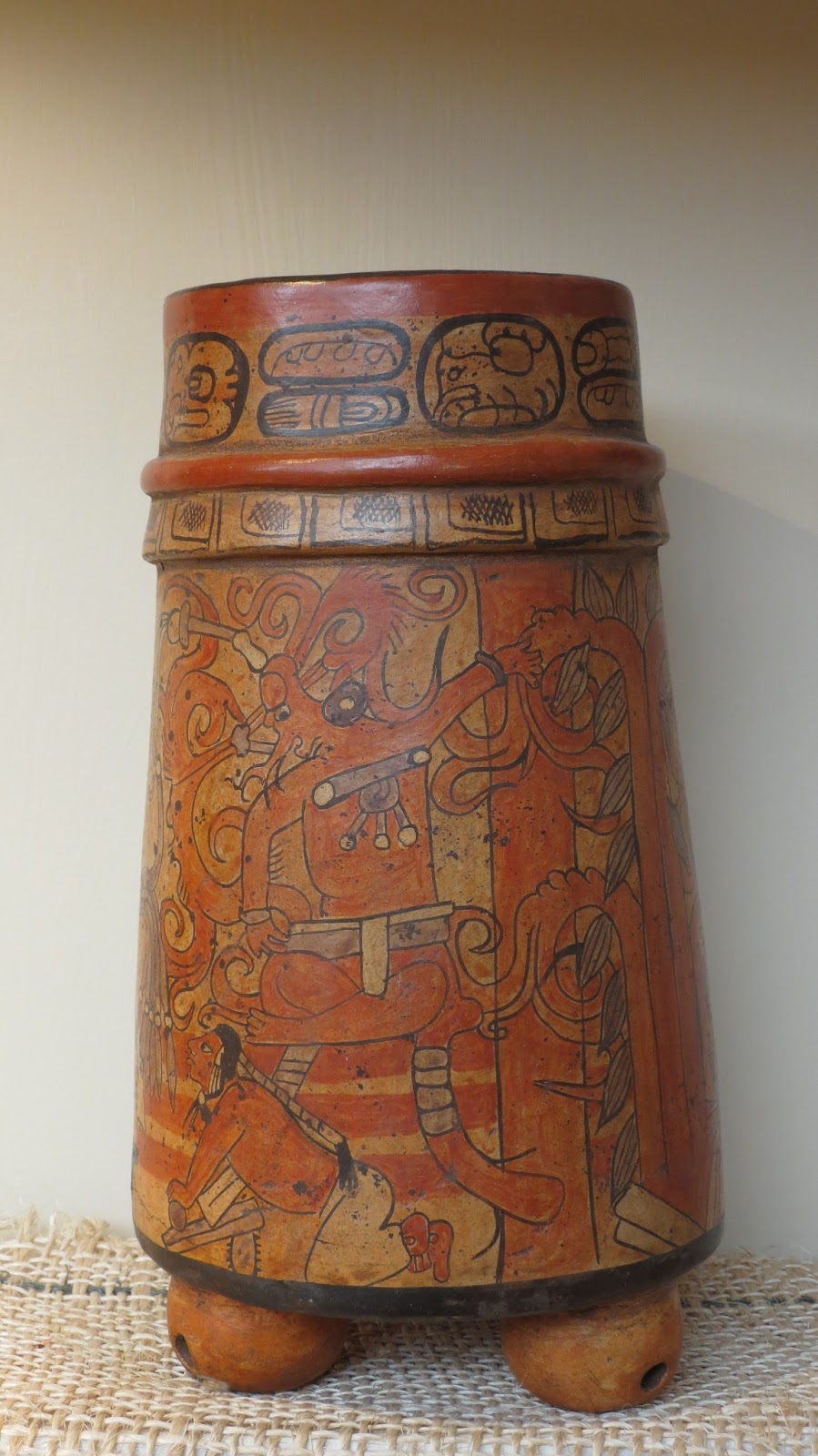
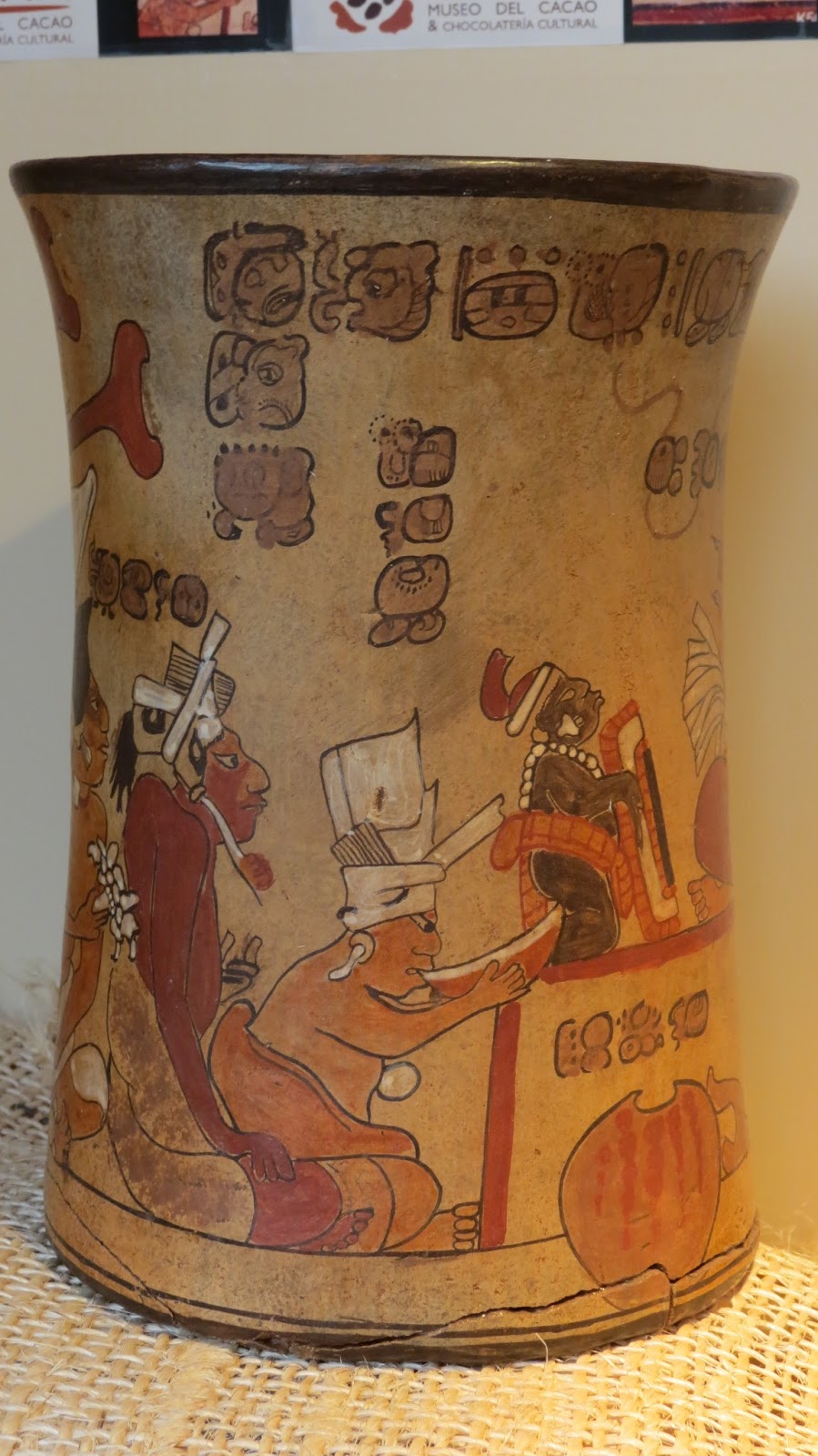
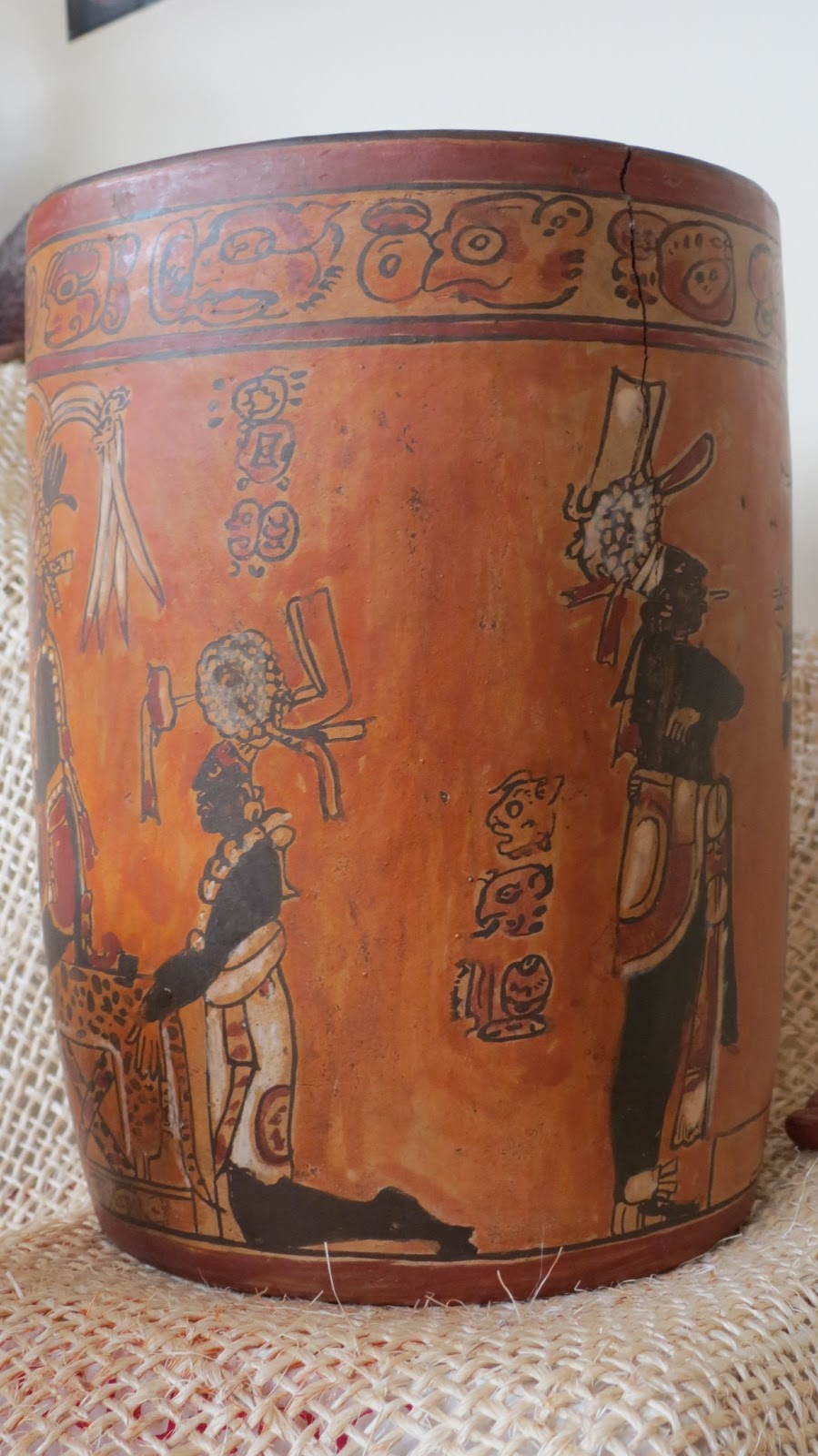
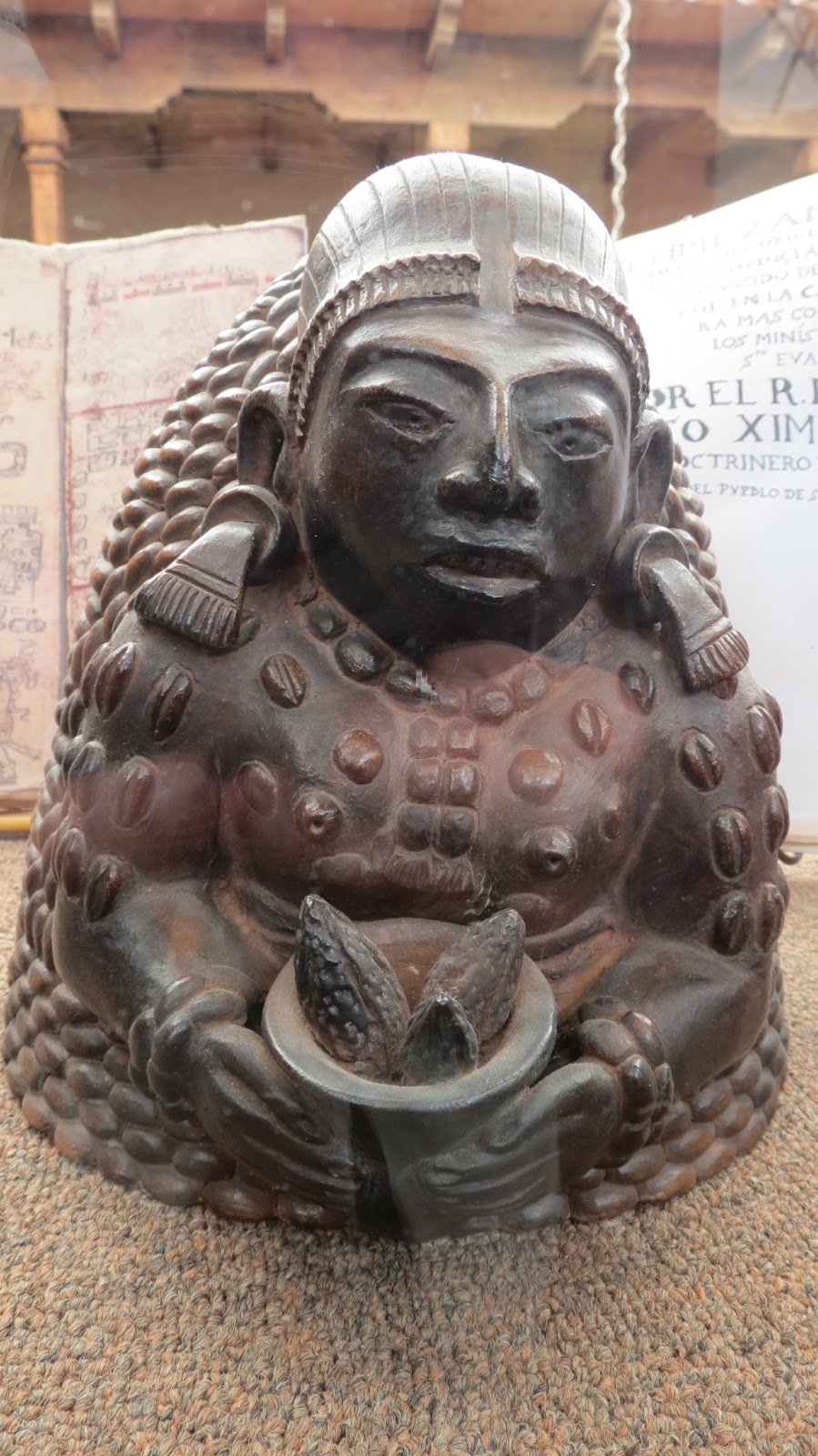
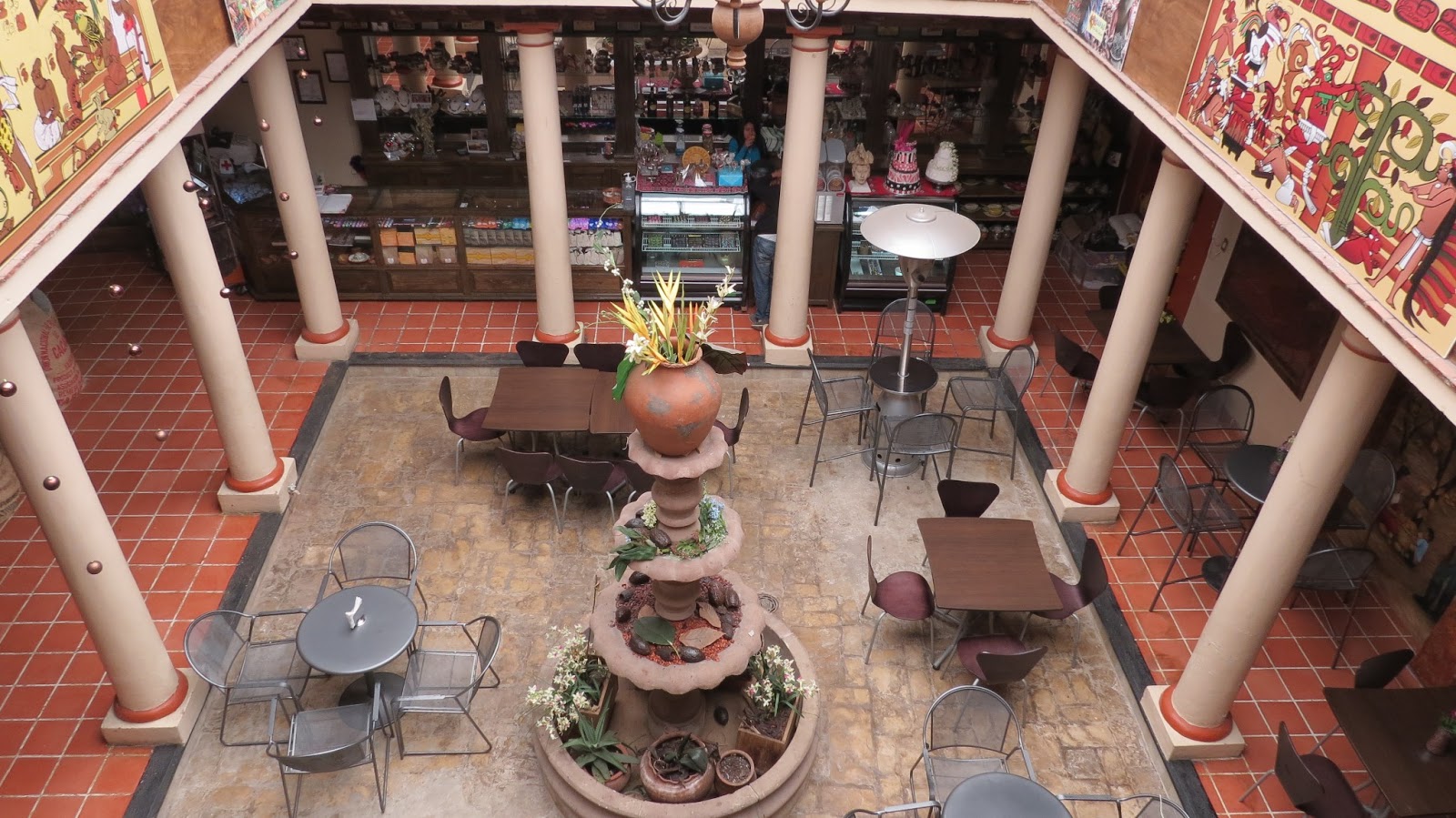
Next stop on our walk was what I waited for with baited breath all day – the Chocolate Museum! I was in heaven. Upstairs is the museum with fascinating history of the kakaw or cocoa. You could even make your own chocolate bar if you booked ahead of time. That part I had missed – darn.

Add caption


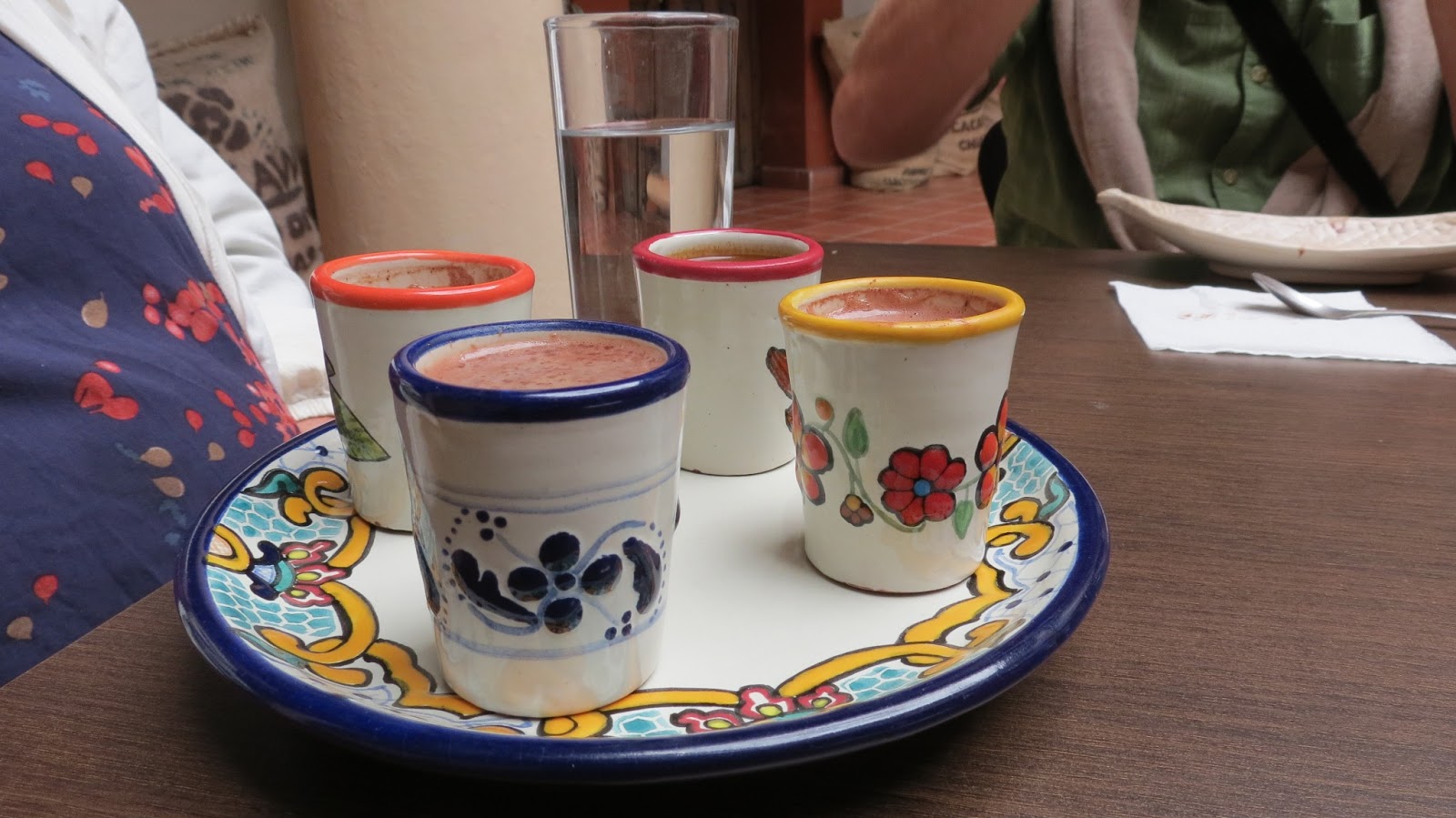
Downstairs is the store and dining area where you can purchase a huge assortment of chocolate products and try some of their famous hot or cold chocolate. I chose a four sampler with Achiote, Amaranth, peanut and vanilla. Words will not suffice as to how scrumptious it was.


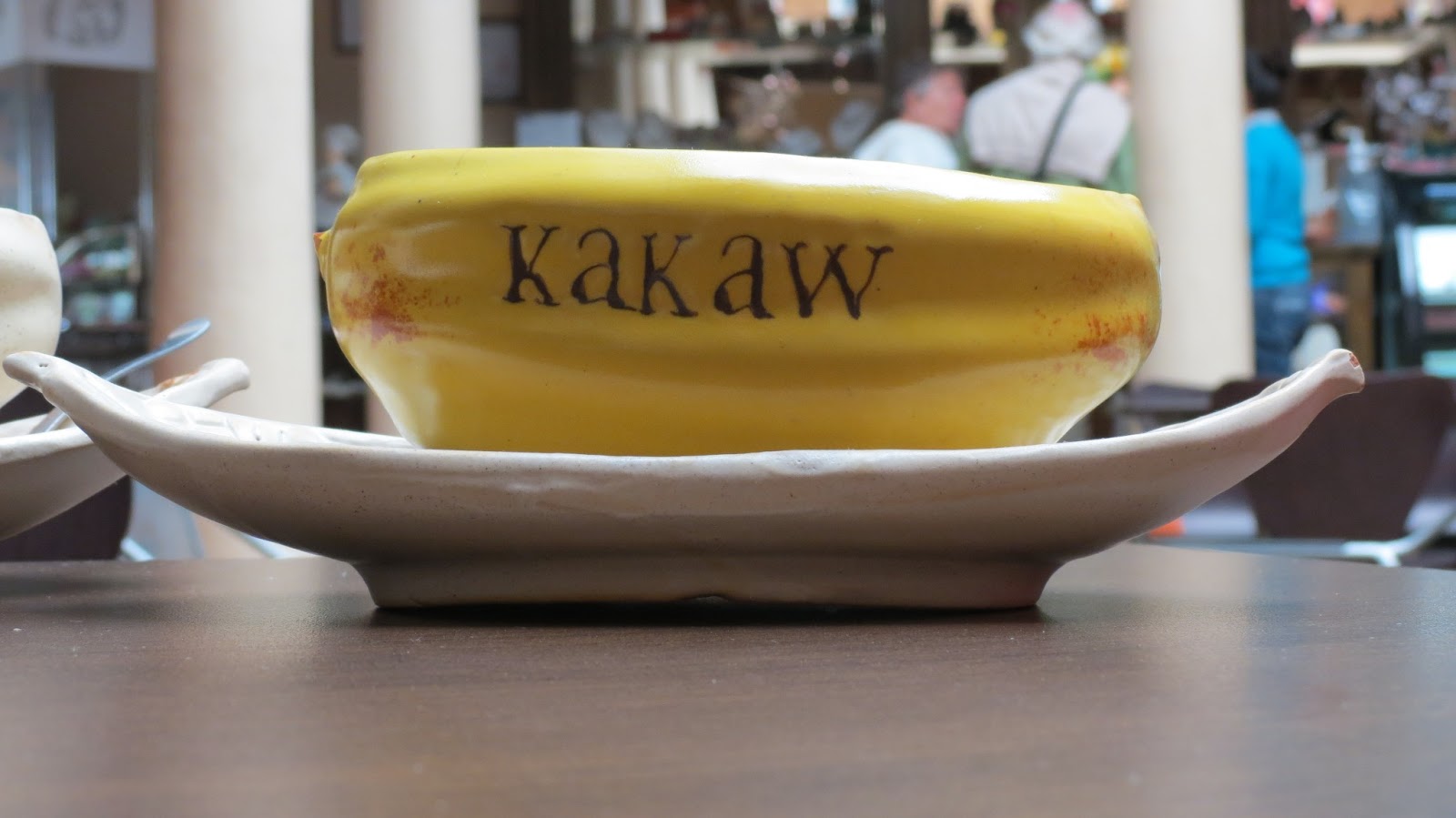
This is the “cup” for the chocolate


My four samples – delicious

Besides all the one-way streets in San Cristobal, three streets are for pedestrians only. There you will find wonderful restaurants. After a sumptuous dinner, we started back towards our hotel when we were drawn to the sound coming from the bandstand in the plaza. If there was a state musical instrument, then in Chiapas that would be the xylophone or marimba. The marimba is a type of xylophone but with broader and lower tonal range and resonators. The chromatic marimba was developed in the state of Chiapas. The sound was infectious and we had to look. While my husband was videotaping, I was swaying to beat and before I knew it, I was dancing with a young woman, Aluce who is from Honduras. Enjoy the video clip.
SAN CRISTOBAL – DAY THREE

Chiapas Day three

We enjoyed a relaxing breakfast at a restaurant on the waterfront. After a bit of discussion with our friends, we decided to hire a taxi to take us to San Cristobal de la cases instead of taking the local bus and then a taxi to the hotel.

San Cristobal is 2200 meters above sea level. Travelling from Chiapa de Corzo, we could feel the cold, as we got closer to San Cristobal. My mind could not fathom that we were just a half hour from 33-degree weather. I definitely was not prepared for the cold.

Our taxi driver had never been in San Cristobal and finding our hotel was proving to be a challenge with all the one-way streets. I know it is hard to believe, but yes, he did ask for directions several times. Eventually we found the hotel and I think he was pleased with our tip. The streets are so narrow that traffic had to wait until we unloaded our luggage and paid our driver. Amazingly, there were no honking horns or any show of impatience.

Our hotel, Axkan Hotel is a new renovated hotel only blocks away from the Zocola or square and in the heart of the historic centre.  The staff were very helpful and helped make us feel at home.  The restaurant served traditional Mexican food – delicious.

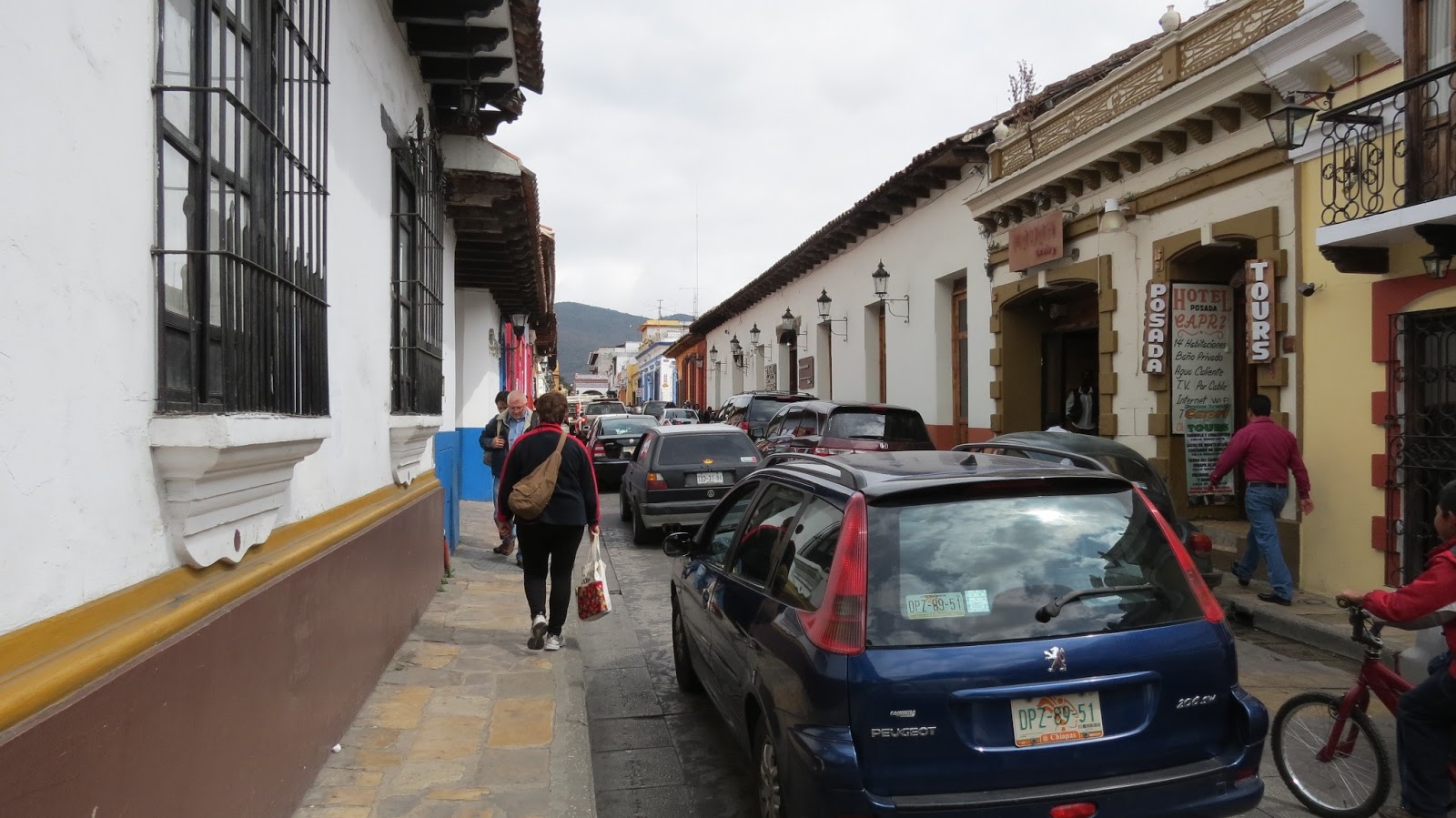
San Cristobal felt very much like a cosmopolitan city but it has still maintained its Spanish colonial layout with narrow cobblestone streets, roofs covered in red clay tile and wrought iron balconies with flowers. You can see the architecture varies from Baroque to Neoclassical and Moorish painted in various colors.


Not only are the streets narrow but the sidewalks are really meant for 1 person only and they are at least a foot high and would drip down for every driveway – and there were a lot –  so walking was like taking step aerobics.

We walked around town to get the feel of the place, found a good place to eat and then off to bed to rest for our adventures the next day. Did I mention it was cold?

City Hall


some local art work


Chiapa de Corzo

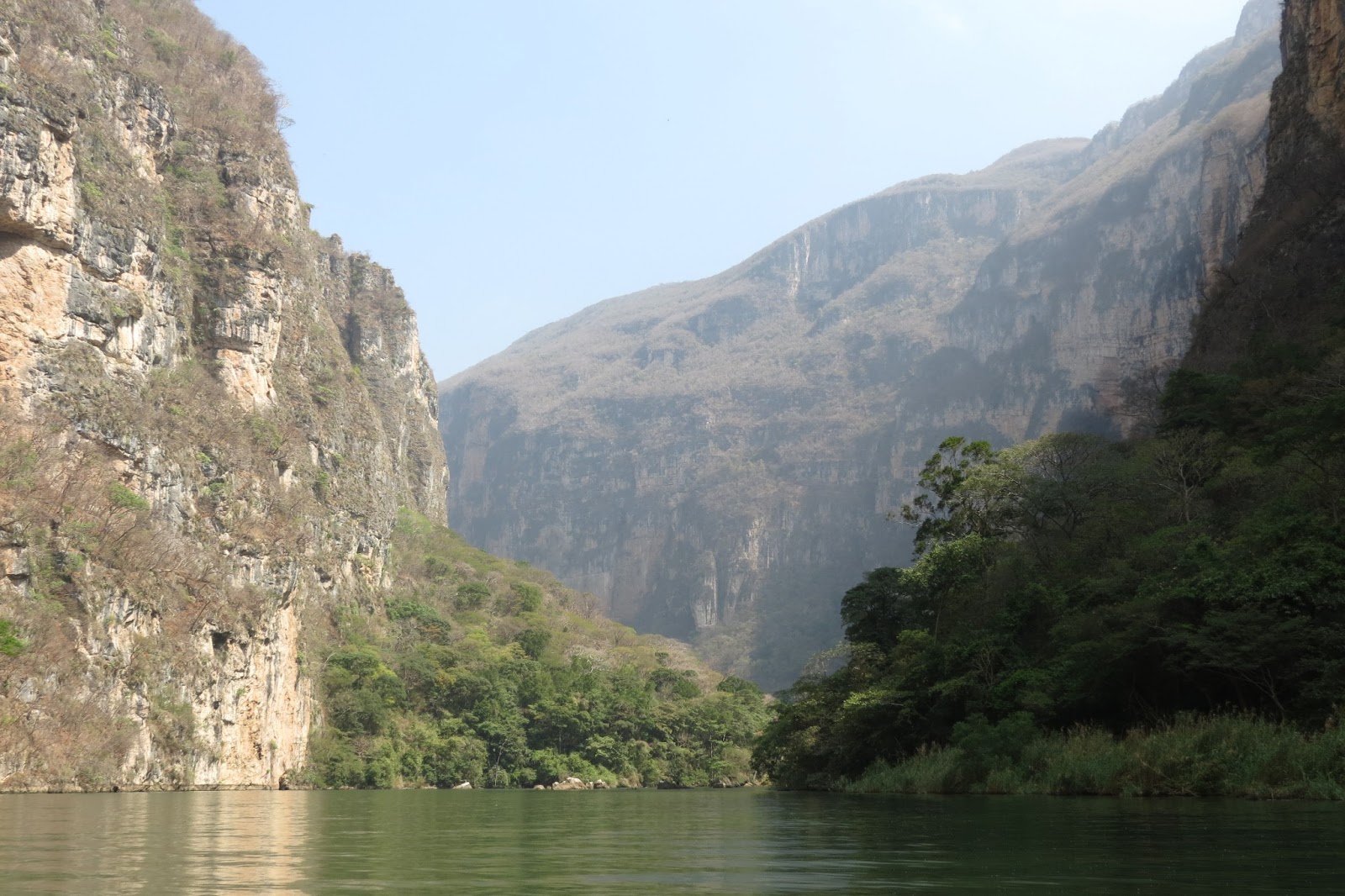
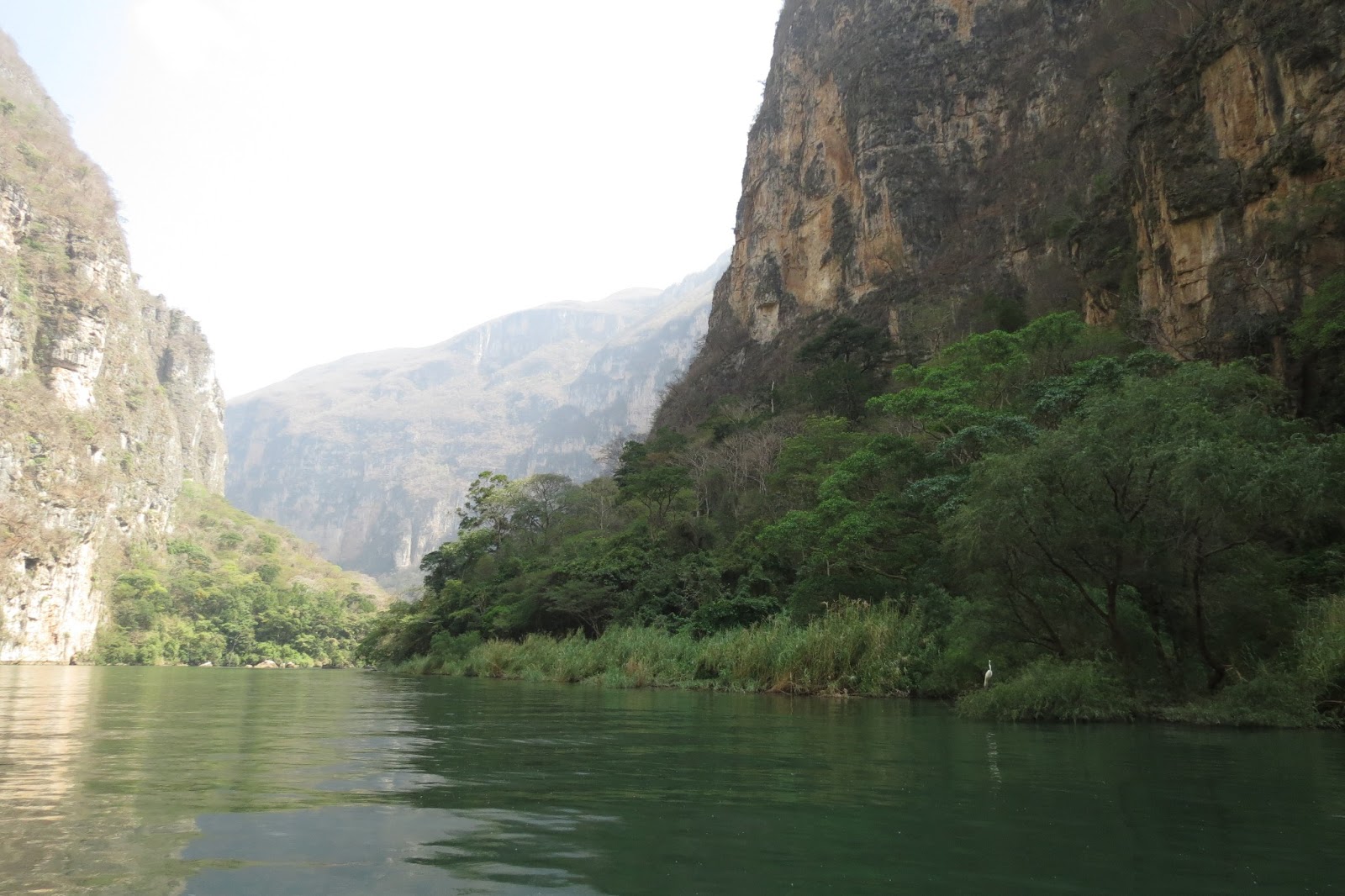
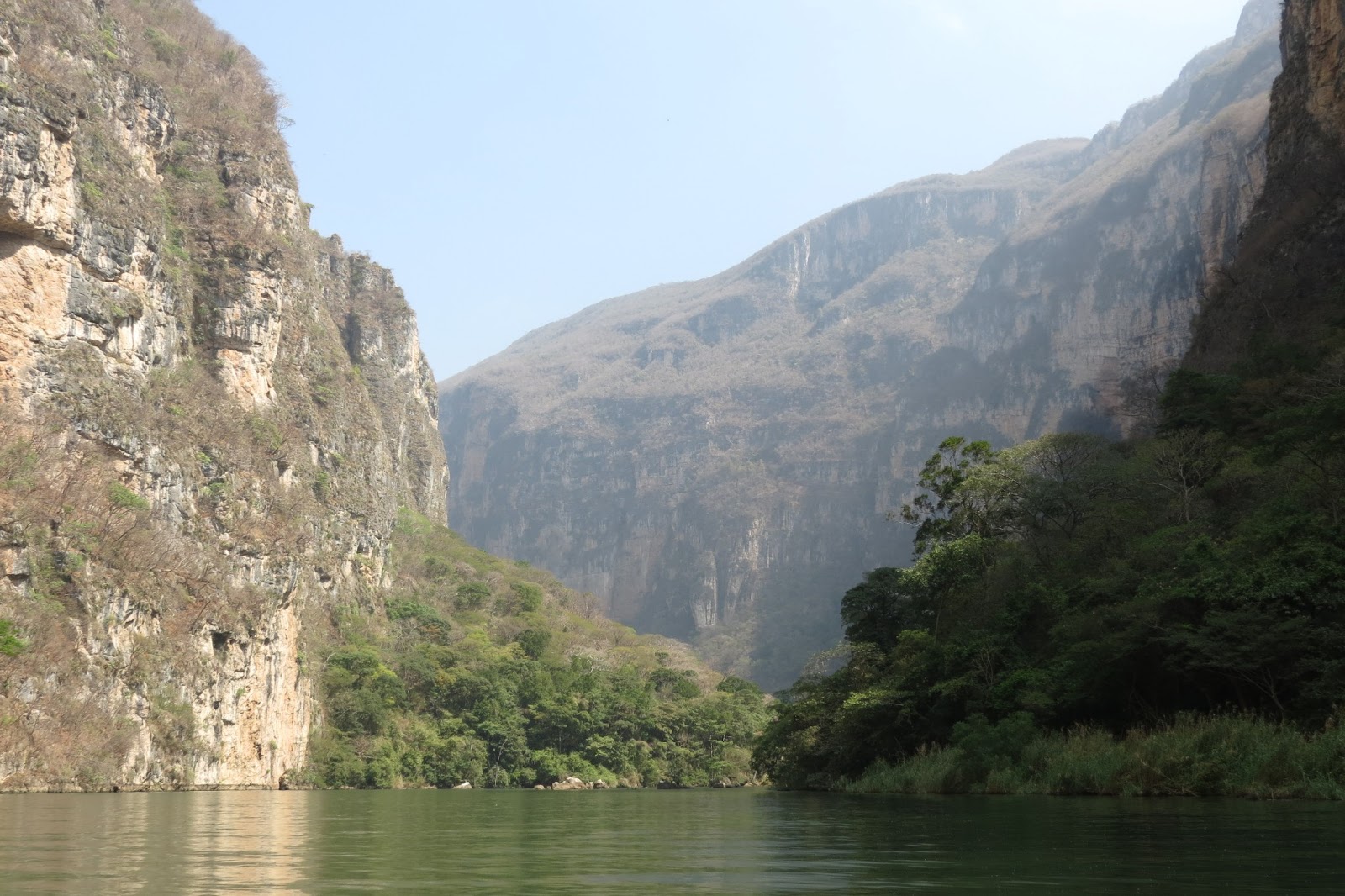
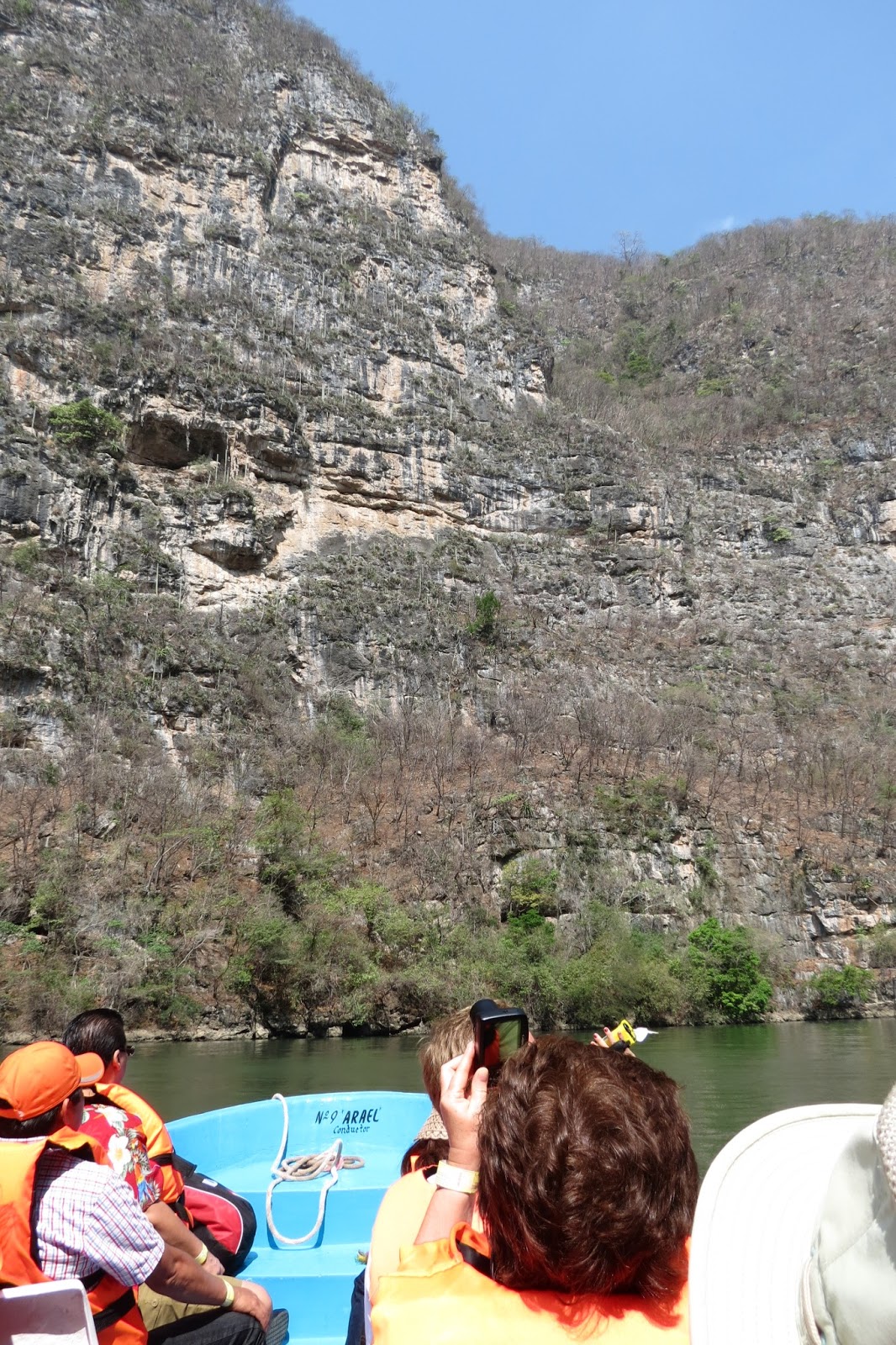
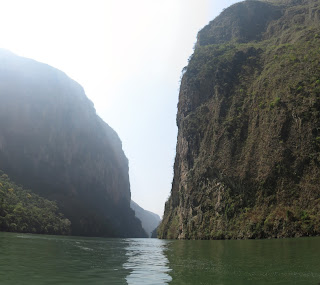
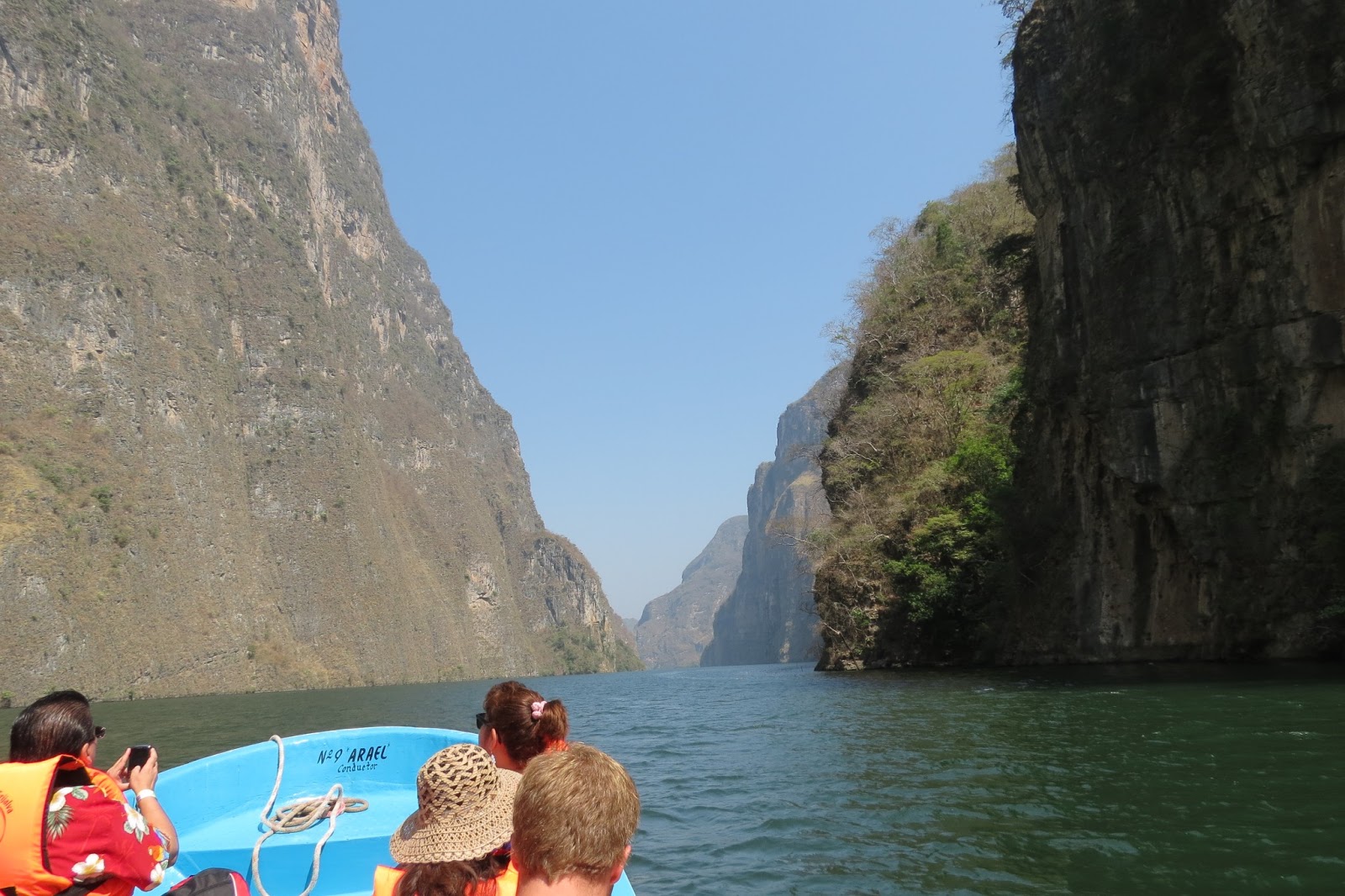
Boating down the Sumidero Canyon is a spectacular experience that should not be missed. The canyon’s creation began around the same time as the Grand Canyon, approximately 35 million years ago. It was caused by a crack in the earth’s crust along with erosion by the Grijalua River.

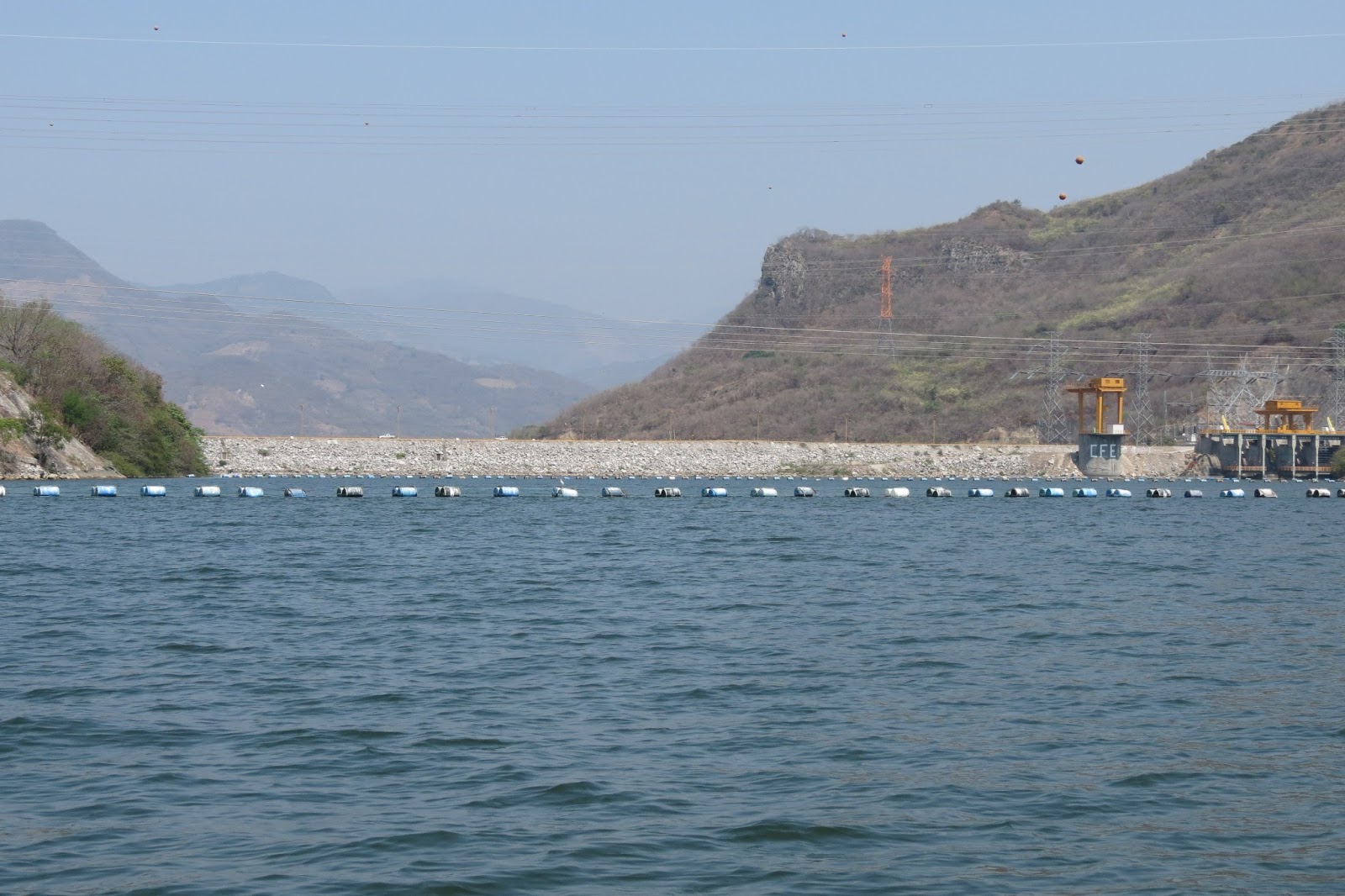
At the north end of the canyon is the Chicoasen Dam, which is important for water storage and the generation of hydroelectricity. Before the completion of the dam, the river was not navigable, even for skilled boatmen. Once the river was dammed, it created an extremely deep (260m) and serene river. It is 35 km from Chiapa de Corzo to the dam.

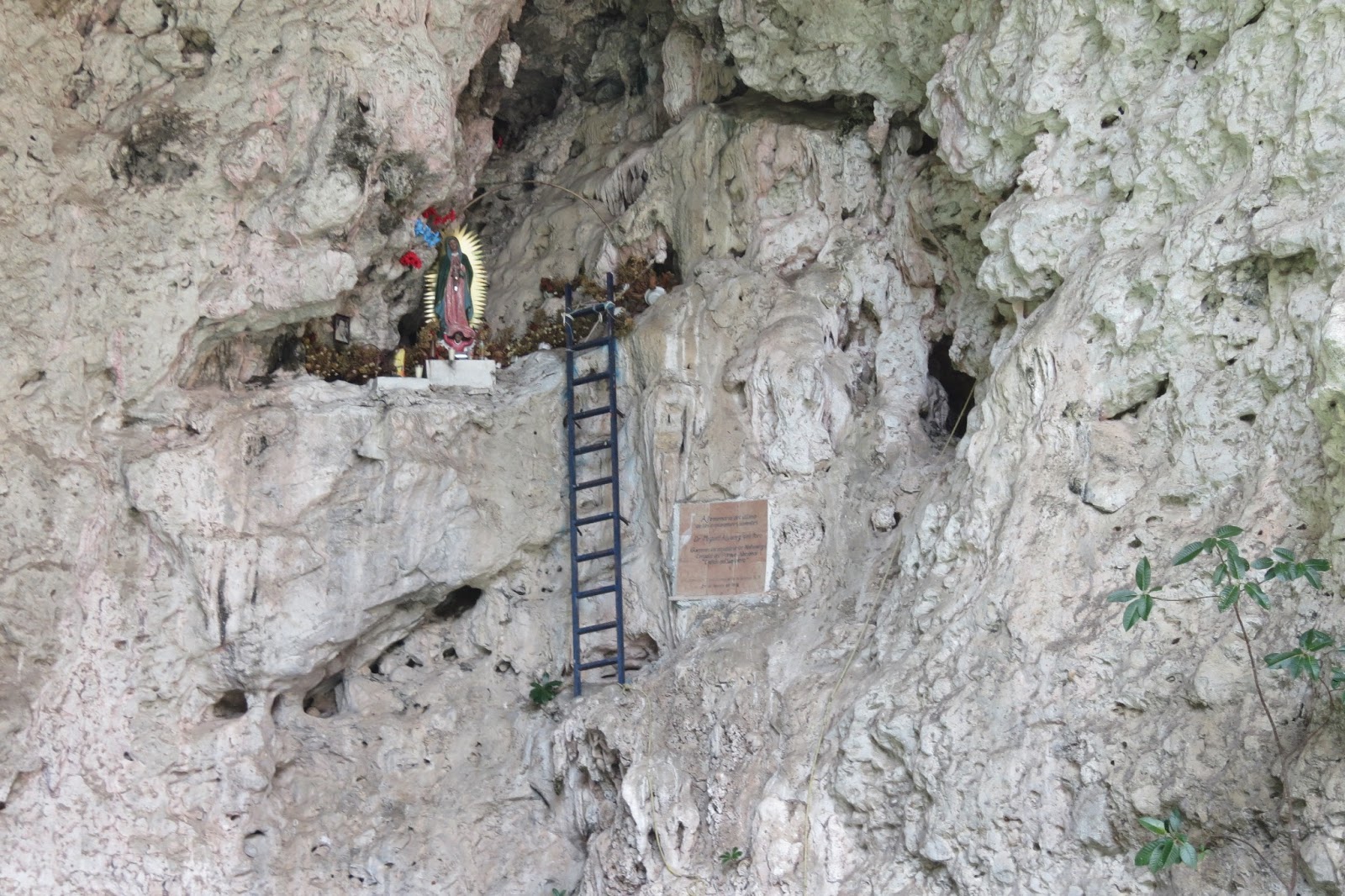
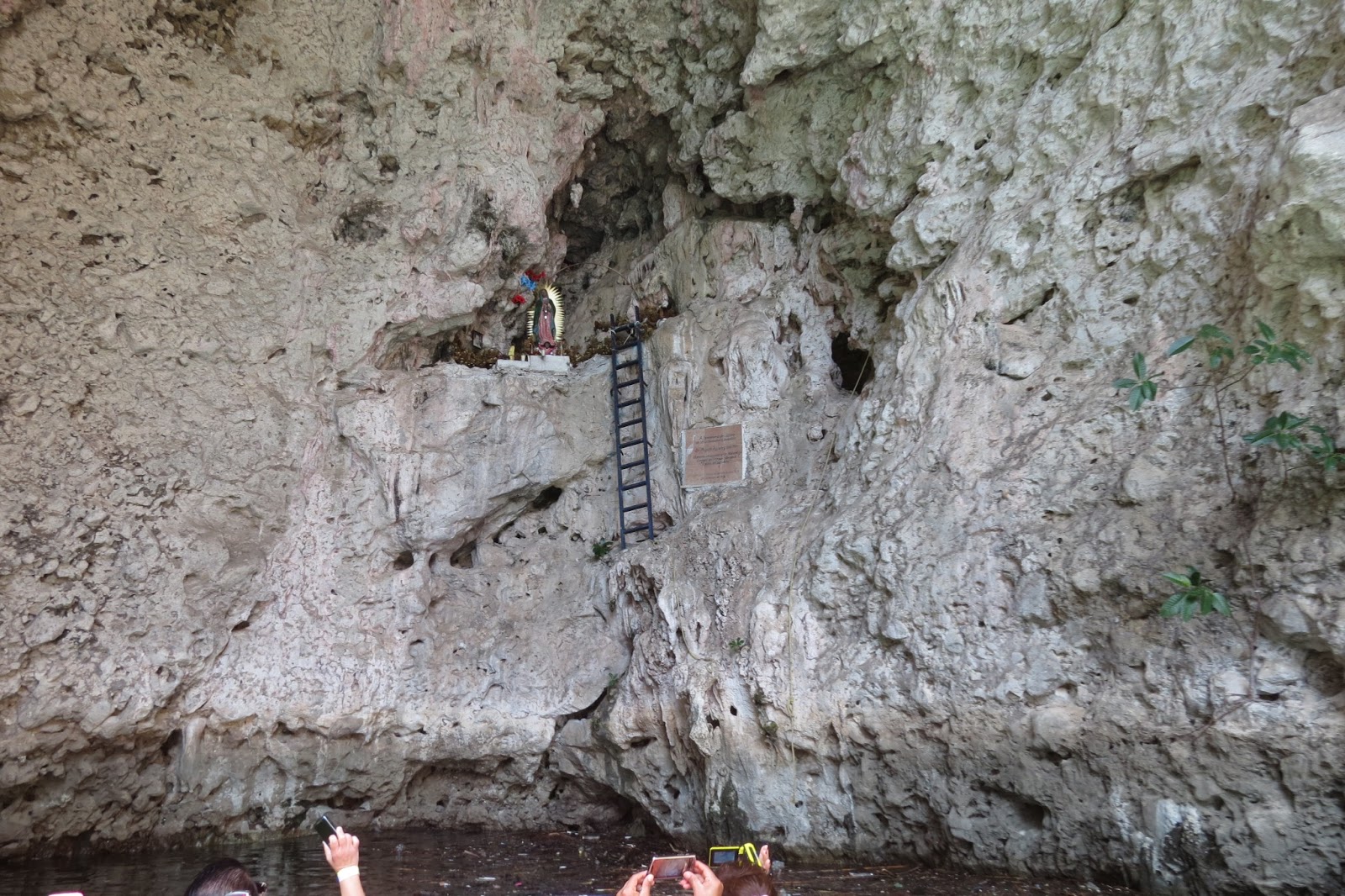
One of the stops was to a small cave, Cueva de Colores (Cave of colors). The cave gets its name from the filtration of magnesium, potassium and other minerals, which form the colours on the walls, particularly shades of pink. There is also a statute of the Virgin of Guadalupe surrounded by fresh flowers and candles left by visitors.

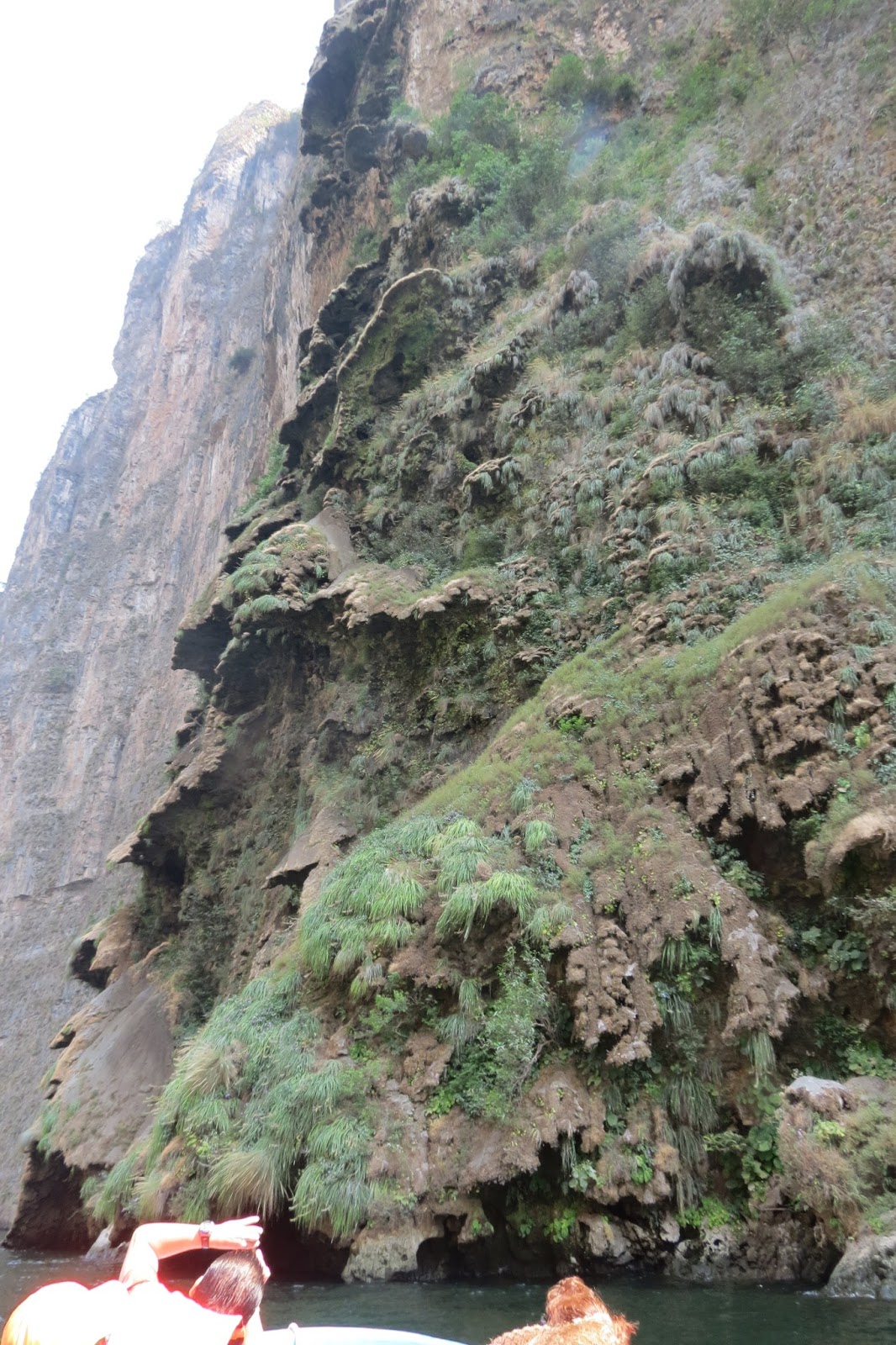
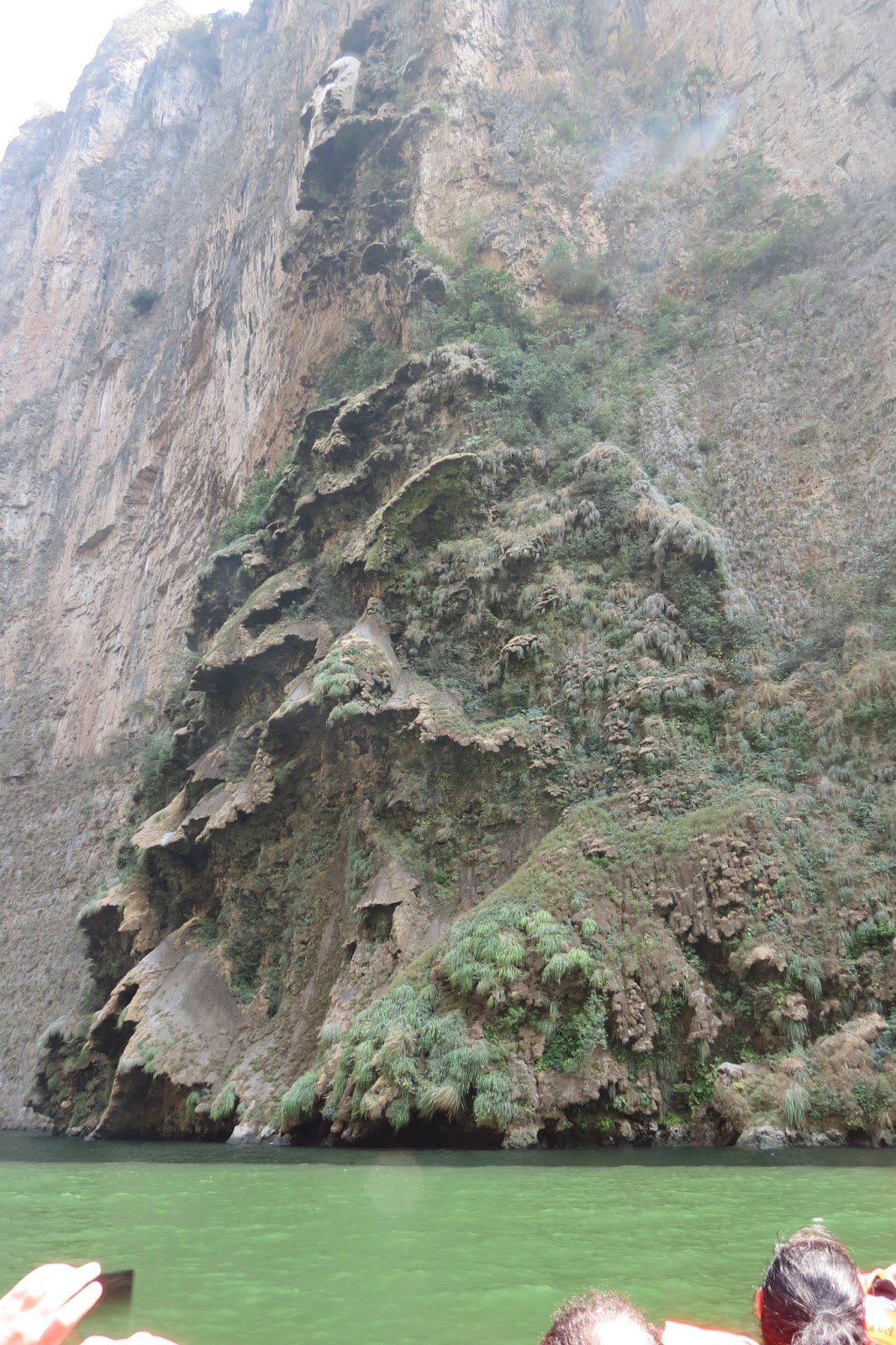
Along the river on one of the canyon walls, they call the “Christmas Tree,” which is created by moss hanging on the rock face.


Pictures do not do this canyon justice. You will just have to see it for yourself.


do you see the face??


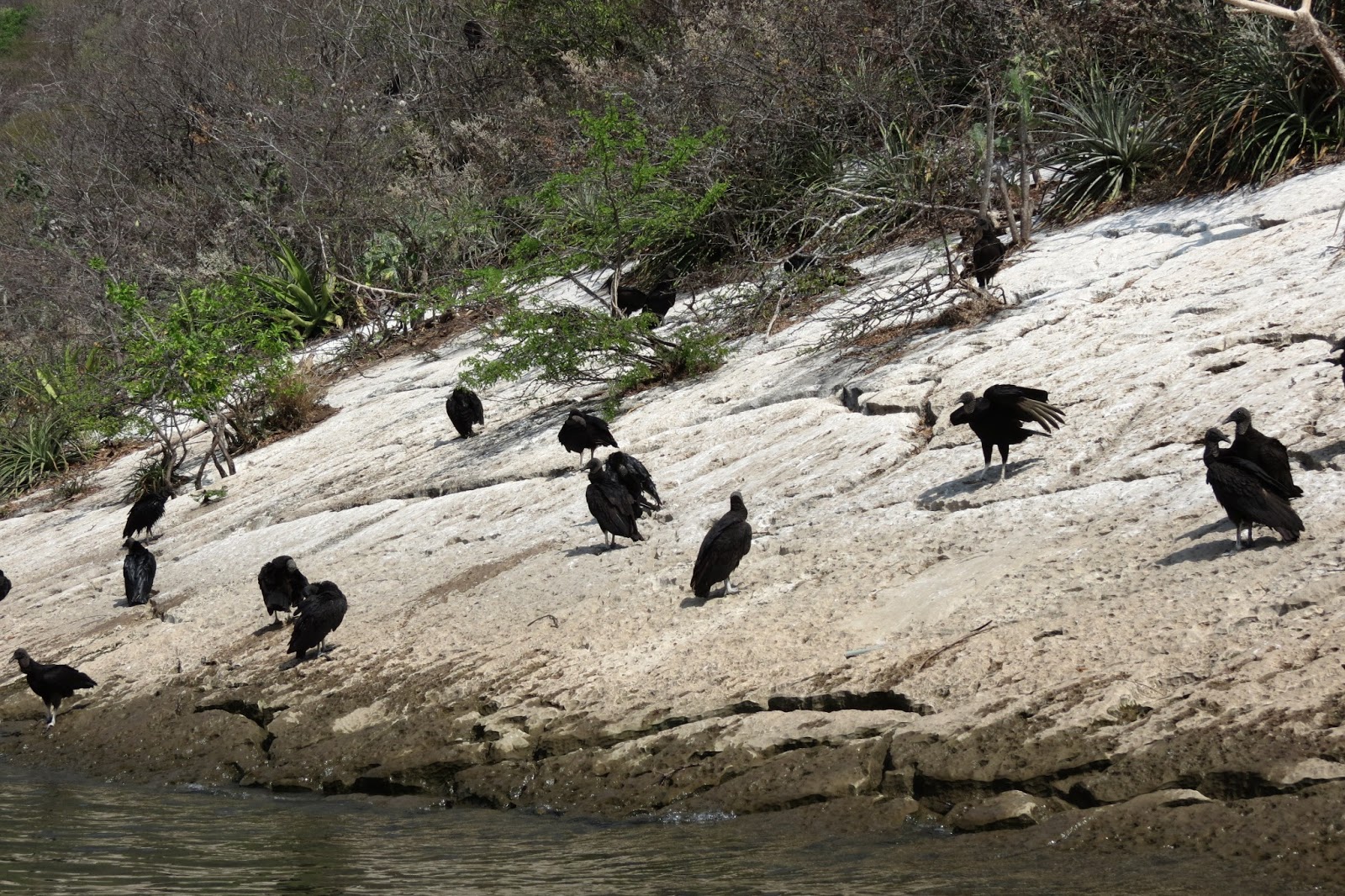
vultures

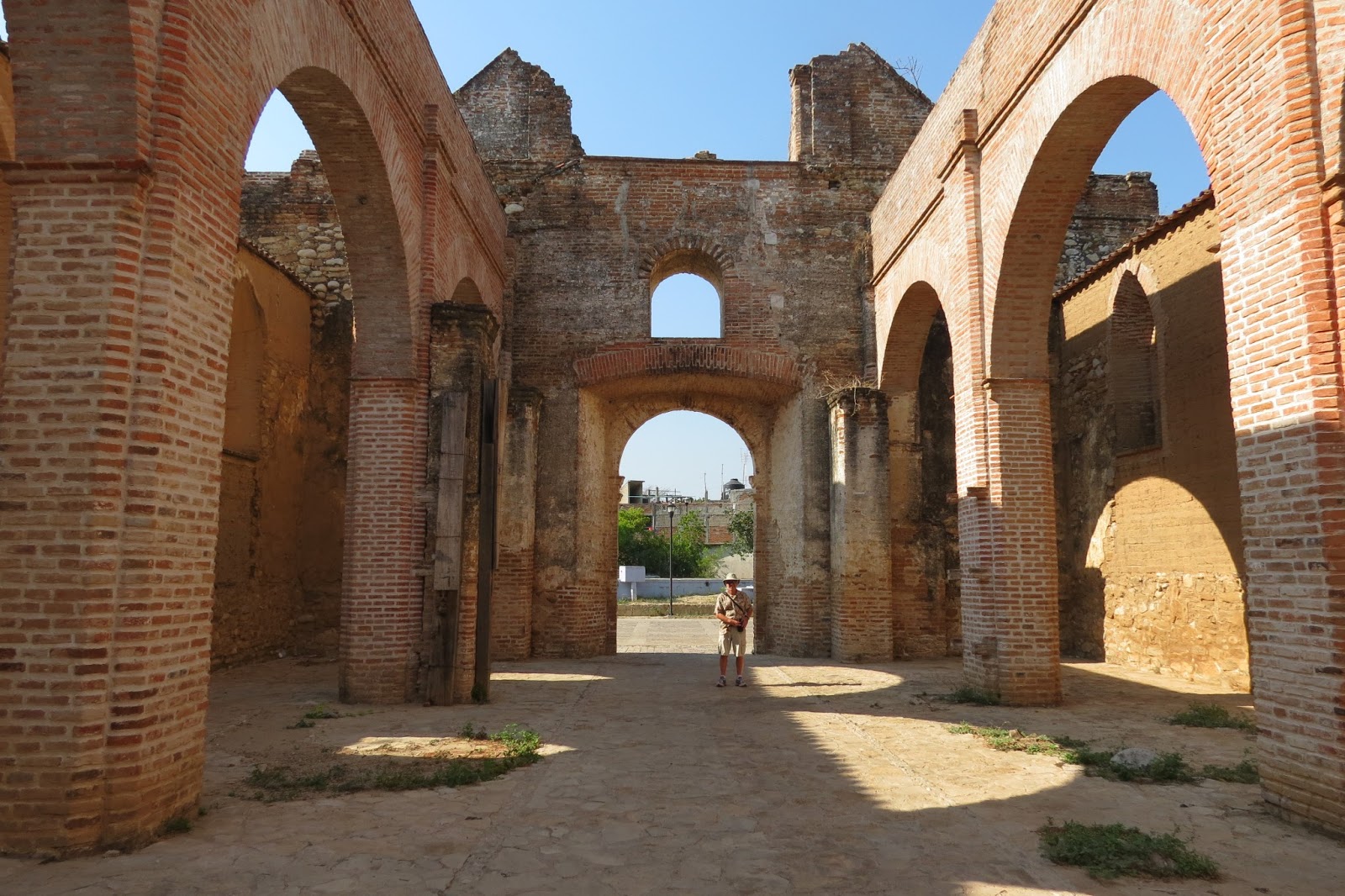
We then toured the small city of Chiapa de Corzo, which has been occupied since 1400 BCE. According to Wikipedia, it has been an archeological site with its height occupation between 700 BCE AND 200 CE. It is important because the earliest inscribed date; the earliest form of hieroglyphic writing and the earliest Mesoamerican tomb burial have all been found here. Chiapa is also the site of the first Spanish City founded in Chiapas in 1528. However, because of the climate, most Spanish would move into the mountains to found what is now known as San Cristobal de las Casas.

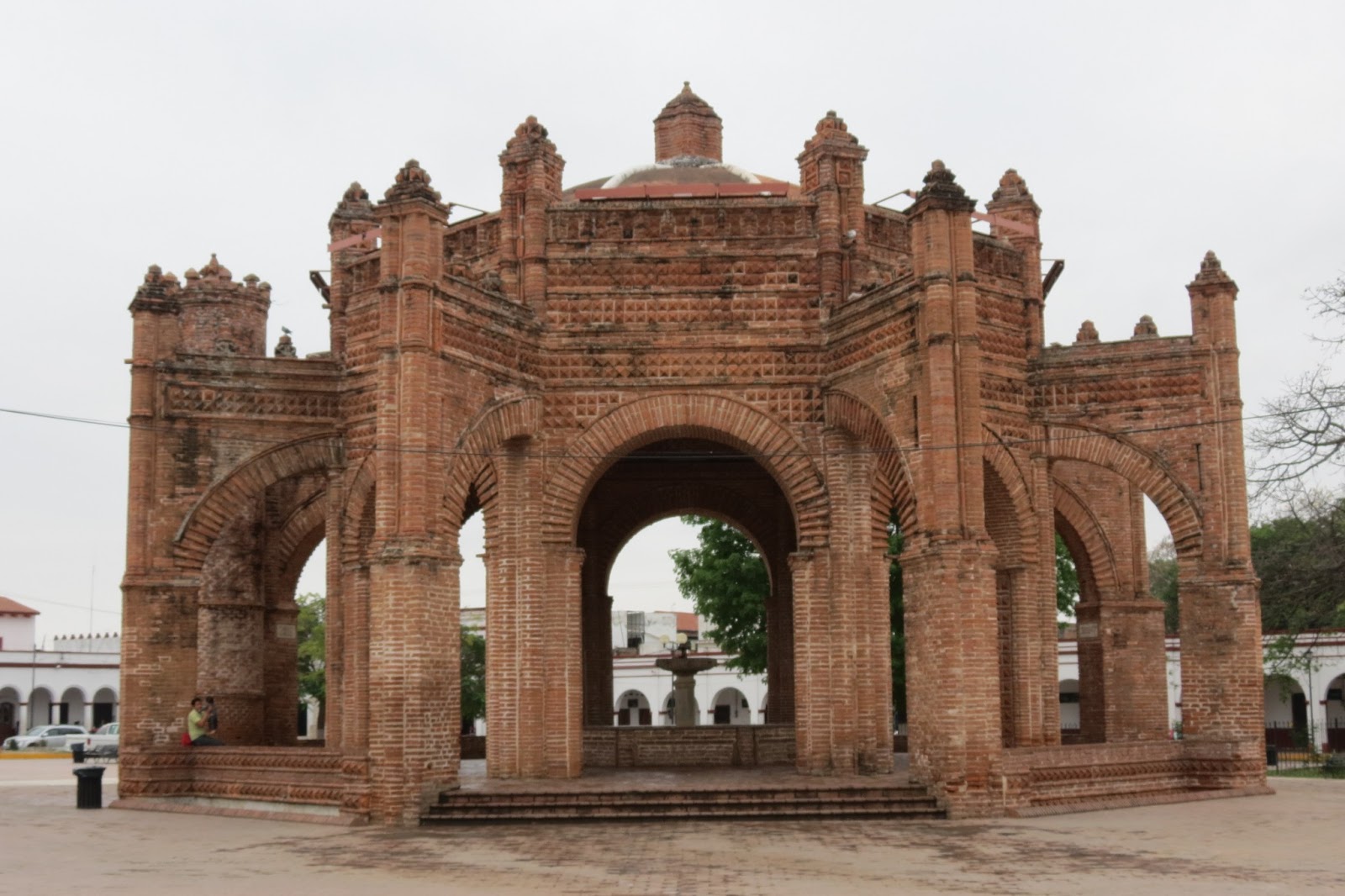
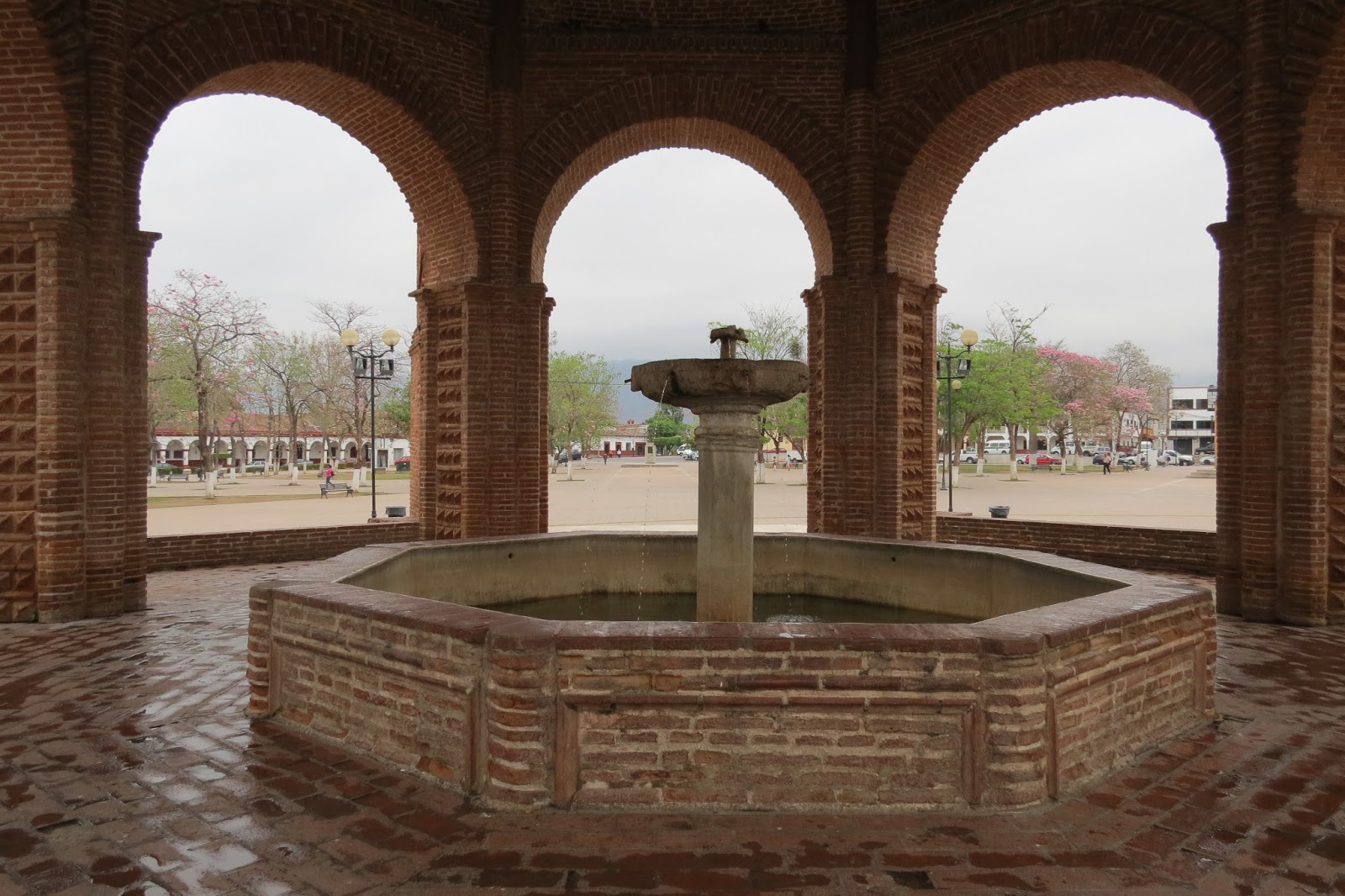
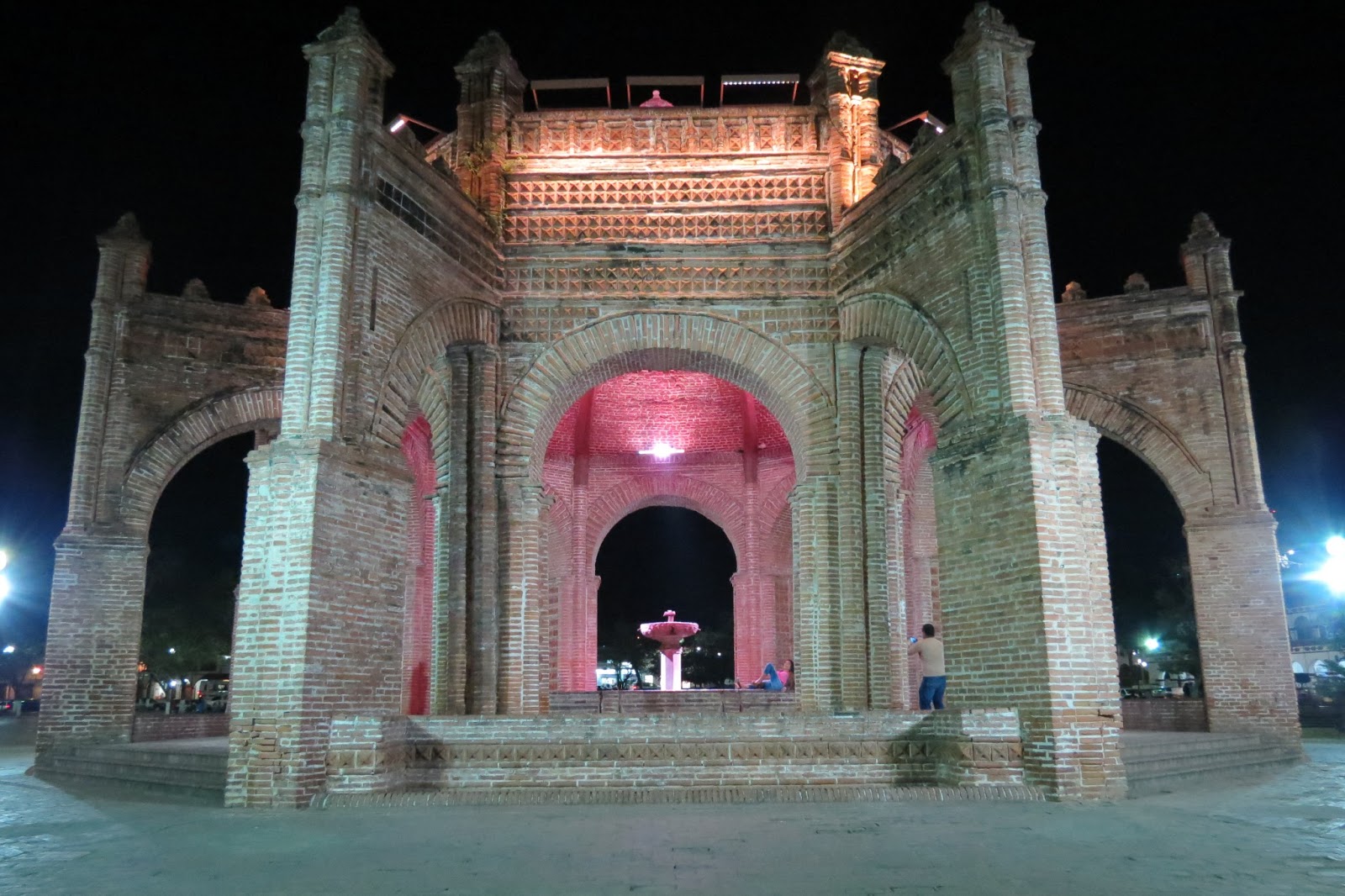
The Zocalo or plaza has a fountain known as La Pila. It was constructed in 1562 in a Moorish style. The structure is made of brick in the form of a diamond.


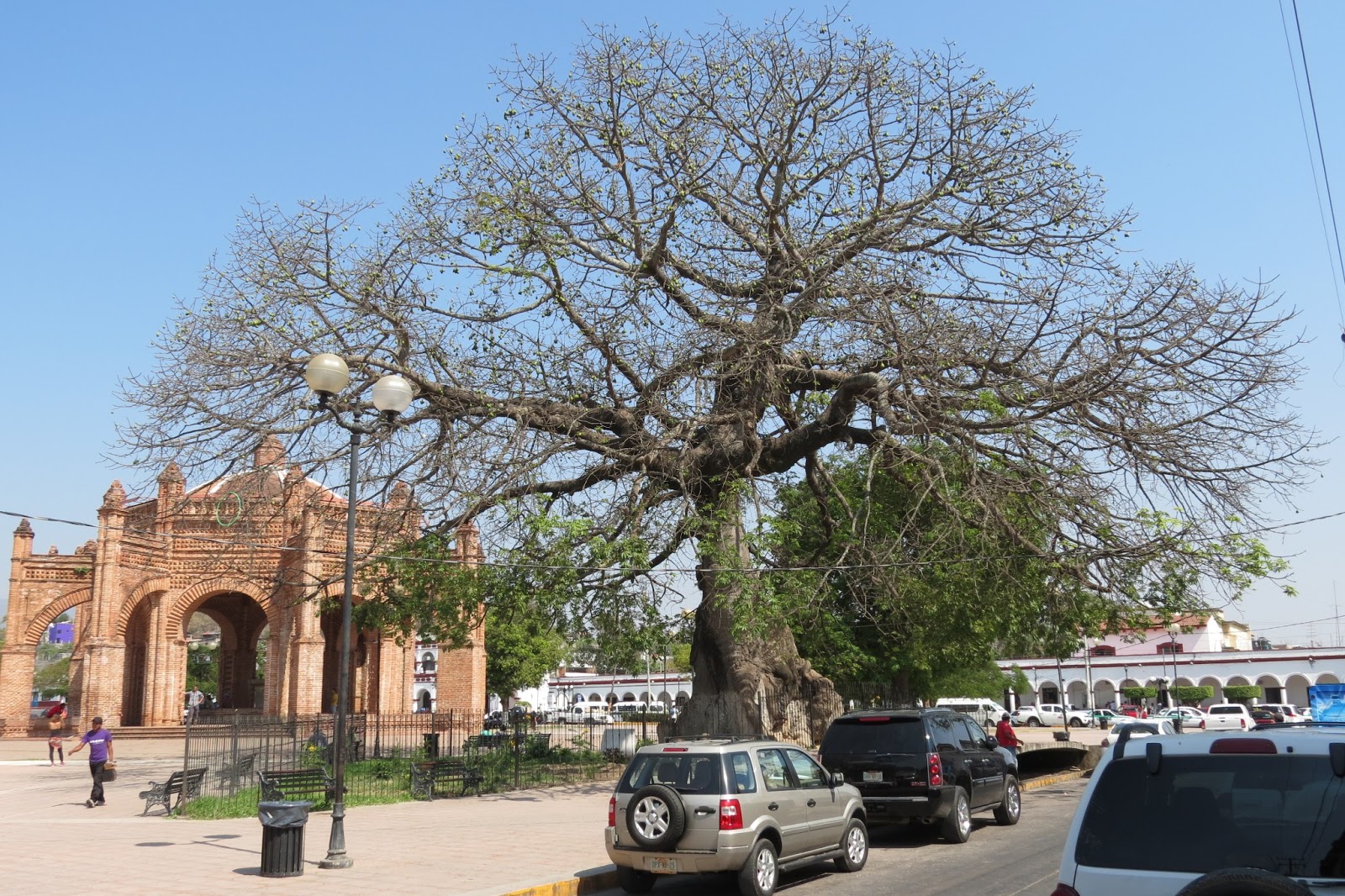
Also on the square is the La Pochota kapok tree. According to tradition, the Spanish town was founded around this tree.

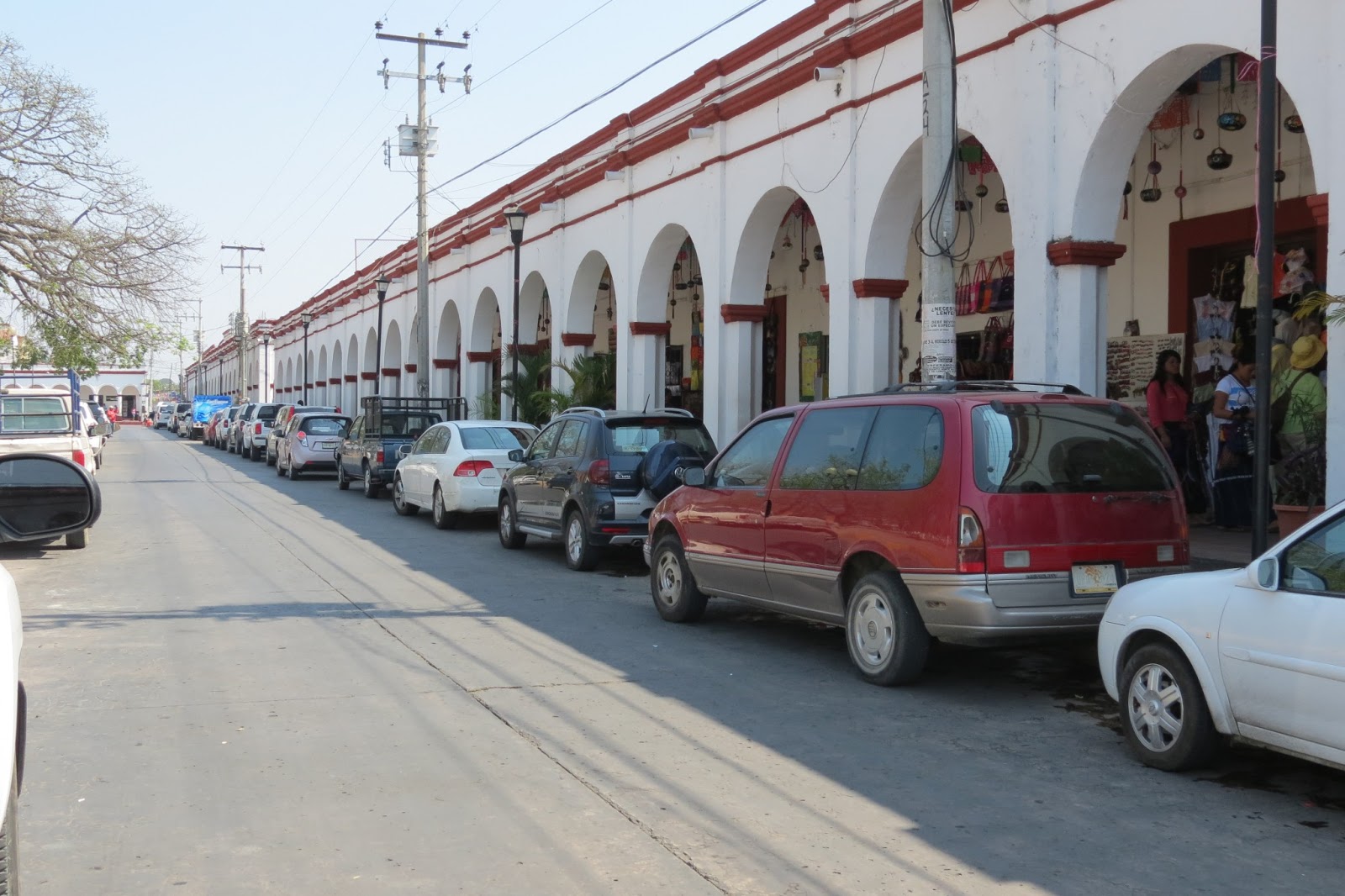
On one side are the “portales” a series of arches initially built in the 18th century, which contain a number of businesses.

Chiapa de Corzo is a city that should not be missed. Enjoy some more pictures.


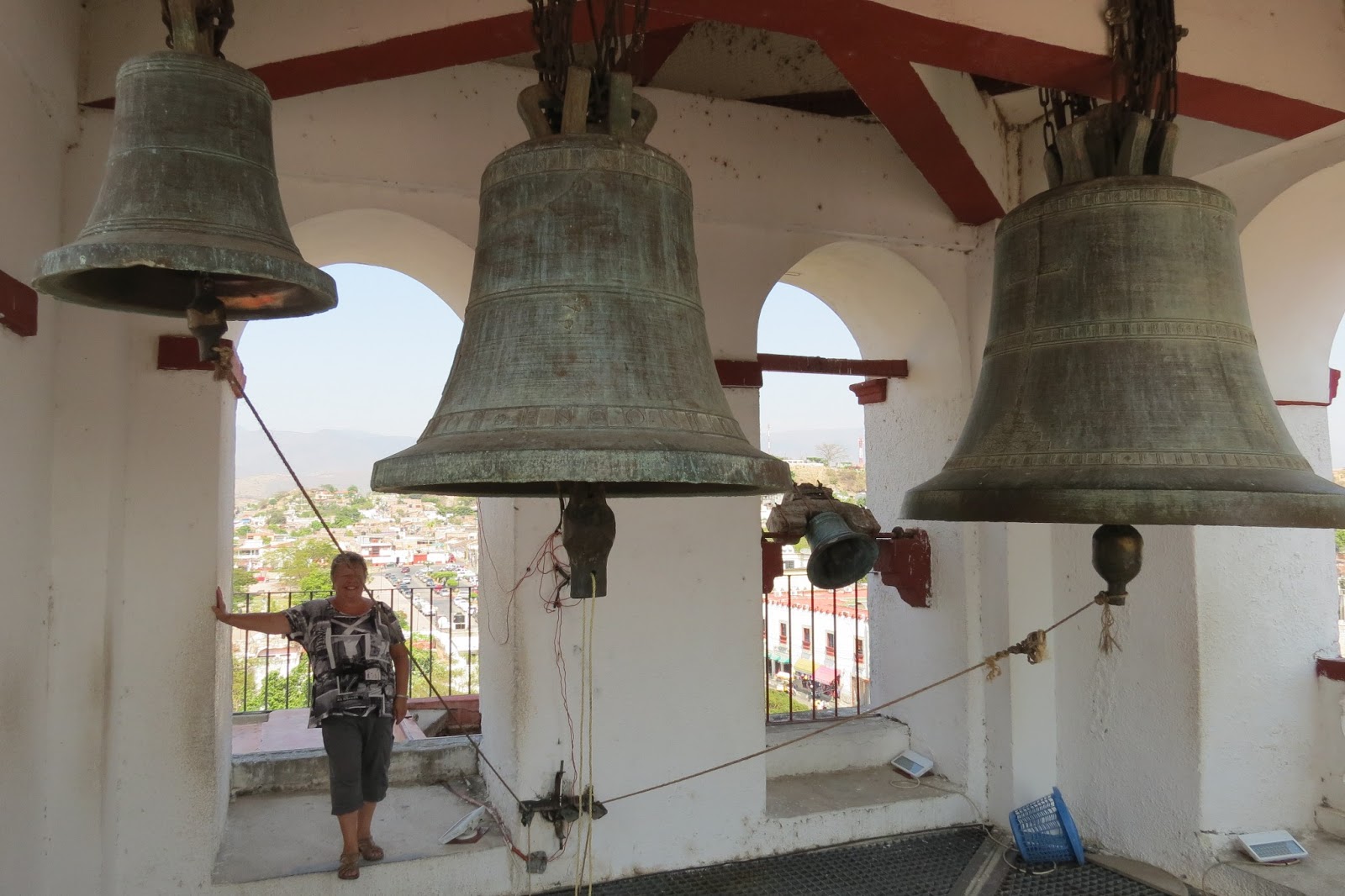
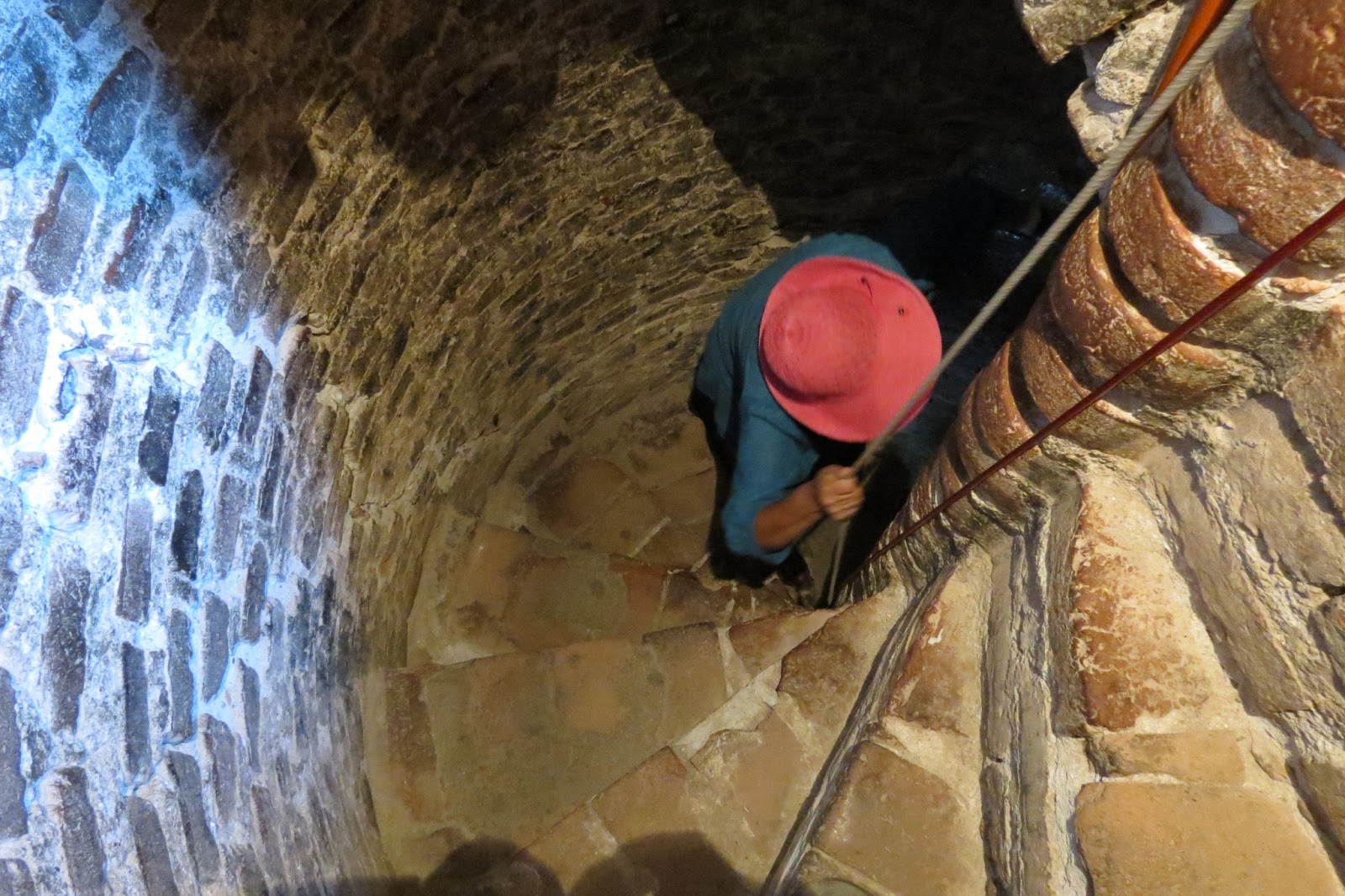
these are the steps to the bell tower


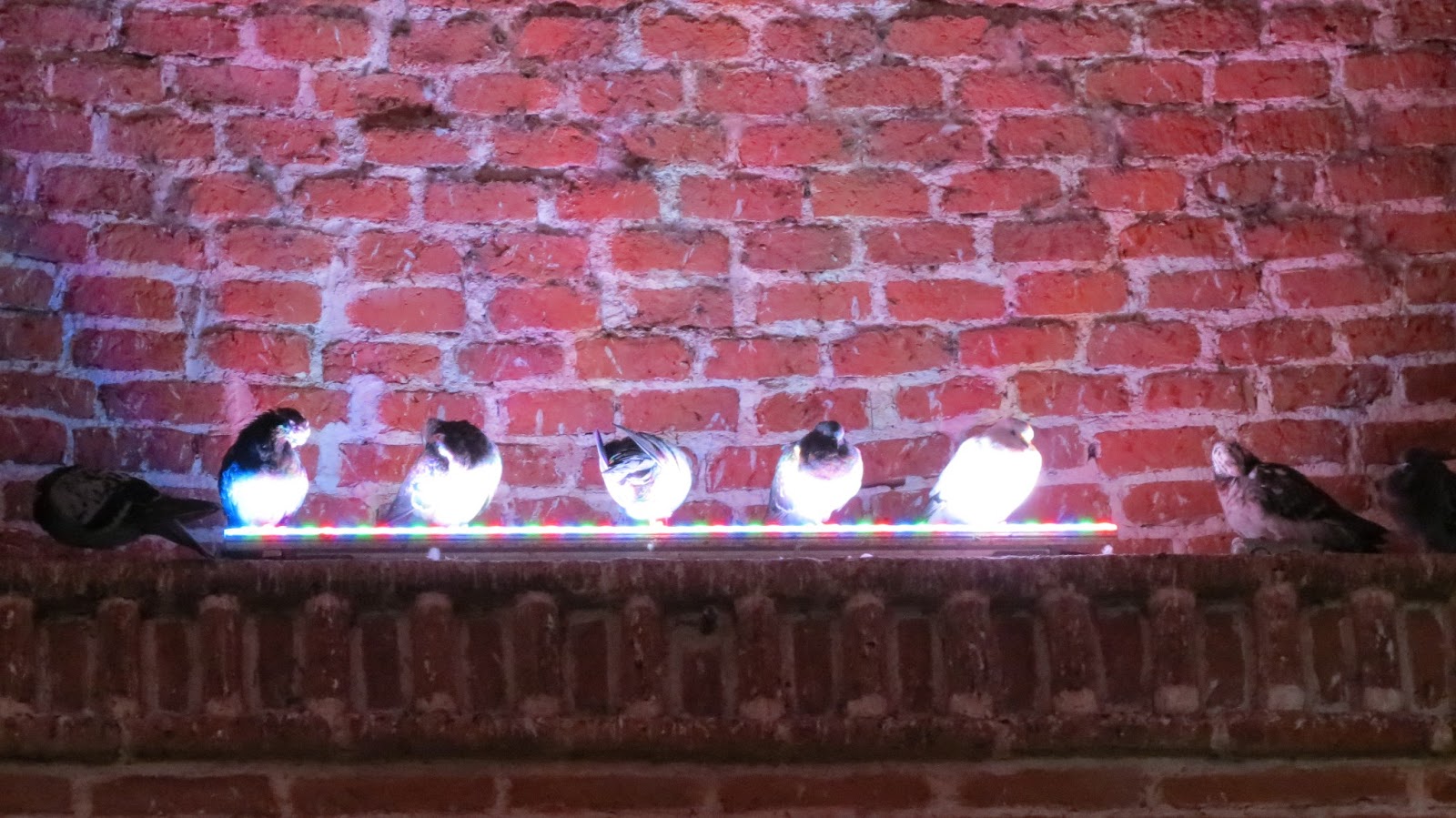
birds keeping warm on the lights


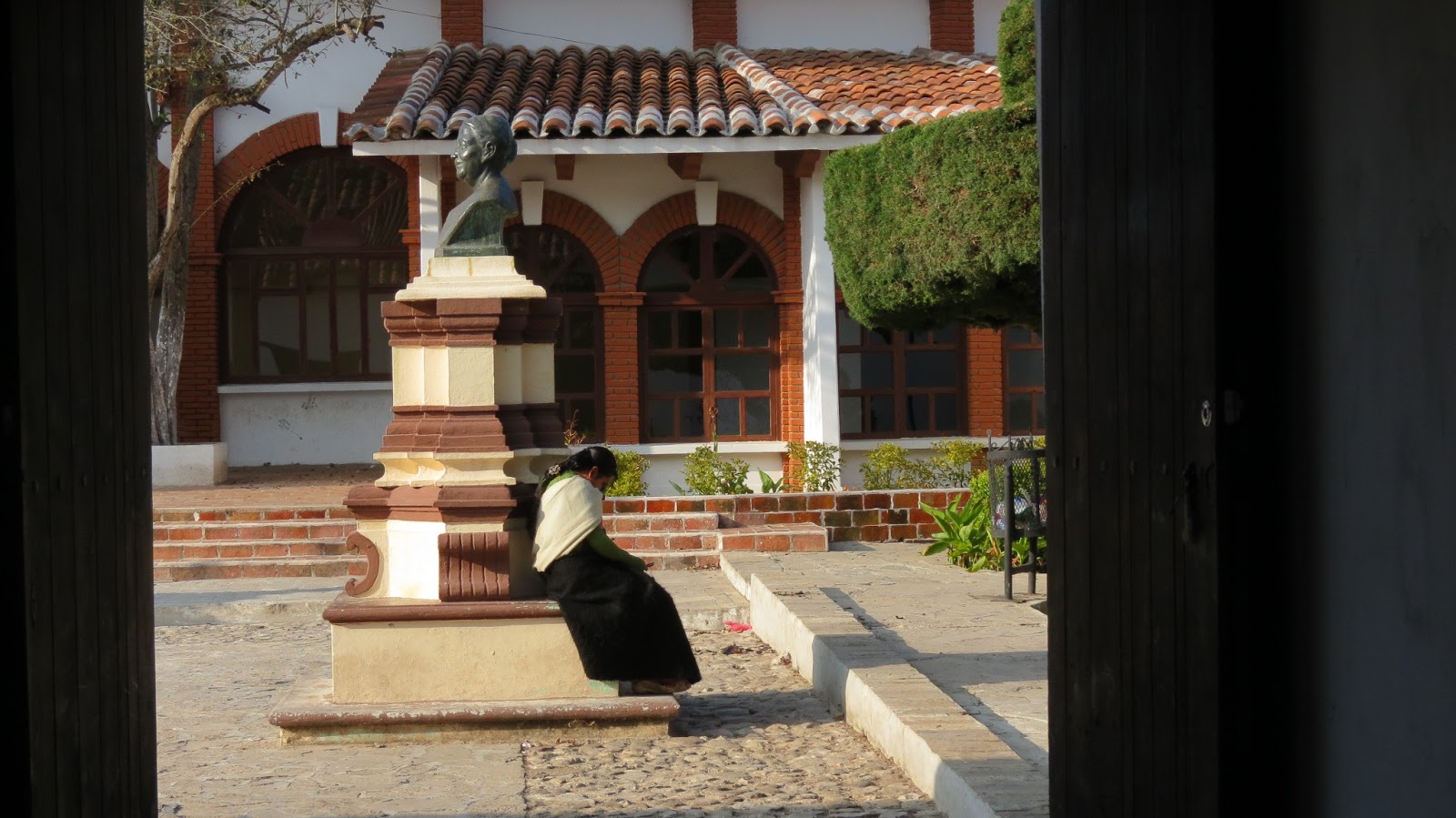
indigenous woman taking a moment to rest


Chiapas Day One

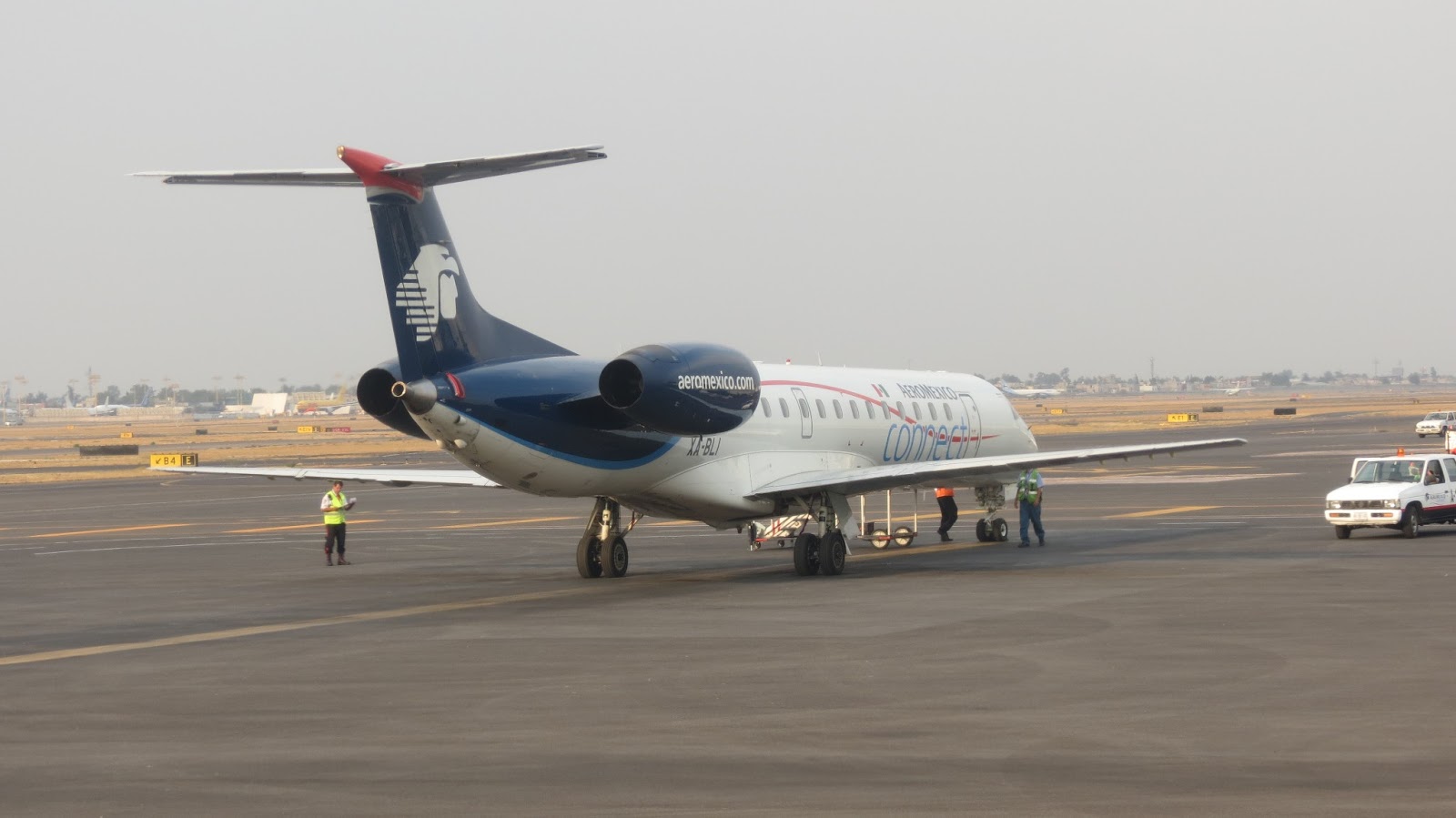
I am always excited to start another adventure, especially in Mexico. We began our 11-day journey with another couple who we have travelled with before on a flight from Manzanillo to Mexico City on an Aero México RJ. The flight attendants were dressed in what I would consider “retro” uniforms, similar to the TV show “Pan Am.” Red berets, colourful scarfs, red high heel shoes, nylons, yes even in the heat, and a red purse. We were impressed.

Flying over Mexico City took some time – it is a huge city. We landed at Terminal 2 that is smaller than the main terminal but there was enough to do and see for our 4-hour layover. We had a good lunch at Chili’s.

Onboard an Aero México 737 bound for Tuxtla City, we found ourselves seated next to a young man. Now, I do not know about you, but I am hesitant to start up a conversation lest I get a “talker,” you know, the kind that talk nonstop about everything and nothing. However, we were fortunate. Alex is a 30ish year old Mexican who was traveling on business. He is a logistics manager for Heineken Beer. It sounded like he had quite a large territory. I found out that Heineken owns Tecate, Dos Equis, Sol, Corona plus American Miller Coors and Anheuser Busch. Who knew?

He spoke very good English and said he wanted to practice so we talked. He told us he was married, his wife was a teacher who spoke five languages, and they have one son. The hour-long flight went by quickly and pleasantly.

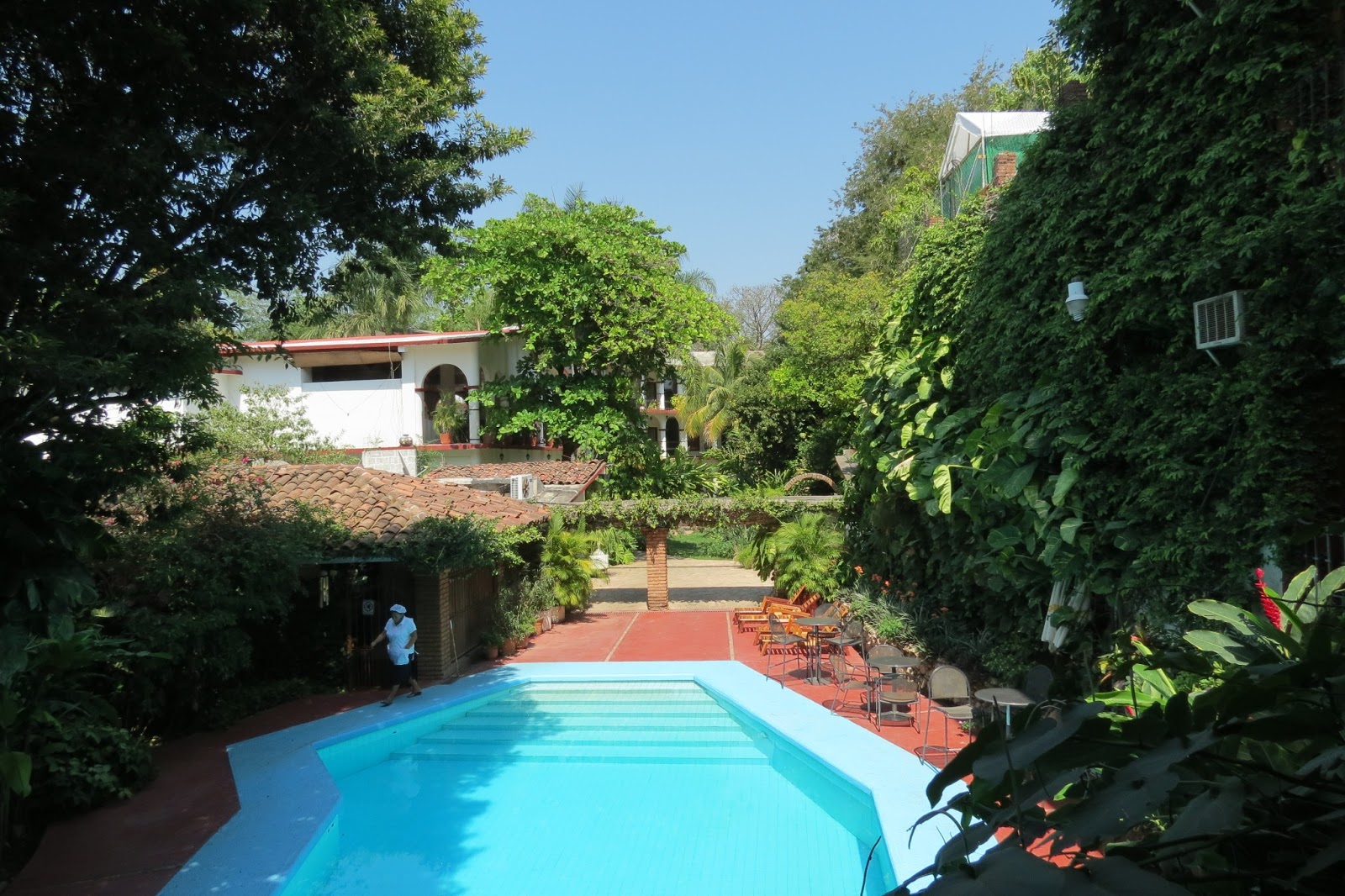
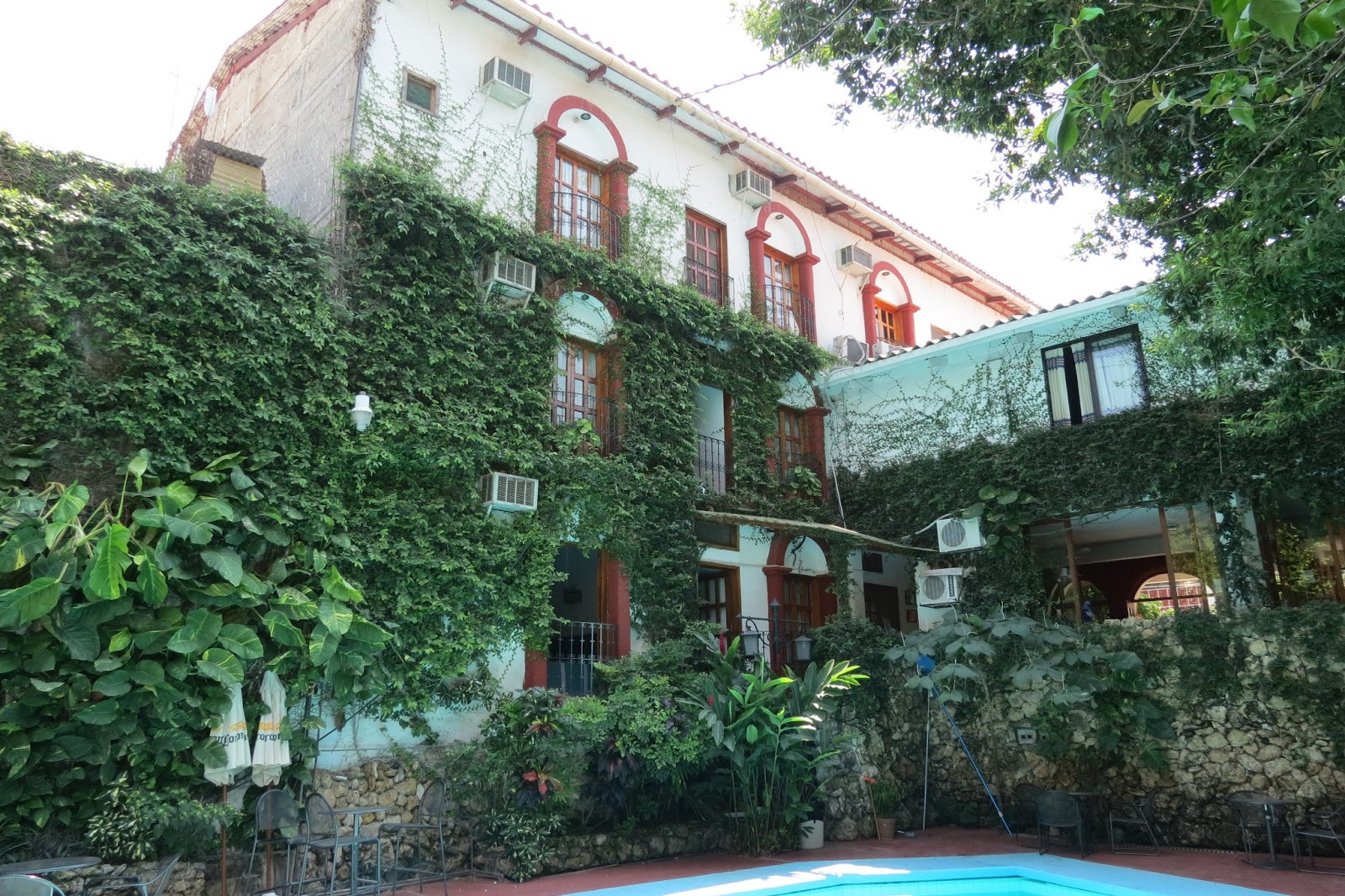
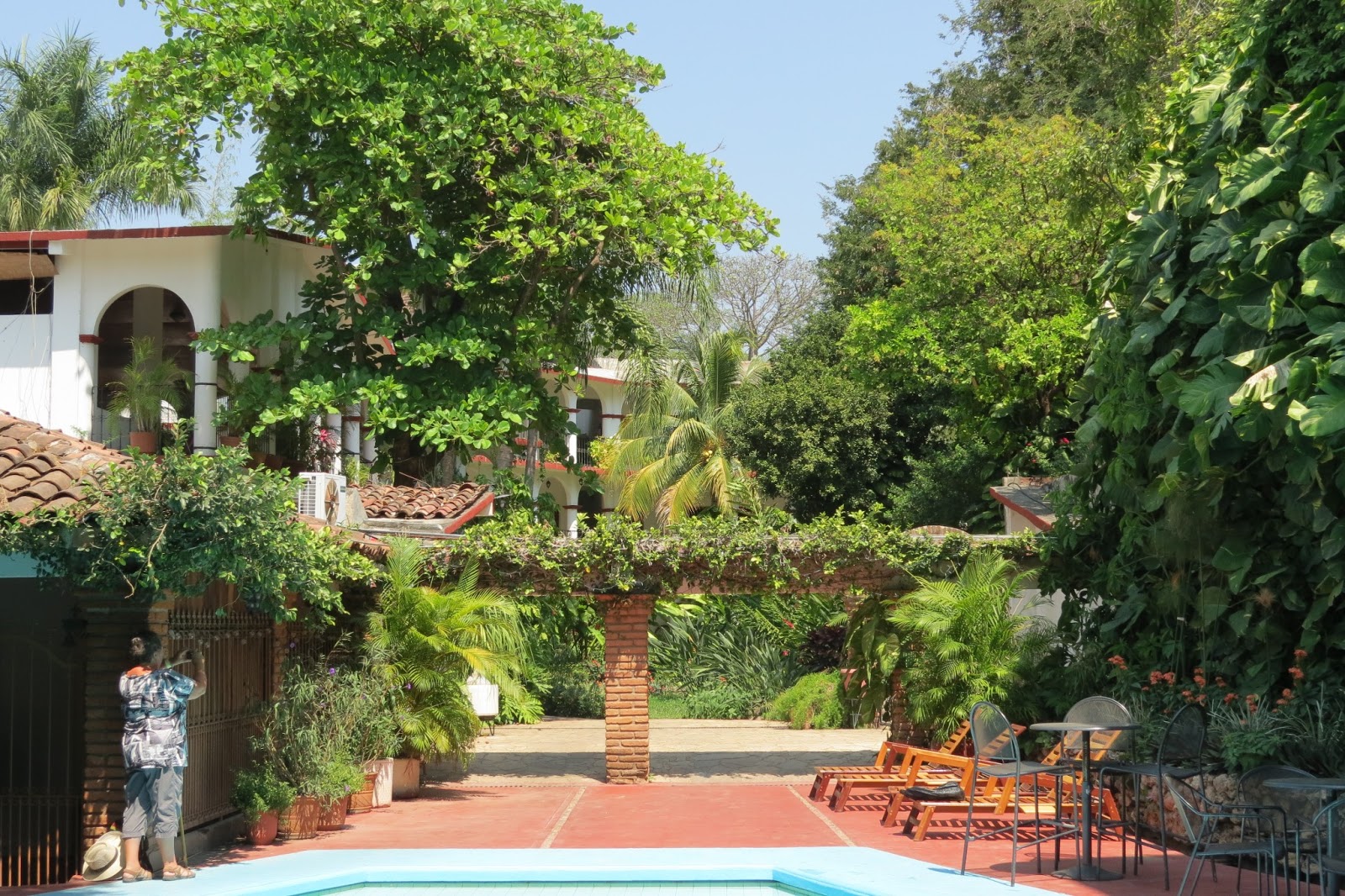
We took a taxi from Tuxtla to Chiapa de Corzo. We were very pleased with our hotel, Hotel La Ceiba. It was as good in real life as it appeared on the internet. Bonus!

The pool was very refreshing on a hot day


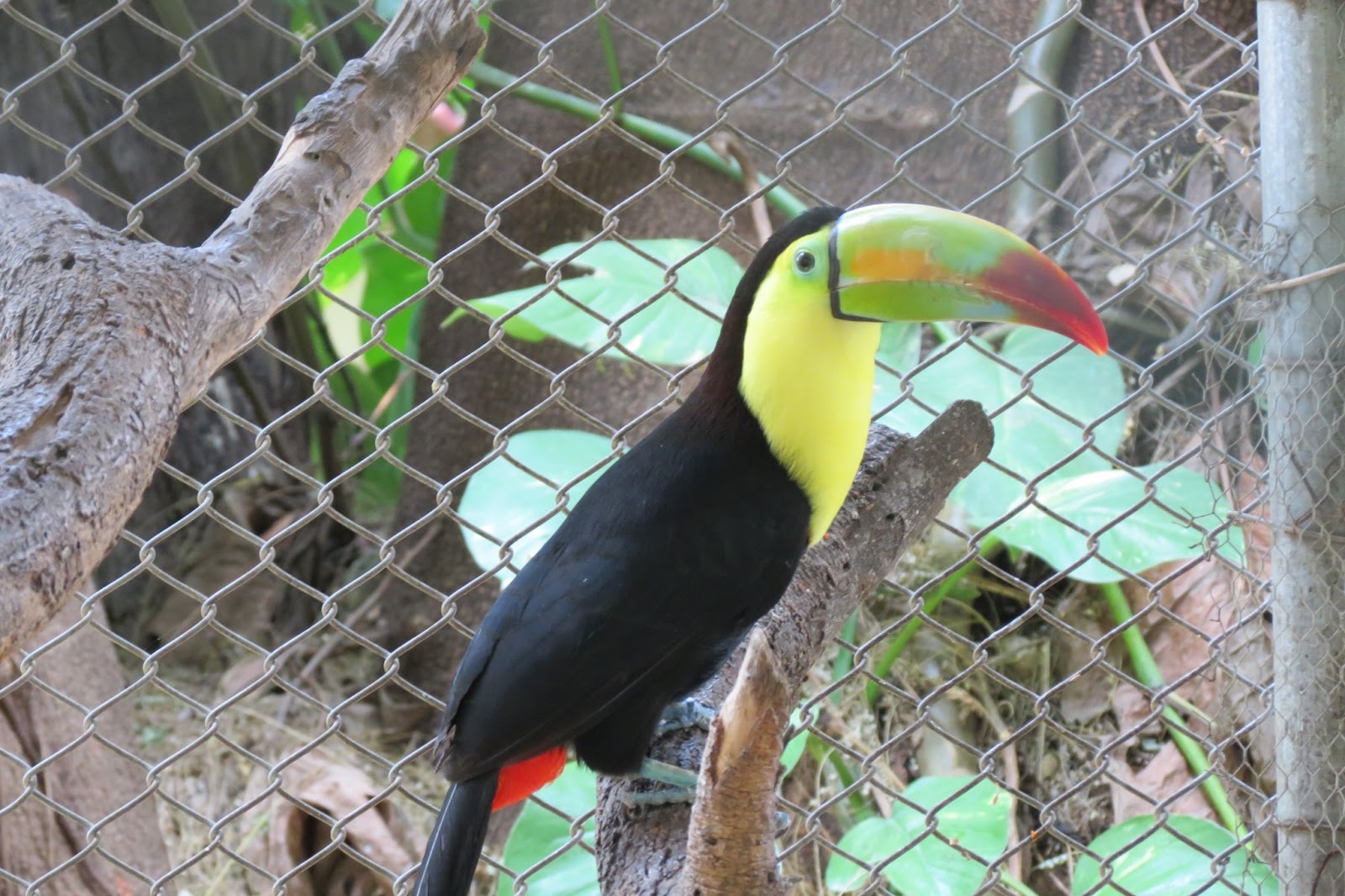
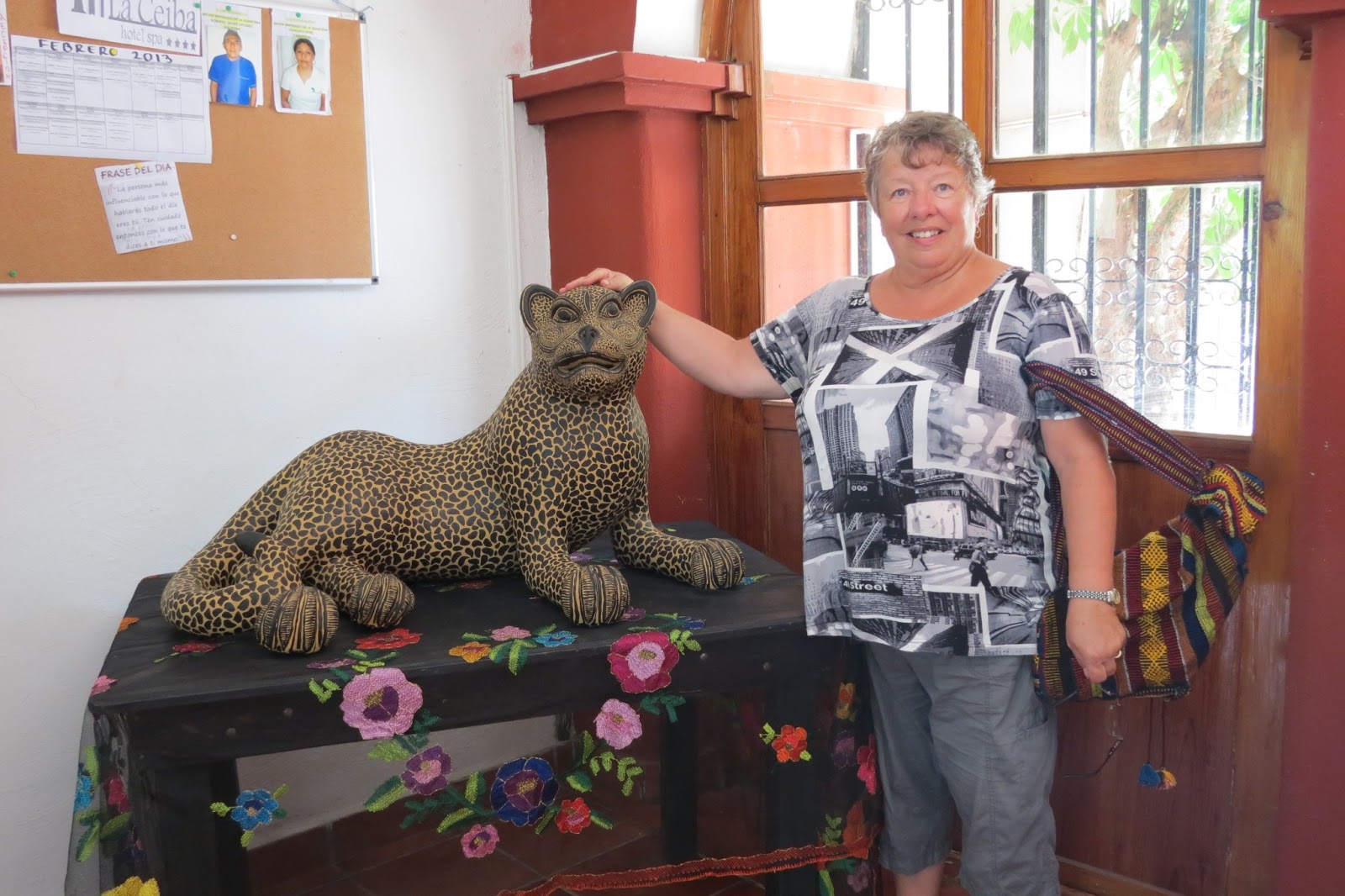
The hotel mascot


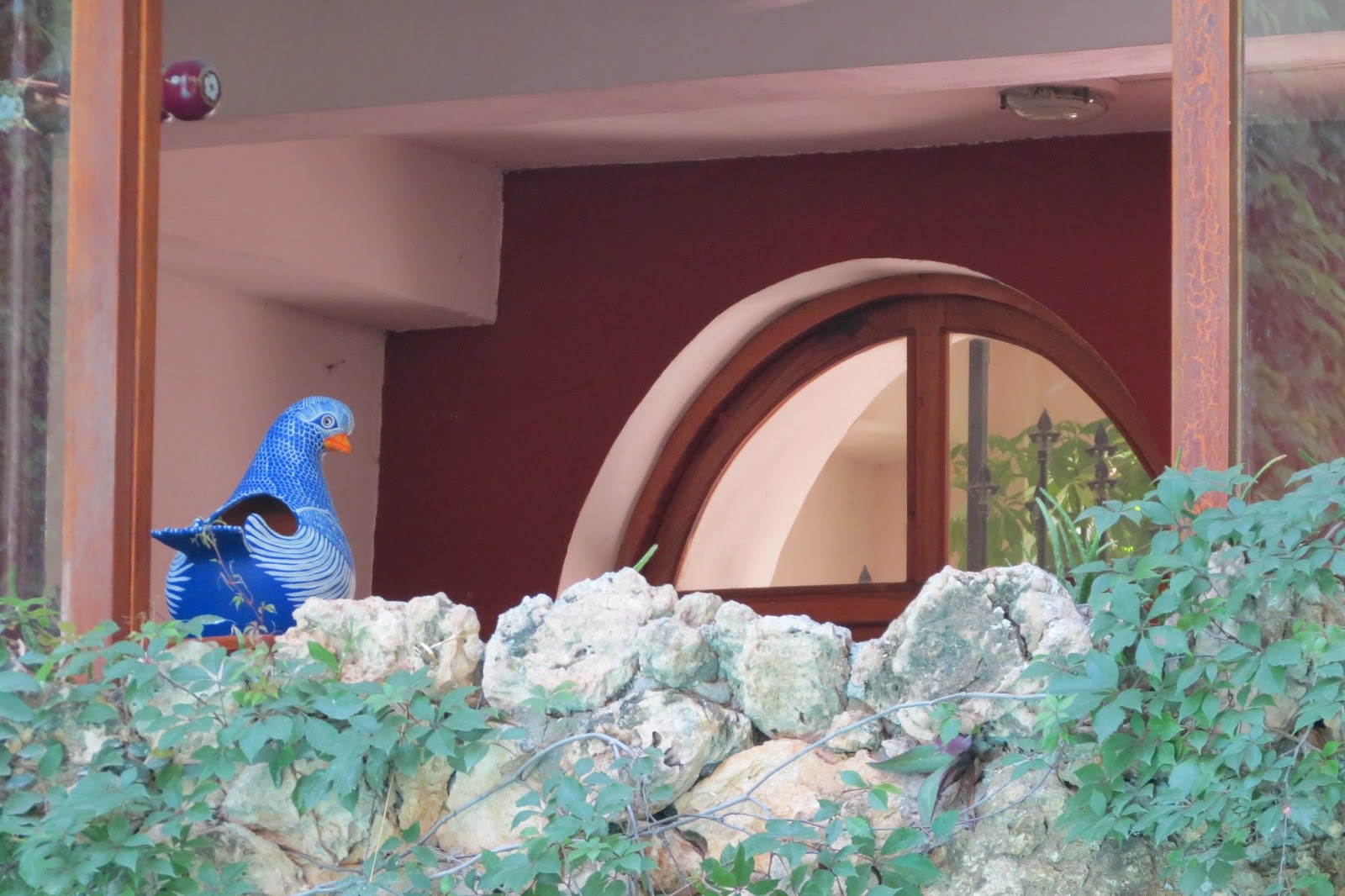
Local pottery


My new pet


Surviving a Flat Tire in Mexico

We were heading home from a tour of the Cuzalapa coffee co-op, Color de la Tierra about a two hour drive in a grey van with 12 other people when I heard a strange grinding noise.

“What is that noise?” I asked my husband.

“I don’t know.”

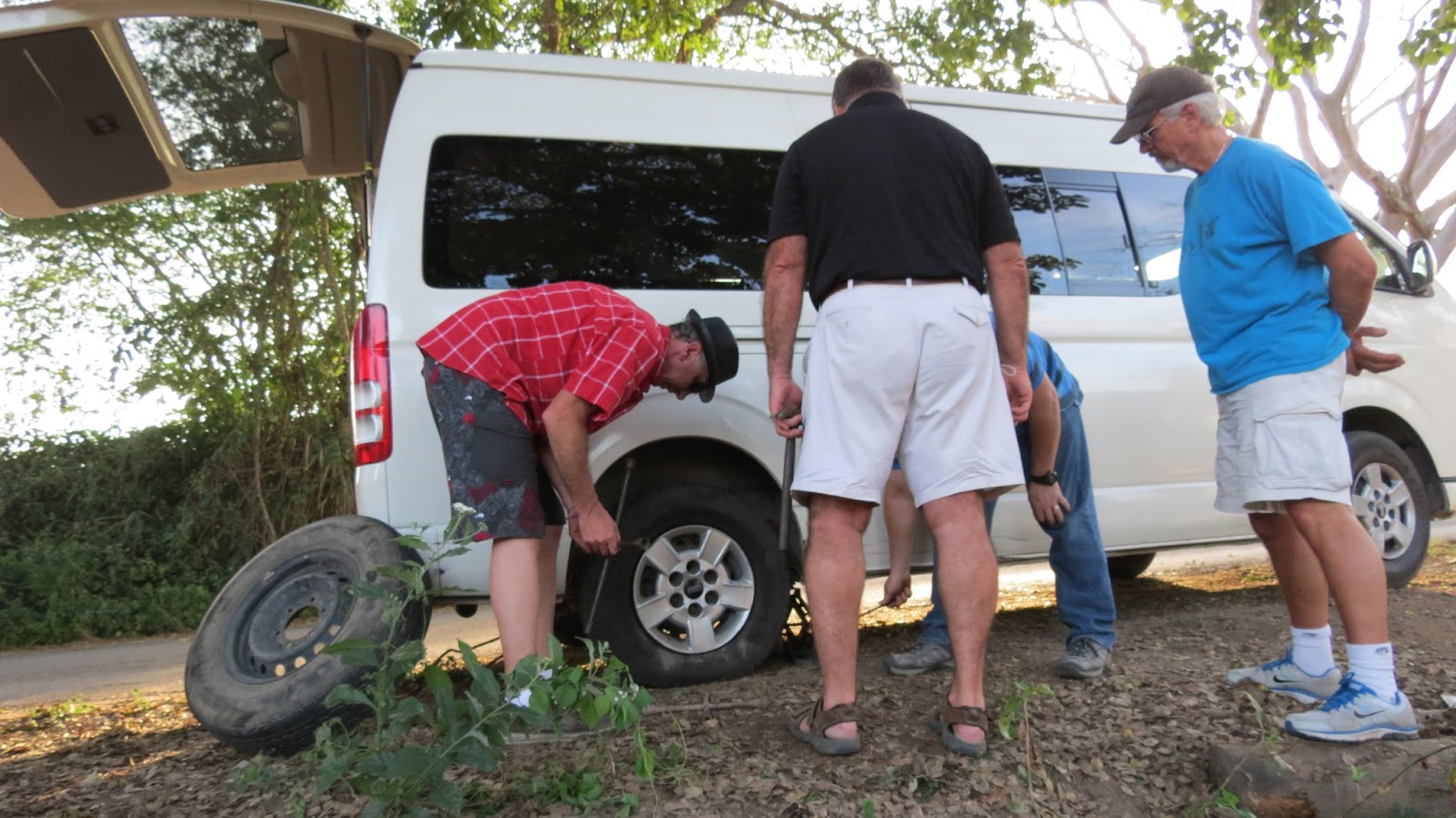
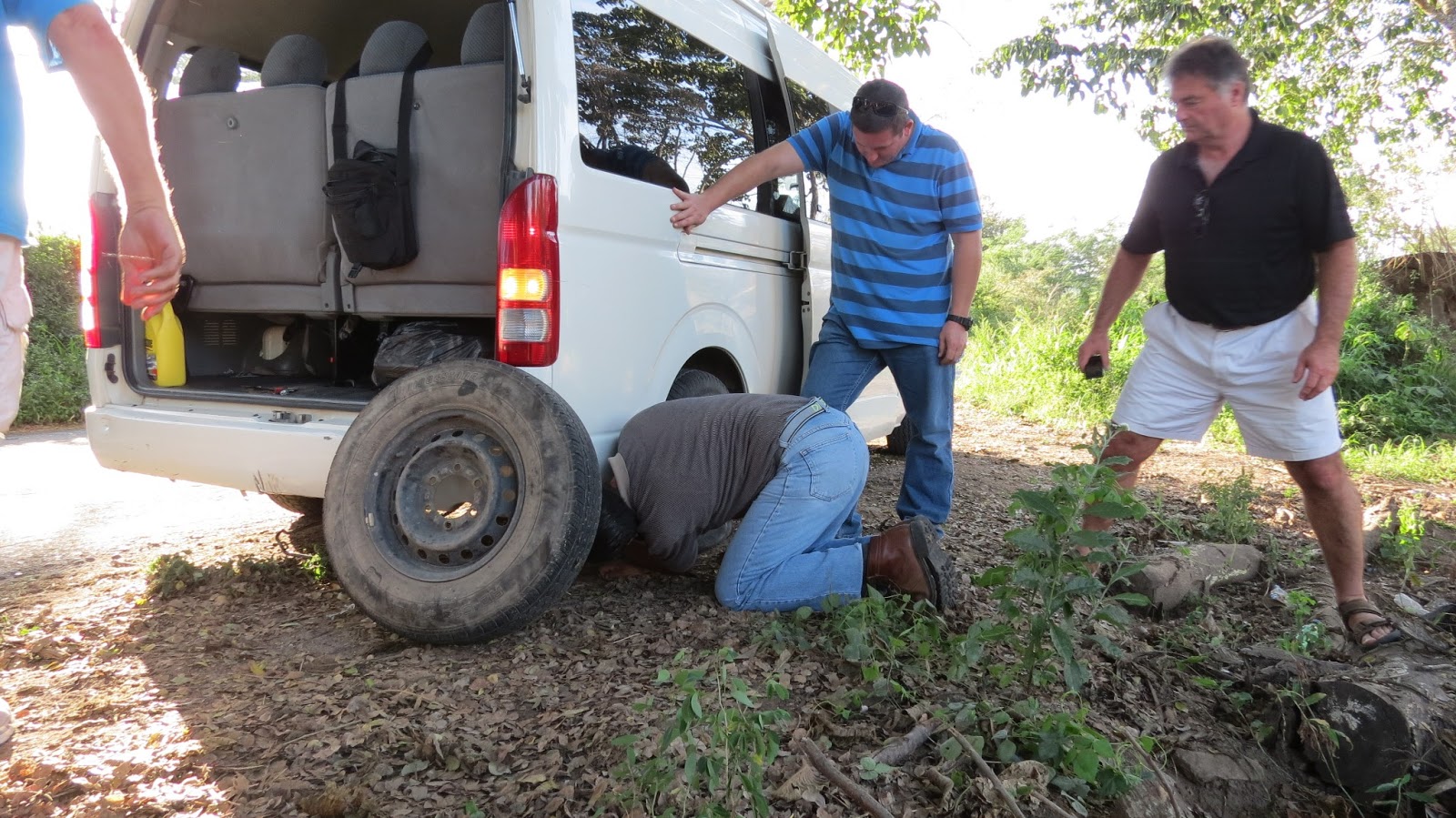
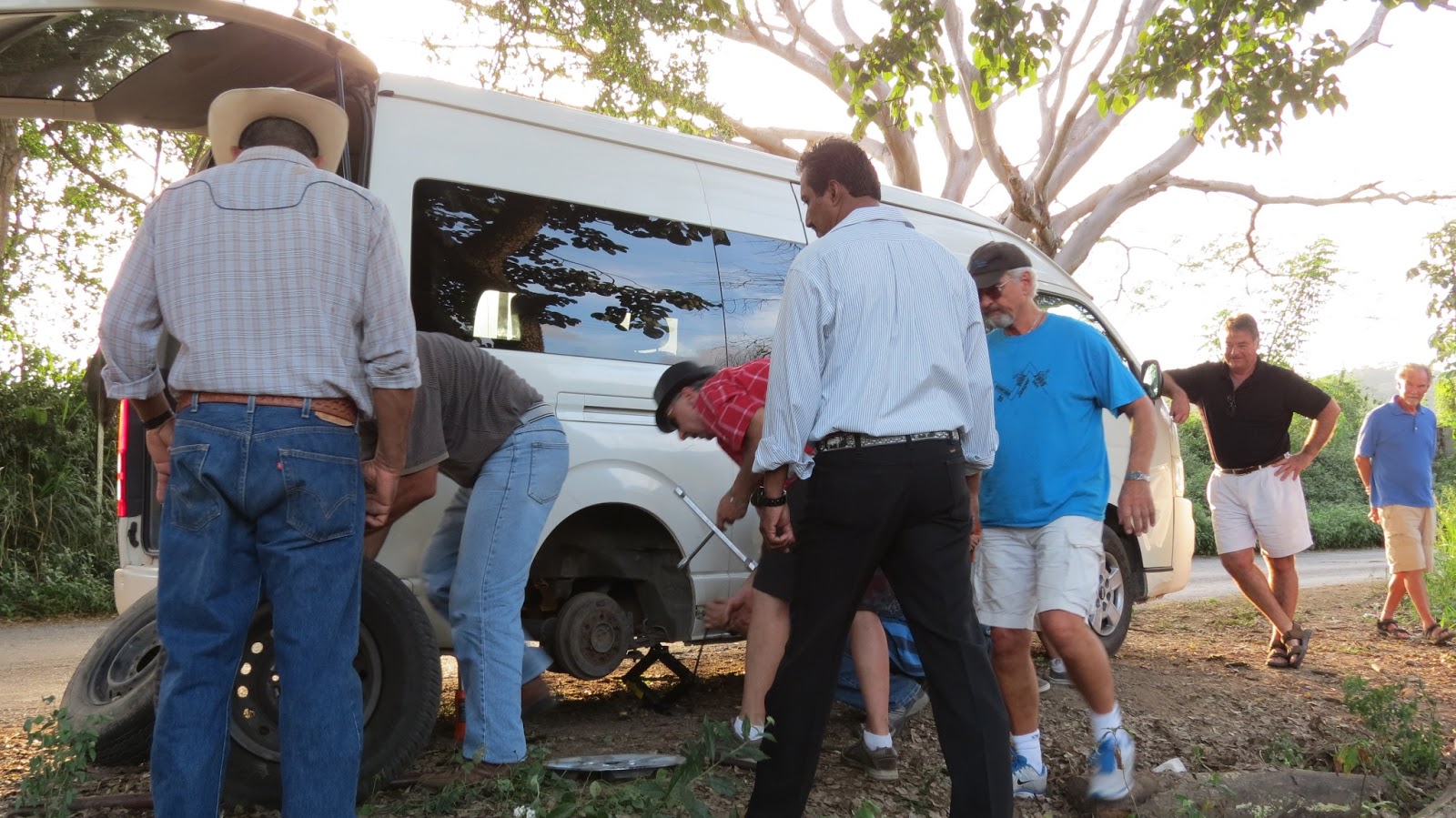
Seconds later, the driver pulls over onto the shoulder. We discover it is a flat tire. Now I am thinking, no problem. There are half a dozen men who surely must be able to fix a flat. We all exit the van. Women gather in one area expecting that this will only take a few minutes. The men get the spare tire out but discover there are no jack and no wrench. Apparently, the driver’s son had borrowed the tools and did not return them. I can well imagine the conversation he was going to have with his son later.


We are almost in the middle of nowhere. I can see three homes; two are down the road and the closet one is next to us in down in a bit of a dip. There is a woman there with two little boys watching the antics of this van full of gringos. Noticing we did not have any tools, she promptly went to her truck, got a jack and a wrench, and brought them over to the men.


I don’t know a lot, well nothing about changing tires but I could see something wasn’t working. So the woman put her two sons into truck and headed down the road somewhere and returned with more tools. So I figure surely, now they can fix it. Well it was quite the show. The wheel nuts were so tight that one man would put the wrench on the nuts and another man would stand on the wrench and try to jump on it. Those nuts were not moving. I learned later that there were only four wheel nuts when there should have been six. So perhaps it was a good thing that they were on tight. 

The very helpful lady in the green top with her two sons


Although few and far between, a few vehicles passed us including a police car but no one stopped to ask if we needed help. With the gaggle of men surrounding the tire, it would appear to anyone passing that we had more than enough help.

I noticed at one of the homes down the road there was a pickup with about 4 or more people around it, watching the apparently very interesting show happening at our van. I would not have been surprised if they pulled up chairs and grabbed some cervezas.

After struggling with the wheelnuts for close to three quarters of an hour, the men were no closer to getting them loosened.


The women were beginning to realise that this was not going to be a 10-minute job. One woman worried that nightfall was near. She said, “What would happen then? Do you think there would be banditos in the area?” We assured her that it was very doubtful and not to worry. Others were just hot and tired. There was no place to sit. We had very little water and no food. We were hot, thirsty, and tired. 

Then down the road, we see two men carrying what turned out to be a long pipe and a wrench that they attached to the pipe for more torque (that bit of info from my husband). They were successful and received a round of applause from their captive audience. With chests puffed out like roosters, they said “gracias” and returned to their homes.

The two Mexican men who came to help


The spare tire was put on and we eagerly climbed back into van. Dan, our tour guide, tried to give some money to the woman but she would not accept it. She grudgingly accepted a package of coffee.

Our driver turned the key but nothing happened. The battery was dead, apparently from having the four way blinkers on. Okay, so now we were getting a little worried. Did I mention that there was no cell service in that area?

The men hopped out of the van again and started to push the van backwards as we were uphill. I closed my eyes at this point, as I was afraid we would roll off the road in the dip. That dip seemed like 200 feet down in my imagination.

Success! They were able to jumpstart it and we were finally on our way home. 

“Dan, are you going to charge us for this extra little adventure?” I asked.
 Dan laughed and replied, “No, just consider it a little extra bonus on this trip.”

Music is everywhere in Mexico

Music is everywhere in Mexico, from singing to playing musical instruments to music blaring from trucks. The trucks have their own unique song in order for you to know what they are selling. Therefore, it wasn’t surprising to learn that our doctor plays guitar in a band and our dentist sings at a restaurant. (According to our dentist tongue in check, he needs the money). Our dentist has a cd, which we were fortunate to get free. Although that might have had something to do with the money we have spent in his office!

The music in Mexico seems to inspire the “gringos.” Every Saturday afternoon at La Sirenita Restaurant any and all musicians, gather to perform at the open mike. There are many very talented people and some that are okay but at least they singing or playing.

Our North American society has lost its voice. We are so afraid we will be judged and we ARE judged that over time we have learned to hide our desire to sing.

Therefore, my challenge to you in 2013 is to sing. Sing while you do the dishes, sing while you are cleaning the house or the yard. Pretend you are that child or teenager with a hairbrush for a microphone belting out your favourite song with abandon.

Just start singing.

Please enjoy the videos below. Copy and paste the links

https://picasaweb.google.com/110639335034831243781/Mexico2013#5822582176517069970
ALSO
https://www.youtube.com/watch?v=ccKmc4Vn86w

Cooking class

Paco Barriente holds cooking classes just about every Saturday.  He, or rather his wife, cooks a typical Mexican dish.  This is a great way to try cooking something new and you get to eat it. Paco explains what the different ingredients are and helps you through the process step by step.  It was a fun class.

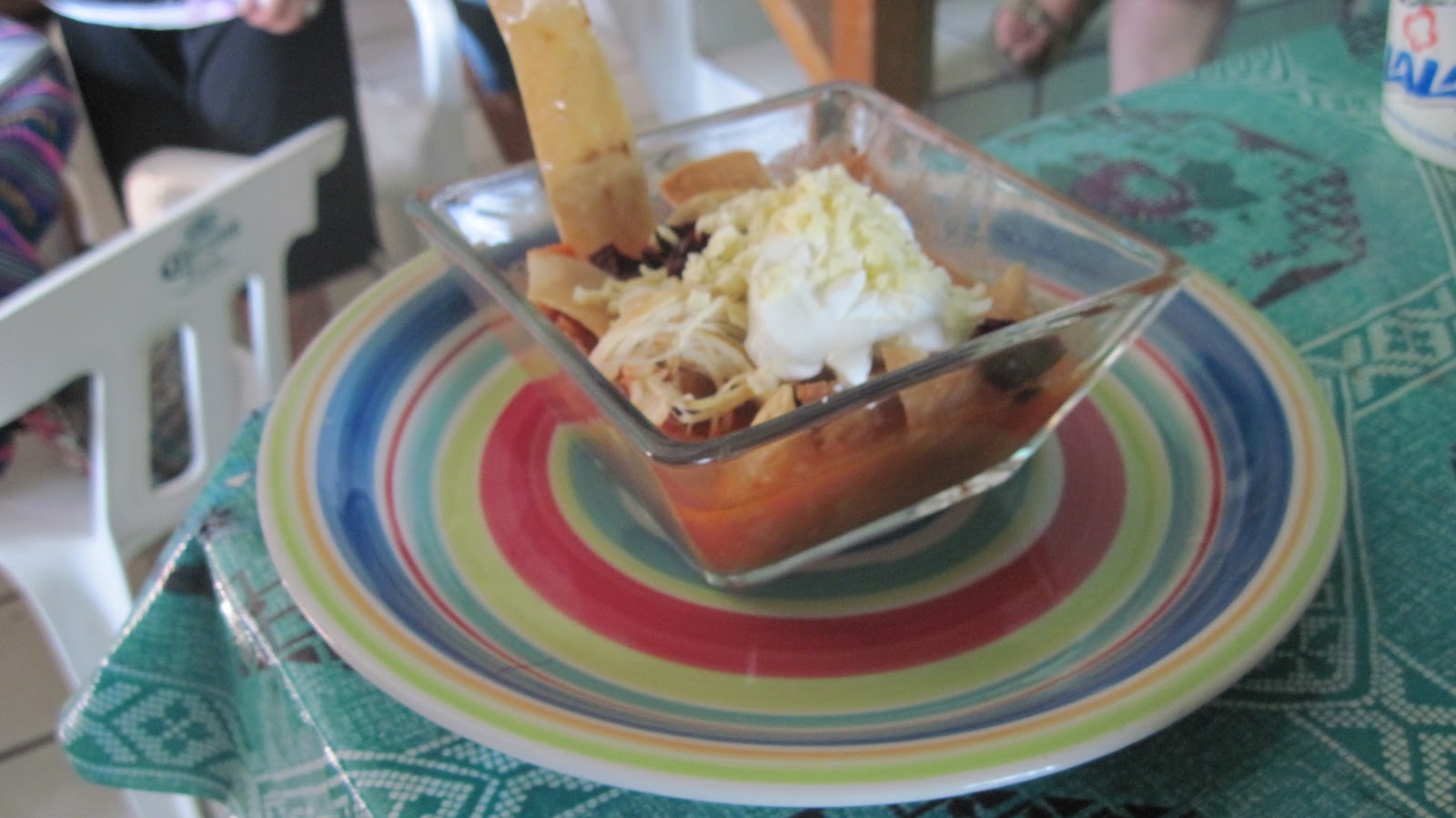
I wanted to learn how to make the wonderful tortilla soup that you can get anywhere. There are as many variations as there are restaurants.  I have posted the recipe below for anyone who is interested.

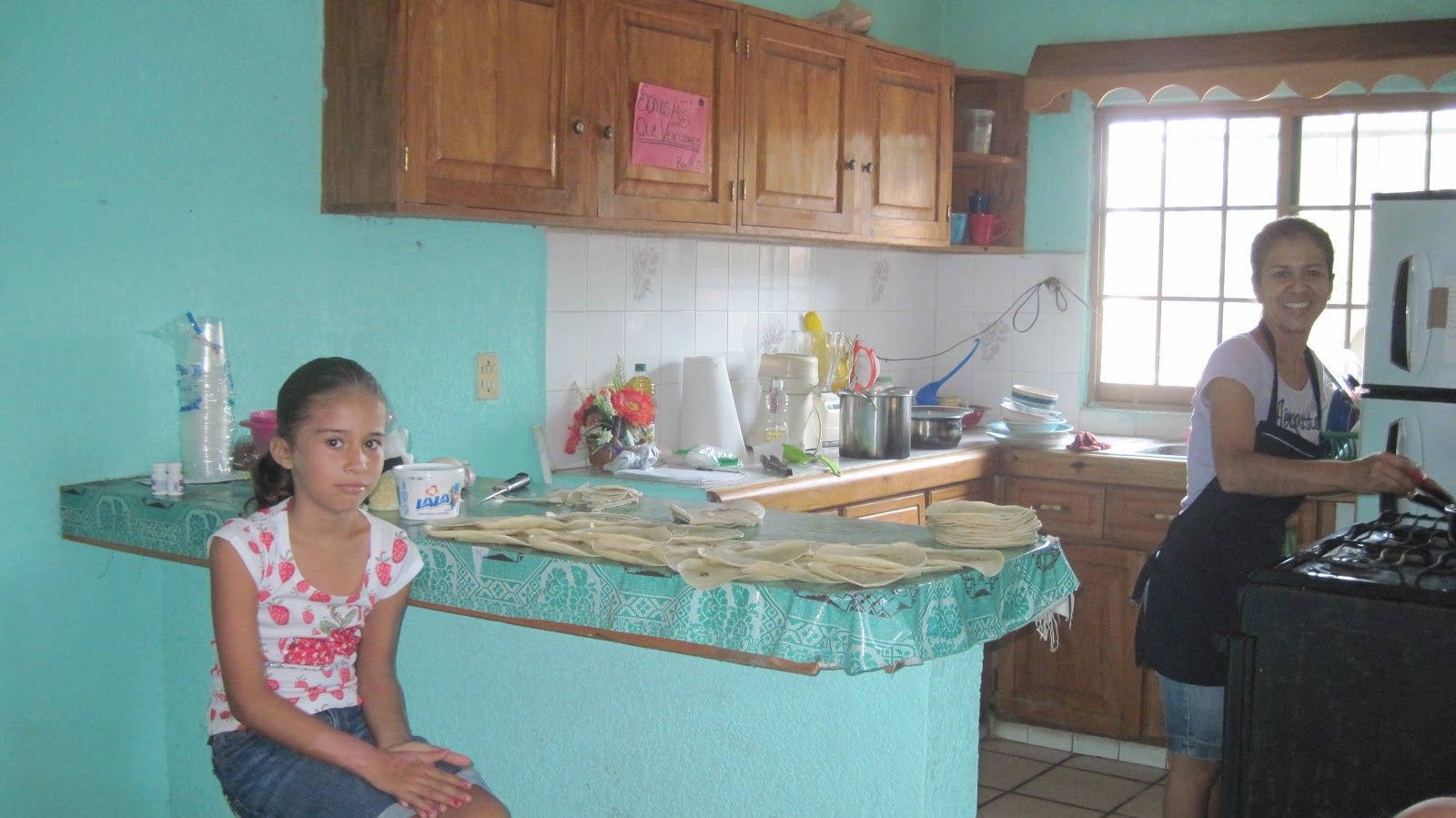
Paco’s wife Azena and their daughter


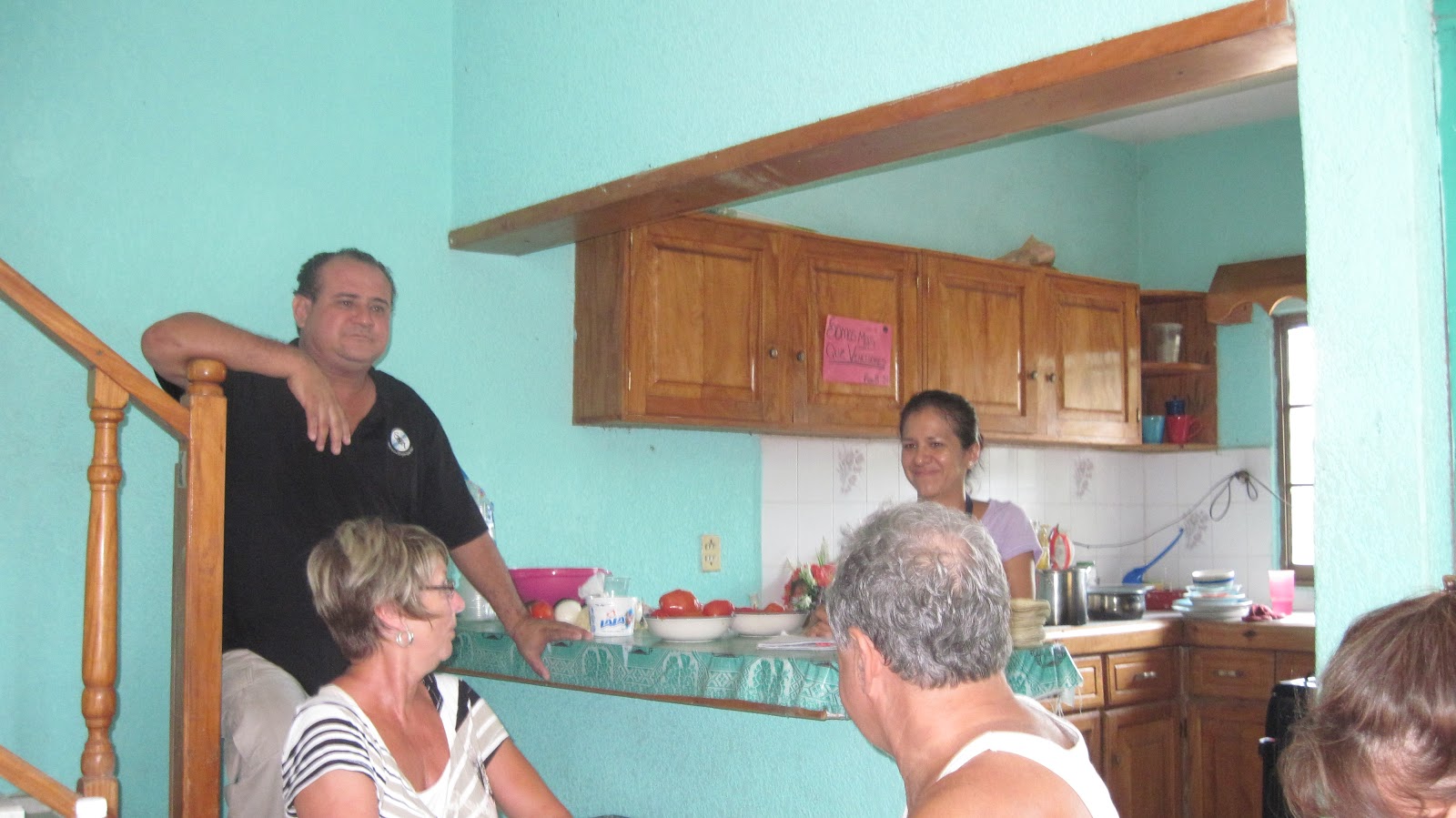
Paco on the left explaining what his wife is doing


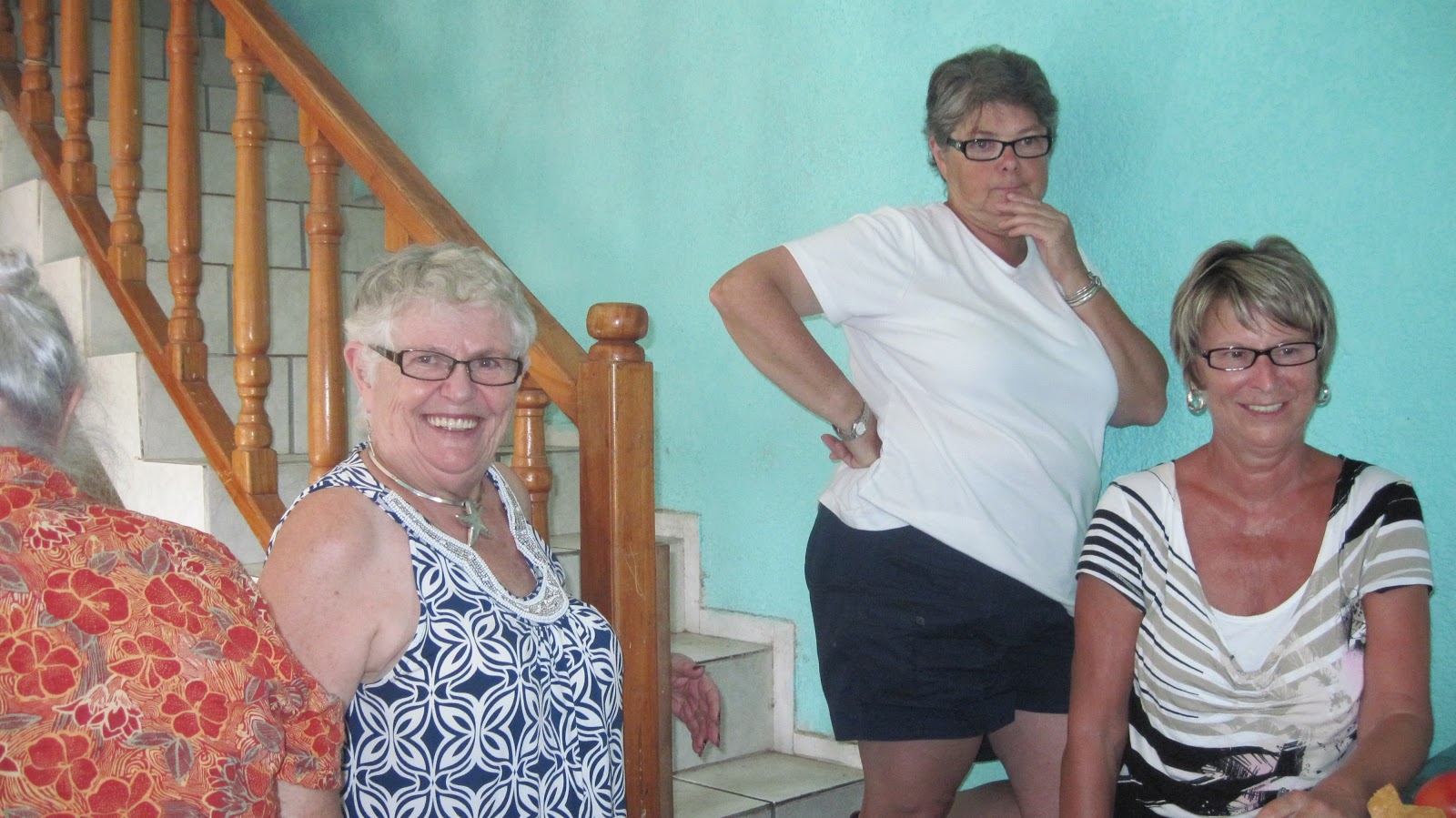
Some participants


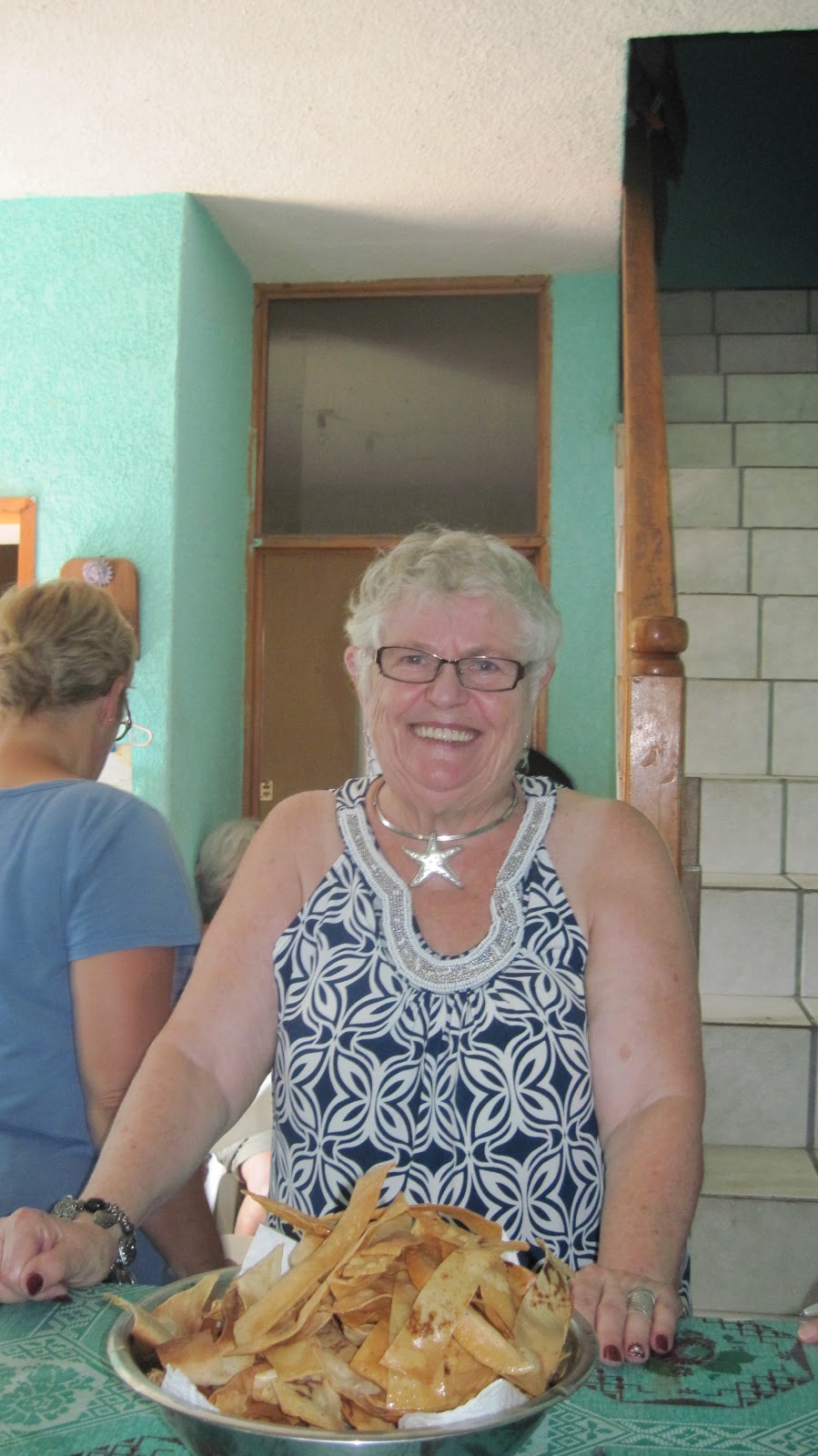
a plate of fried tortillas


The finished product – it was so delicious

AZTEC OR TORTILLA SOUP

For 4 people

8 corn tortillas
½ onion
2 cloves of garlic
1 ½ litre chicken broth
4 chile pasilla  (dried chile)
6 tomatoes
1 or 2 avocados
Sour cream
Grated cheese

The previous day, leave 8 corn tortillas in the open to dry.

On the cooking day, cut tortillas into strips and fry in corn oil until crisp.

Boil tomatoes and peel.

Add peeled tomatoes, garlic and ¼ of the onion to a blender.  Add a little chicken broth. Blend

Fry the remaining onion in a pot.  Add the blender mixture to the pot.  Simmer for a few minutes.

In the meantime, open the chilies and scrape out seeds and veins.  Add a LITTLE oil to a frying pan and fry the chilies until soft and then cut into strips.  Add to soup mixture in pot.

Cut the avocado into squares.

Pour some soup into a bowl, add tortilla strips and garnish with avocado, sour cream and grated cheese.

Enjoy


Family Christmas Eve Dinner

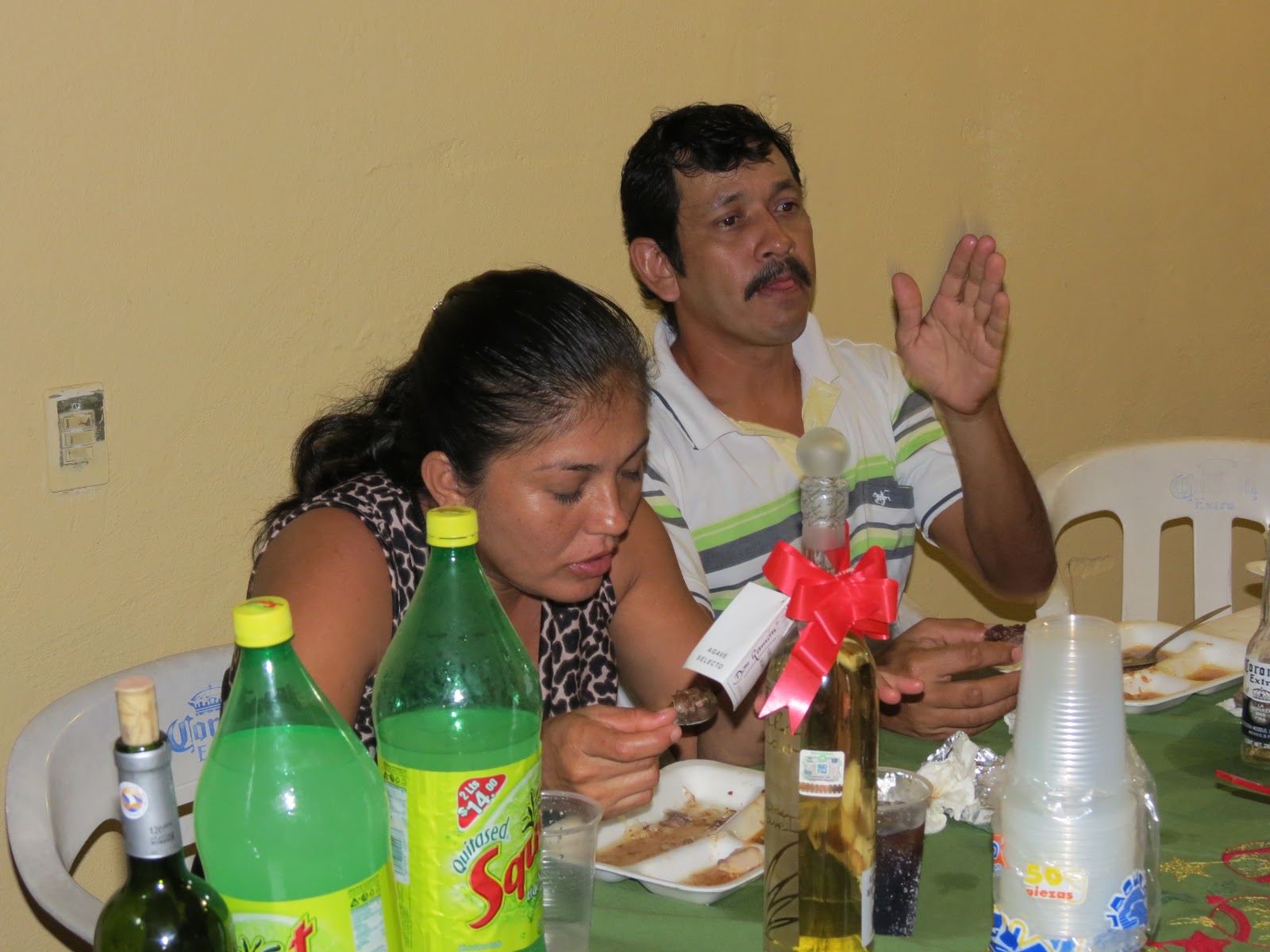
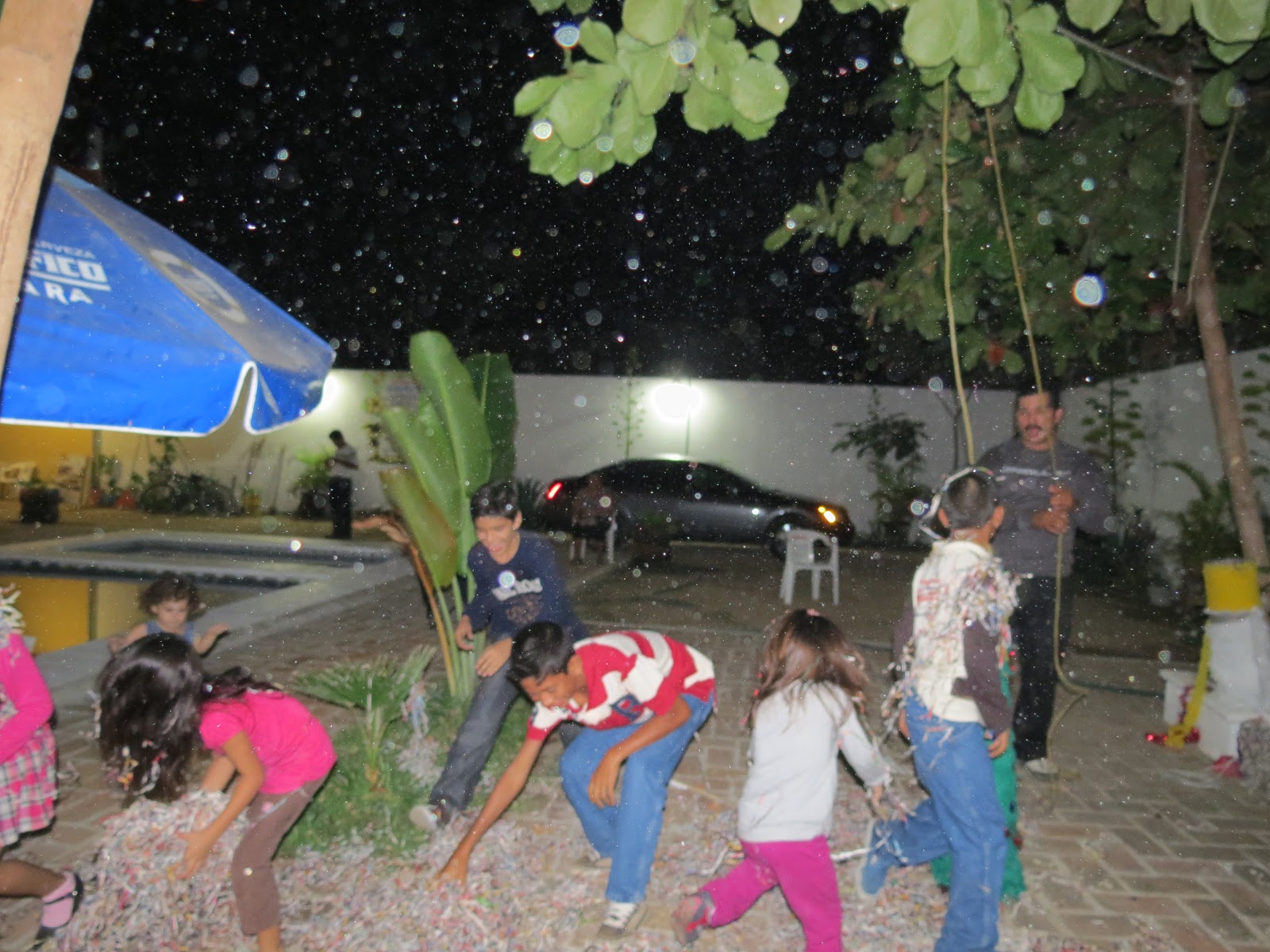
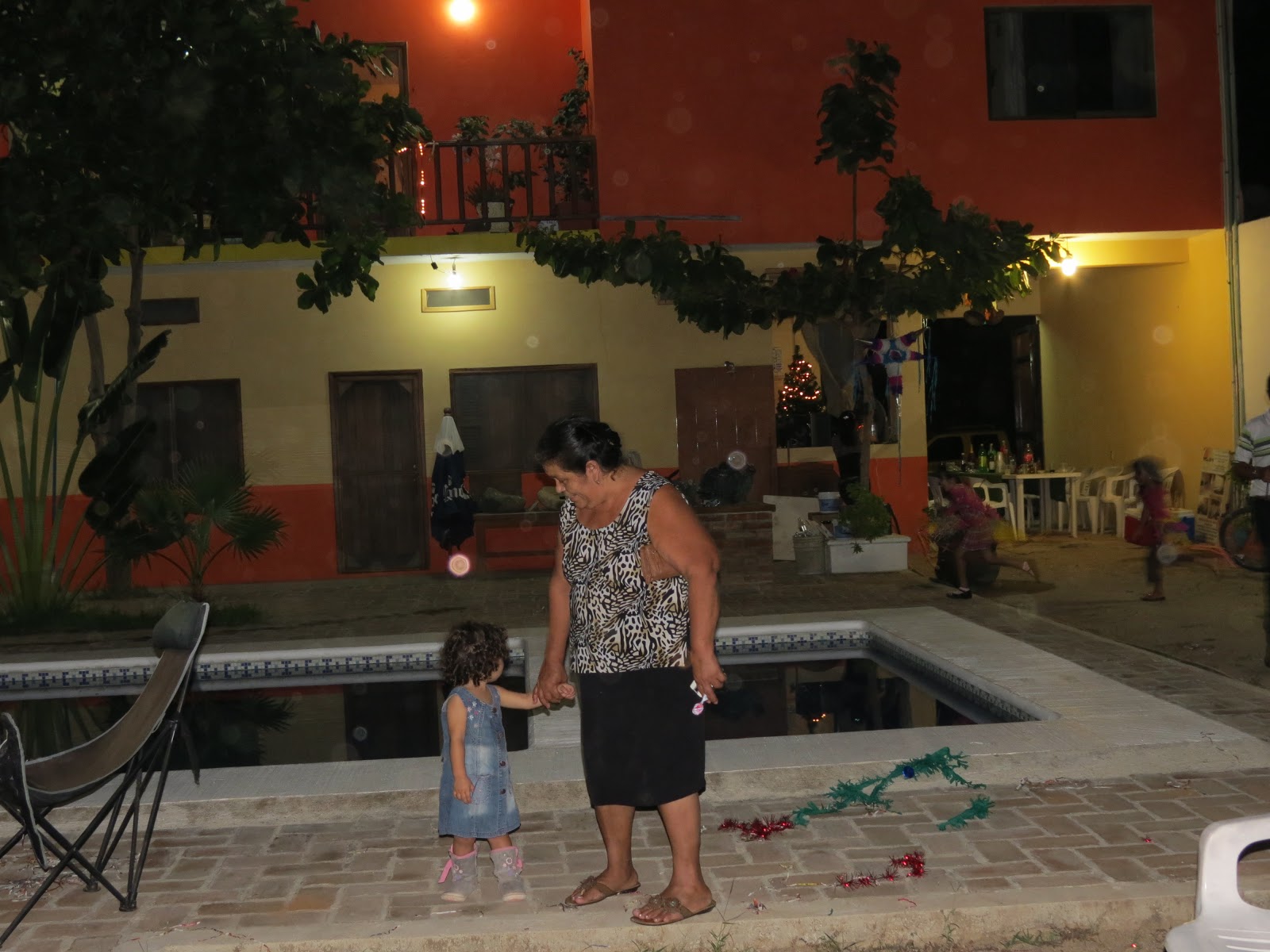
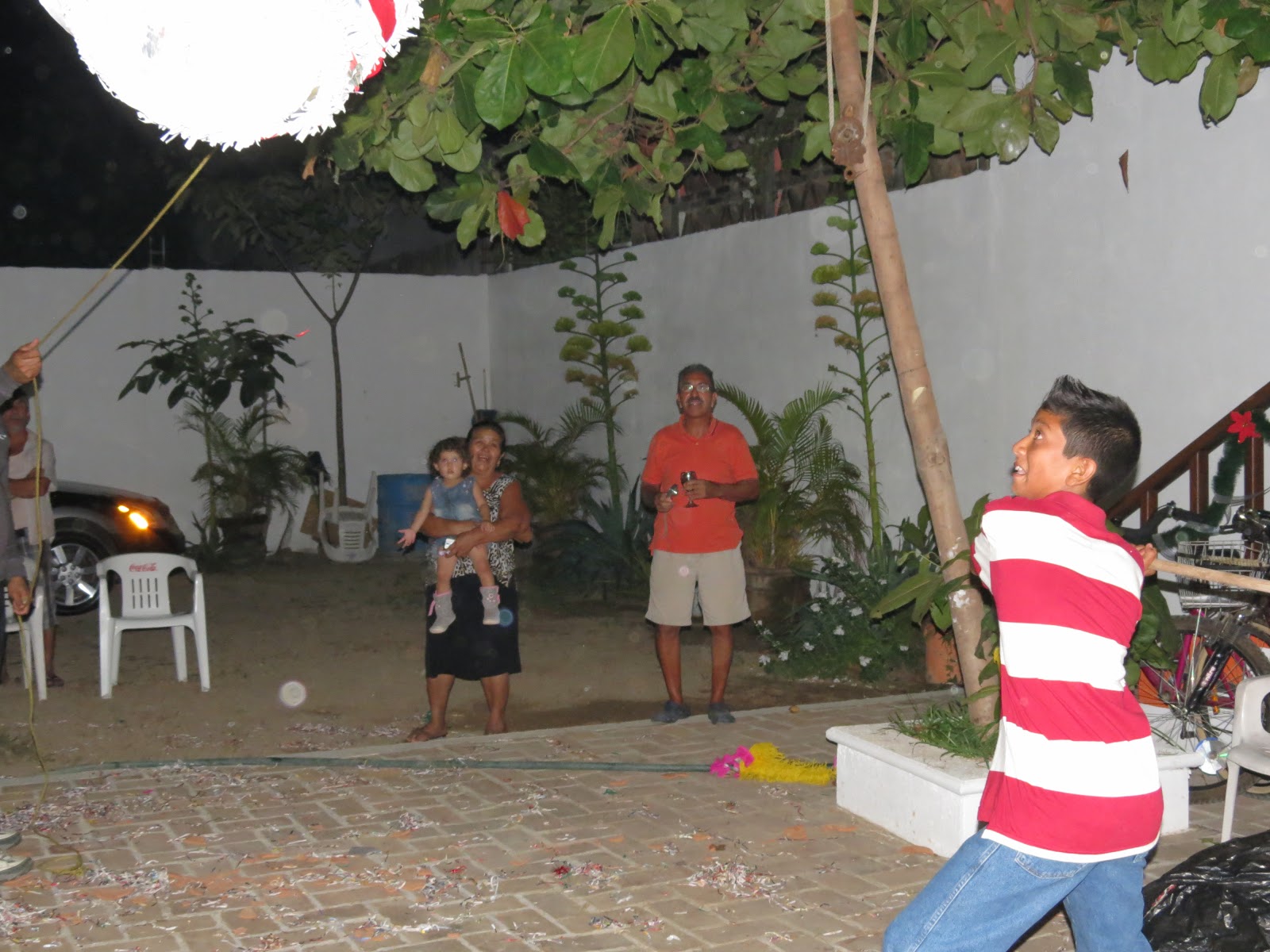
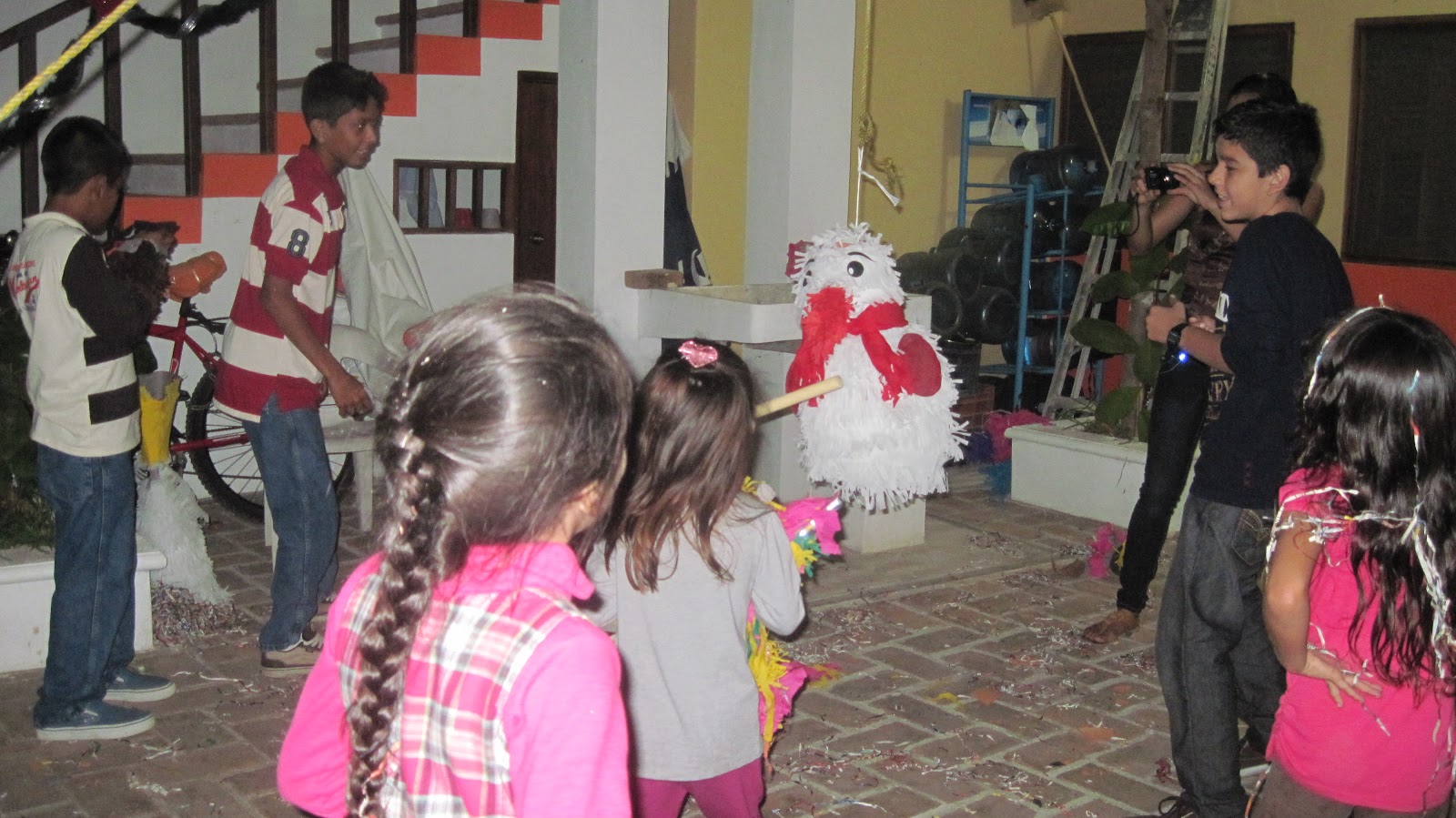
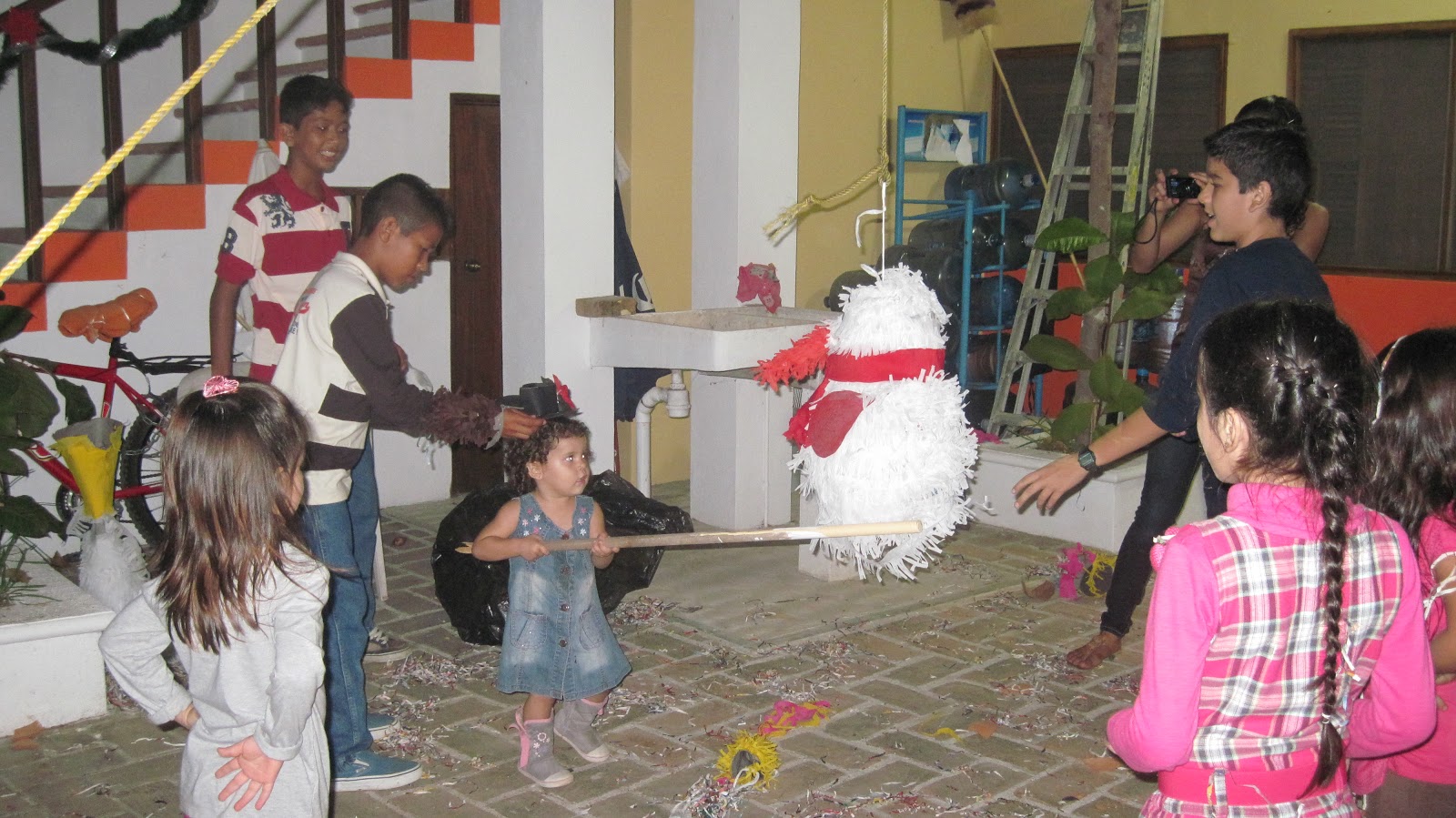
Our landlords were having their family Christmas Eve dinner and kindly invited us to join them.  We had goat meat and beans and of course tortillas. Lots of tequila, wine and pop. They had 4 pinatas for the kids to whack away at.
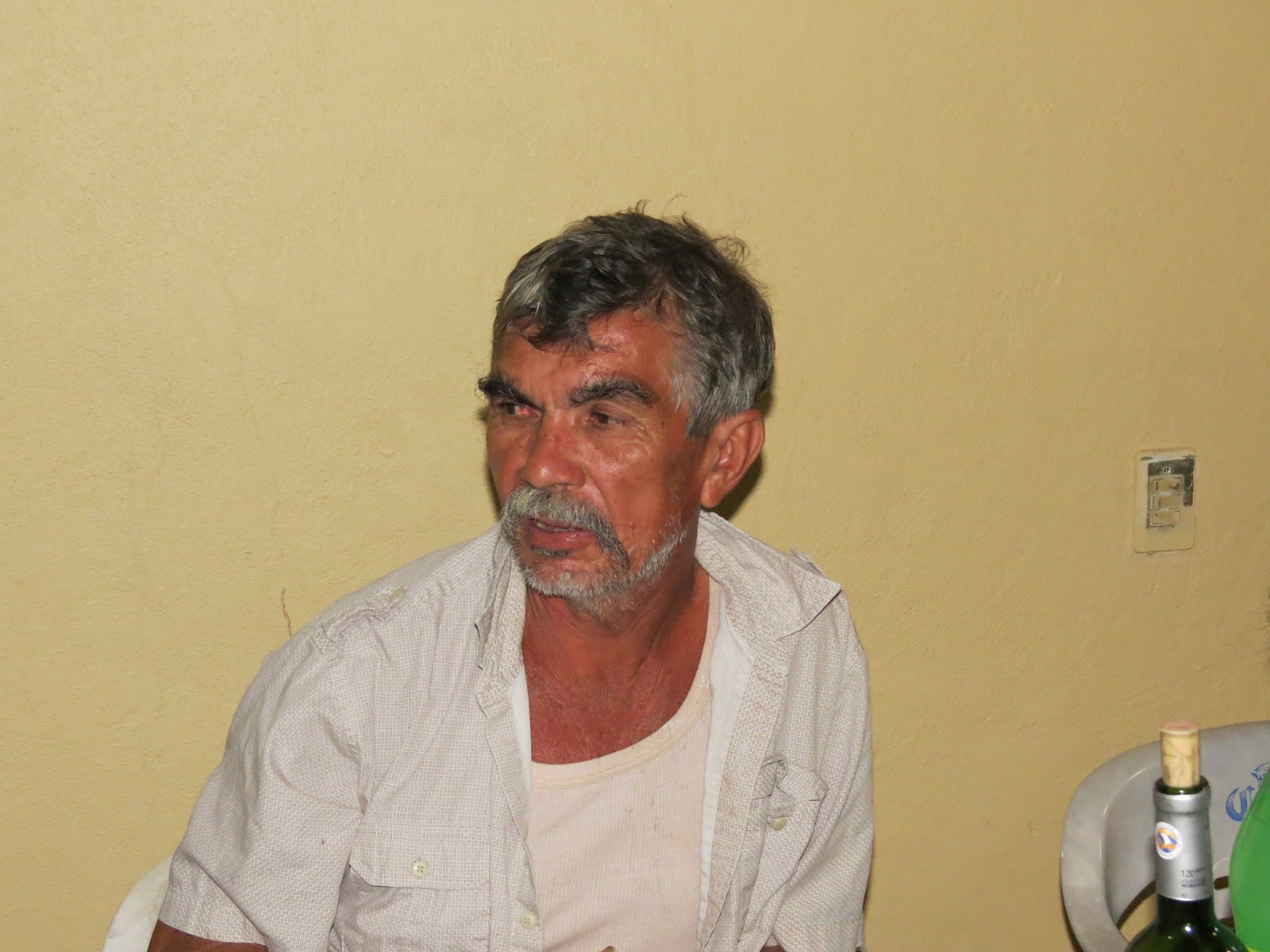
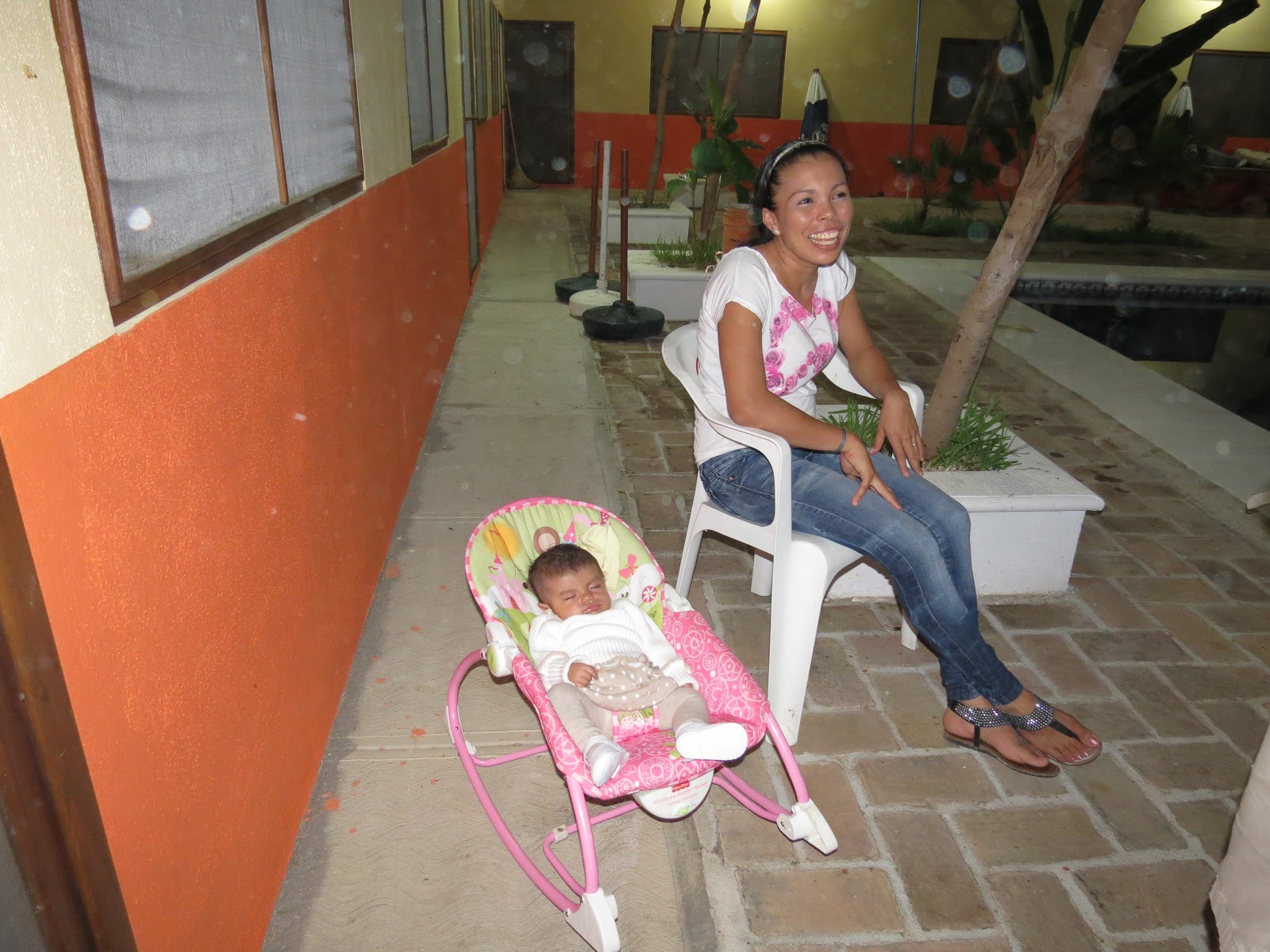
I mentioned to the family that I was missing my family in Canada.They said that they were my family in Mexico.How nice is that.  Enjoy the pictures of my Mexican family.


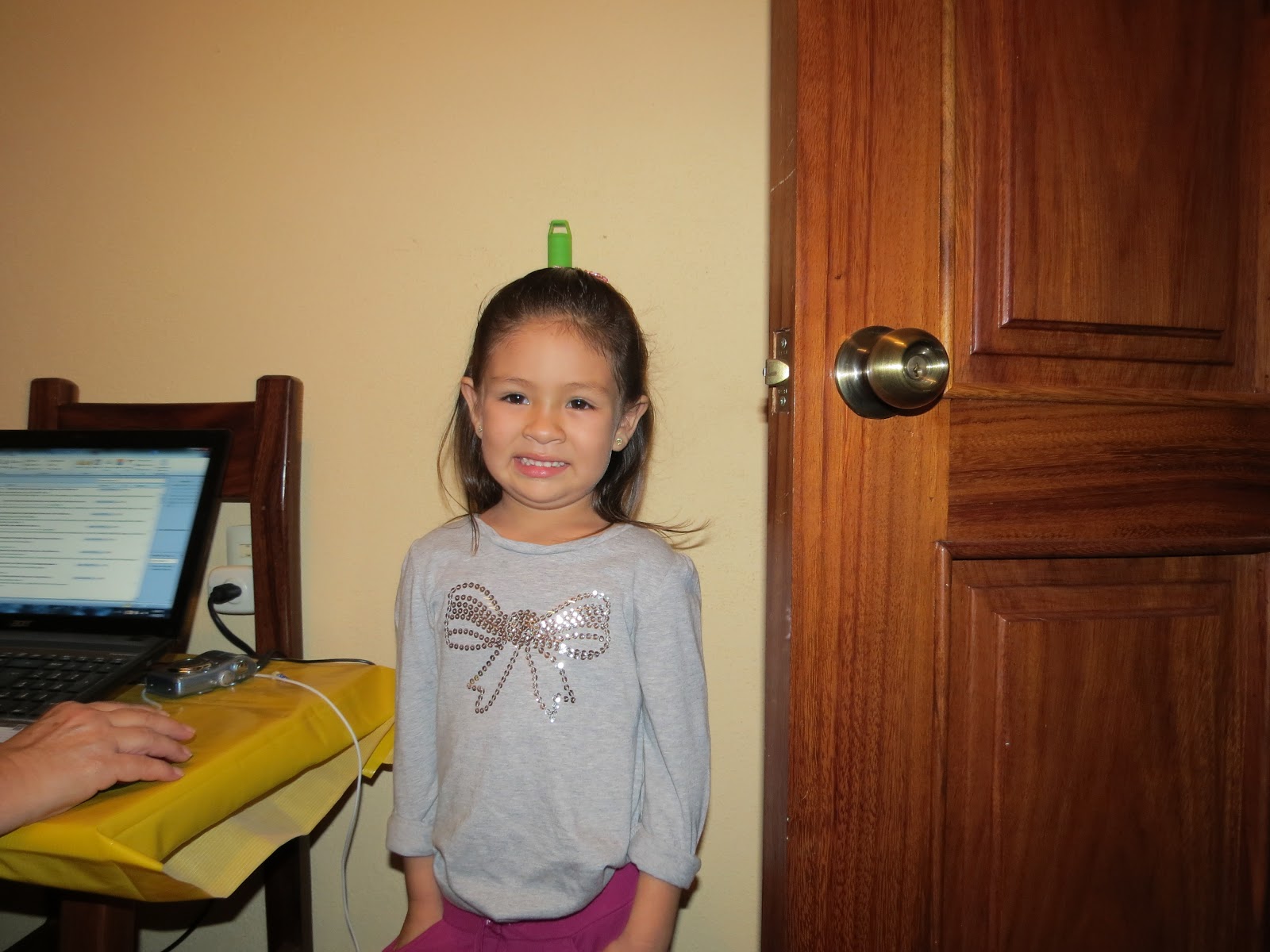
Alondre came to visit at our bungalow


Papa (Grandfather)


oldest daughter and husband


Rosie with her baby Leslie


that is not snow it is the filling in the pinata – the kids were having more fun  playing with that than  with anything


Mama (Grandma) with Daniella


Ramon ready to really whack the pinata


even the youngest wants to try


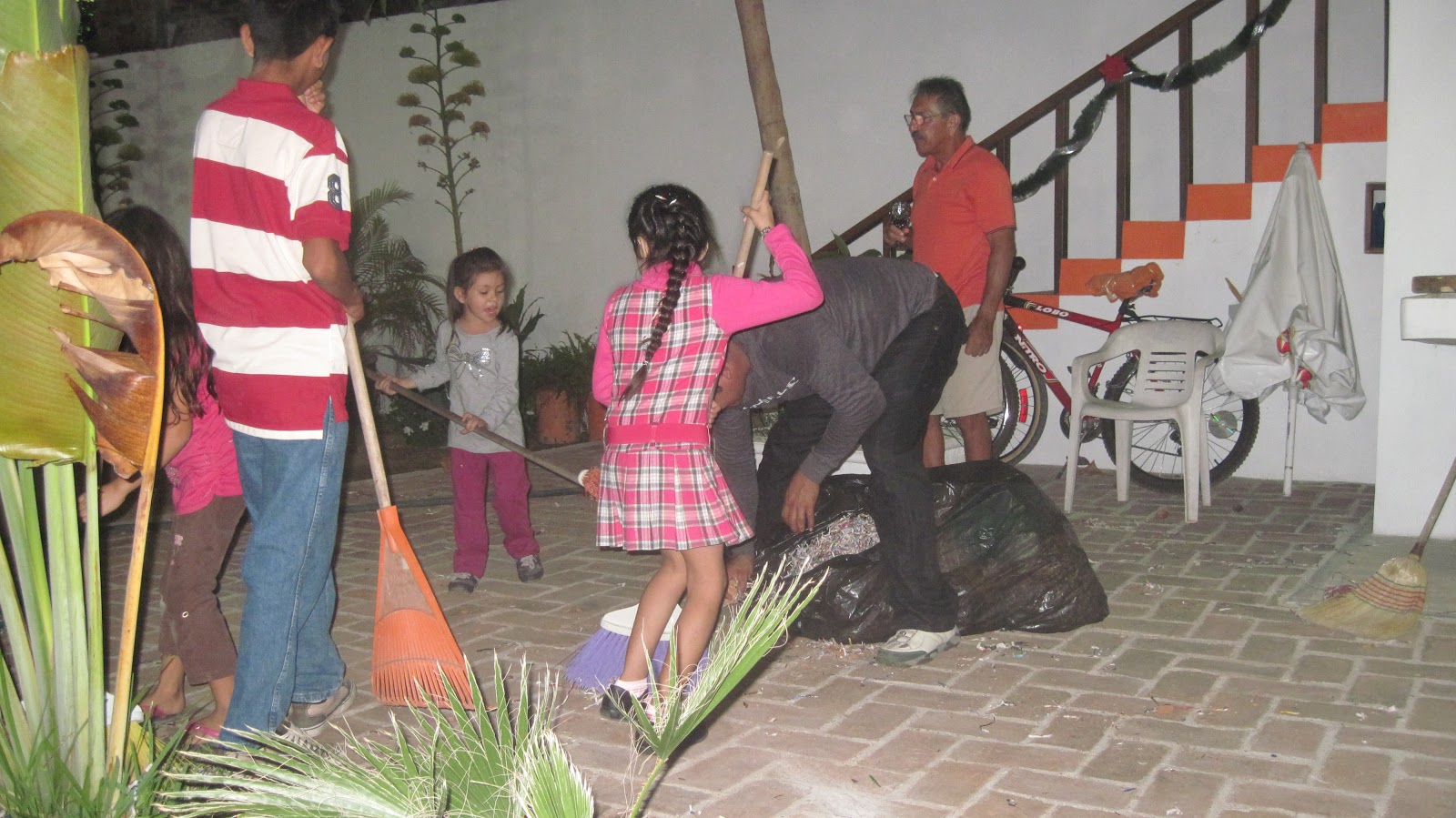
everyone cleans up afterwards