Uruapan, Mexico
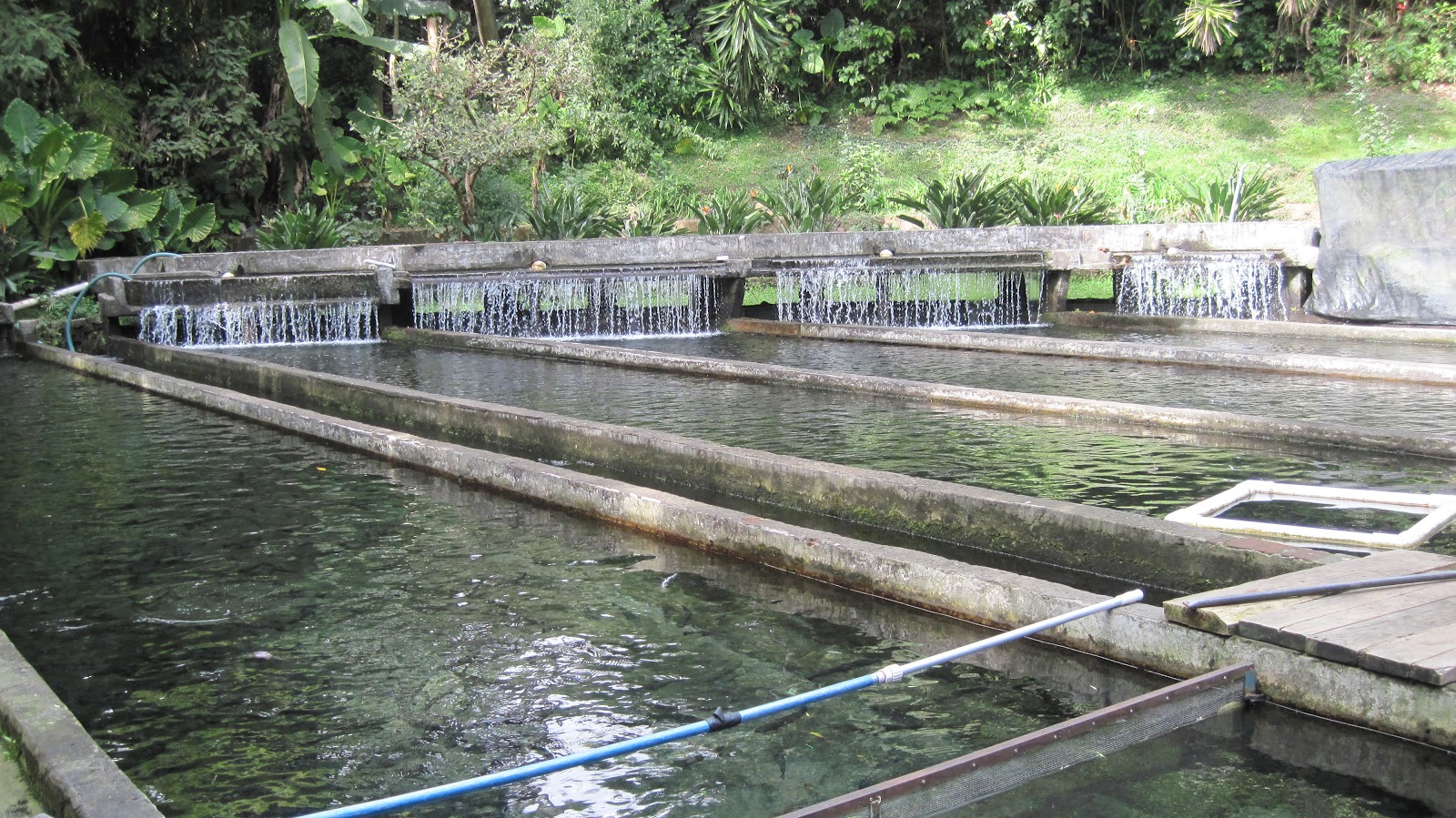
| fish farm where you can ‘catch’ your dinner and take it around the corner to have it cooked |
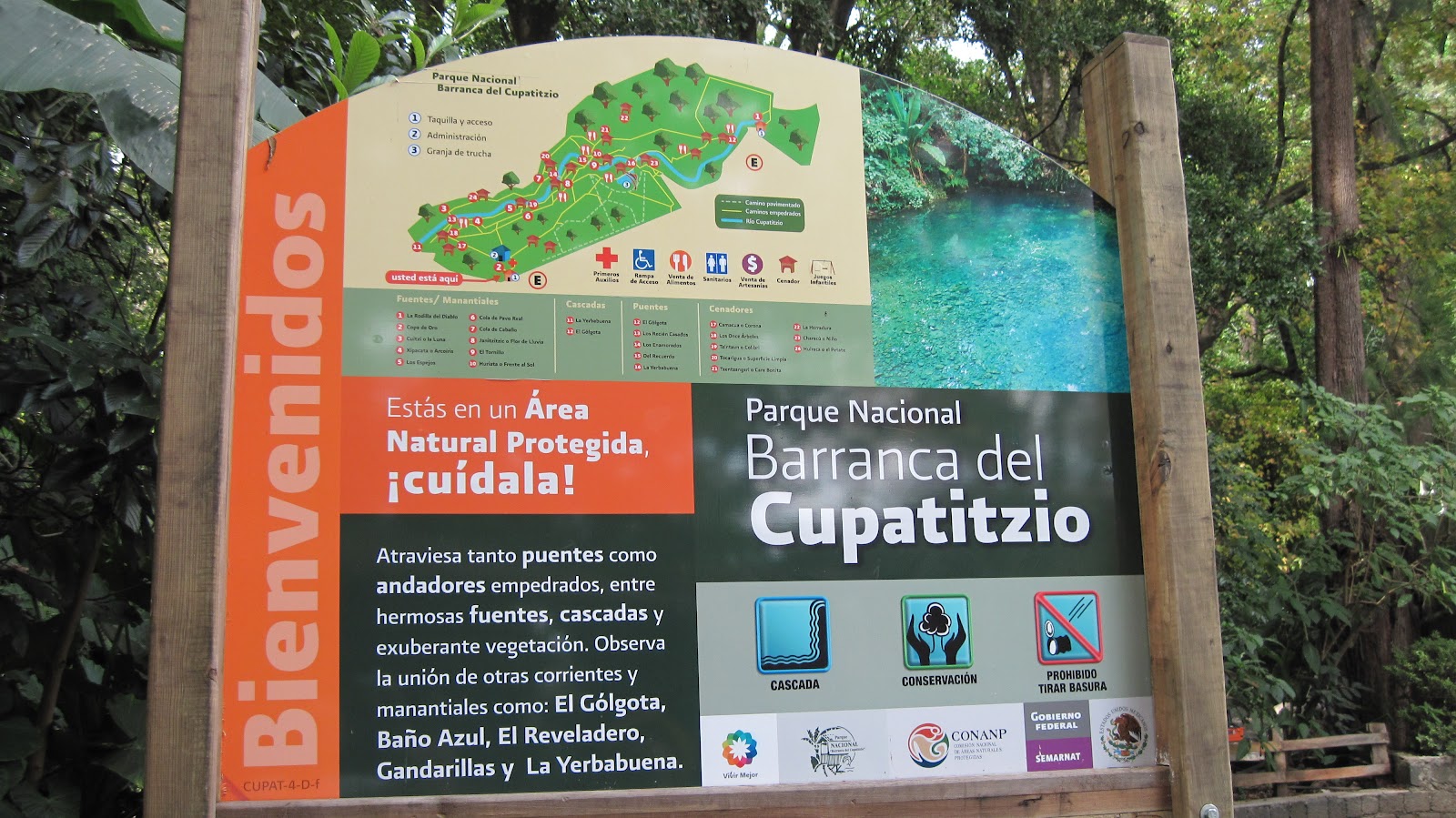
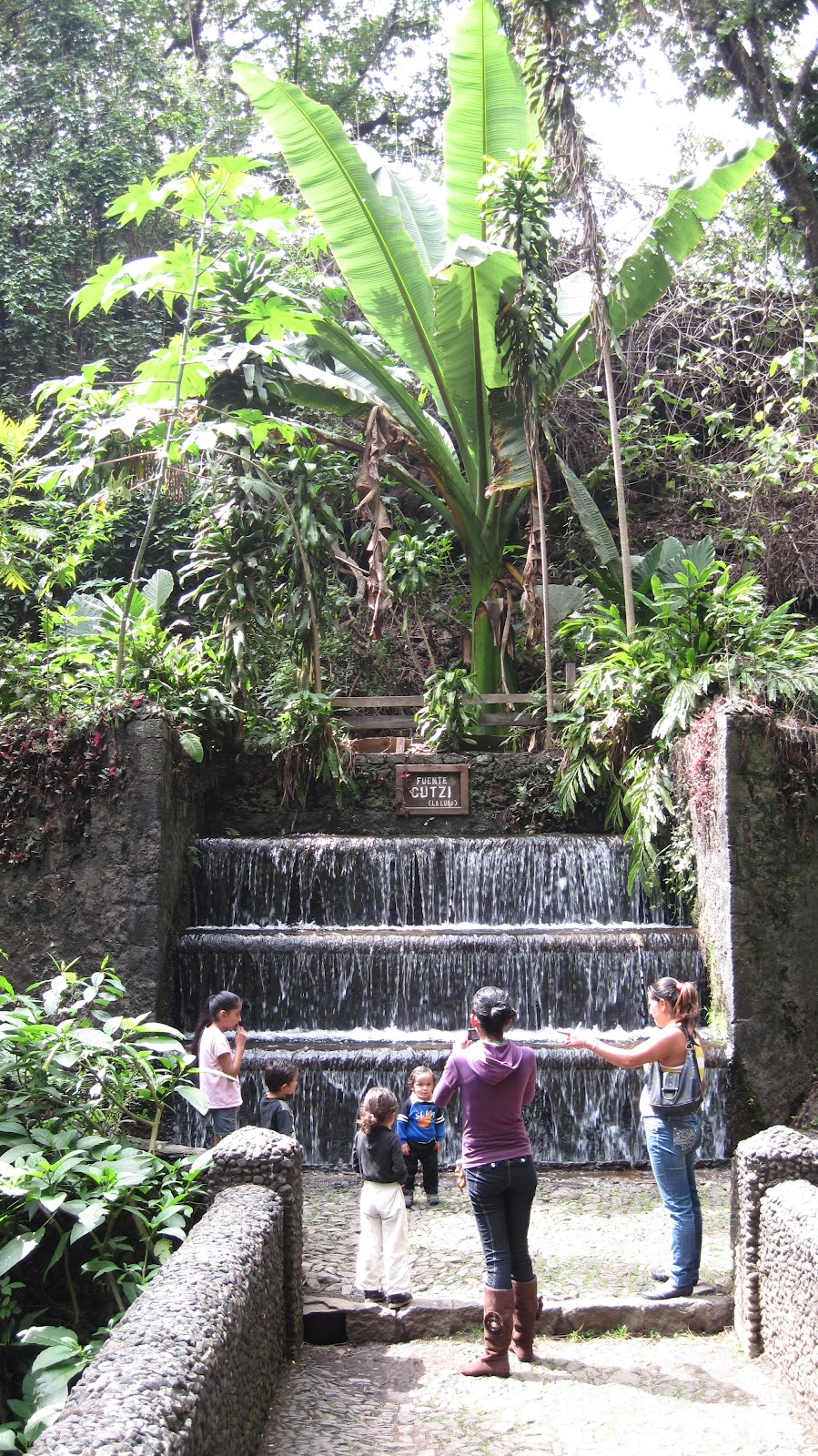
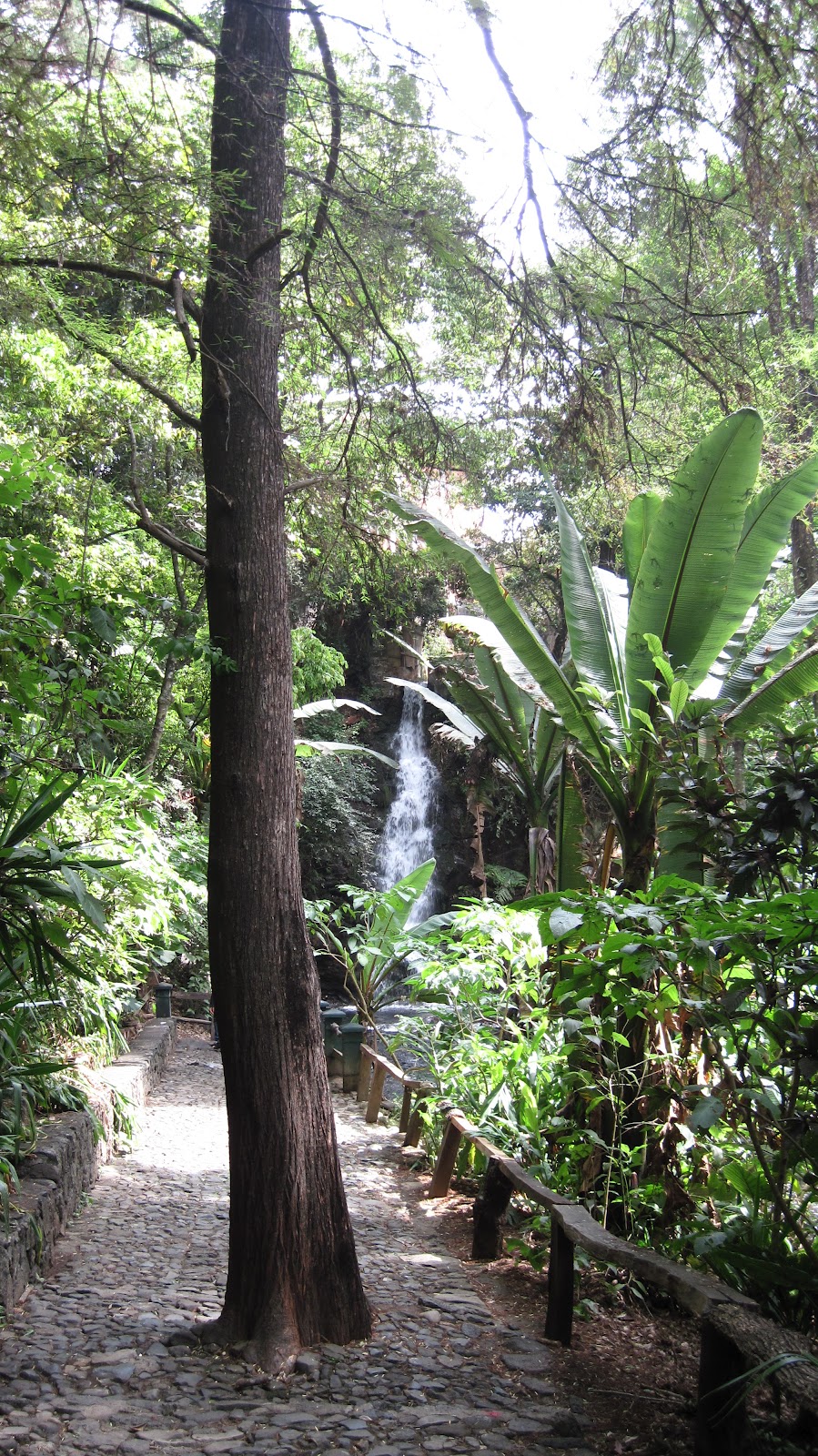
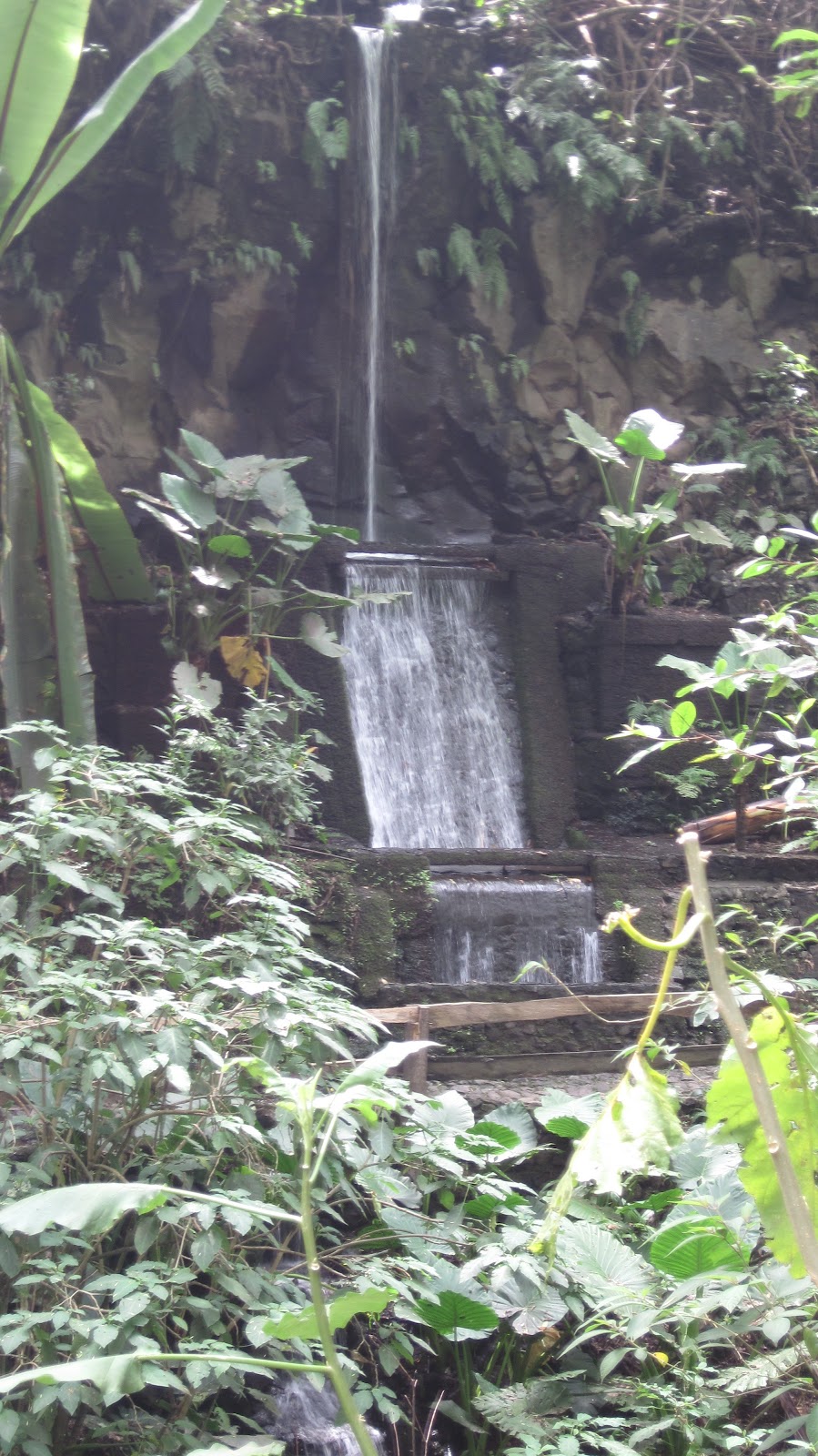
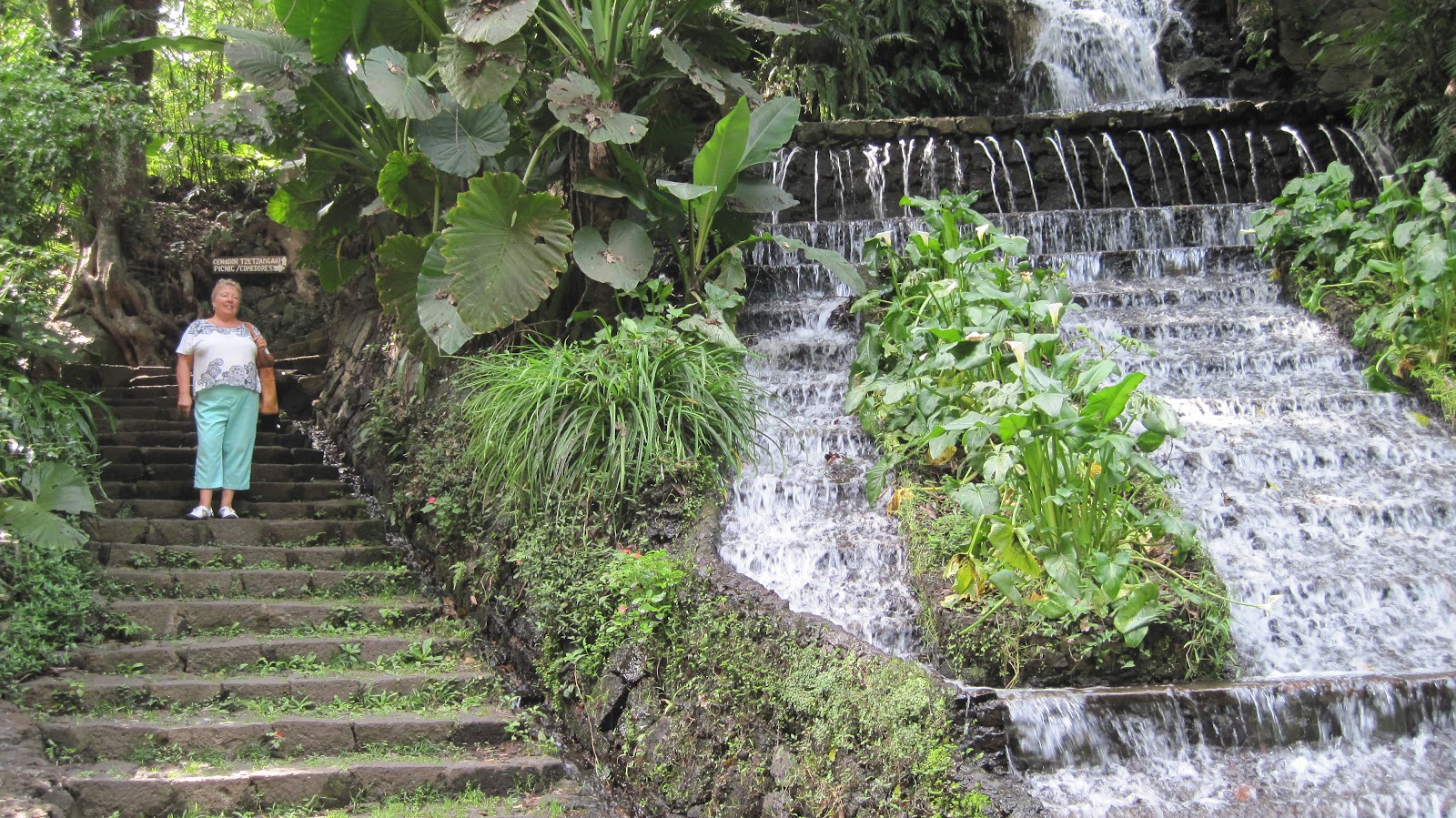
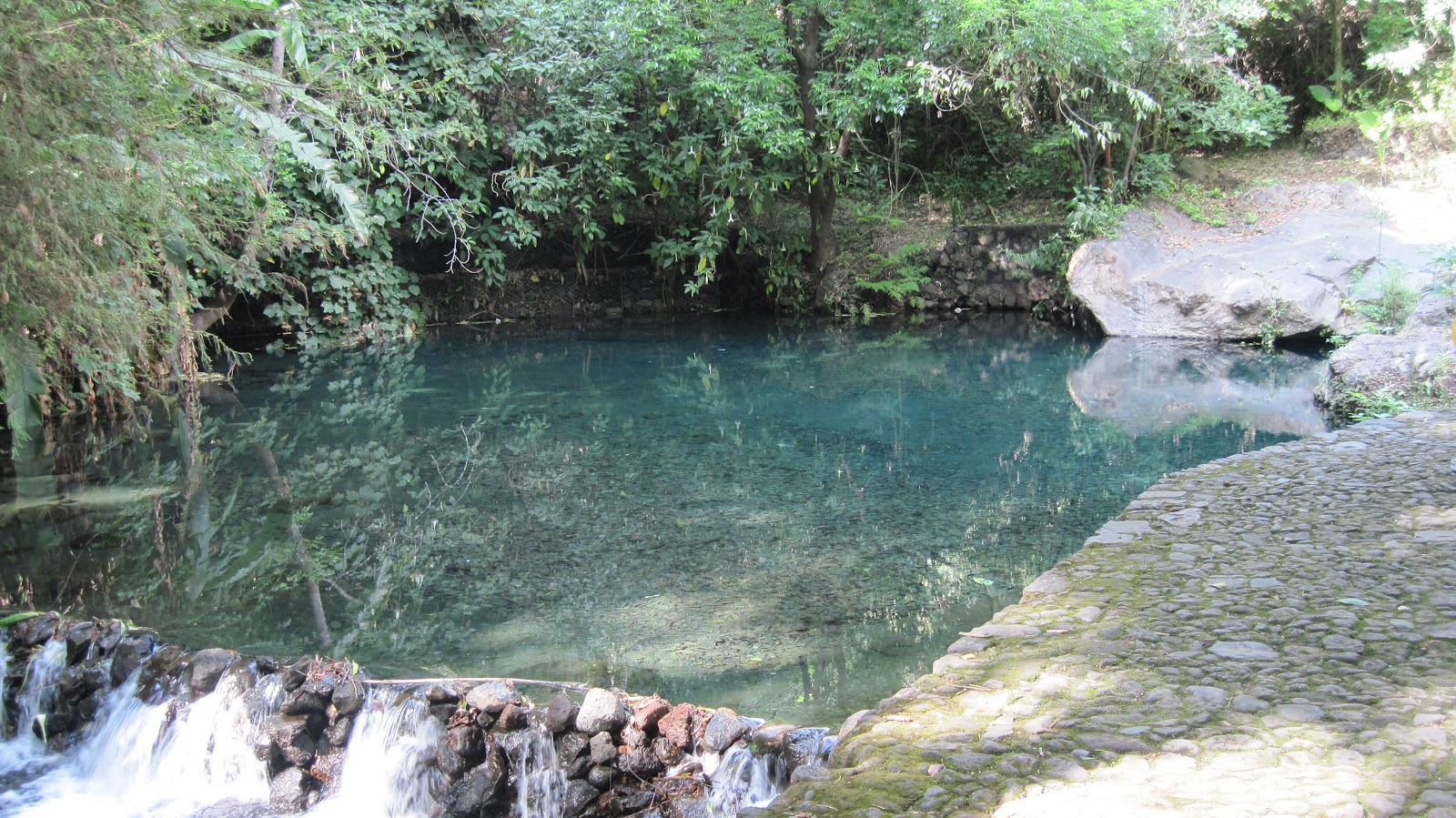
| this is where the river comes out of the ground |
| fish farm where you can ‘catch’ your dinner and take it around the corner to have it cooked |
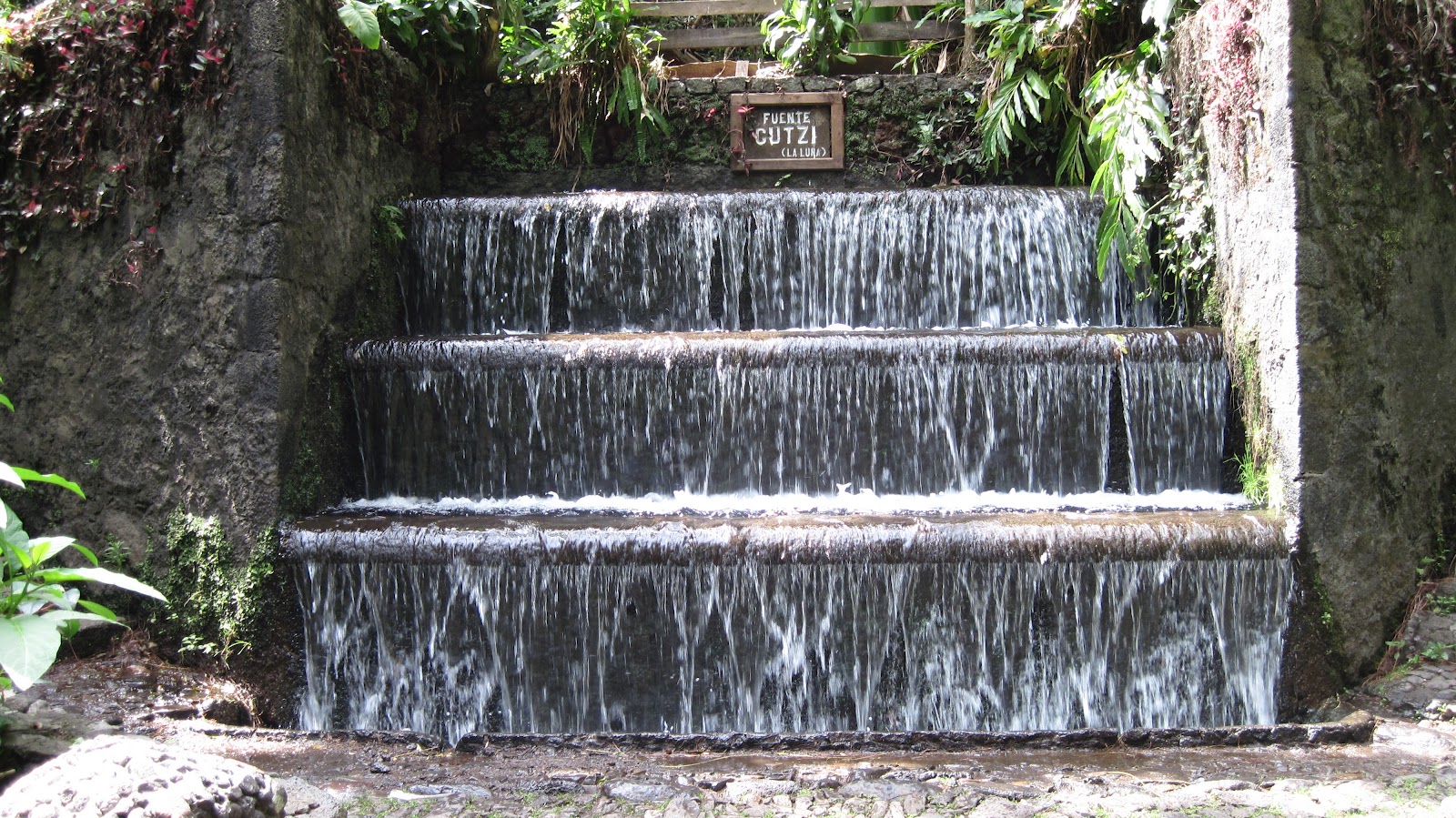
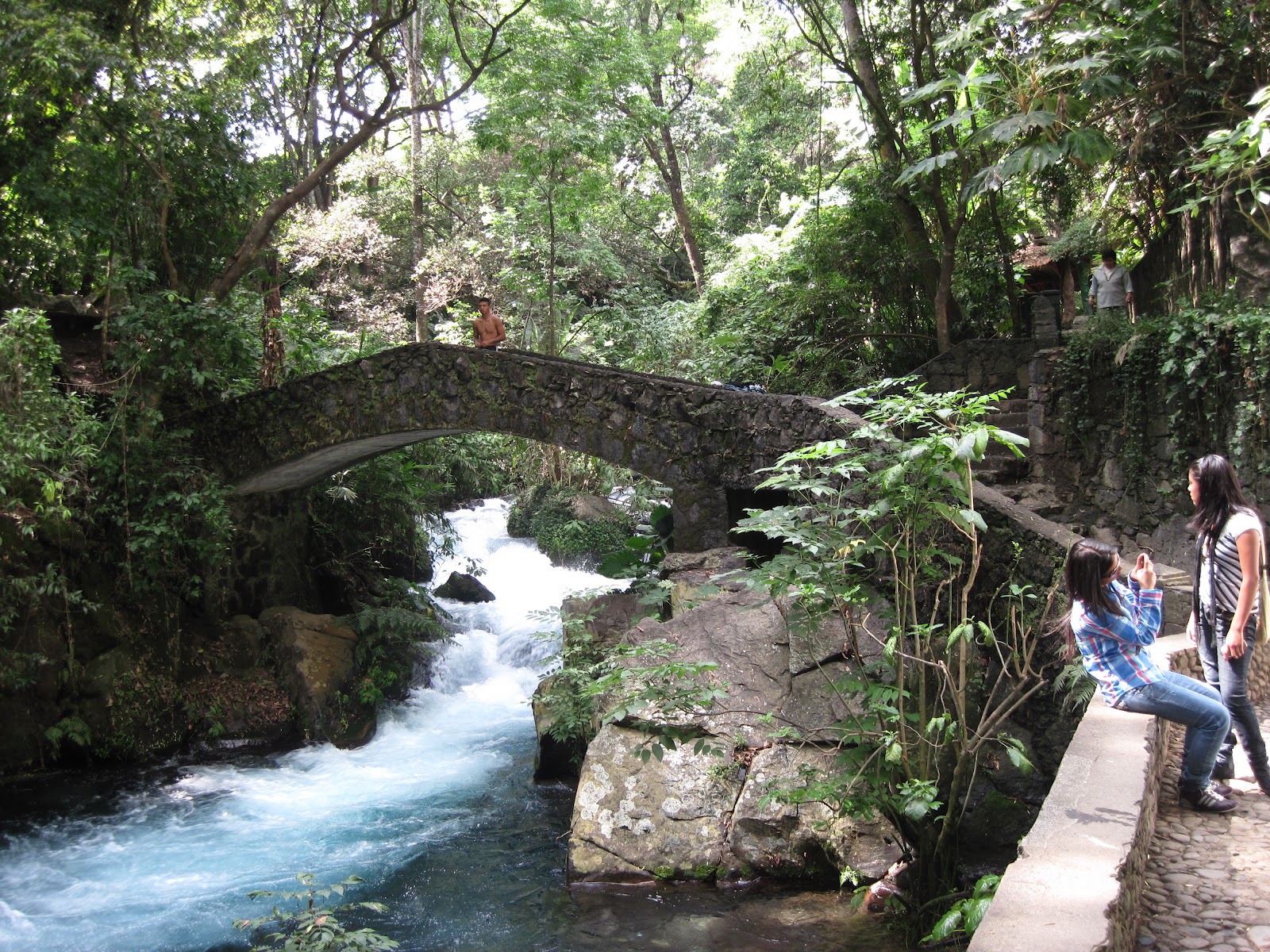
| this is where the river comes out of the ground |
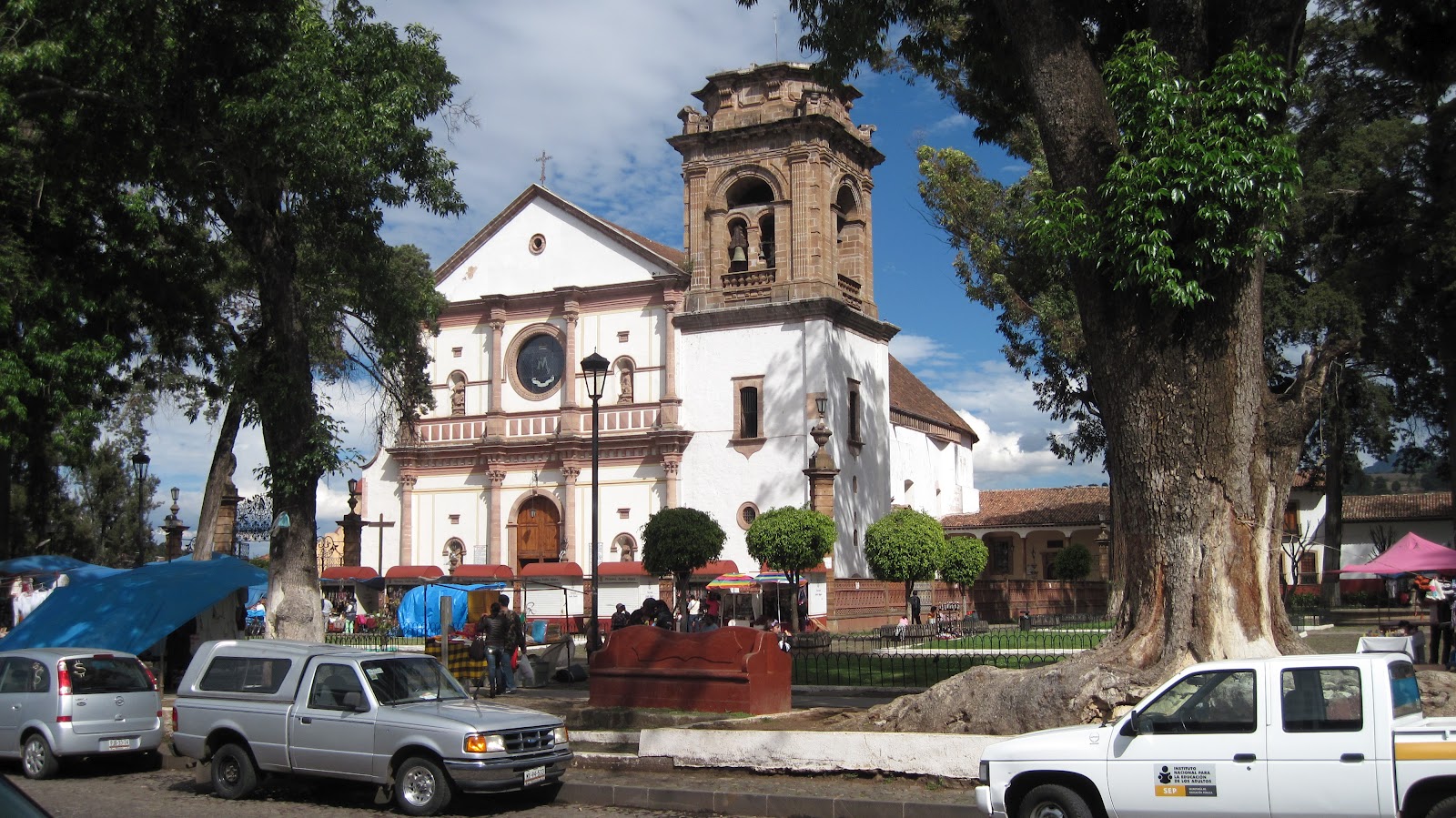
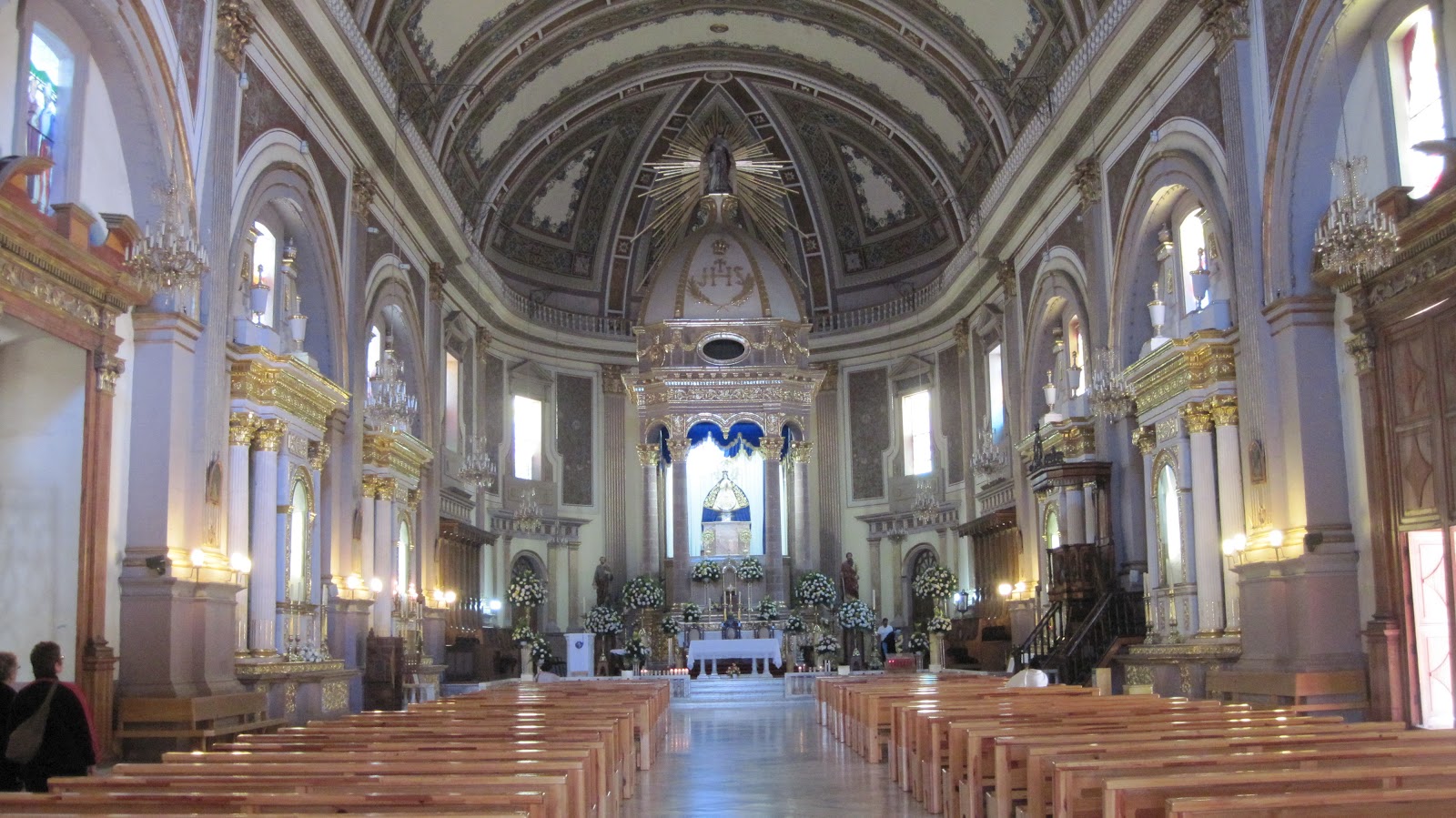
Two blocks east of the Plaza Chica is the Basilica of Nuestra Señora de la Salud (Our Lady of Health) Her image is made with corn-stalk paste and honey and was created in the 16th century. Vasco de Quiroga built this church over a pre-Hispanic ceremonial site to function as the Cathedral of Michoacán. The remains of Vasco de Quiroga are interred here.
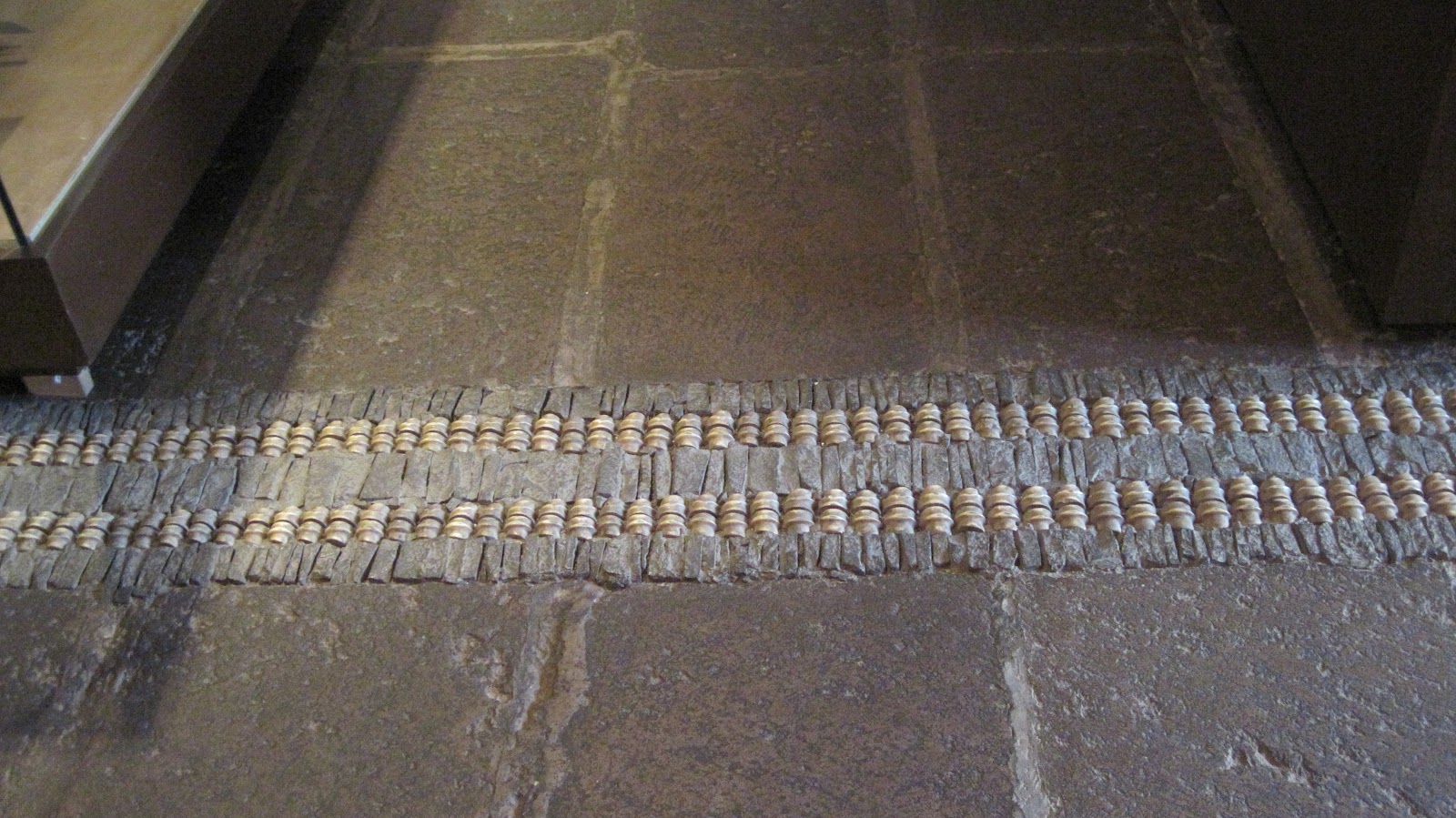
| Cattle vertabrae |
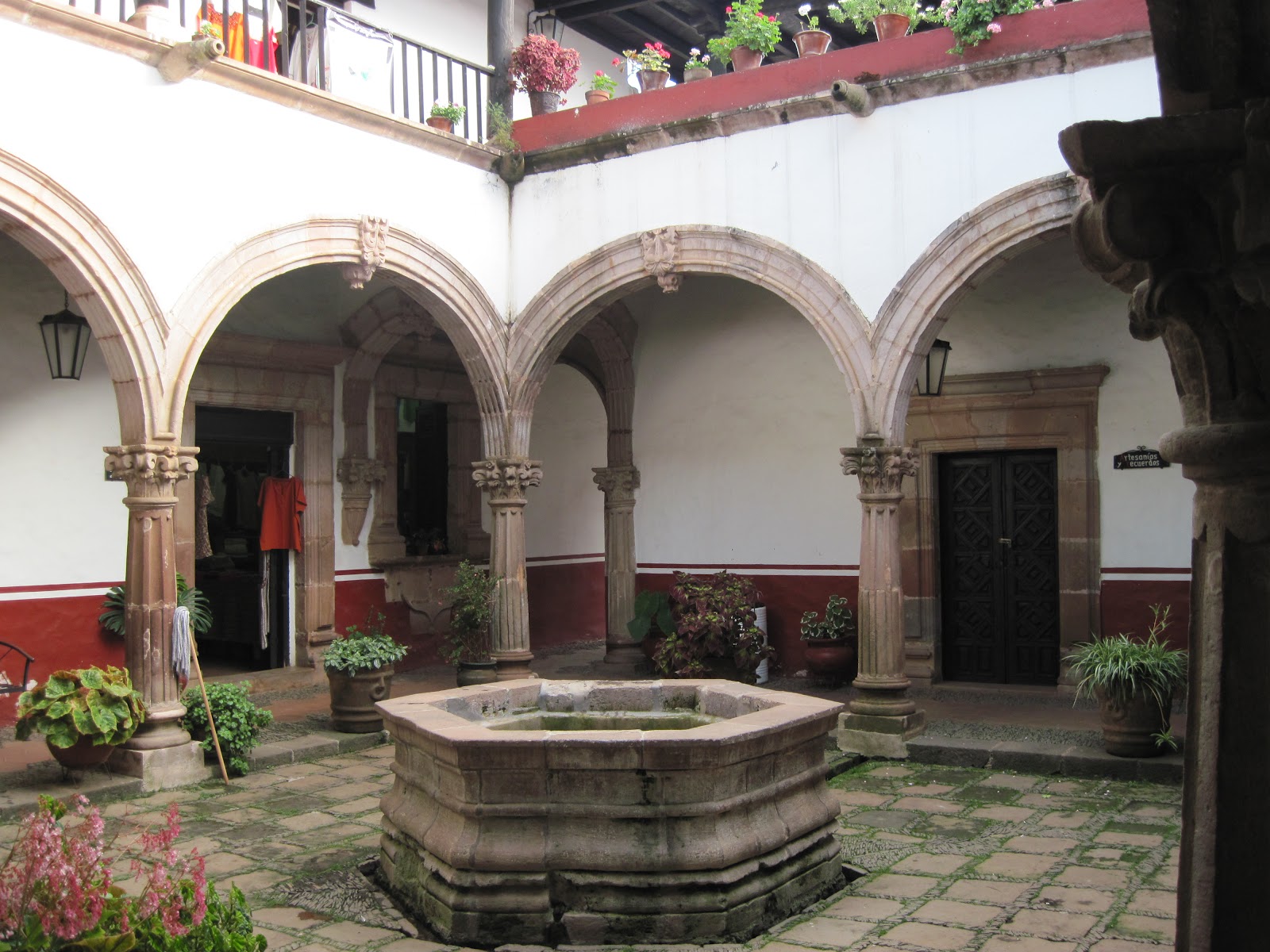
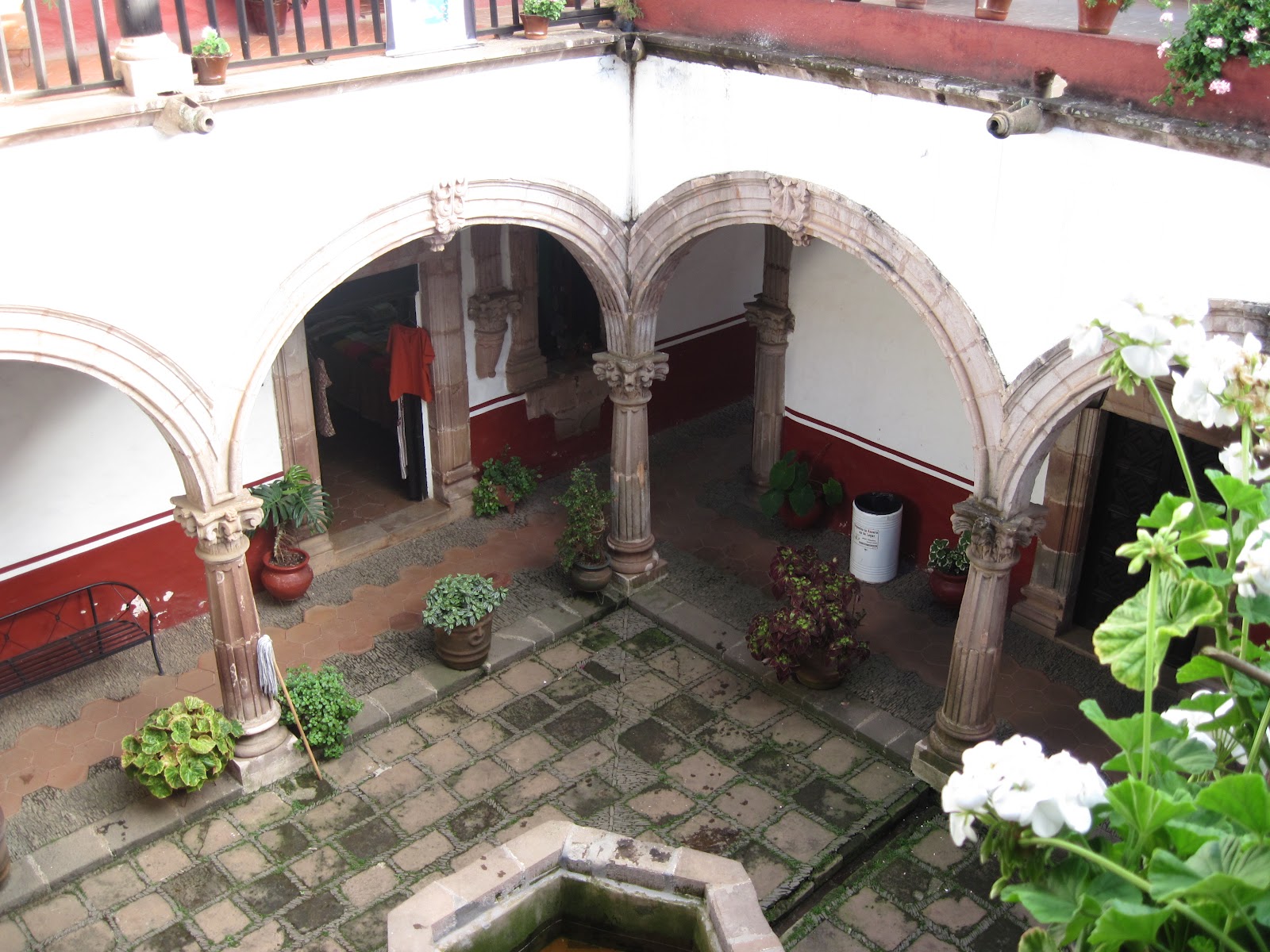
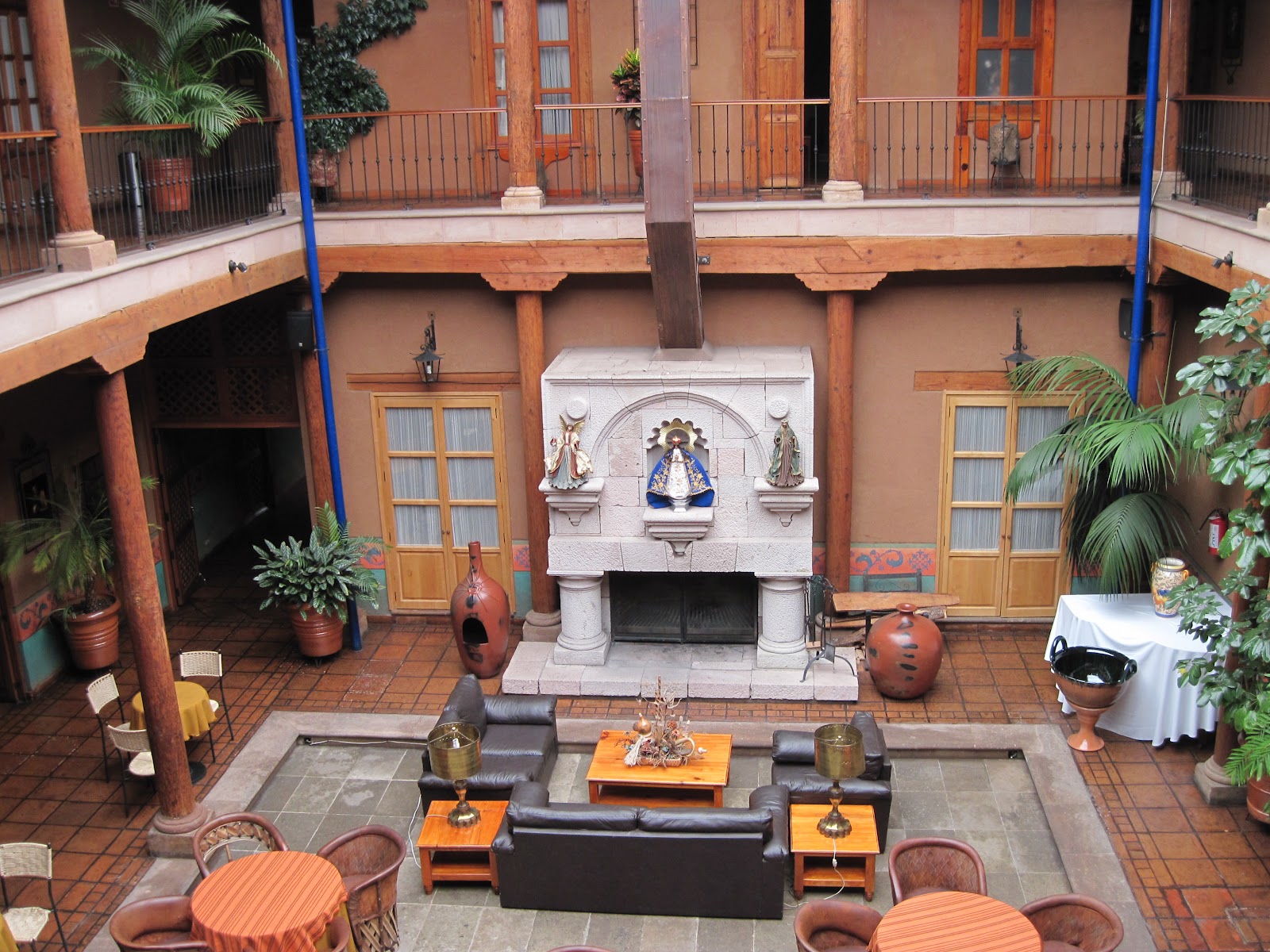
| one of the five patios |
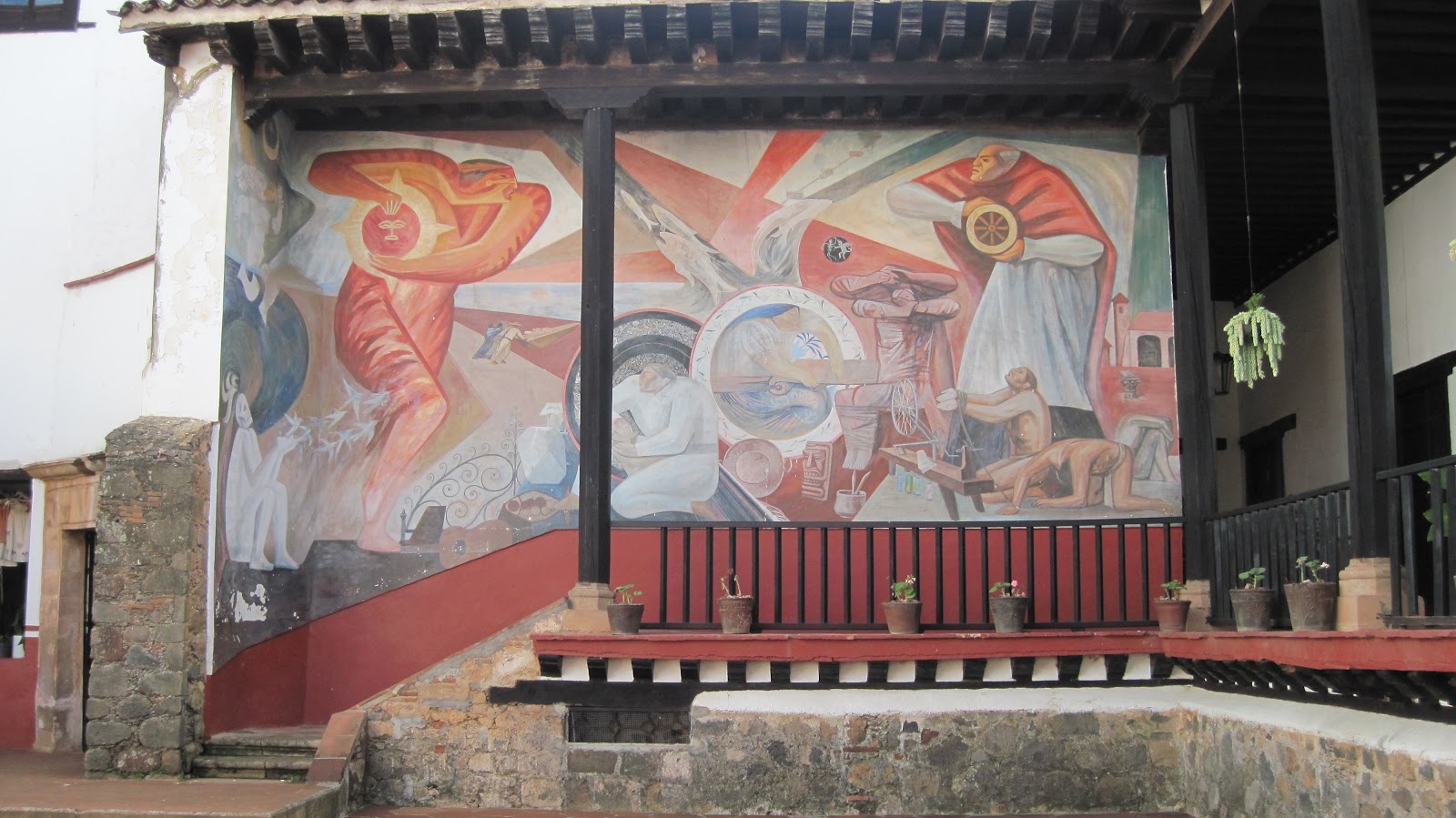
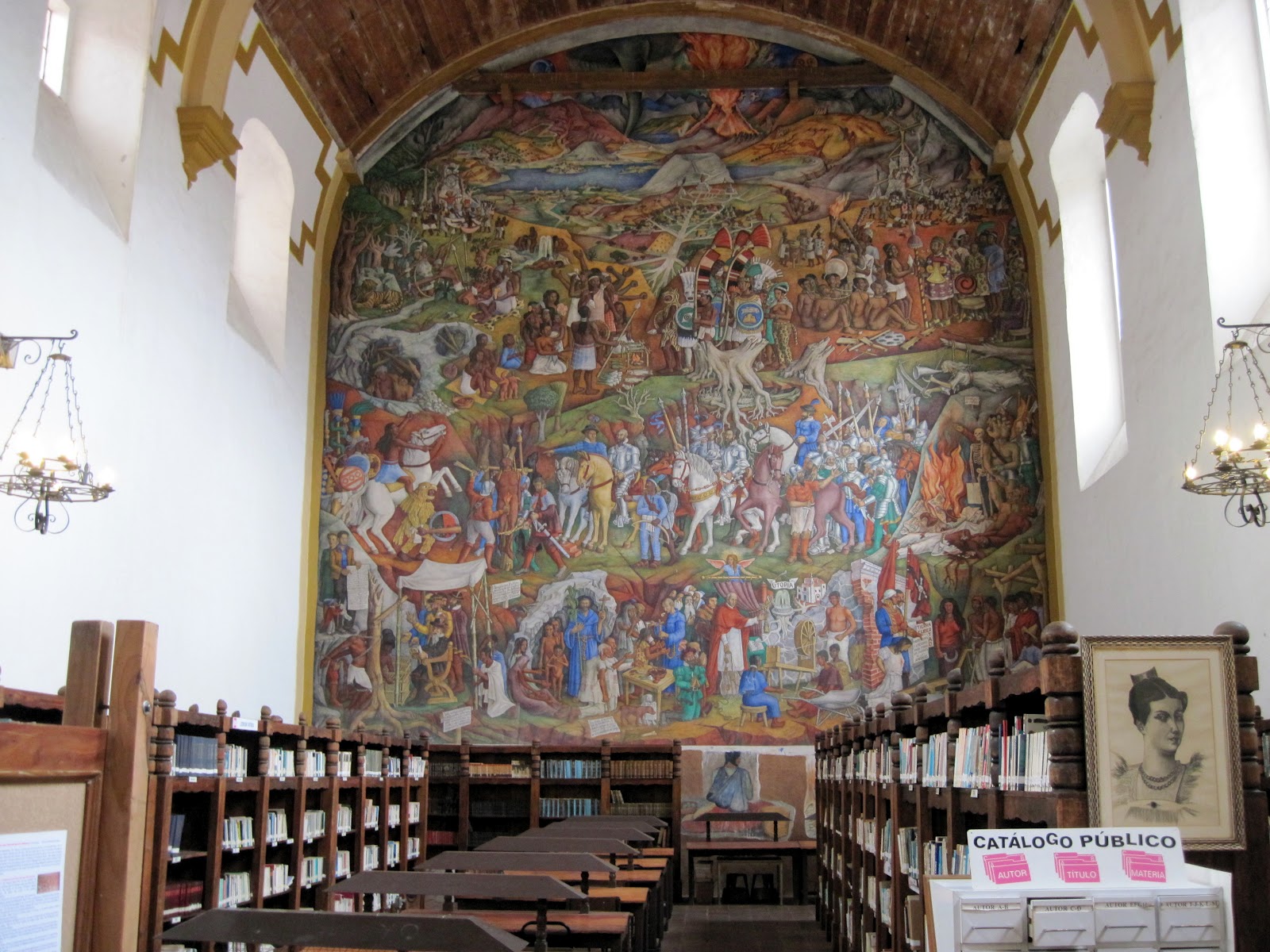
| another patio with mural |
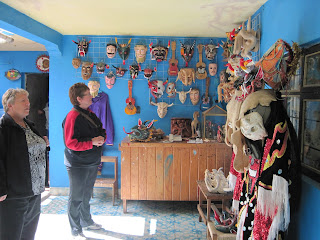
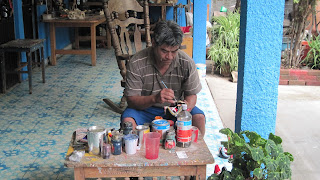
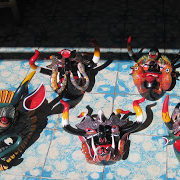
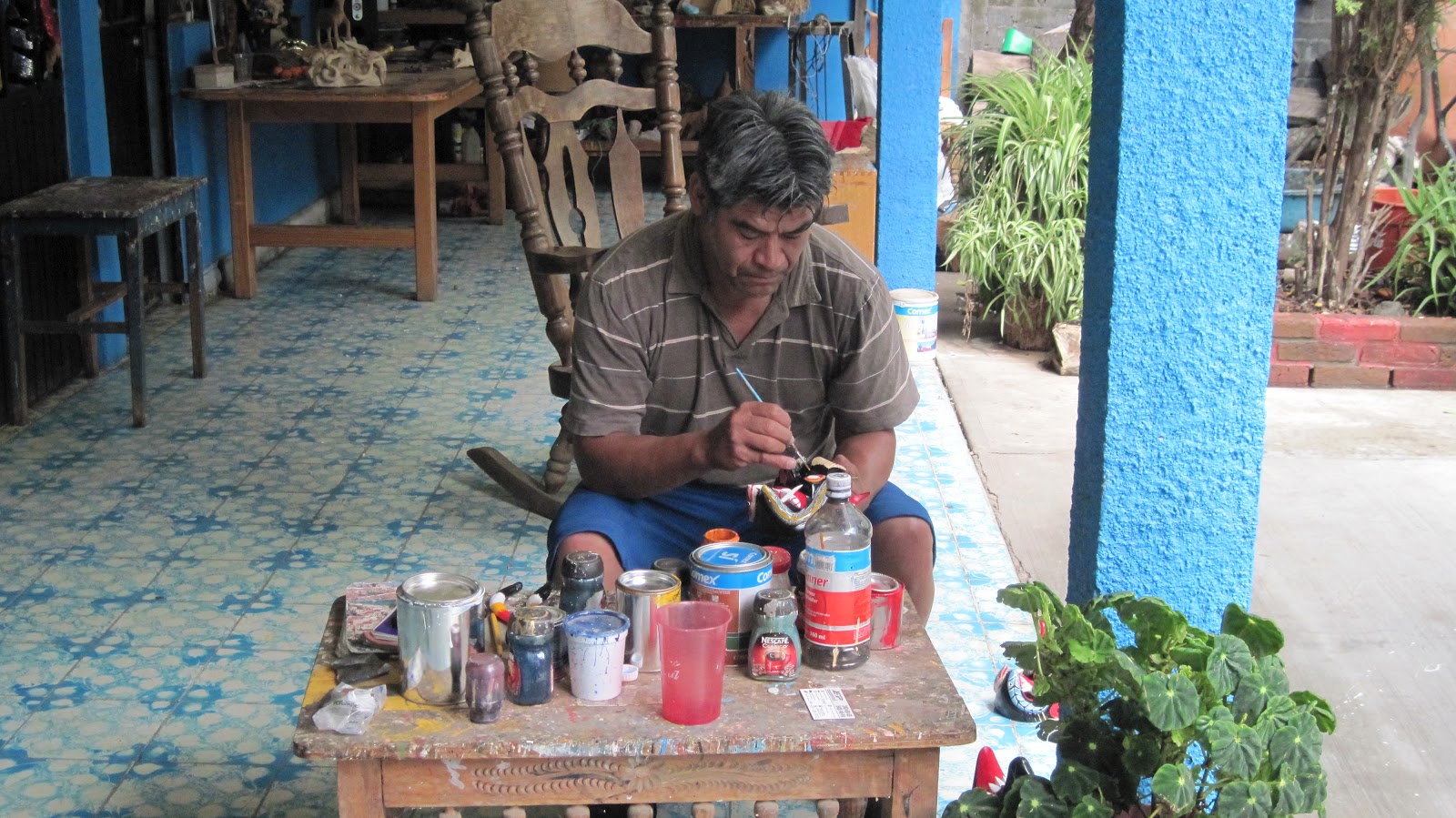
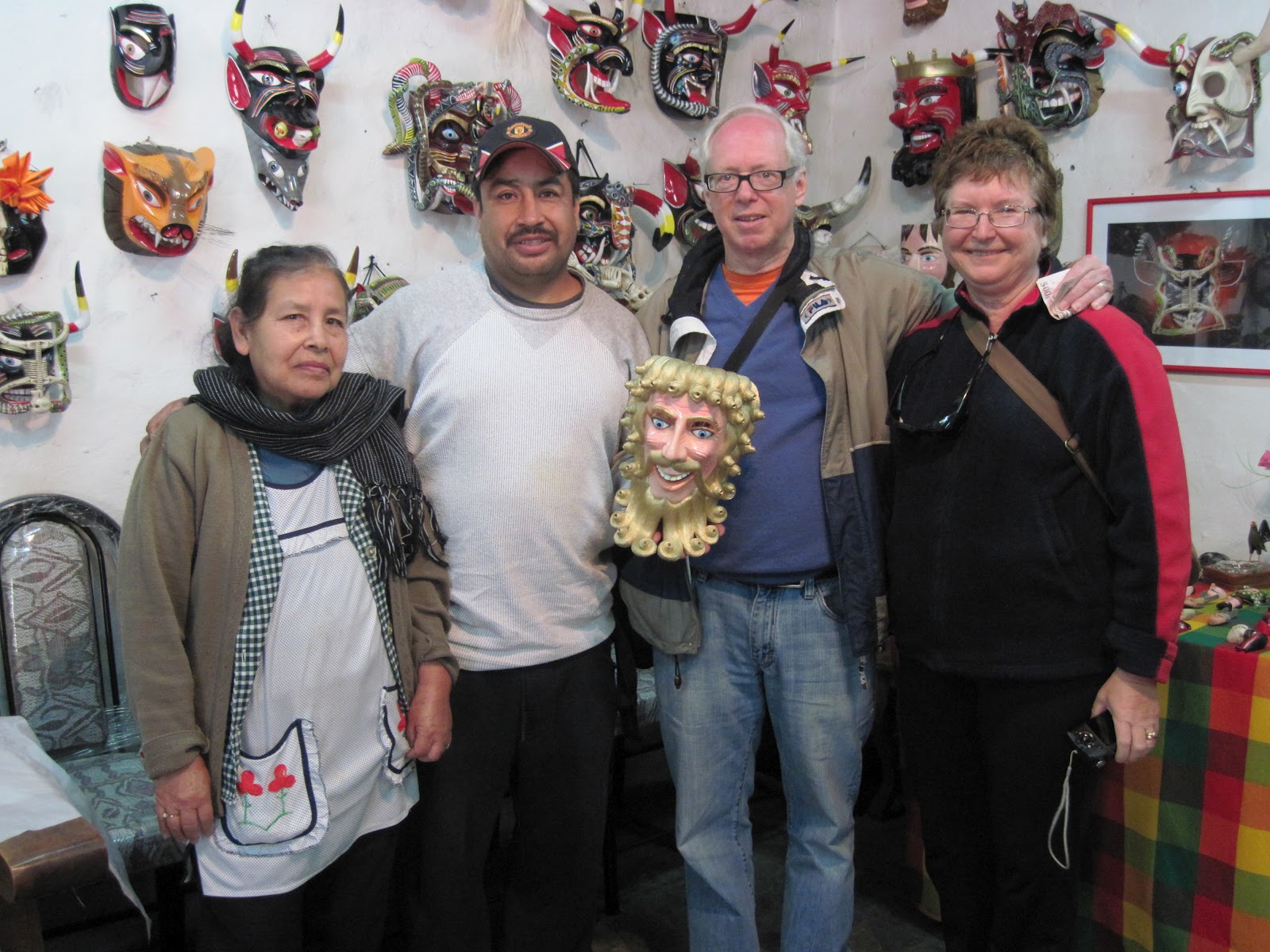
| signing our masks |
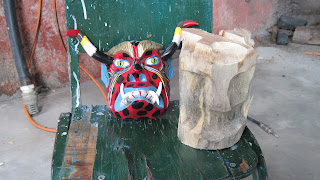
| left, completed mask, right the beginning of another masterpiece |
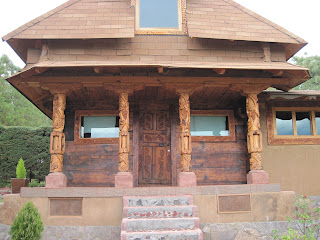
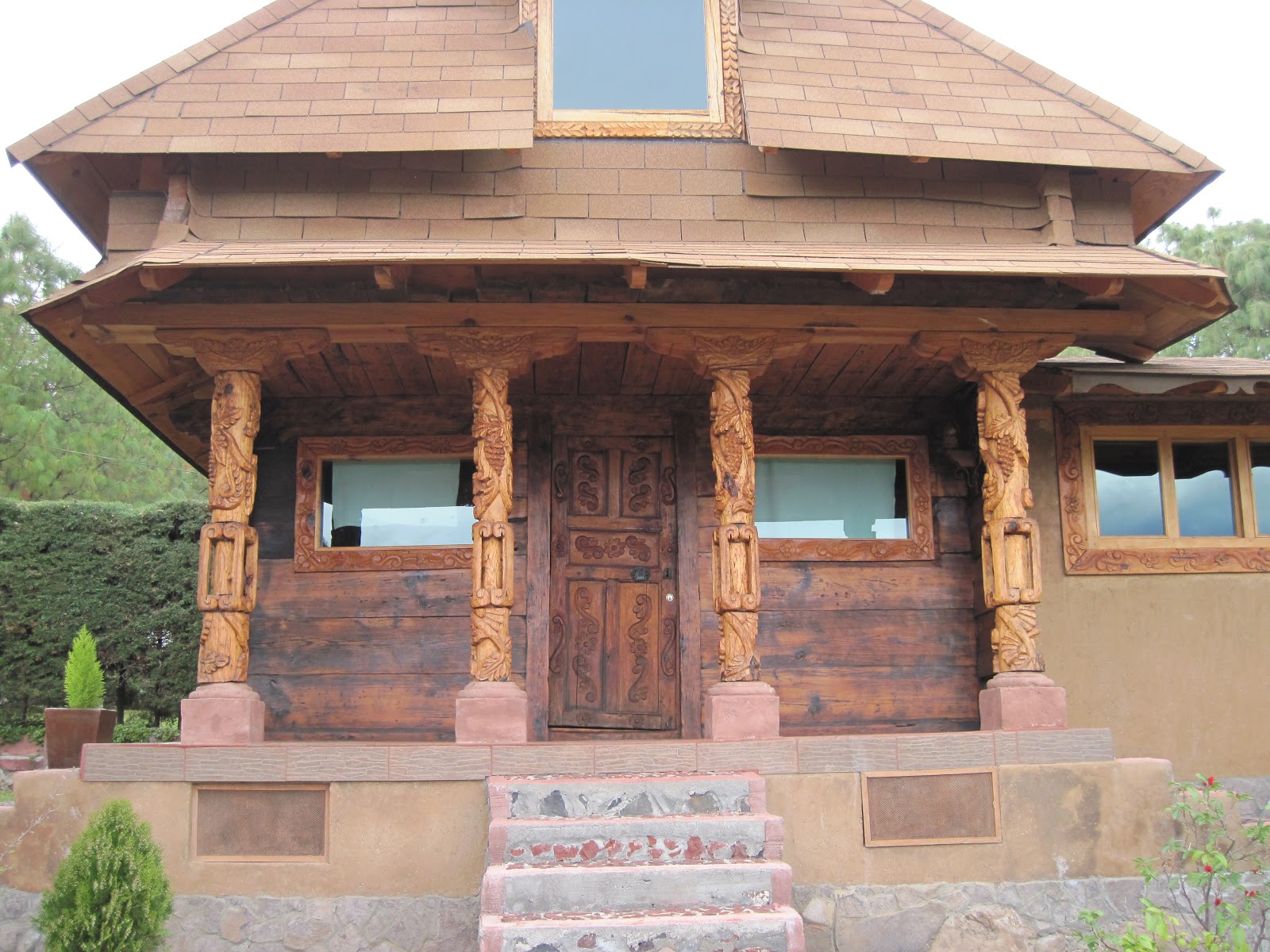
| Purpecha troje house |
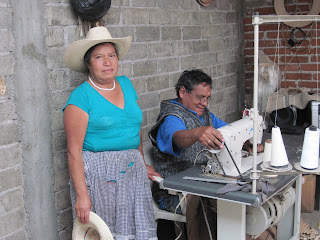
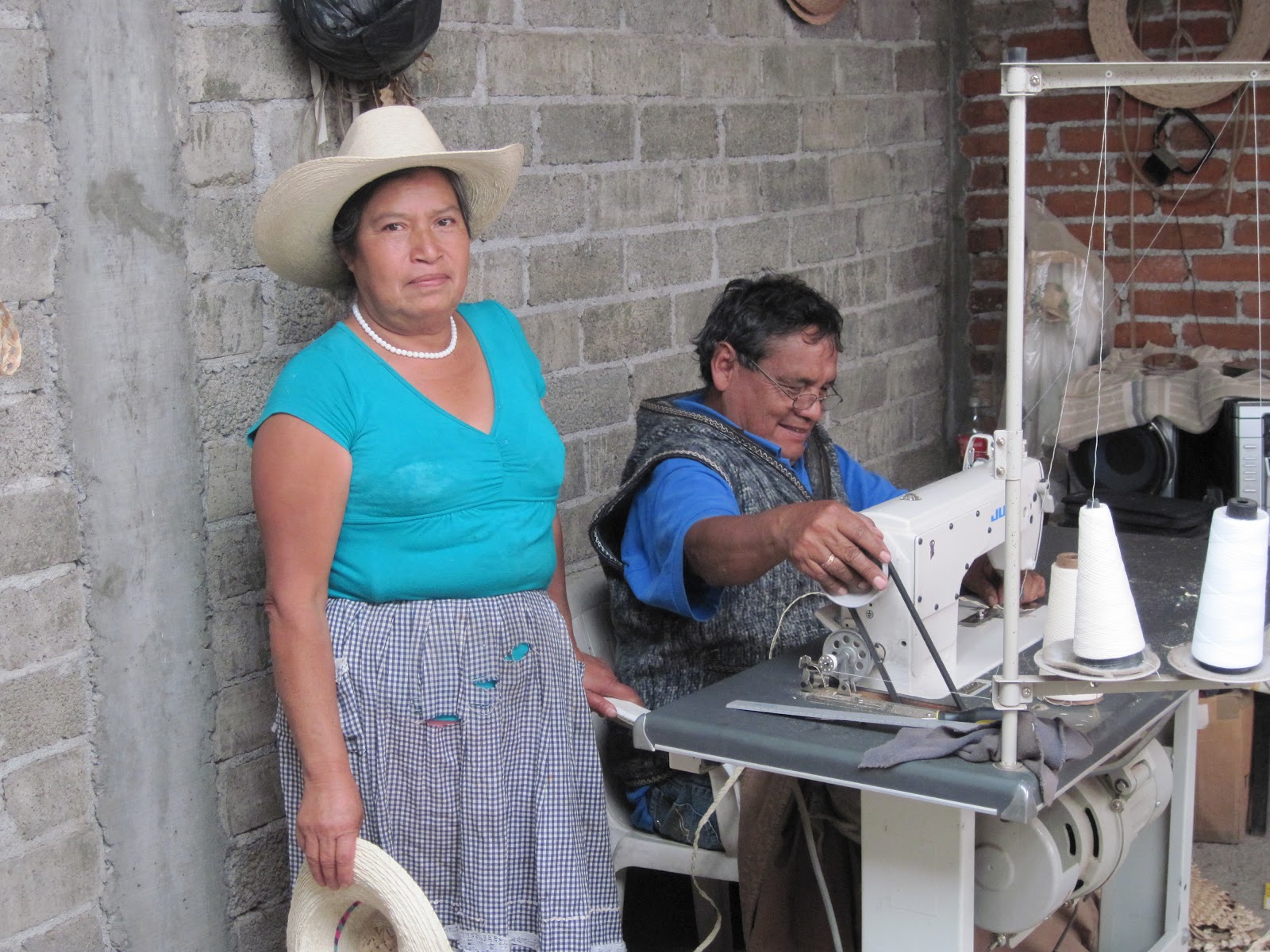
| The husband is sewing the straw braids together to form a hat |
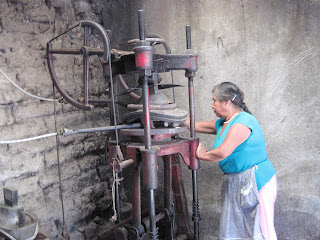
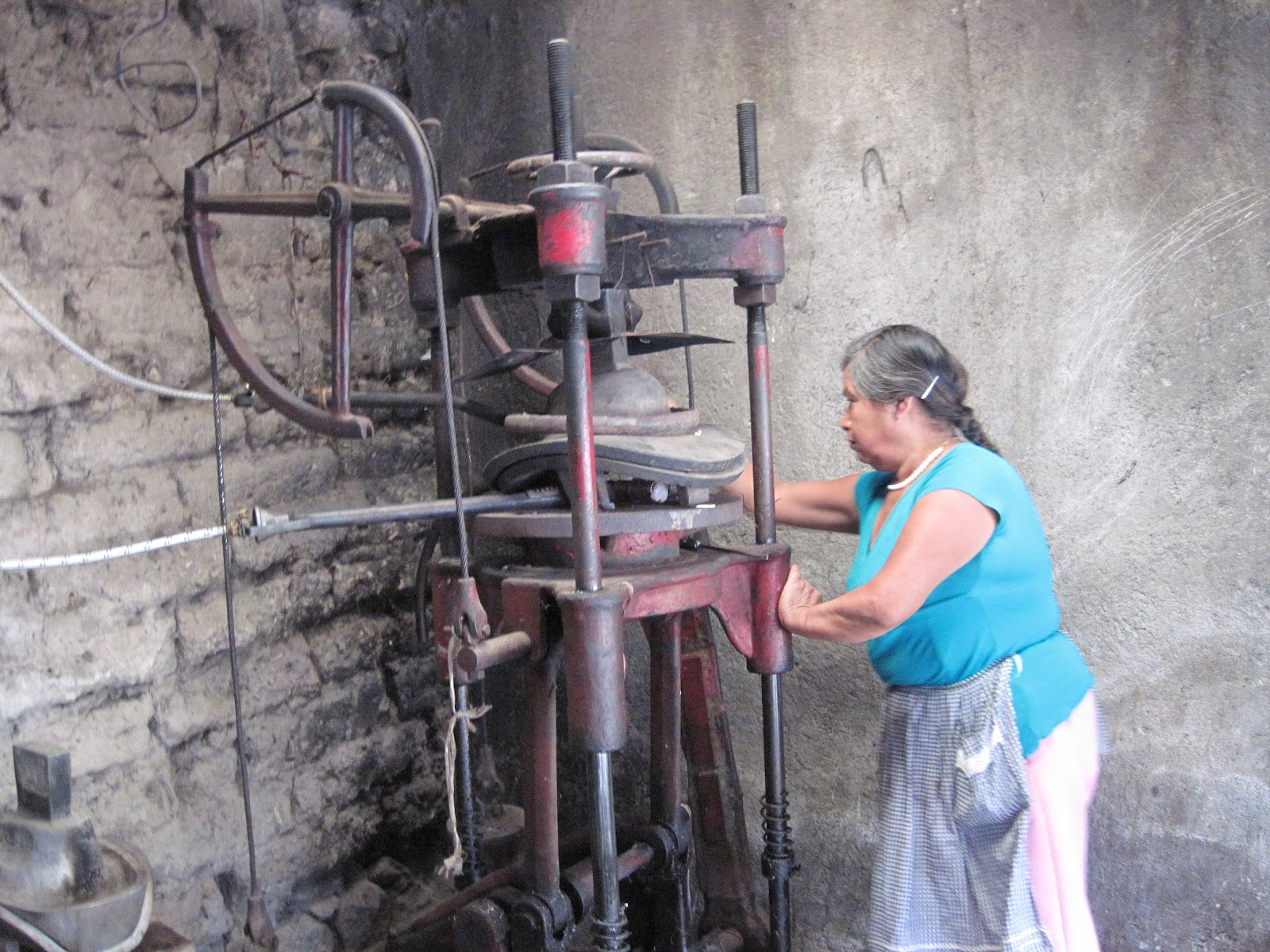
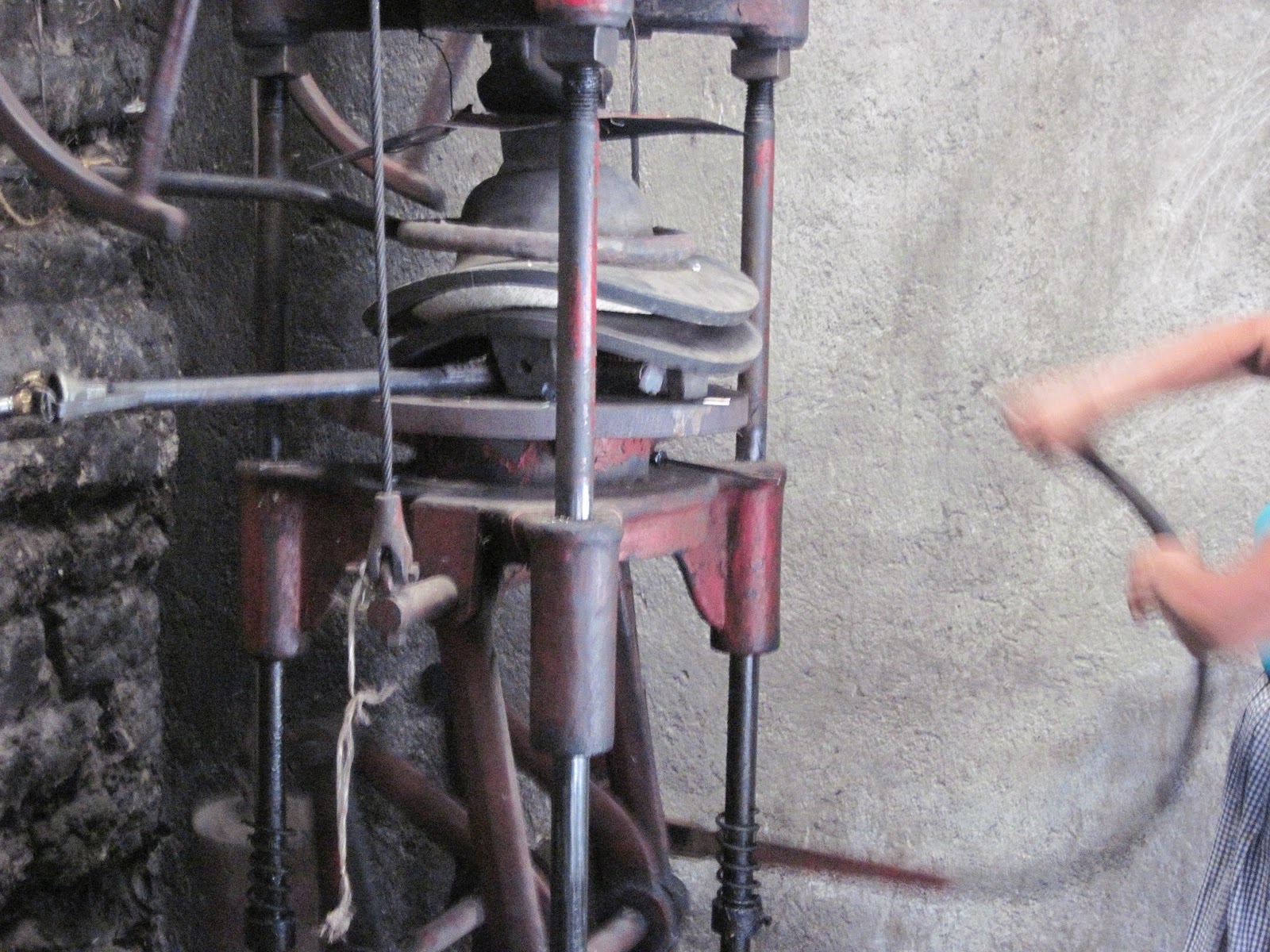
| This machine forms the hat. |
The machine is heated by propane. The iron hat form is very, very heavy. The men tried to lift it but it was not easy.
The wife made it look quite easy. She explained to us that if she left it on longer, then it would take on a darker colour.
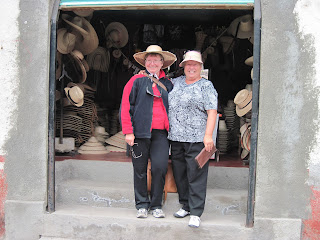
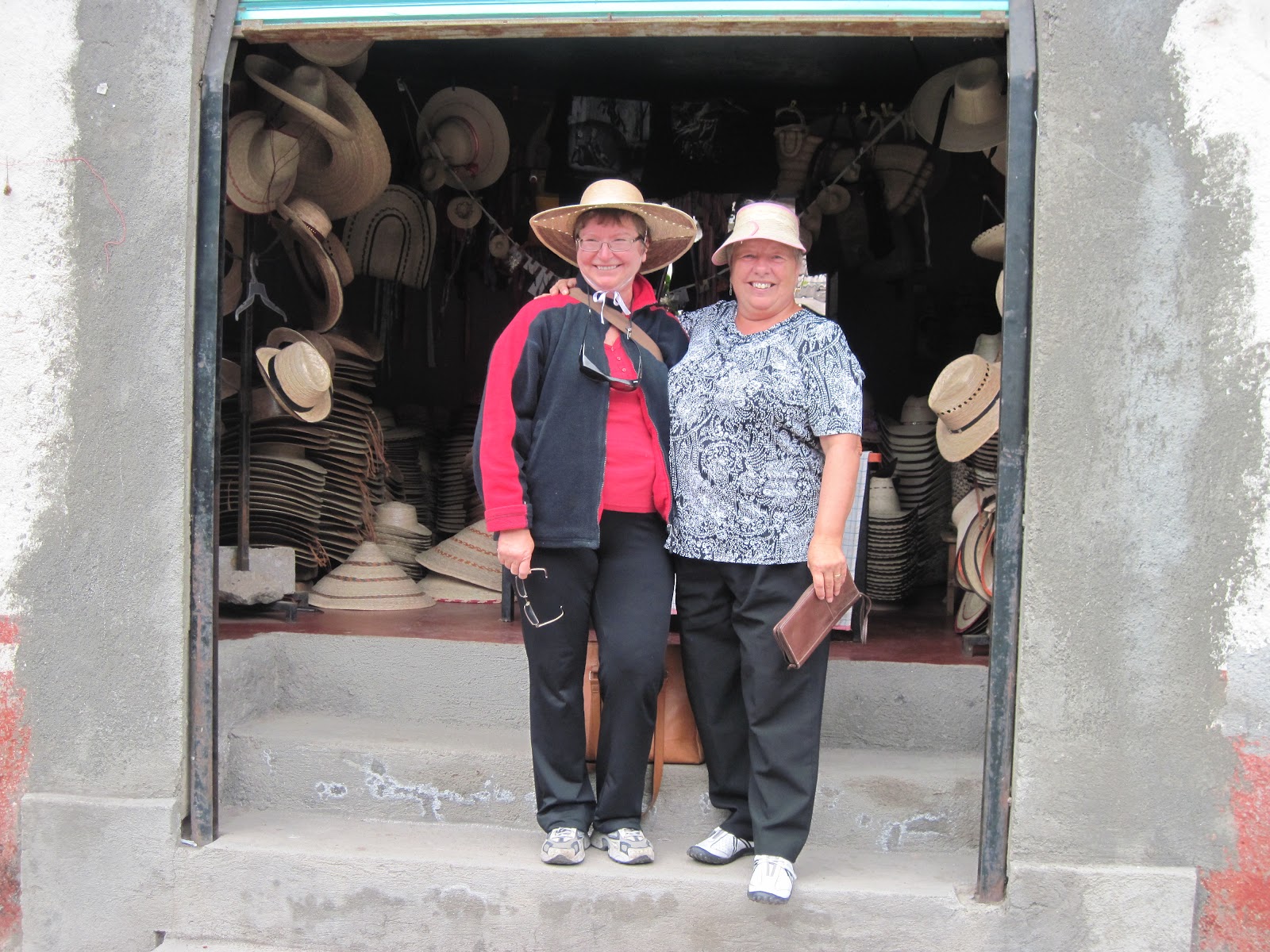
| Our happy purchases |
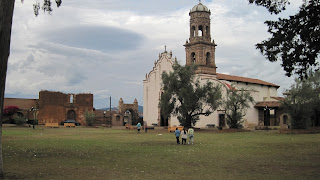
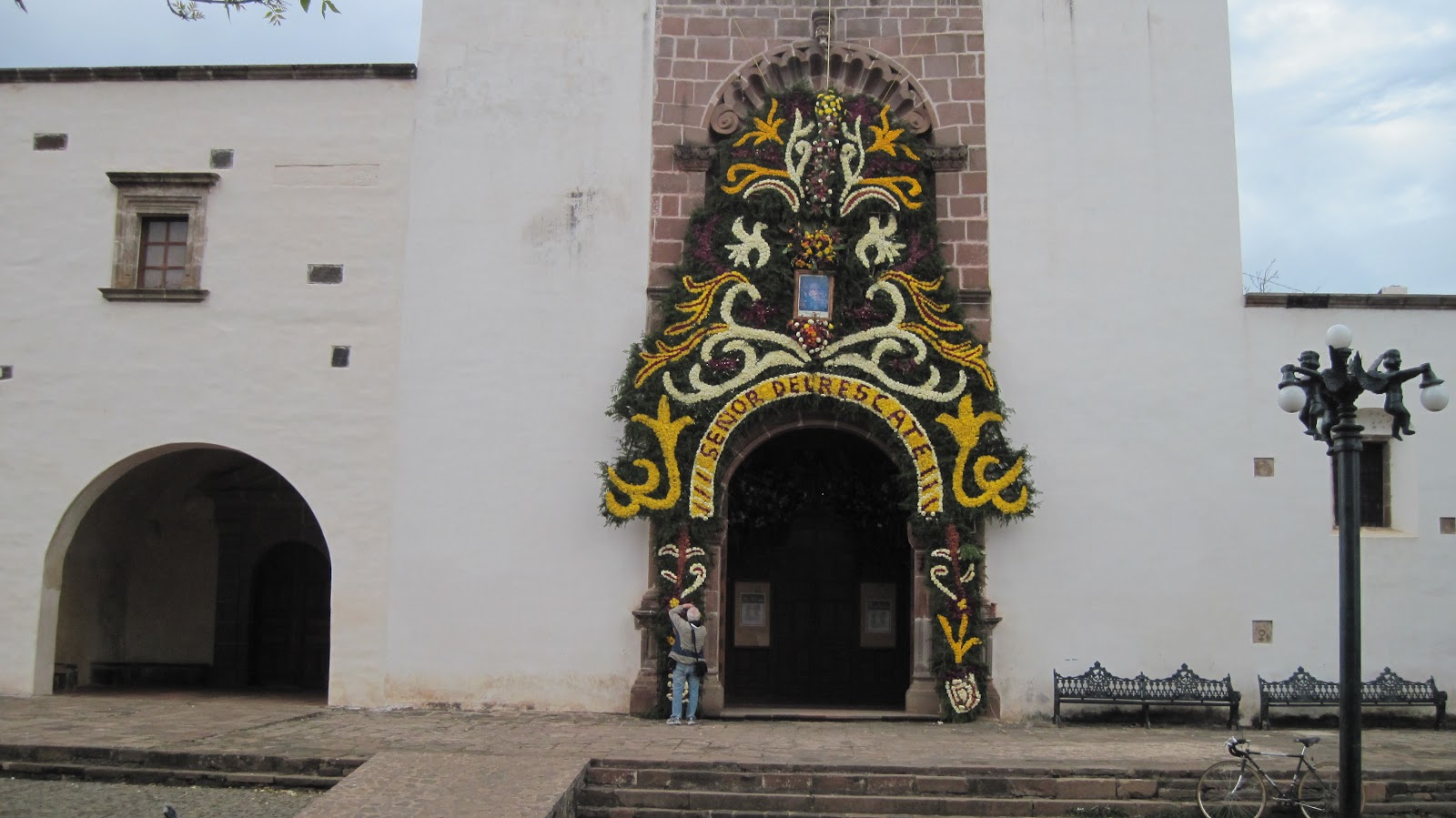
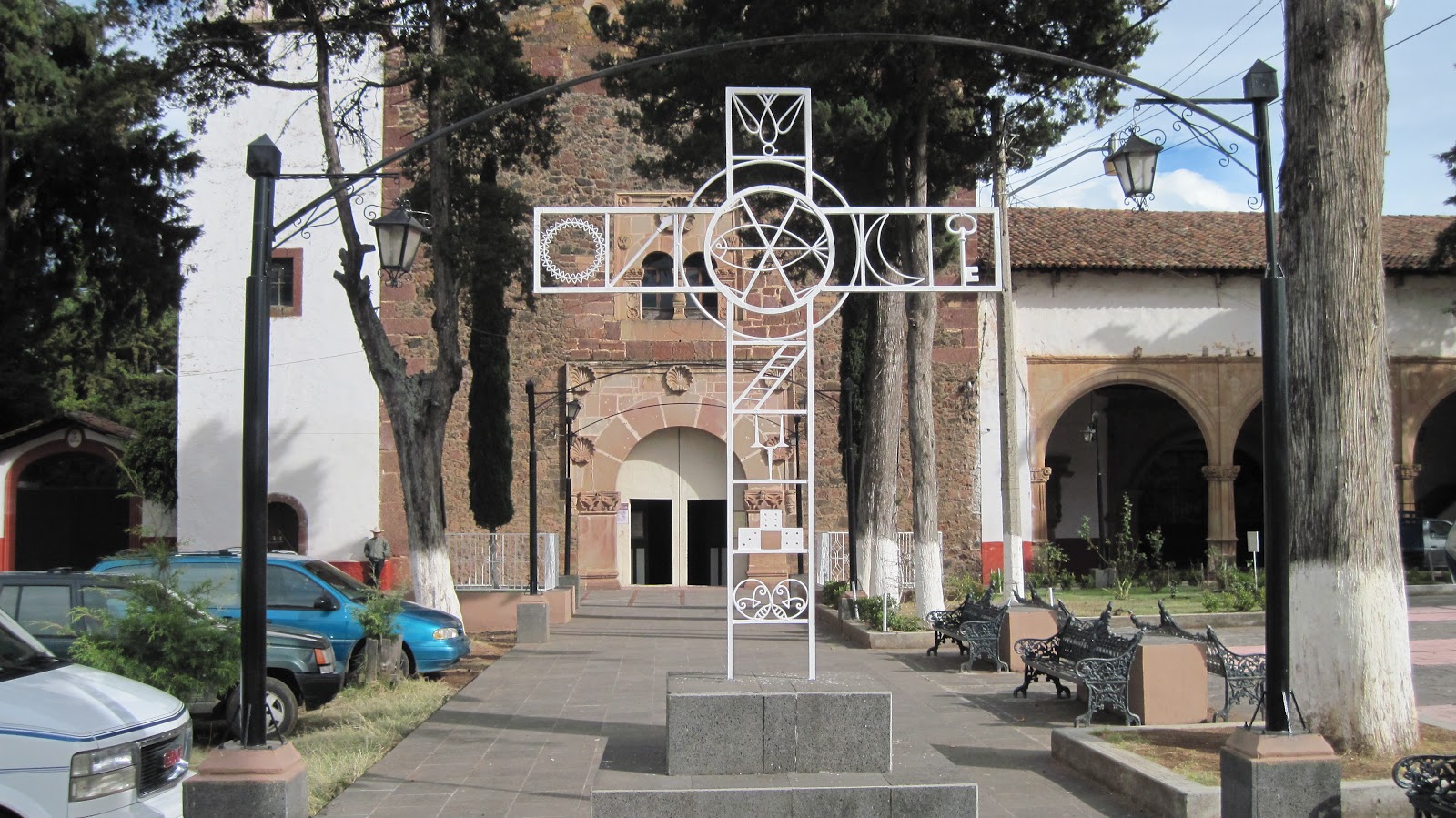
| Church to left of the convent |
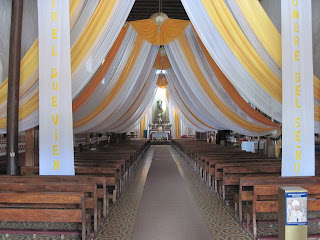
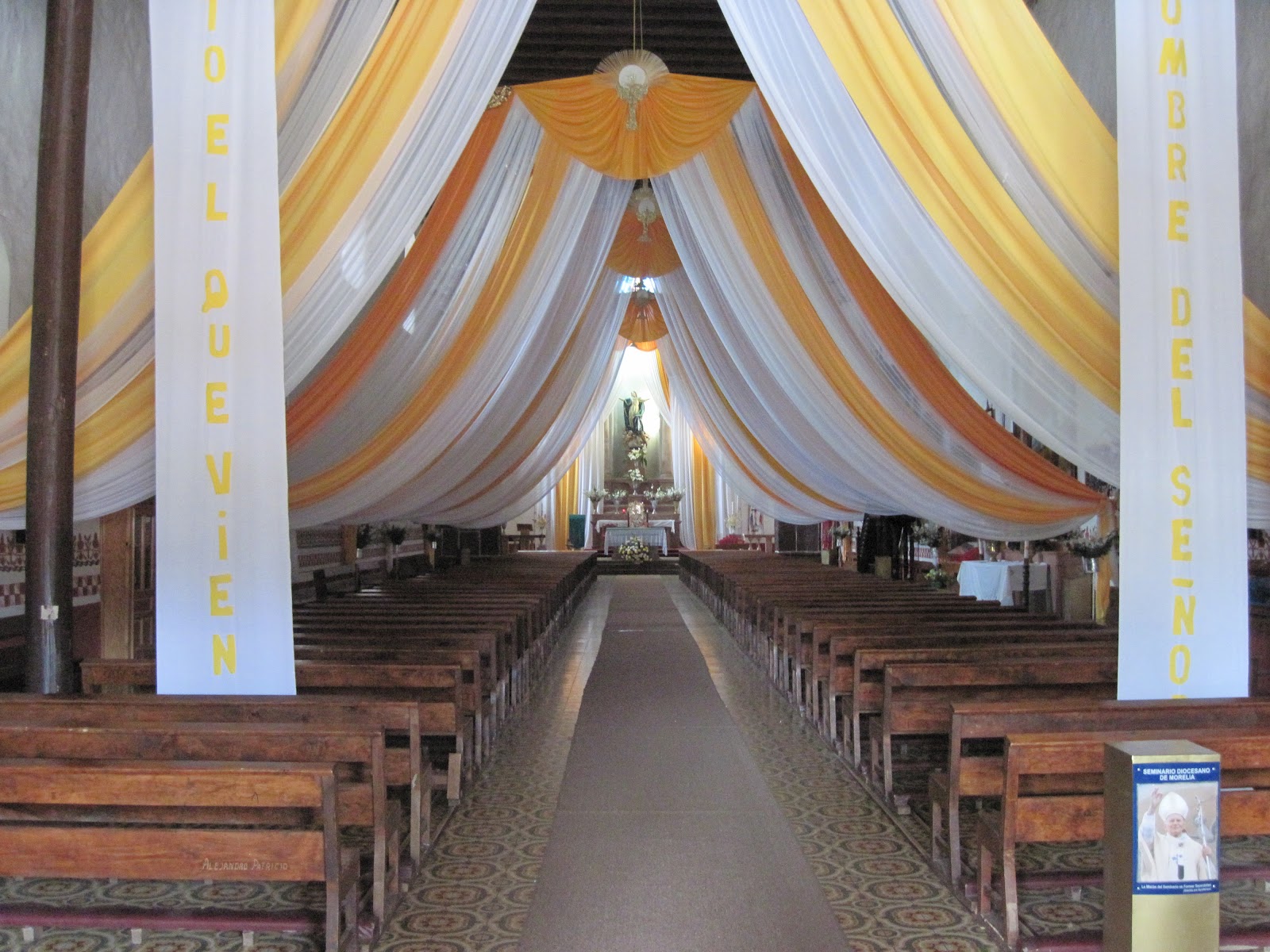
| Inside church |
| church to the right of the convent – you can see the convent on the left |
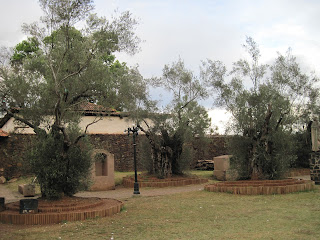
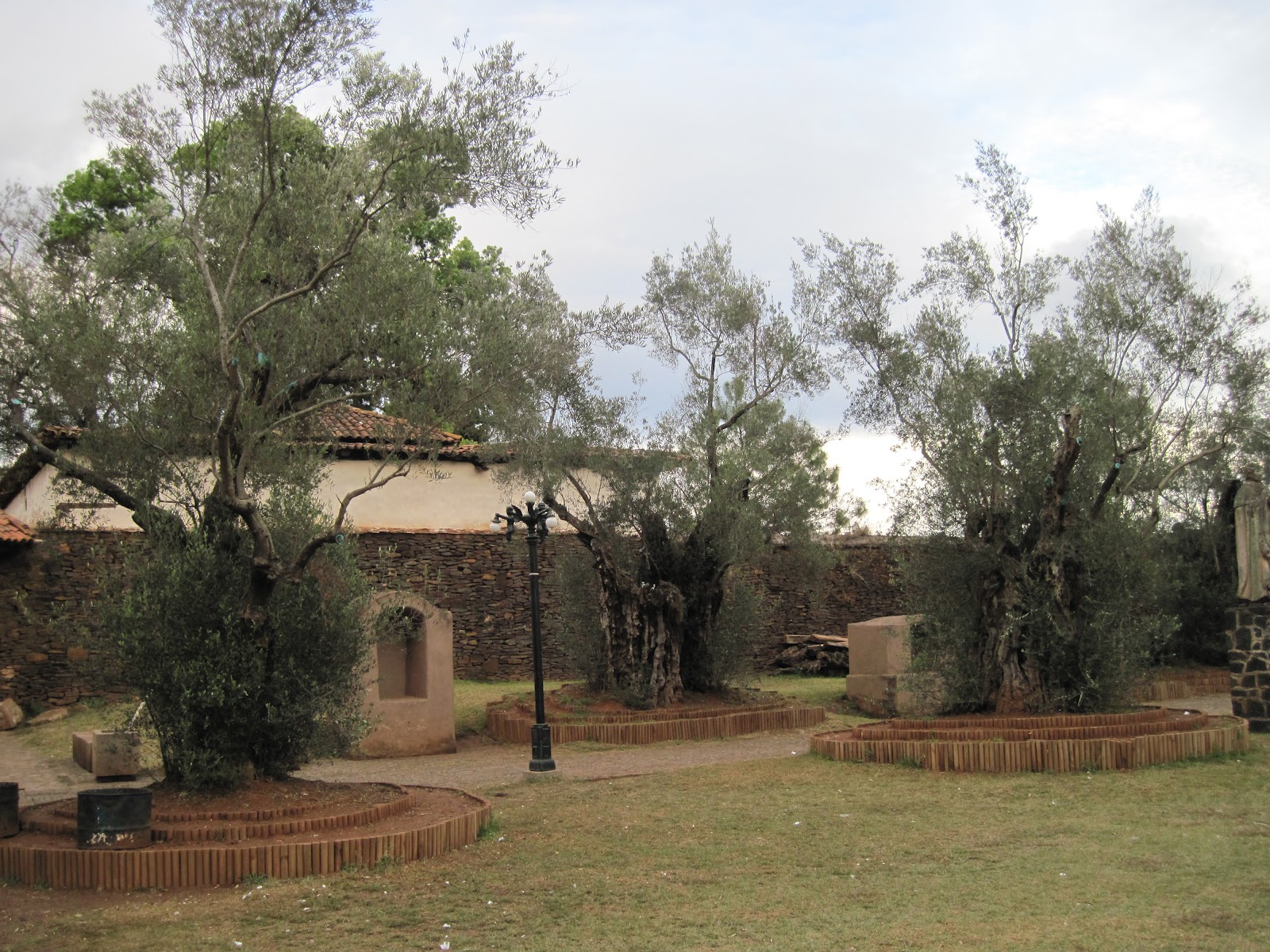
| Olive trees and the stone stations |
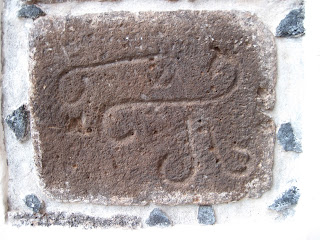
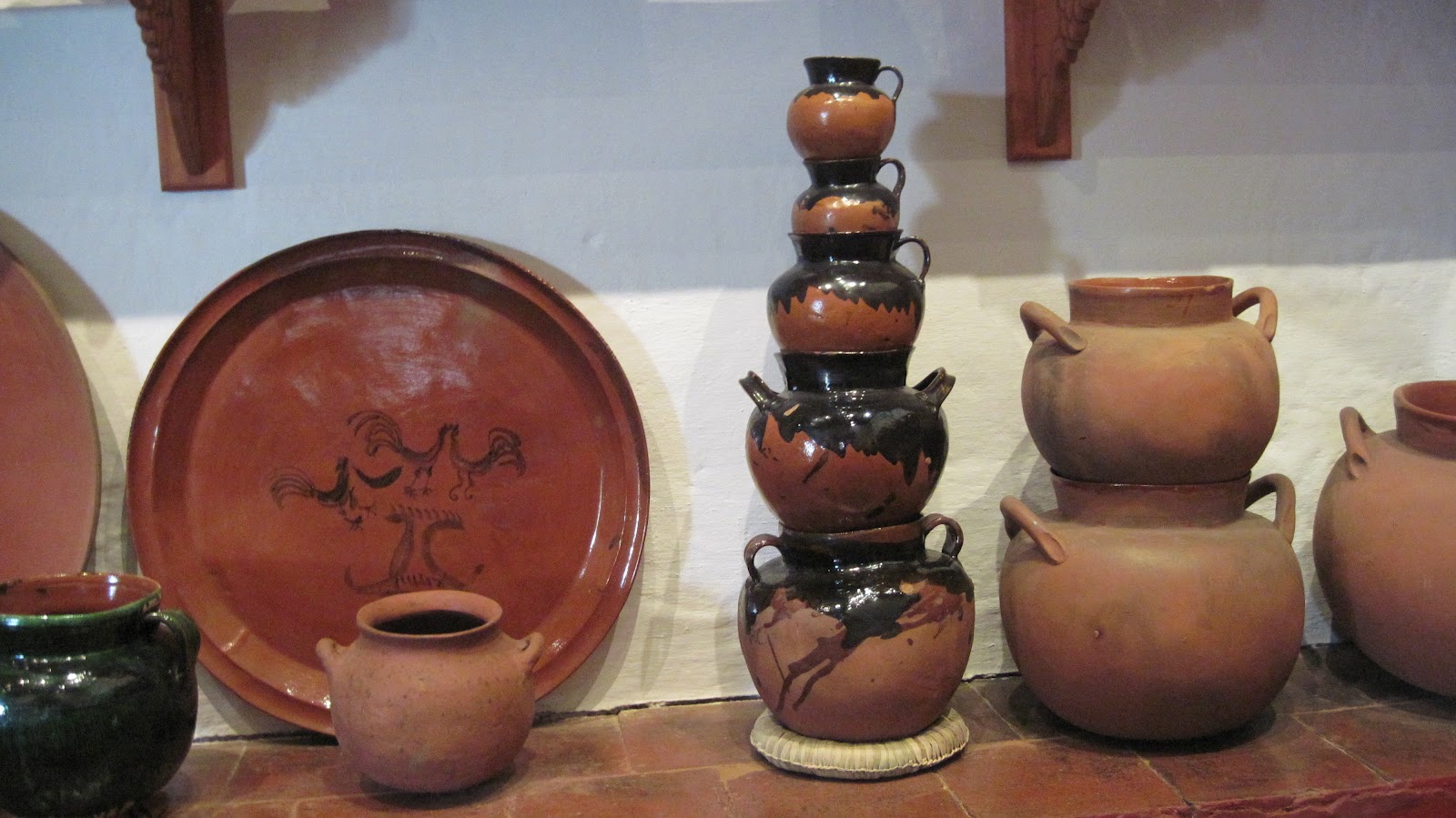
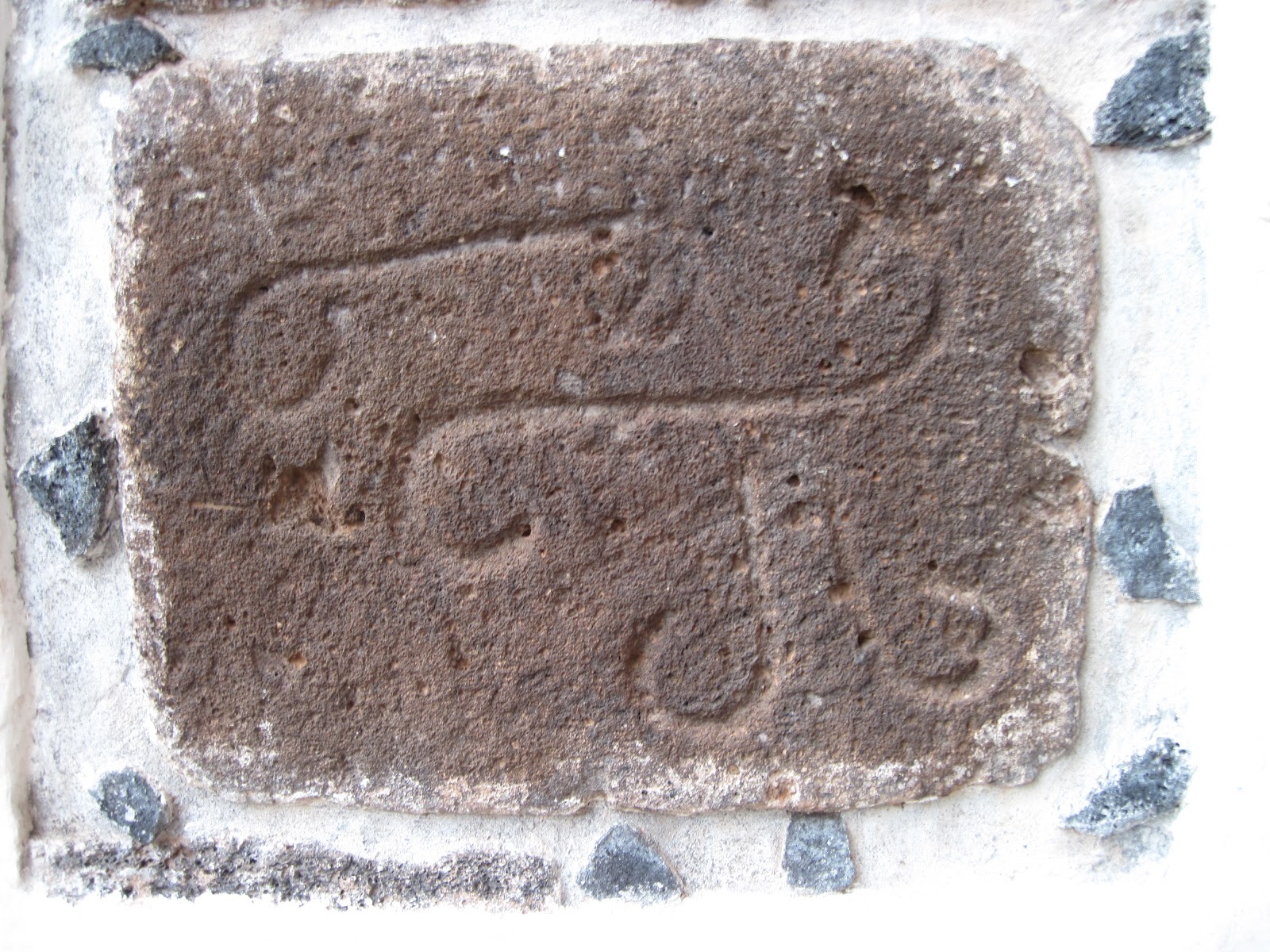
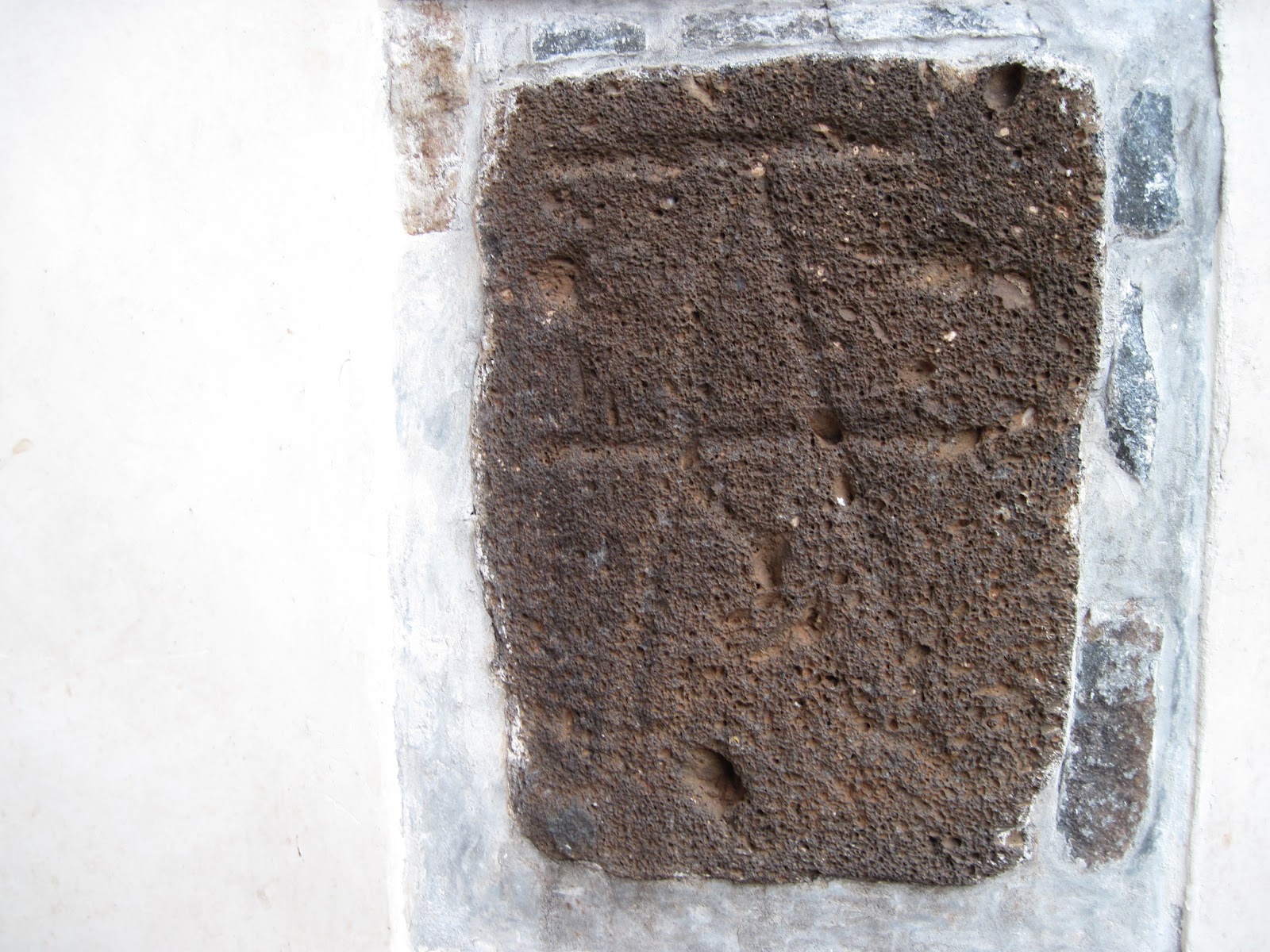
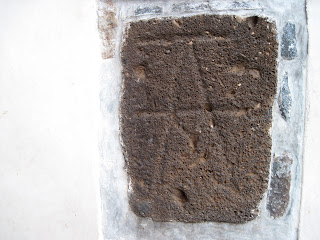
Behind the church is Ceramica Tzintzuntzan, the ceramic studio of Manual Morales, a fifth generation potter. His studio is a converted missionary hospital. On one of the outside walls, they x-rayed the wall and uncovered original carvings in the stone that were taken from the pyramids.
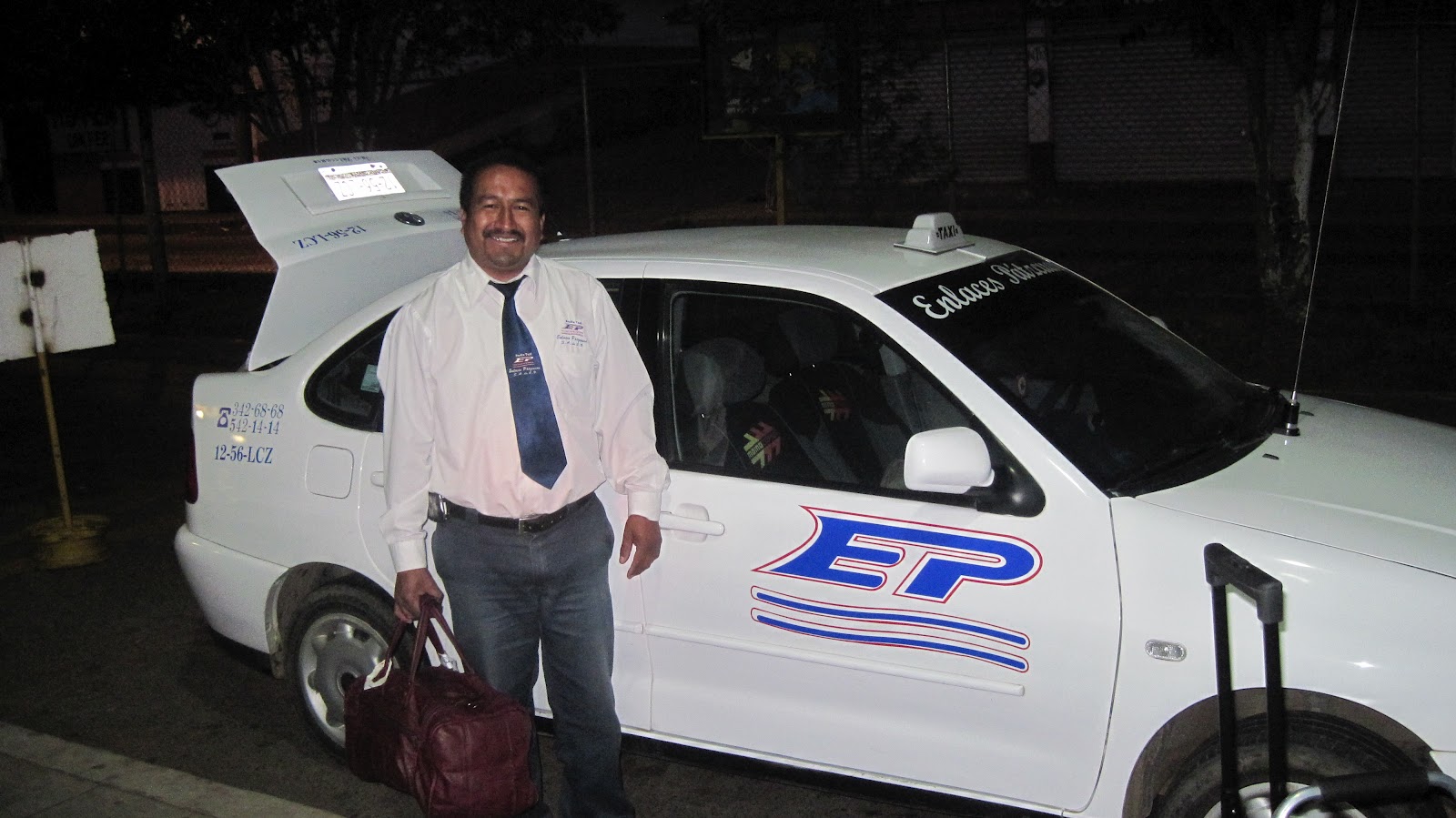
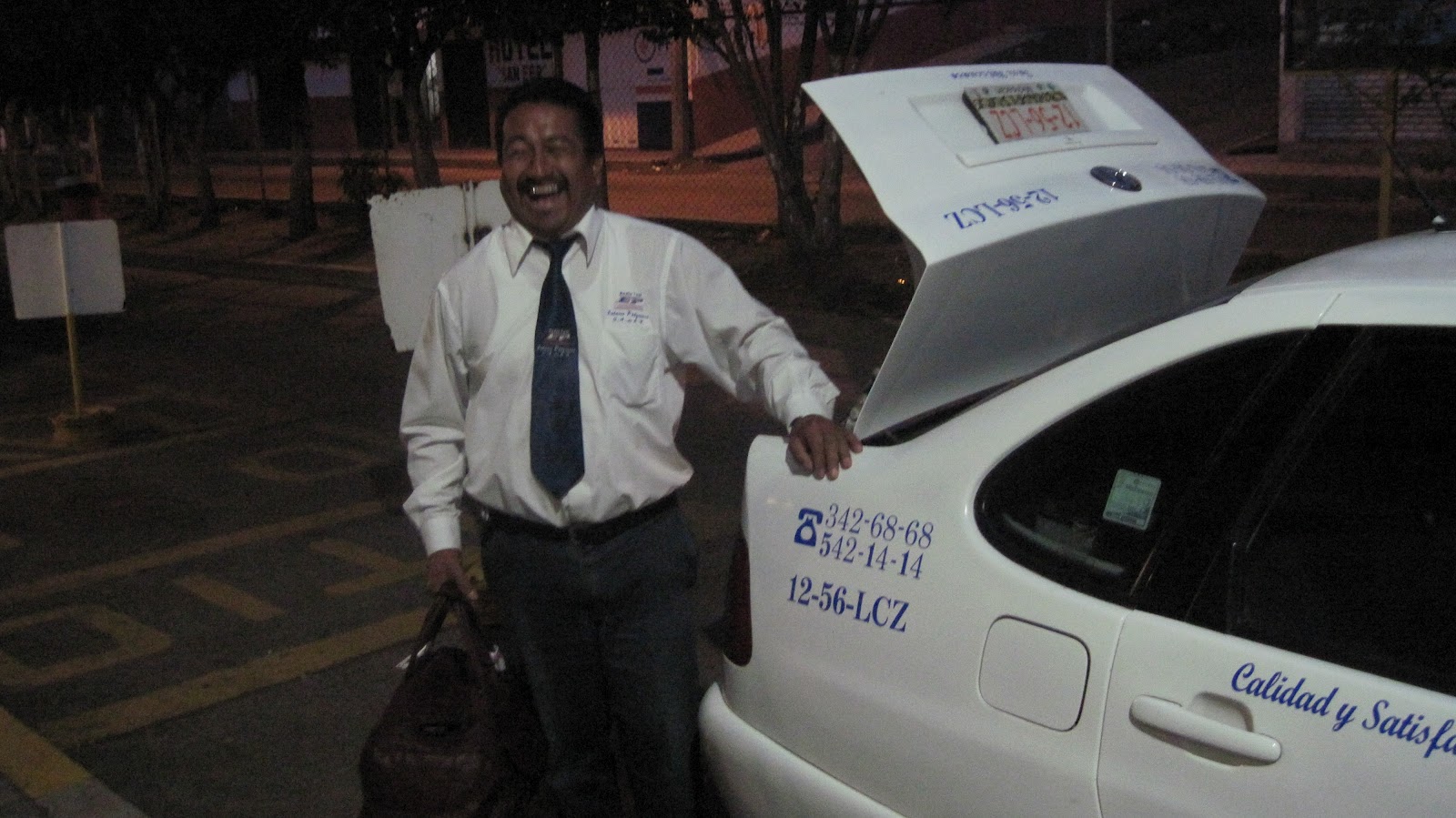
We met our driver Homar Cruz, who was to become, after getting to know him, a special person to us. If you are ever in Patzcuaro, you can reach him at homarcruz1@yahoo.com or phone him at 044 434 1089752 or late night 434 3427858.
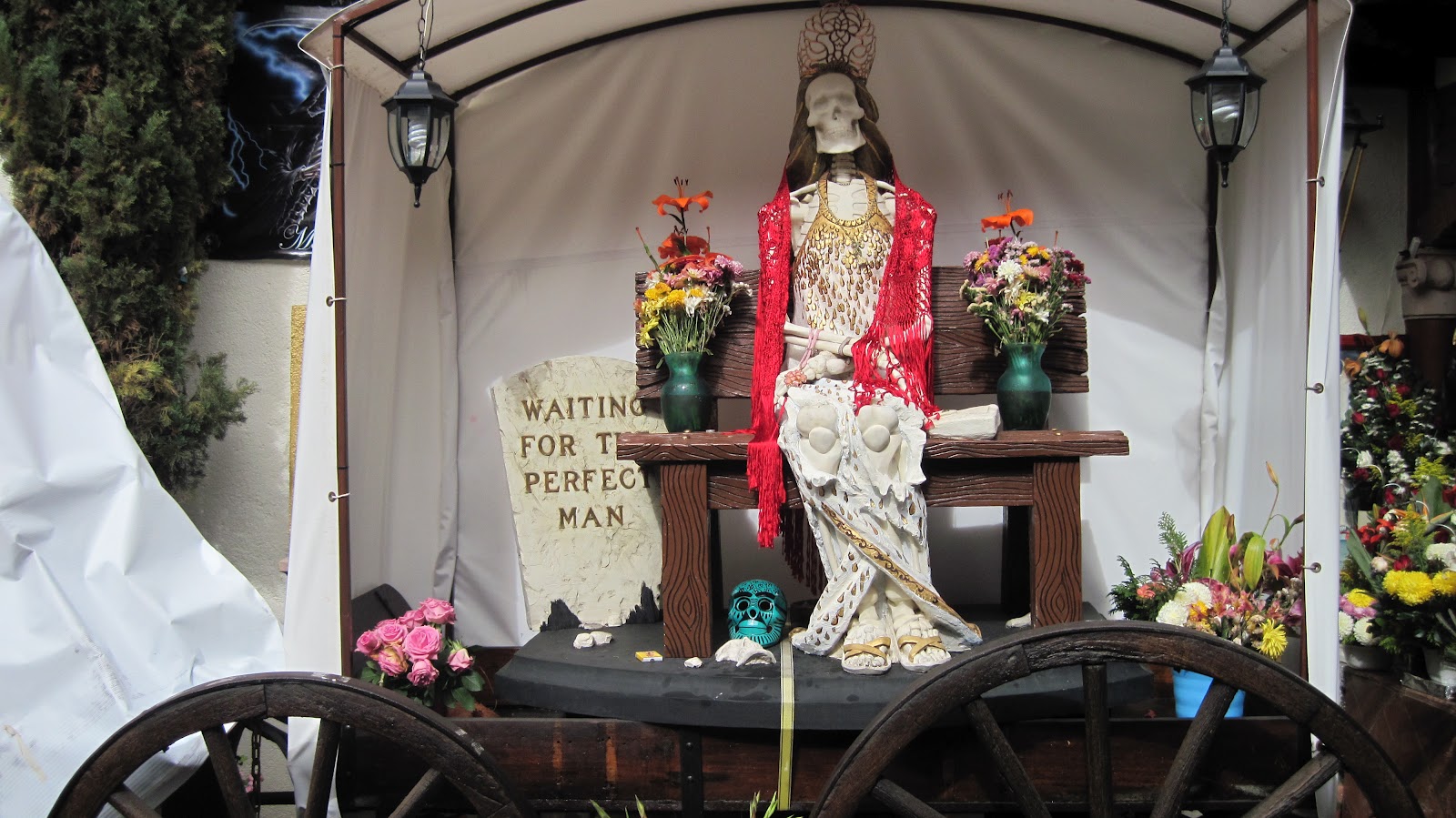
| note the sign “waiting for the perfect man.” |
| Juan Torres’ wife on the left |
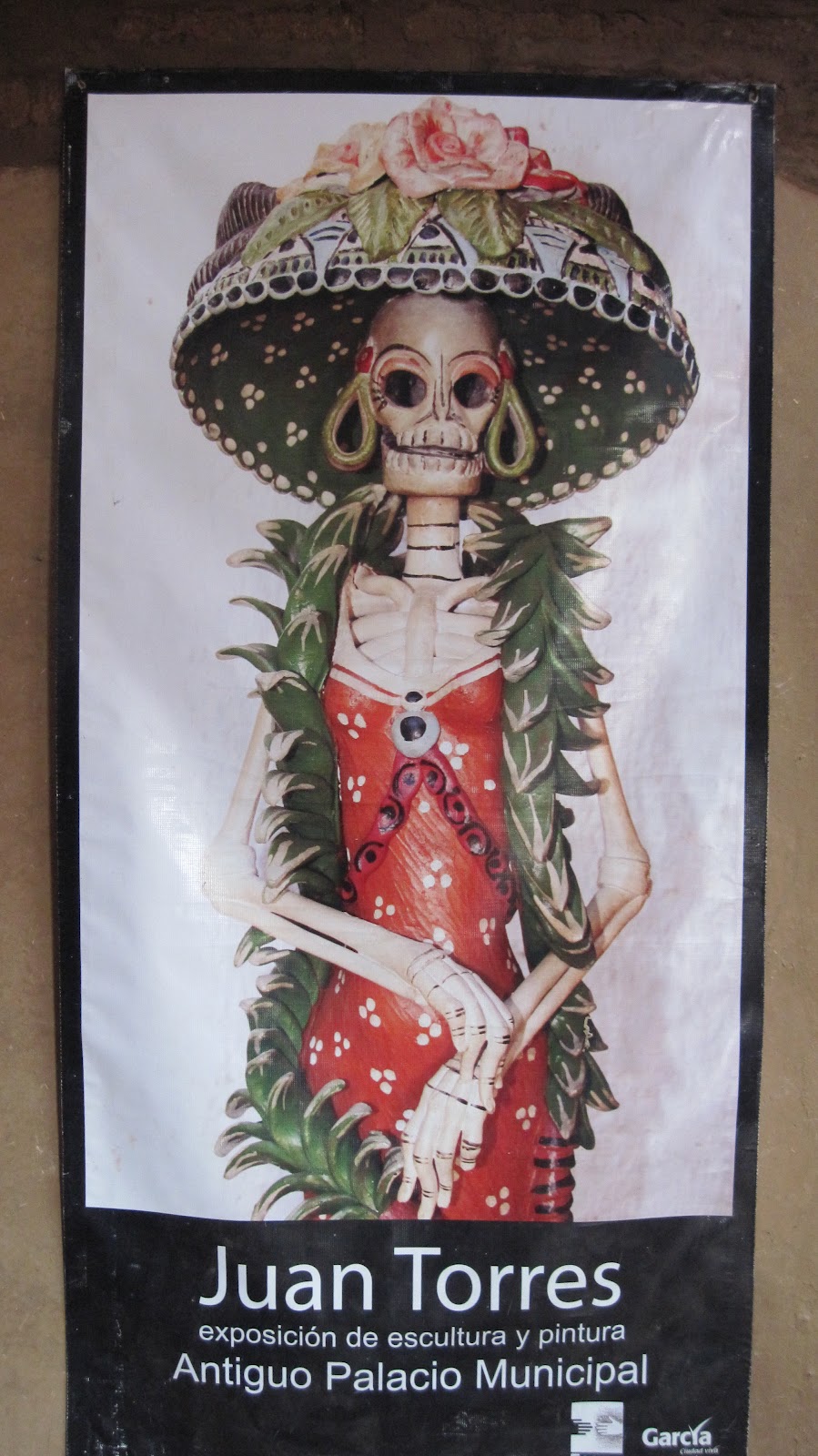
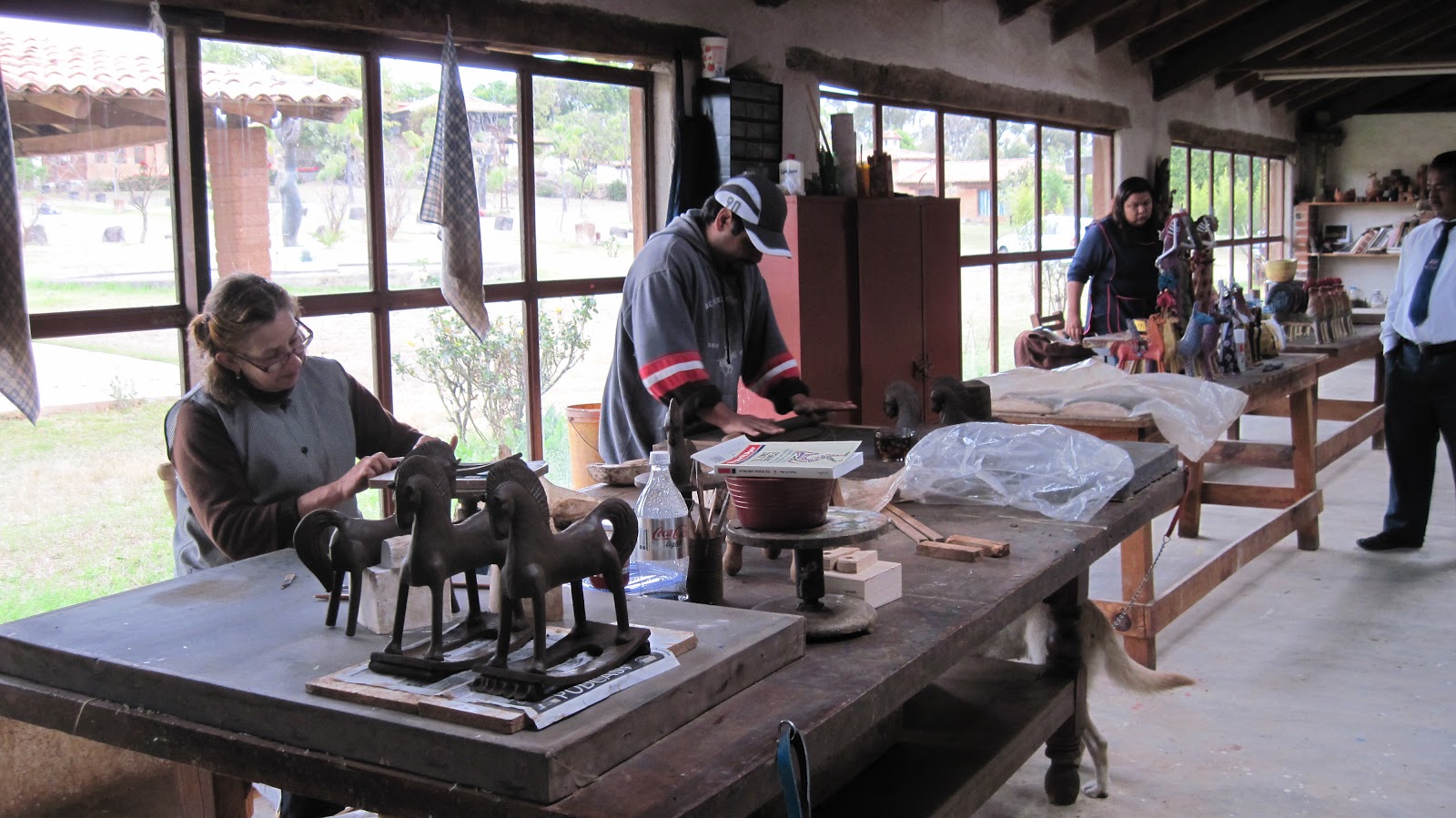
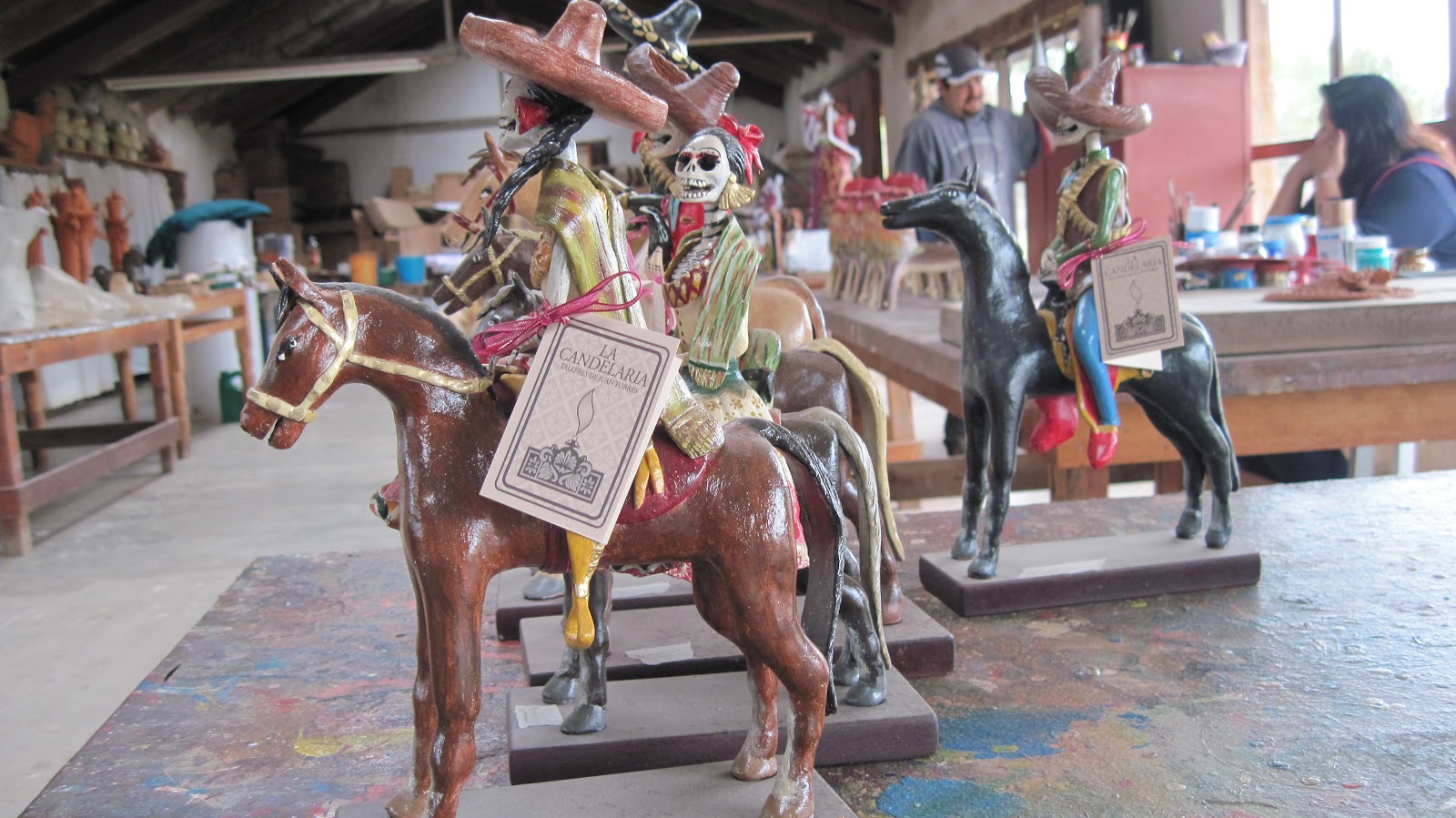
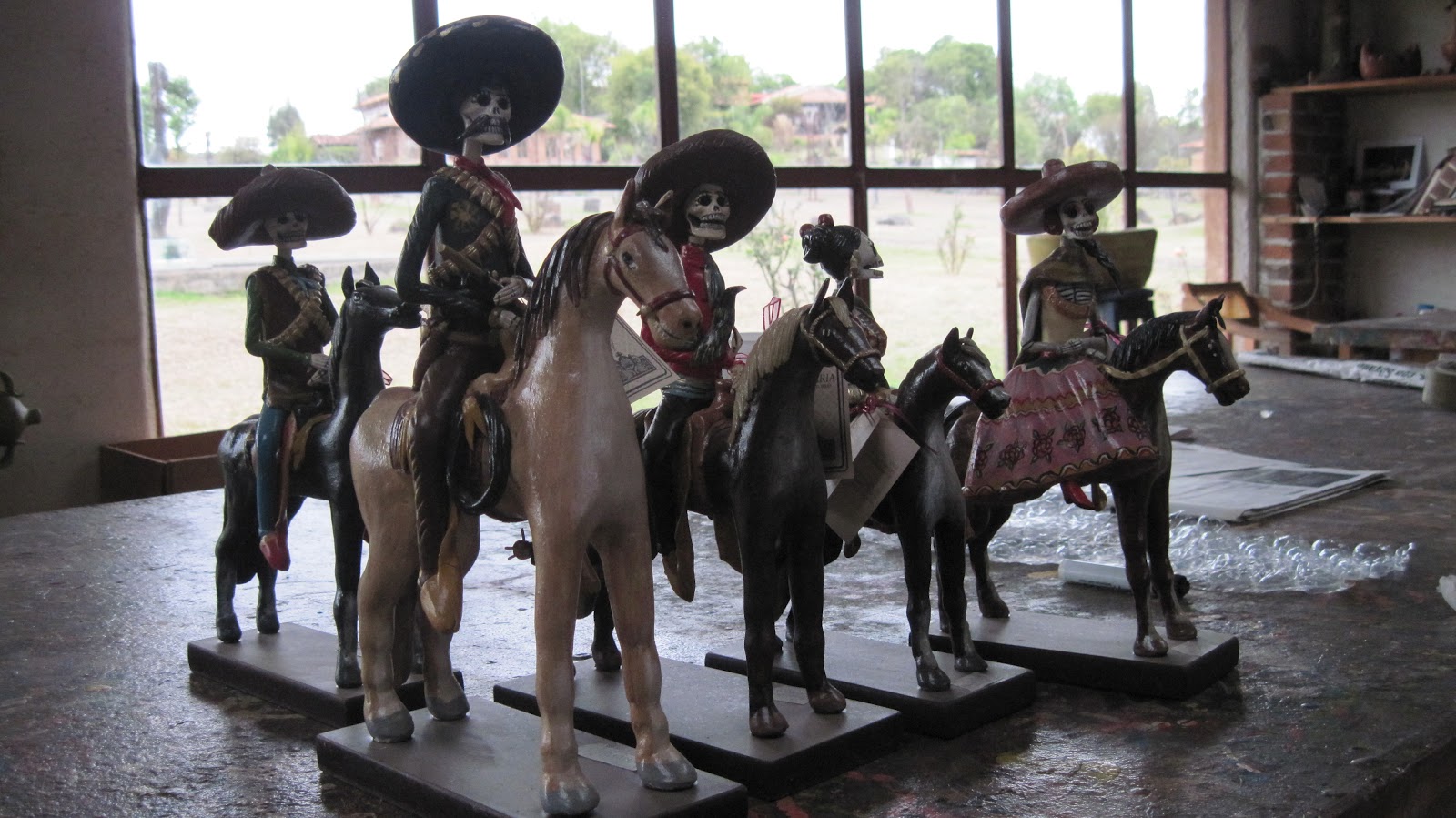
We met his wife and two other artists who were busy making the Catrinas. The detail and quality in each of the pieces were awe-inspiring. I truly wanted one of the Catrina’s on horseback, but they had been sold. Our driver, Homar tried his best to convince them to sell one of them but to no avail.

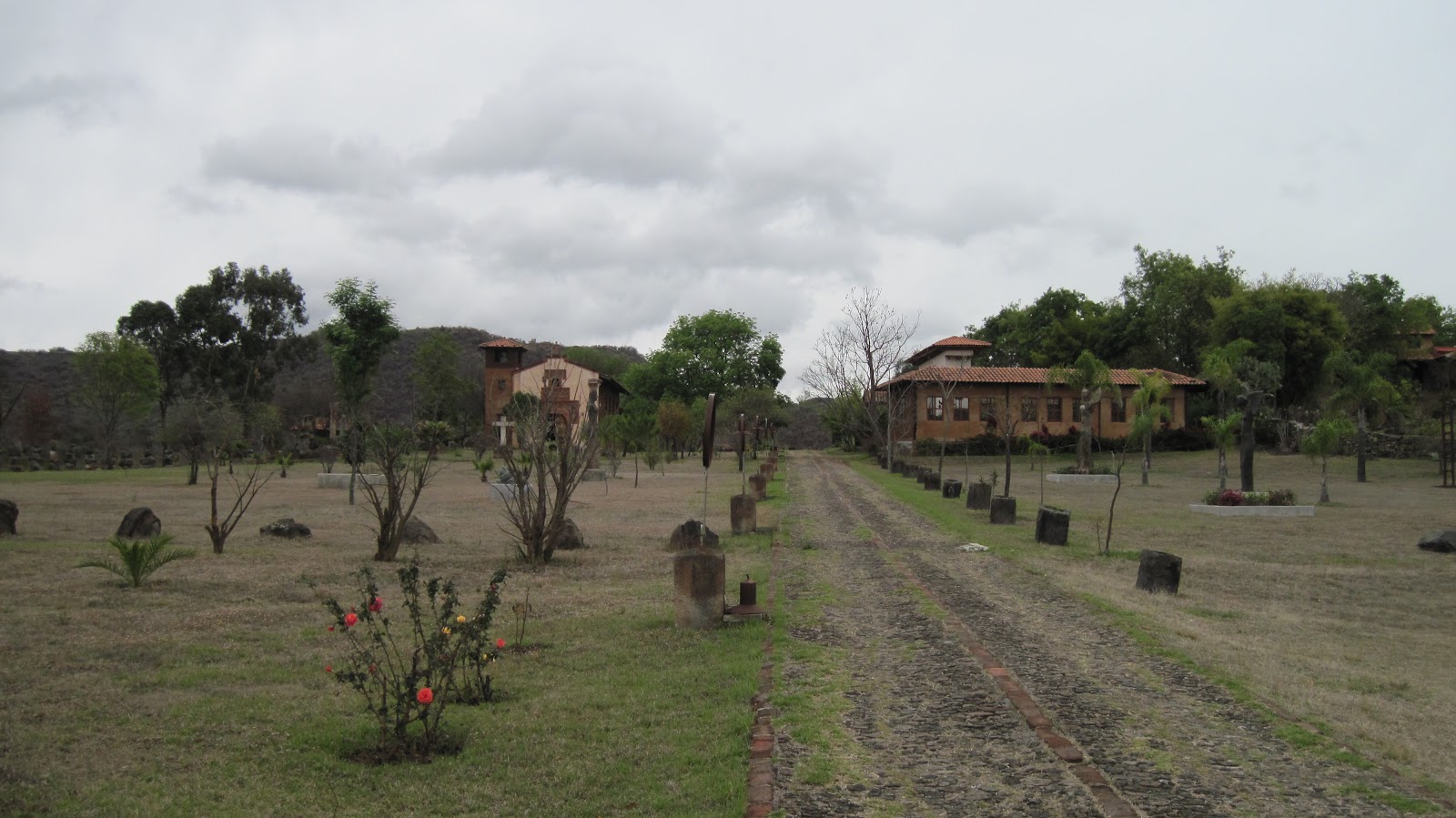
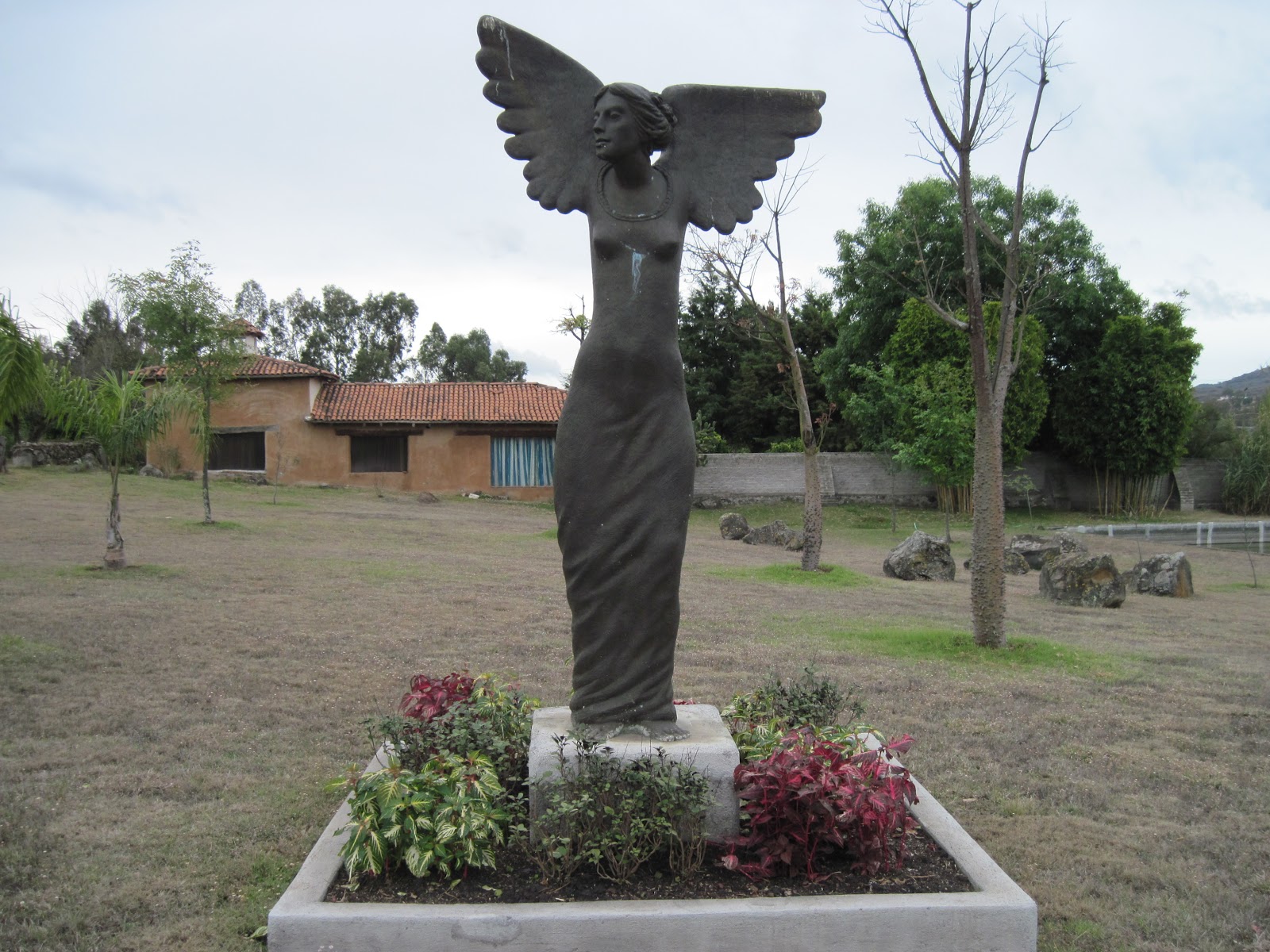
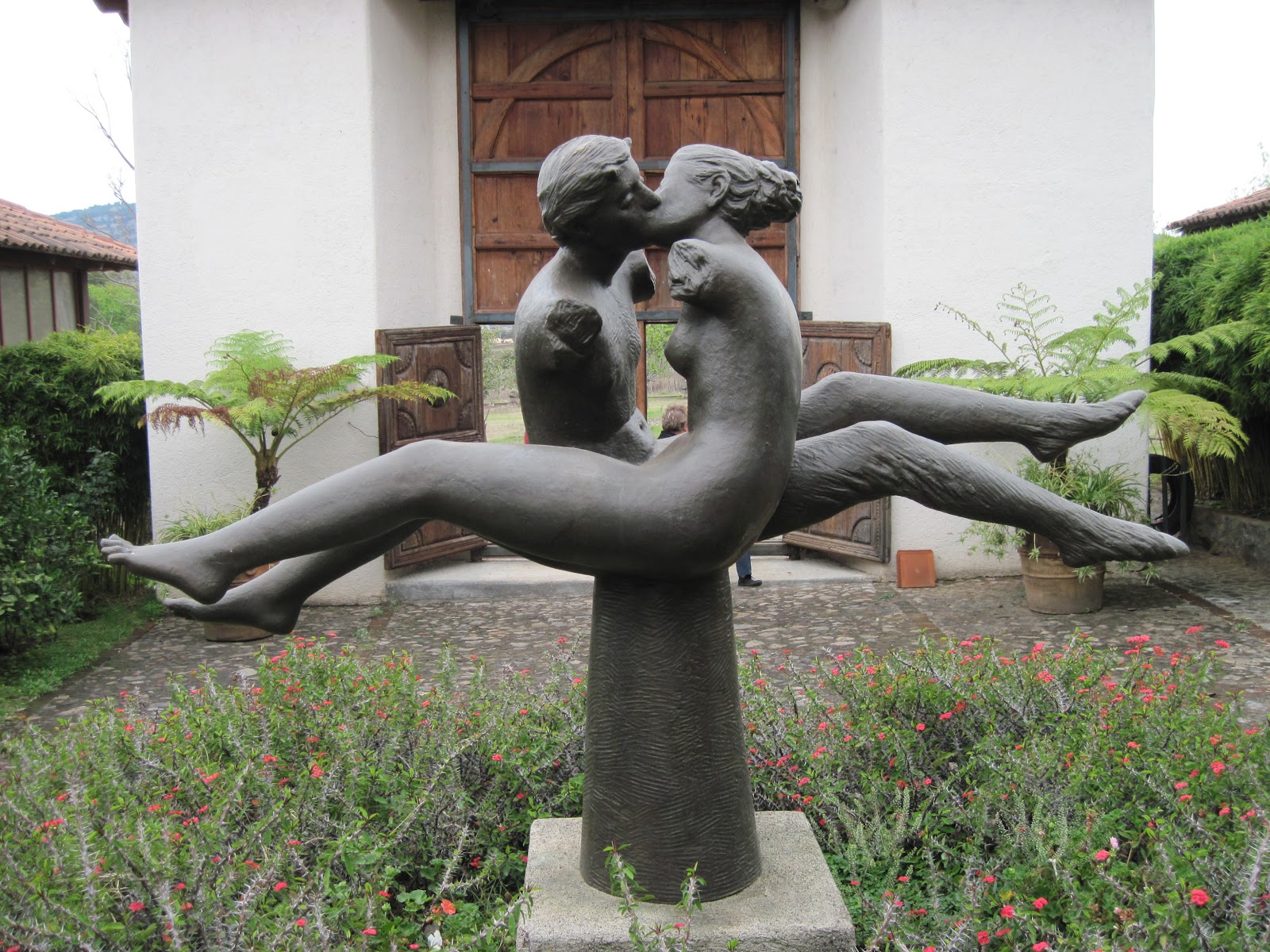
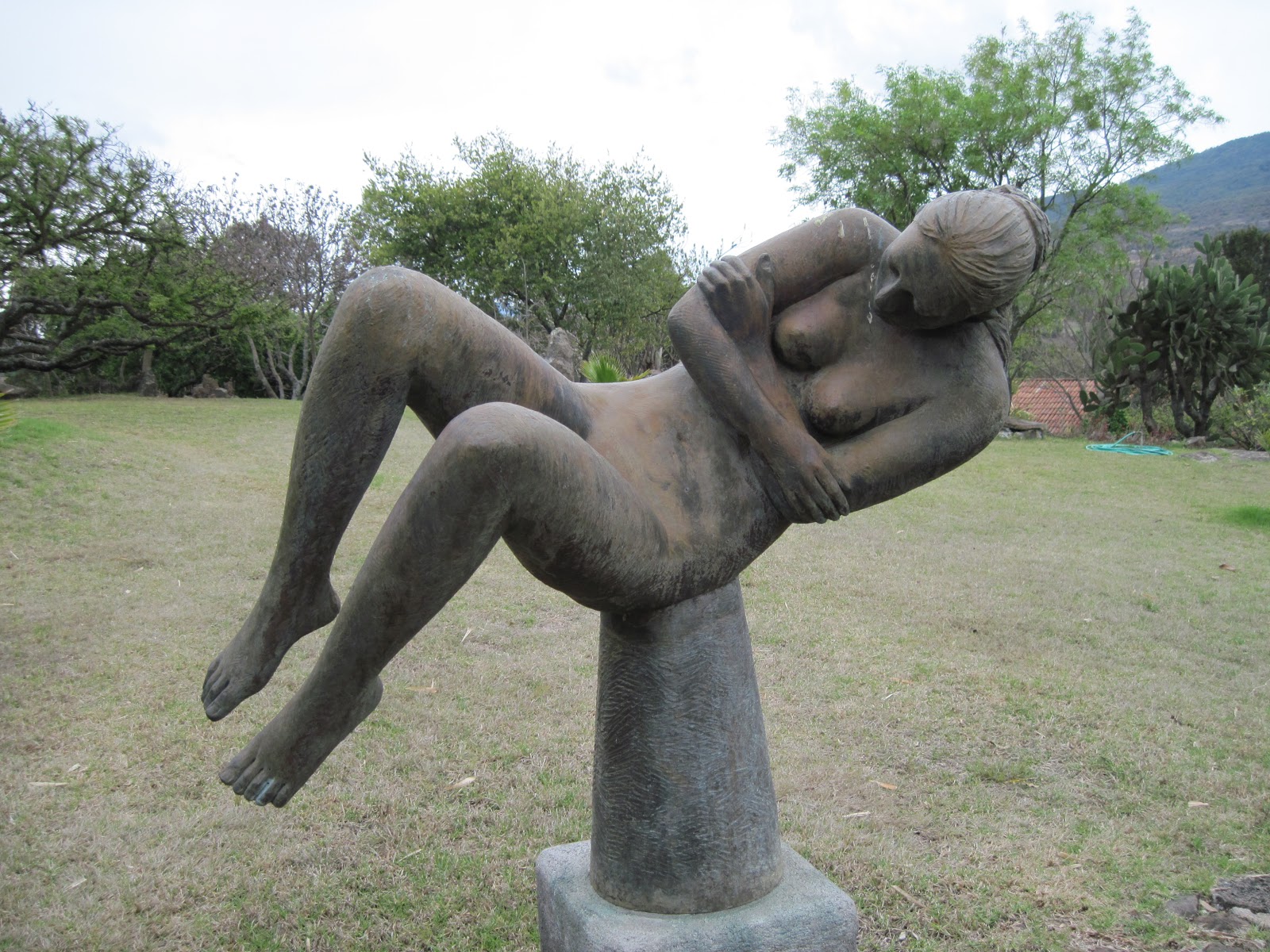
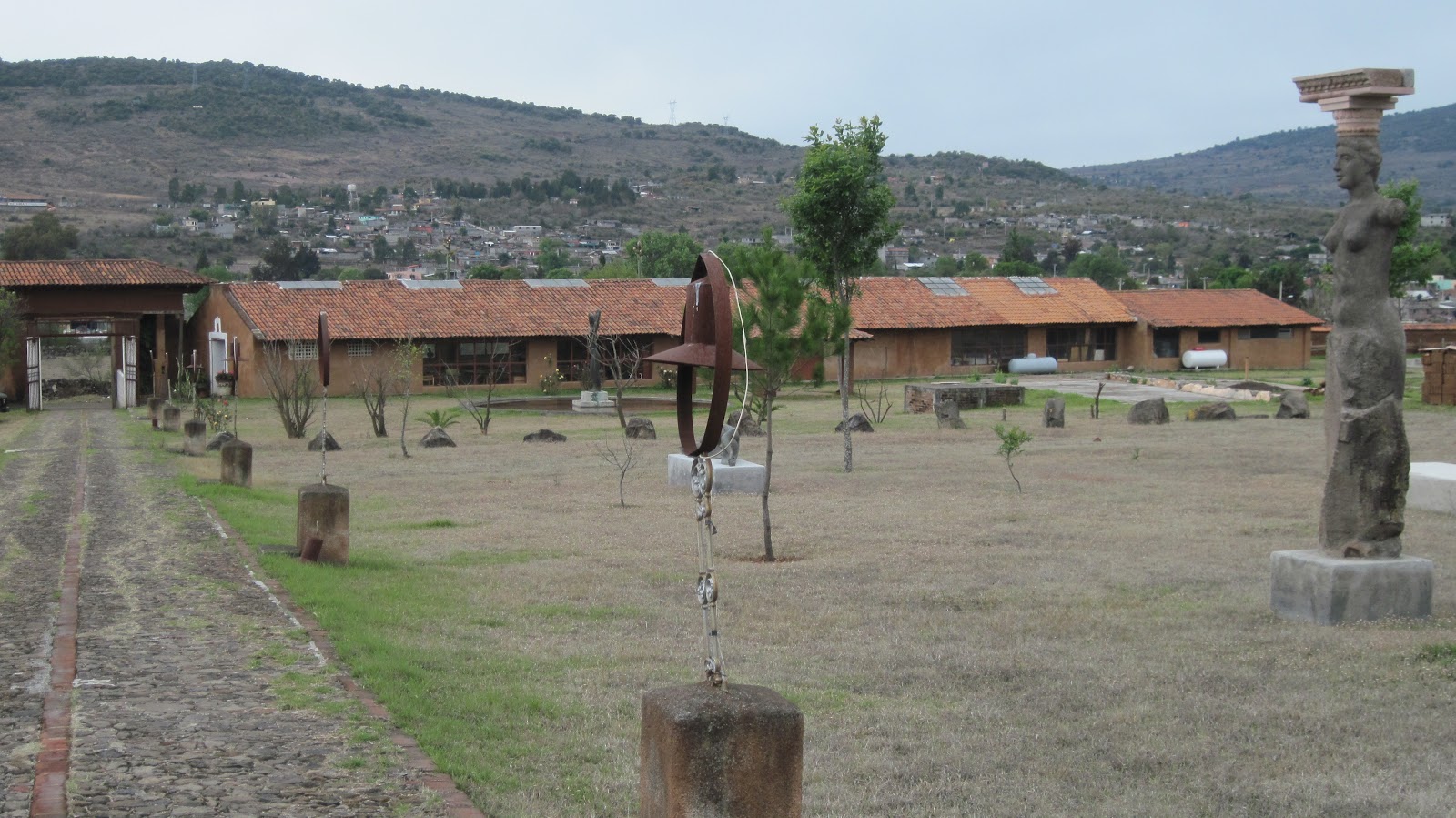
Walking around the grounds of the hacienda was a delight and surprise everywhere you turned. Juan Torres had made sculptures, which he placed, all over the grounds of the hacienda, each one different and unique.
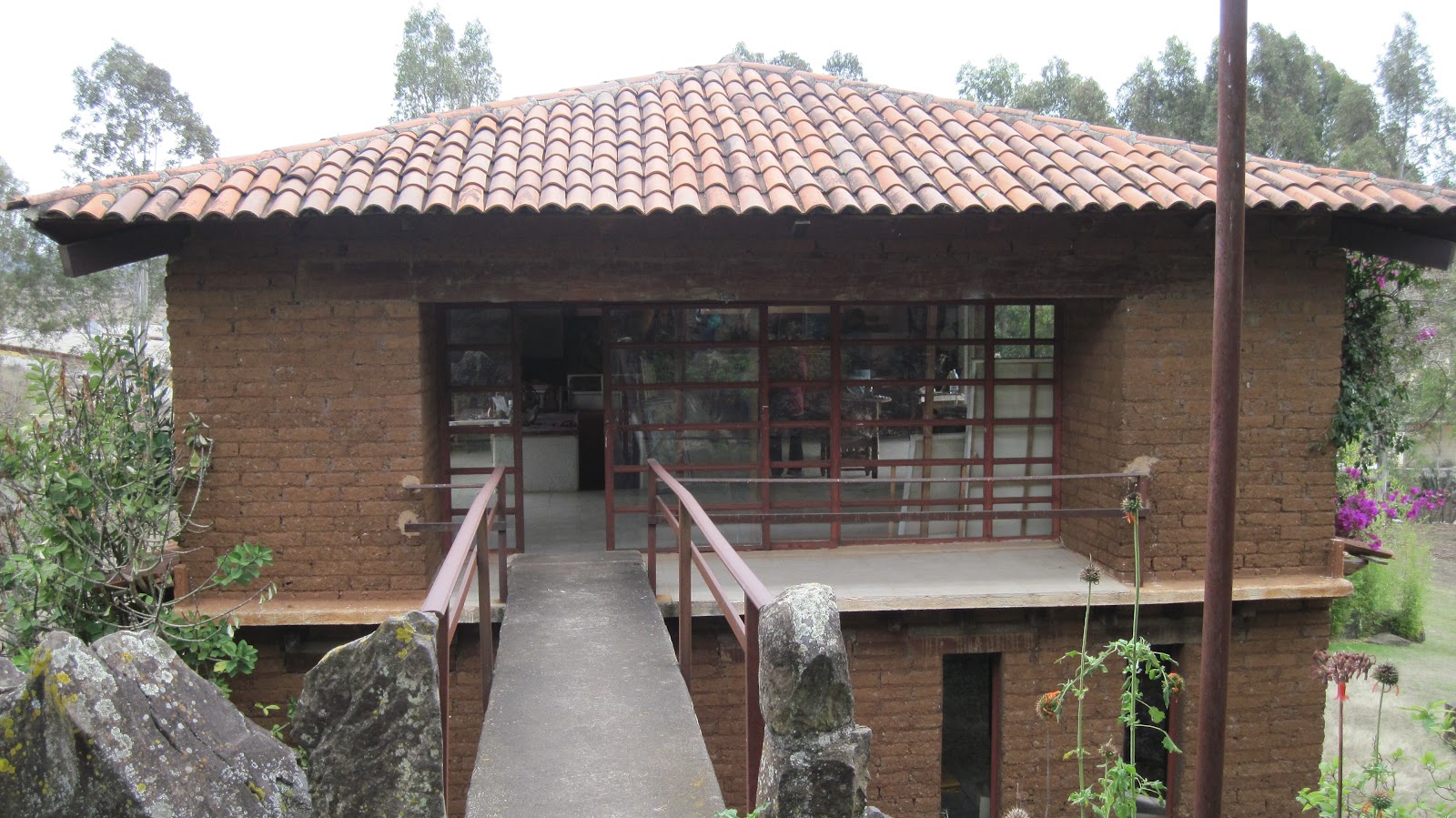
We returned to the workshop/gallery where we were pleasantly surprised by Juan’s arrival. He kindly asked us to view his art studio. What an amazing space for him to create his masterpieces. After viewing all his work, he then invited us to his home. Each room had a differently decorated fireplace, and one room housed a grand piano and nothing else. We wished we could have taken pictures, but it would have been extremely rude to do so. We felt very fortunate to have been invited into his studio and home and realized that if we had been with a tour (40 people) that this would never have happened.
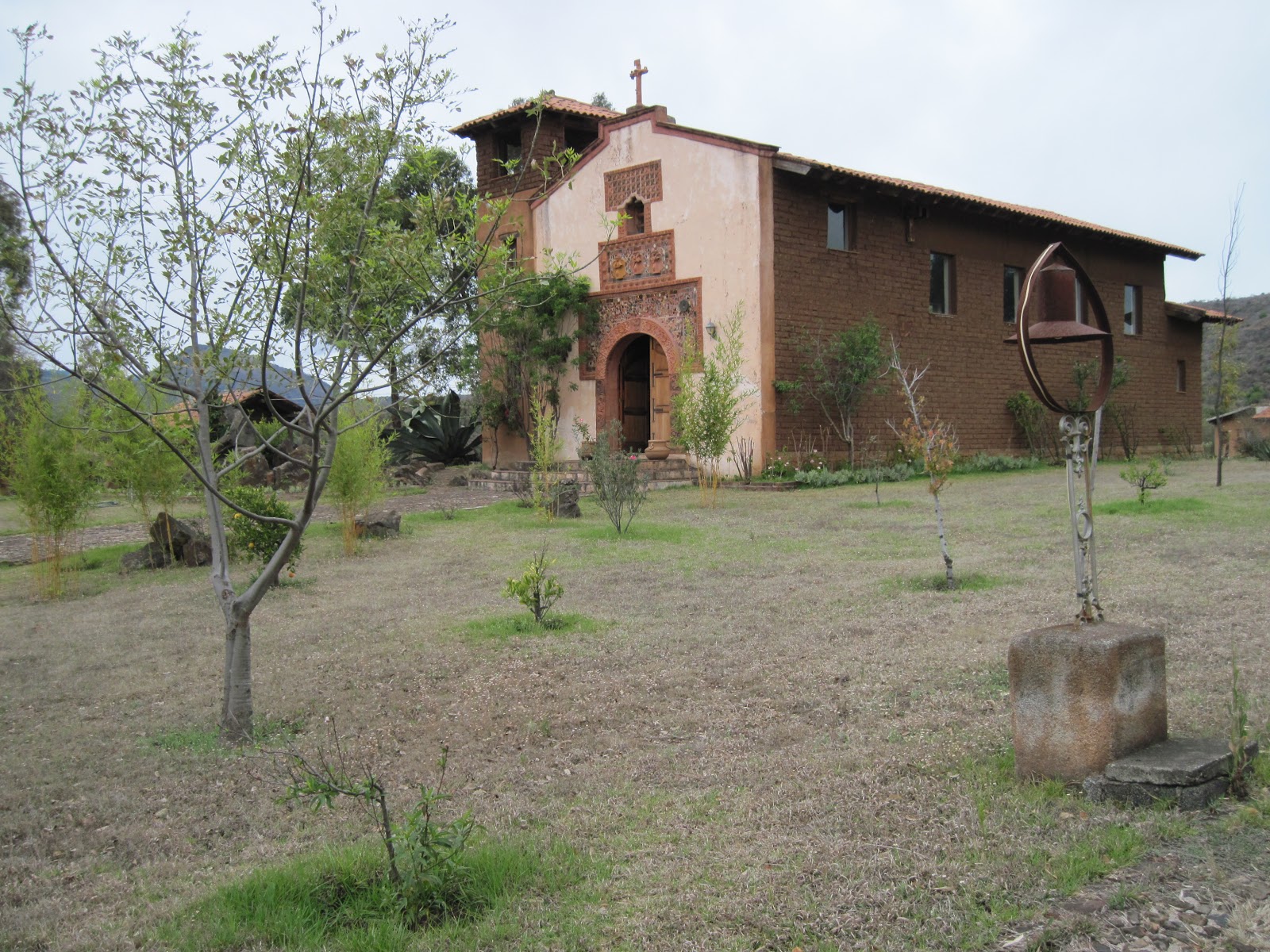
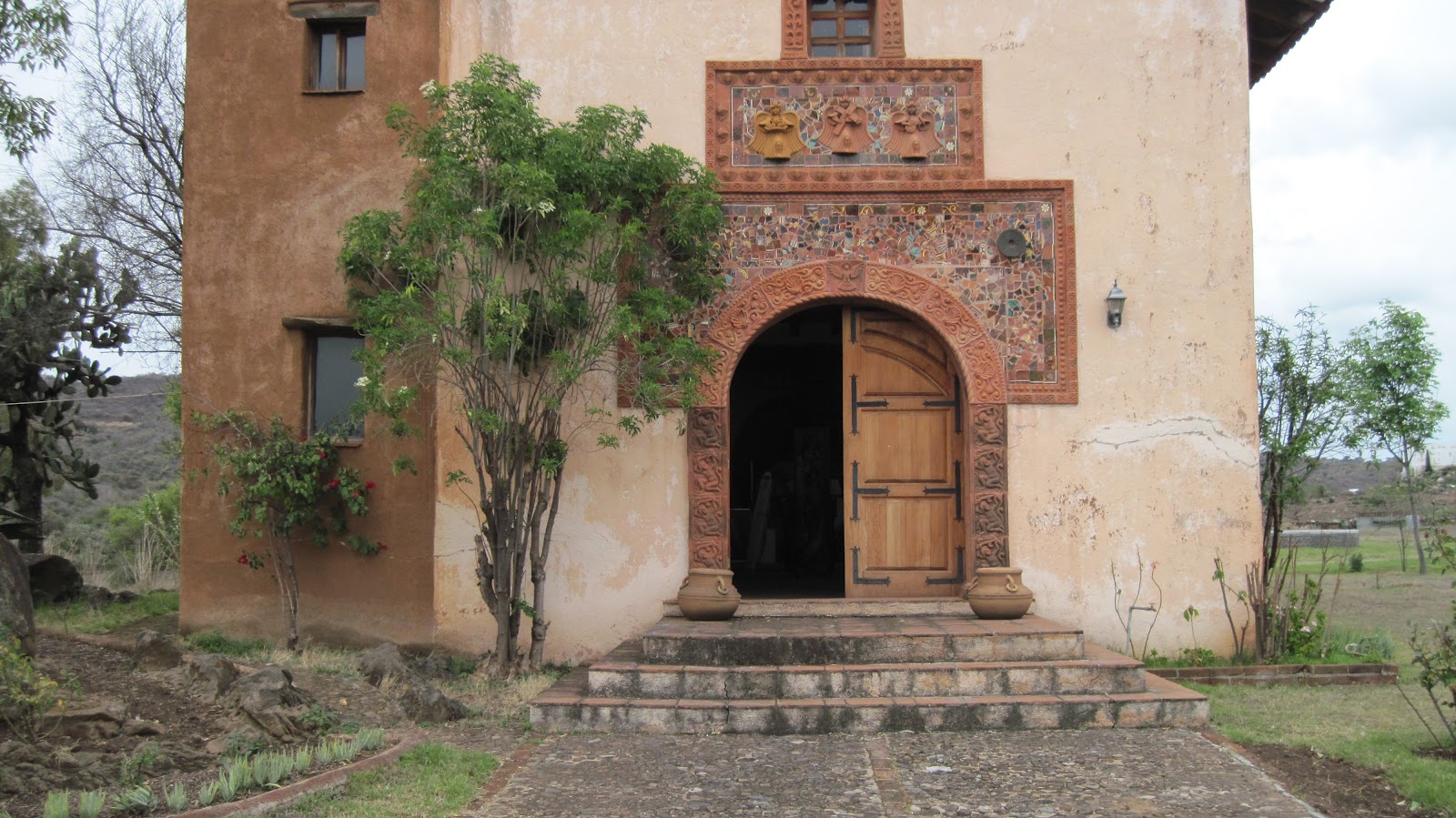
| old church which is now an art gallery |
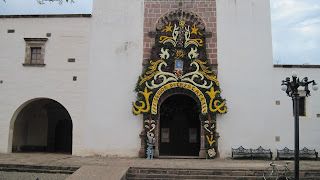
| front of the church |
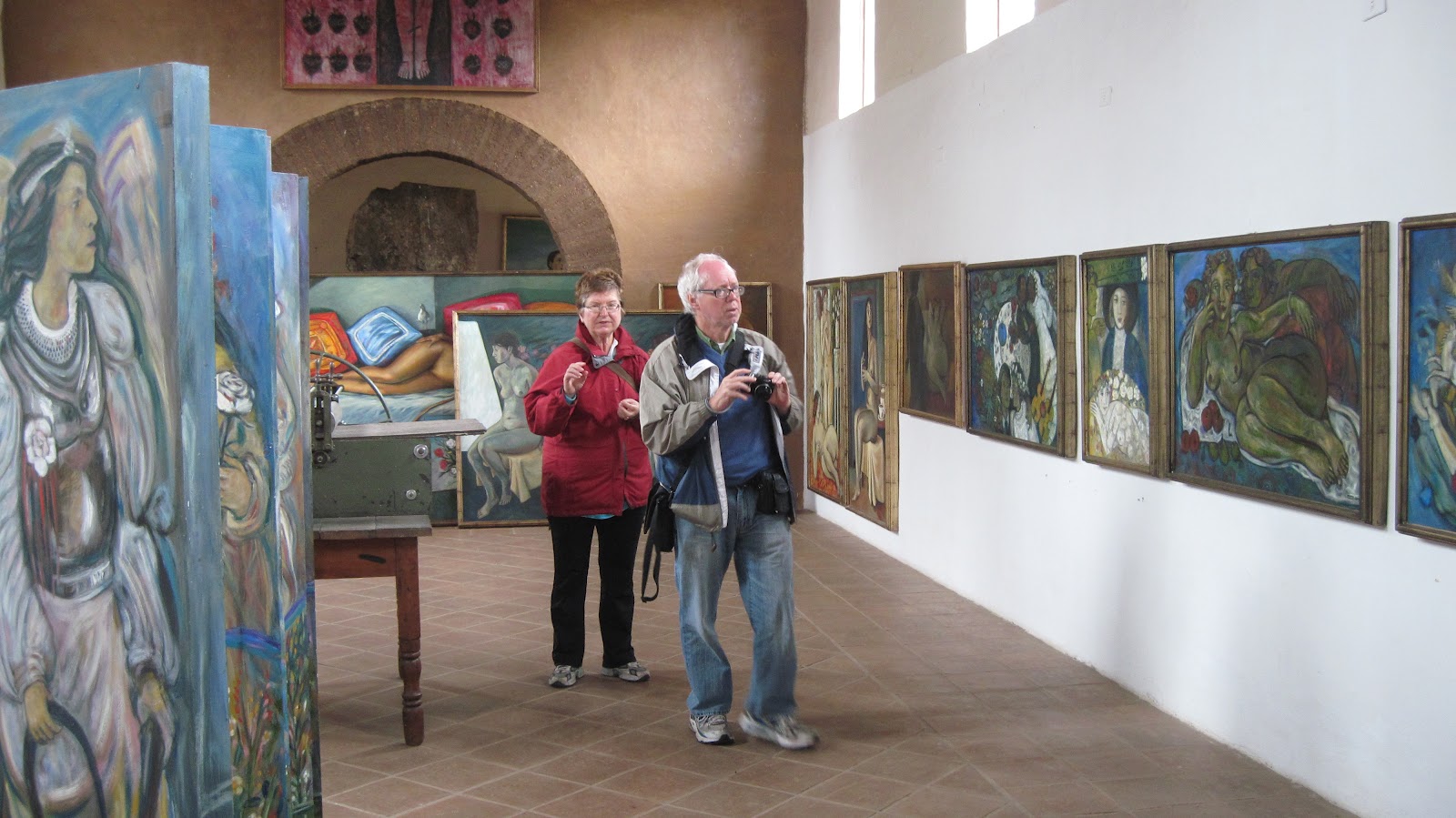
| inside gallery |
| view of the workshop at the front of the property |
| Juan Torres’ studio |
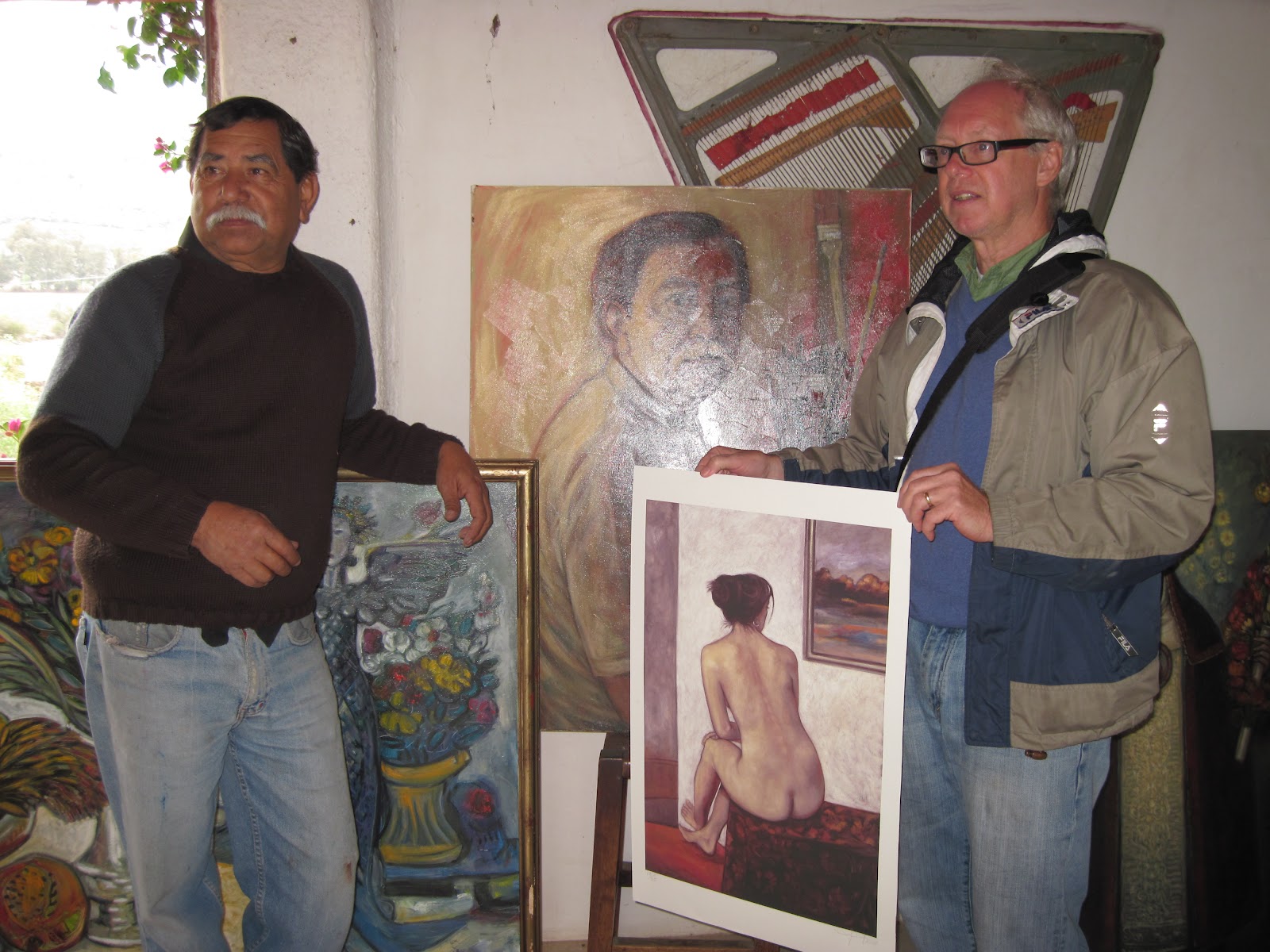
| artist at right with his self-portrait and another painting |
Our next stop was the town of Capula where we had a nice lunch at the only place in town to eat, a taco stand. It was good food. We shopped for a bit and found a Catrina that I liked but it was not the same quality as the artist’s.
The State of Michoacán is known for its beautiful scenery historic buildings, traditions and culture. The area we are visiting is known as the La Ruta de Don Vasco (the Don Vasco route). Don Vasco de Quiroga was educated as a lawyer and was sent by Spain to govern the colony. He was so well loved that the Catholic church appointed him as a bishop even though he was not a priest. He founded hospitals in Tzintzuntzan, Patzcuaro, Ururapan and Cuitzeo Acambaro. He taught the Purepecha about religion, crafts and the fundamentals of self-government. He was greatly loved by his people and became known to them as ‘Tata Vasco’ (father Vasco). The skills he implanted among Purepecha have been passed down to their descendants, who are today considered among the most skilled crafts persons in Mexico. We wanted to see all the crafts that are famous in this area. Each town has its own unique craft.
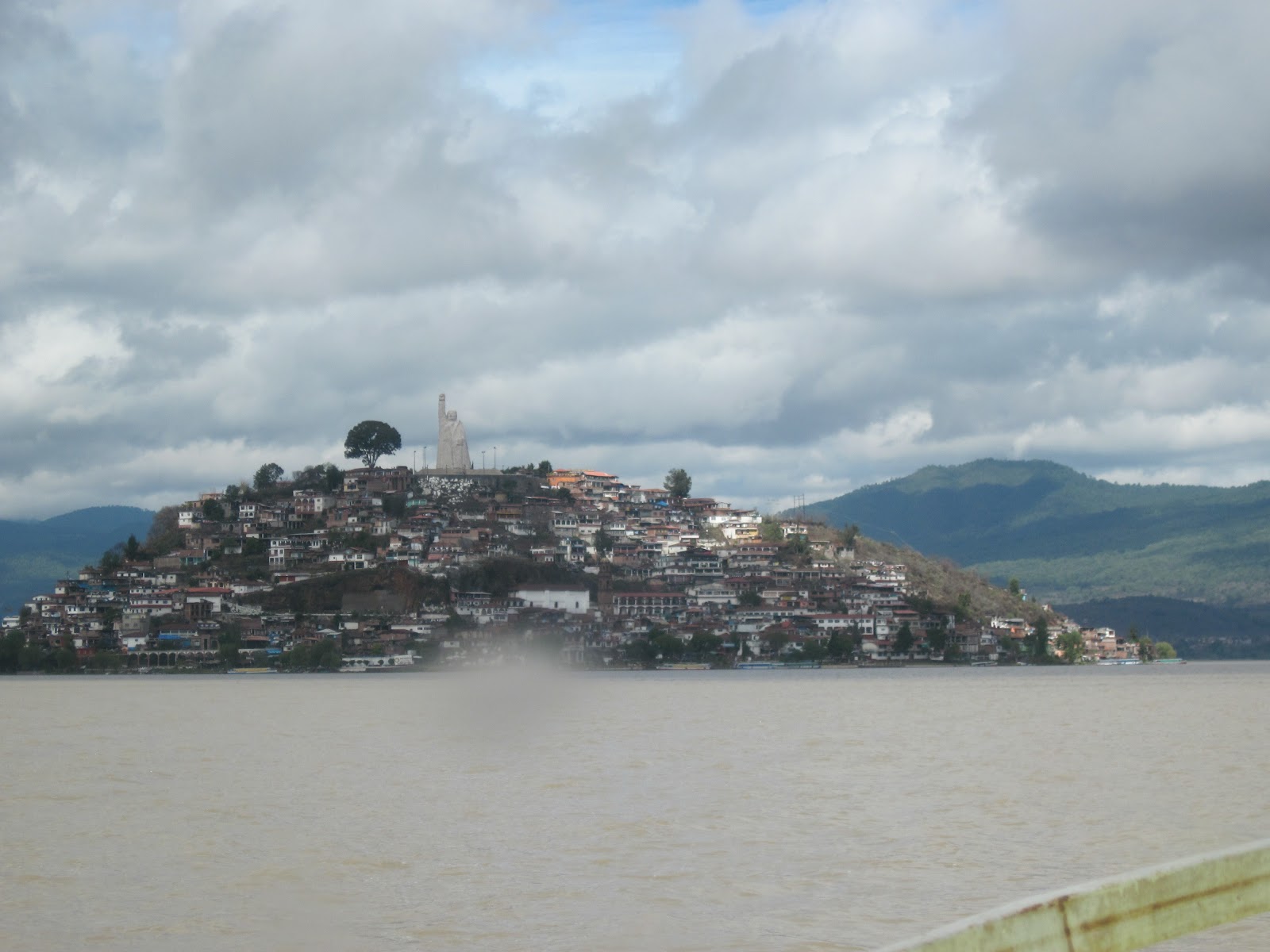
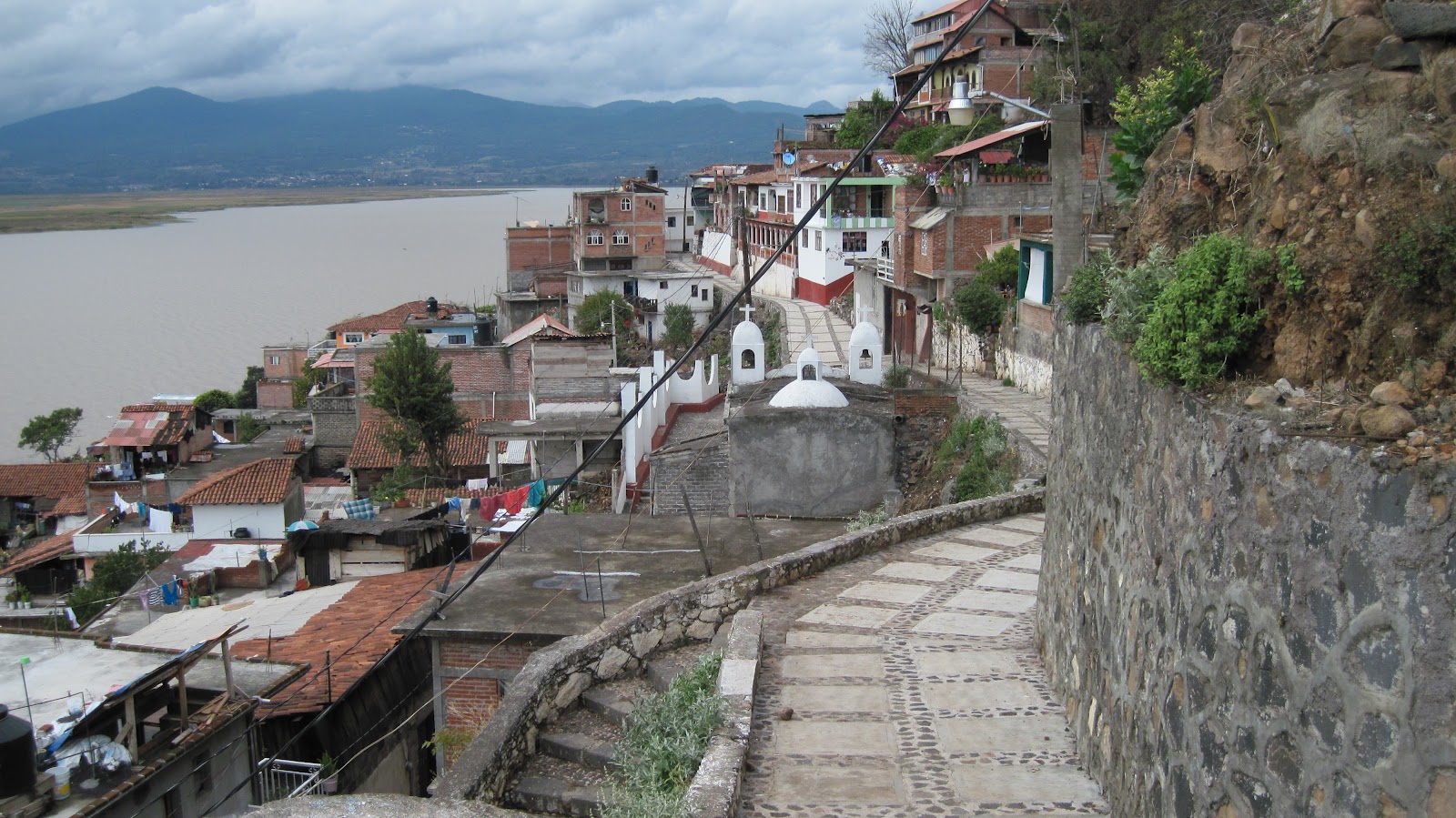
| Isla de Janitzio |
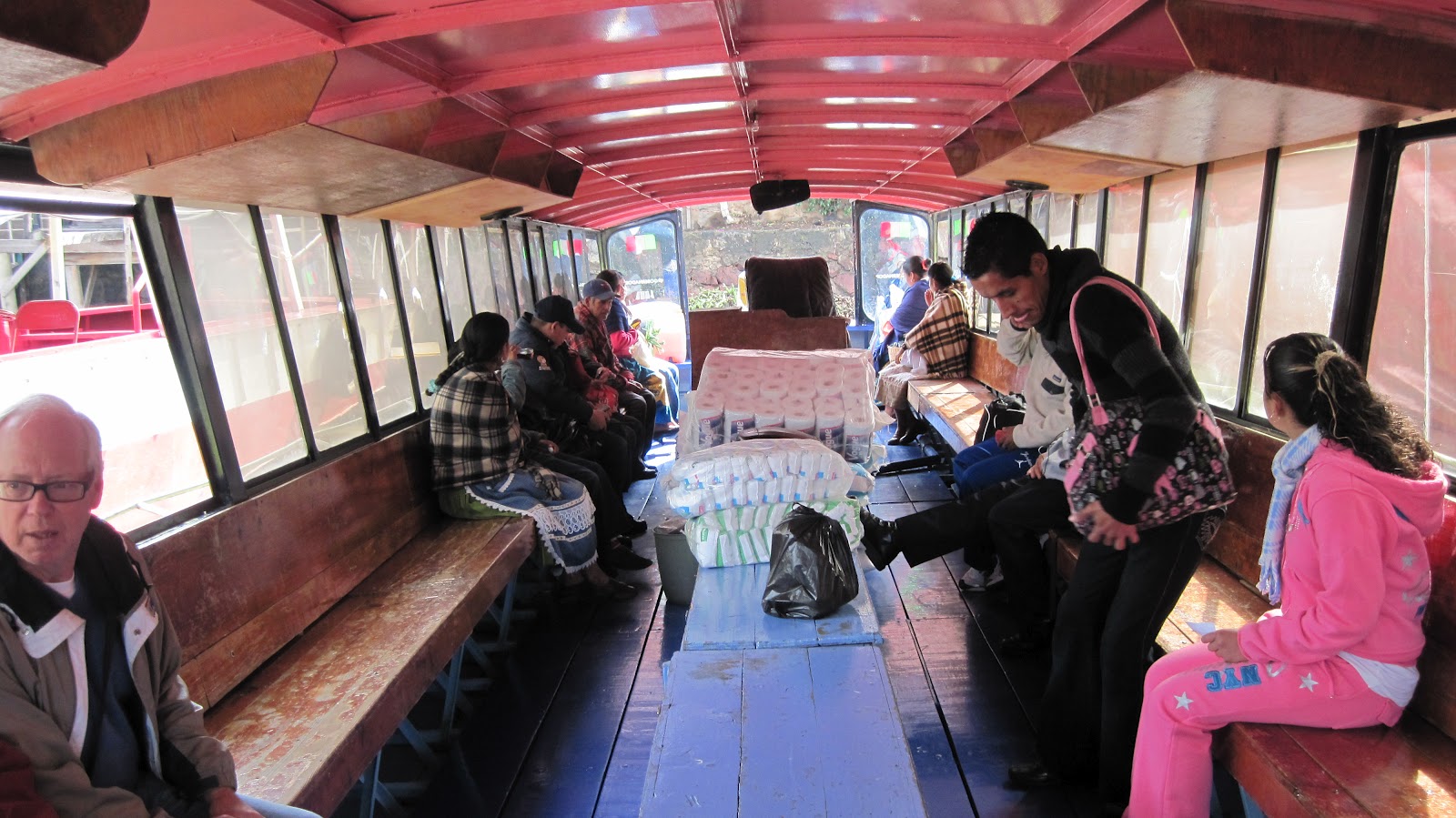
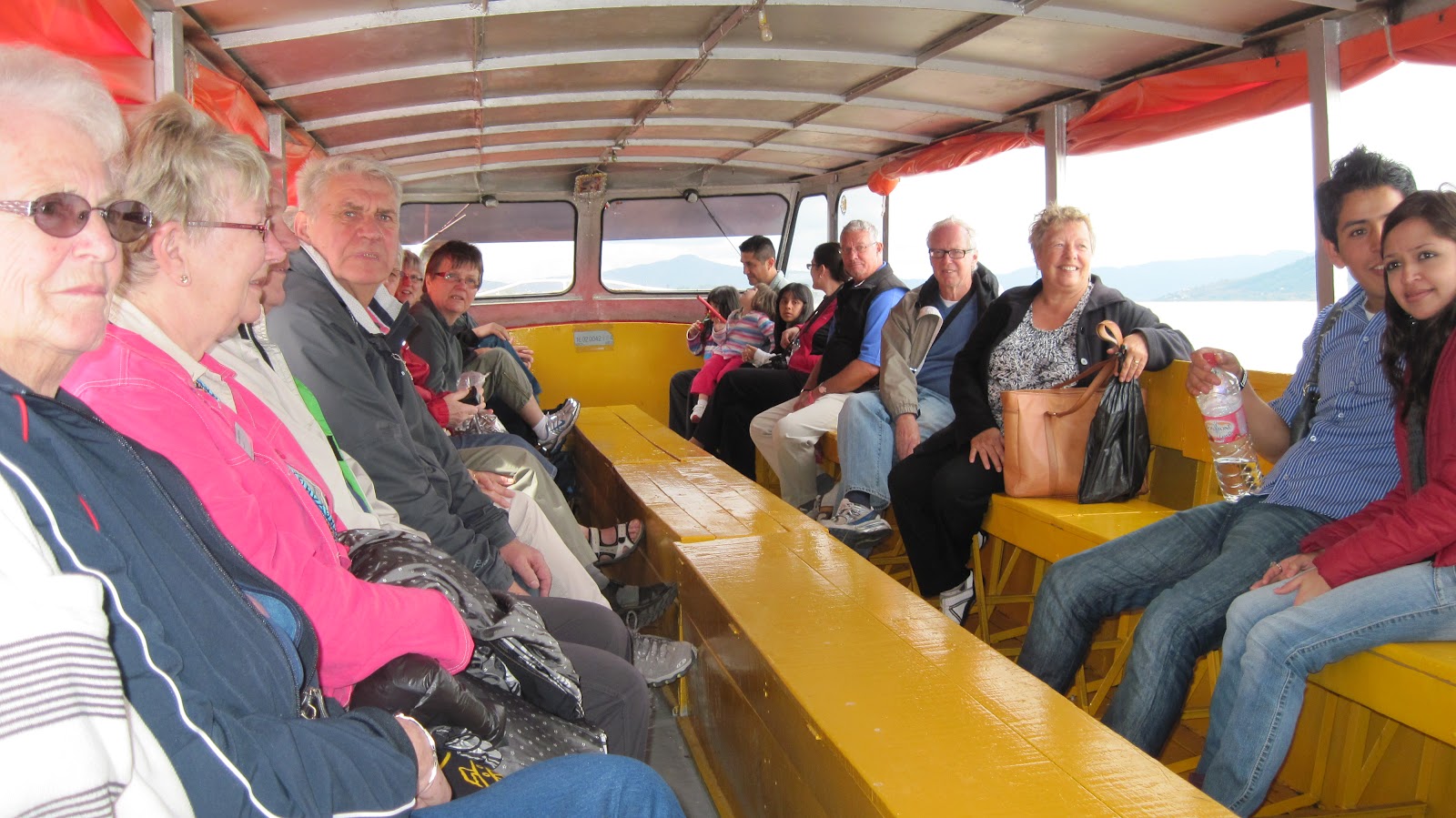
| inside the panga |
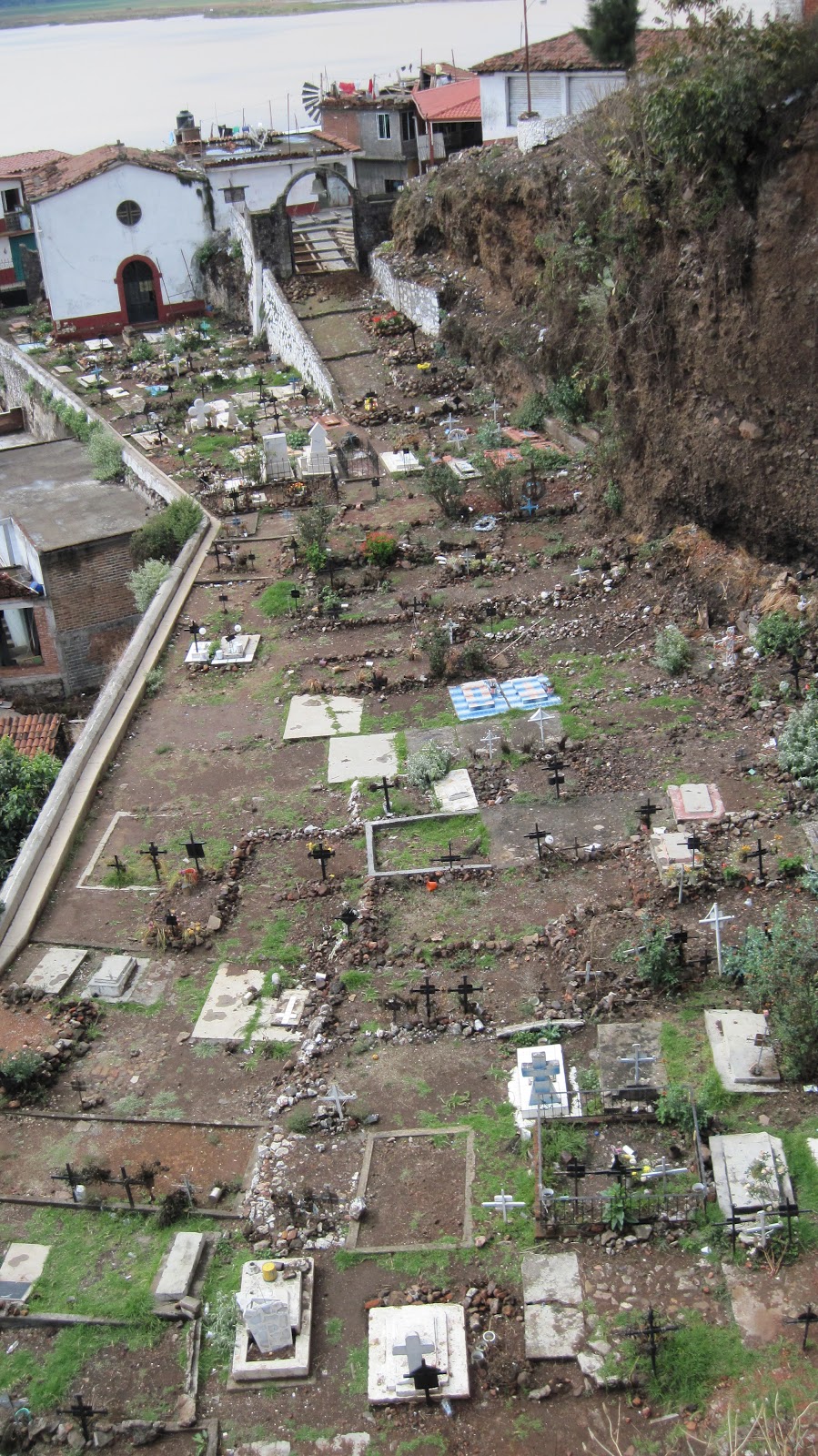
| graveyard where people meet on the Day of the Dead |
There are several meanings to Isla de Janitzio: ‘the place where it rains’; ‘hair of corn’ and ‘fishing location’. The indigenous community of the village has retained much of the authenticity of their customs like the Purepecha language, clothing and the vigil of the dead, a ceremony that attracts visitors from around the world on November 1st and 2nd. At night, it is customary to bring offerings to the dead. There is a procession with candles and animated with religious chants. The whole island is resplendent with lights and torches.
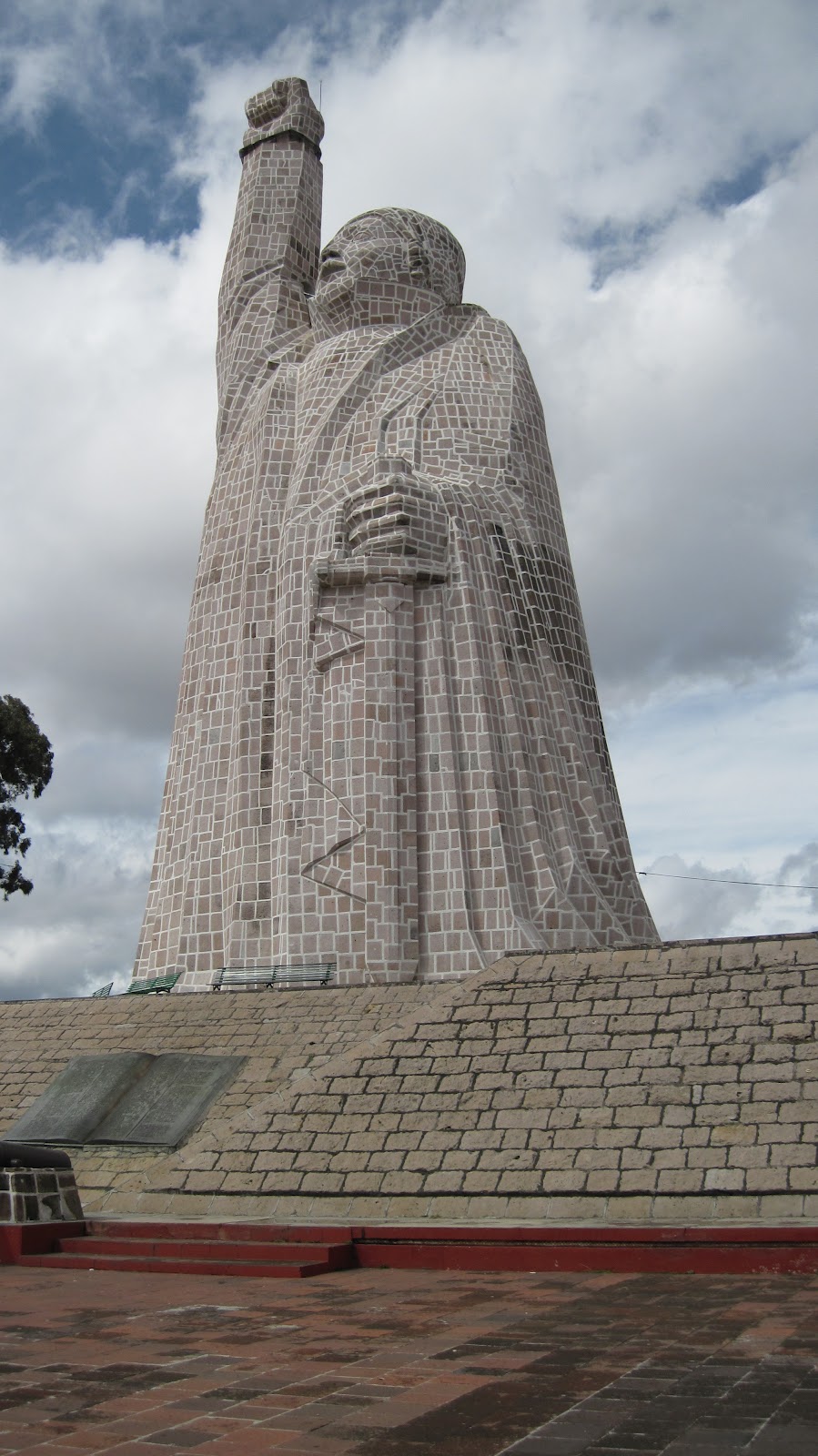
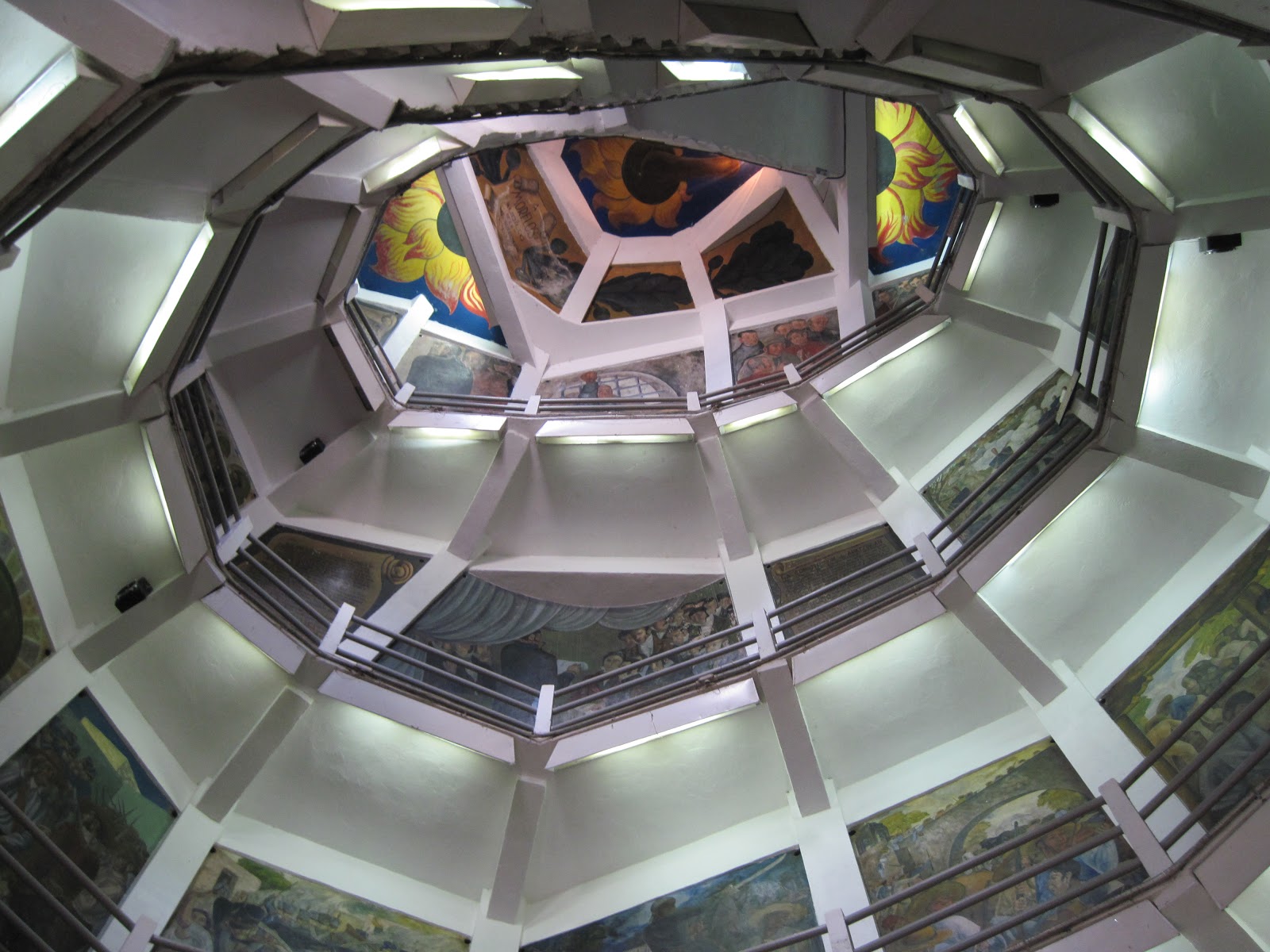
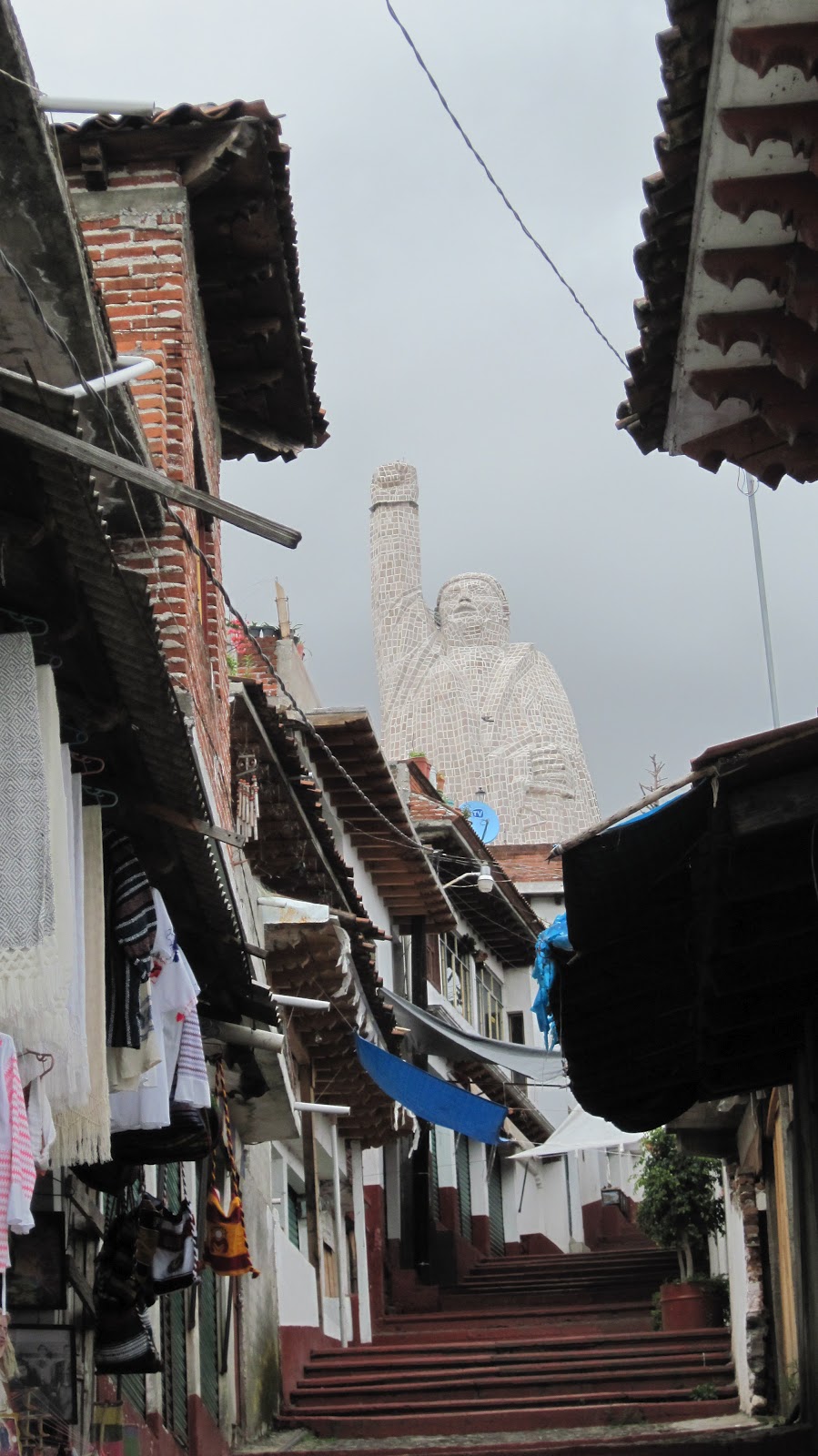
At the top of the hill is a 40-meter monument with right arm raised and hand clenched. This monument is in memory of Don Jose Maria Morelos y Pavon, a national hero of the revolution for independence. Inside the monument are murals, depicting the hero’s biography and painted by Ramon Alva de la Canal.
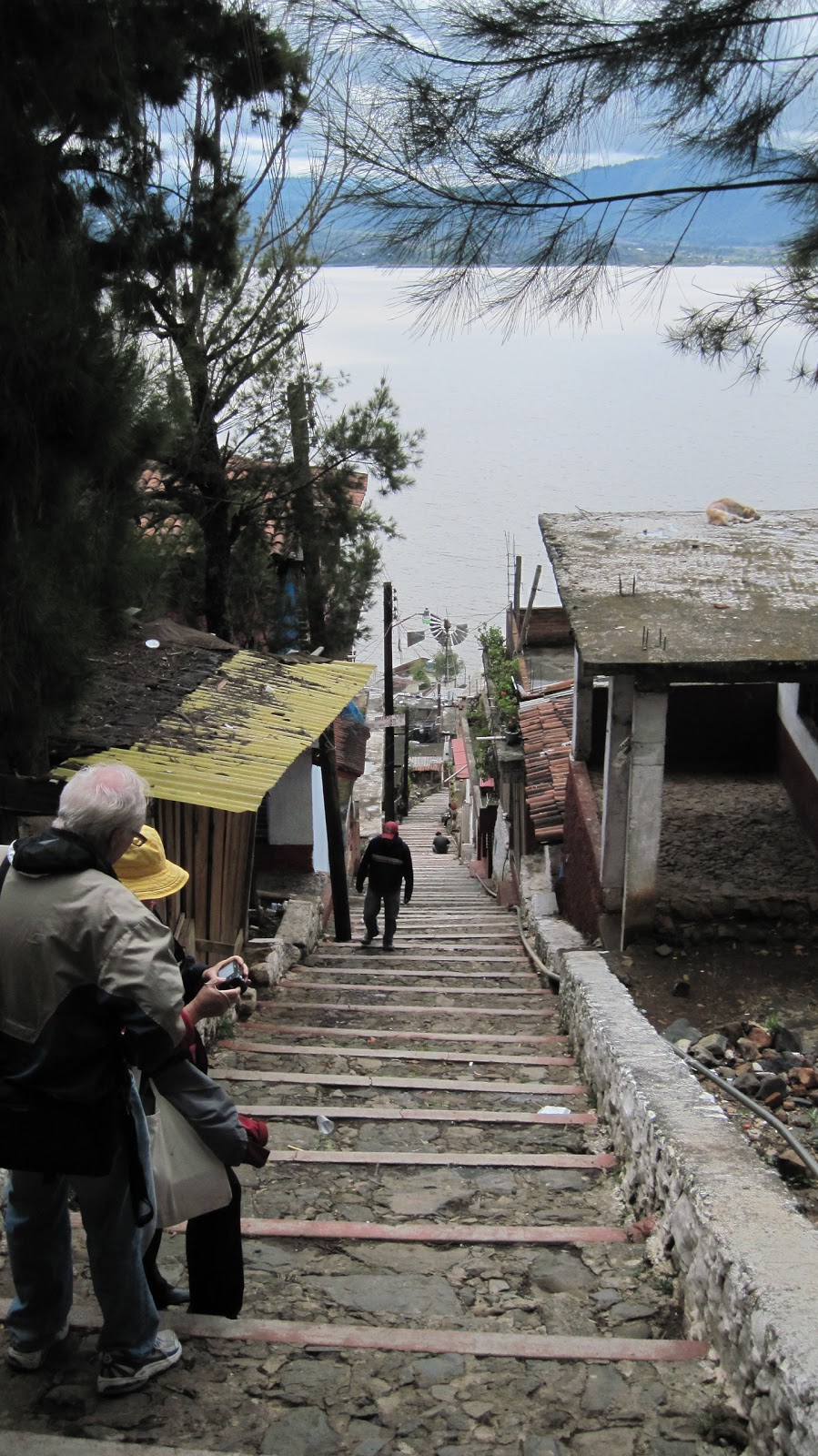
| looking up onto the walkways |
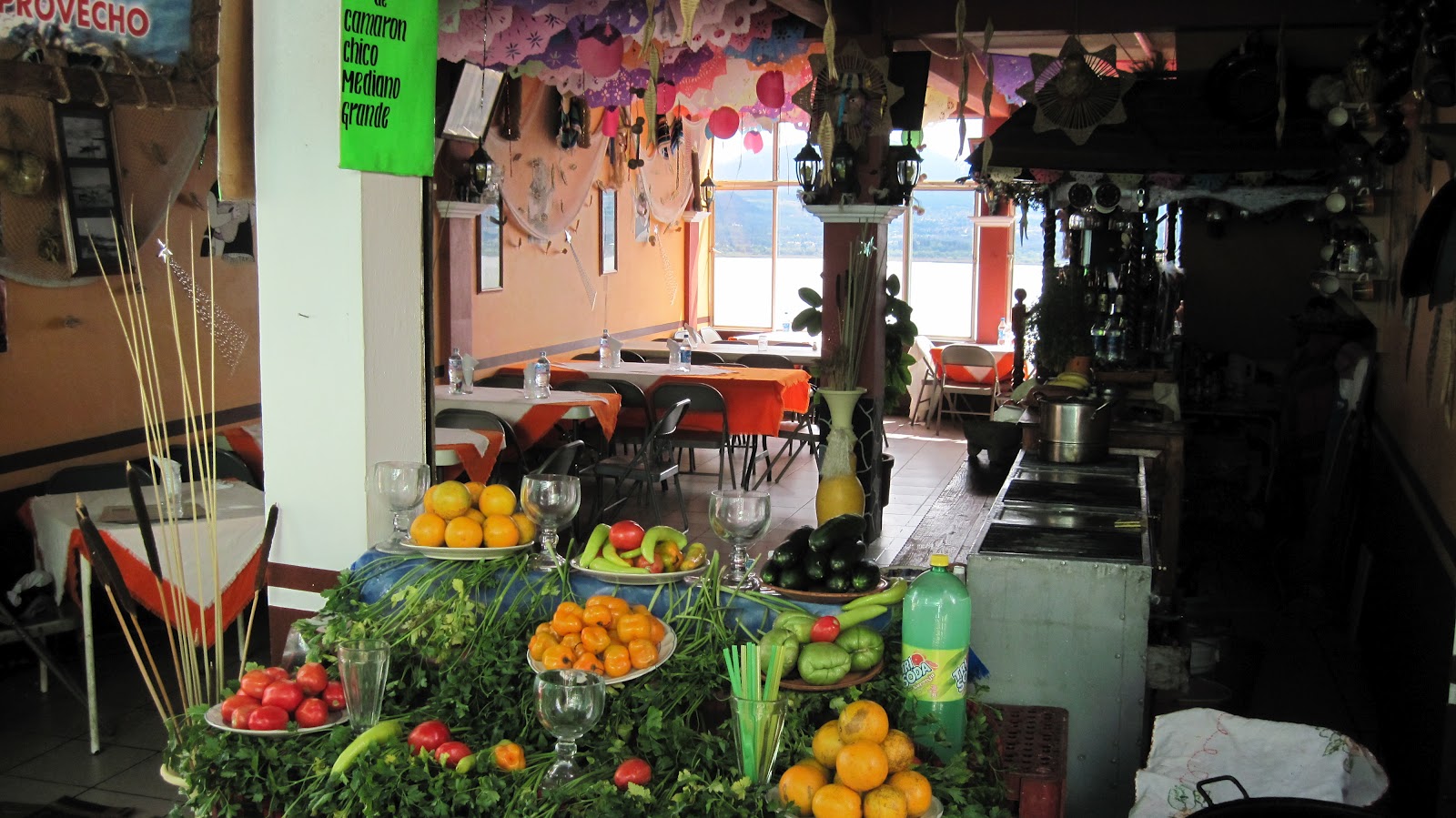
| outside of restaurant |
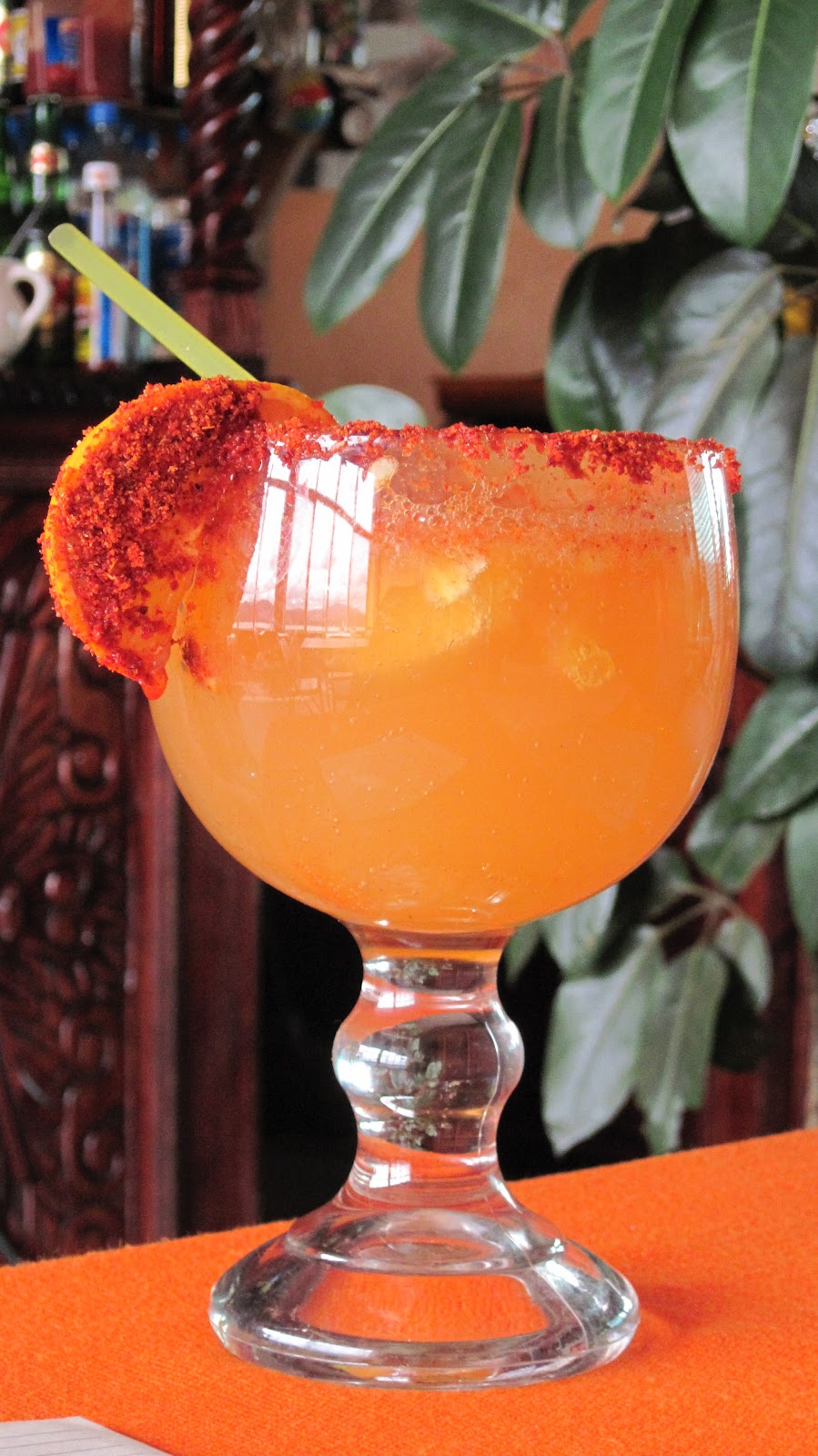
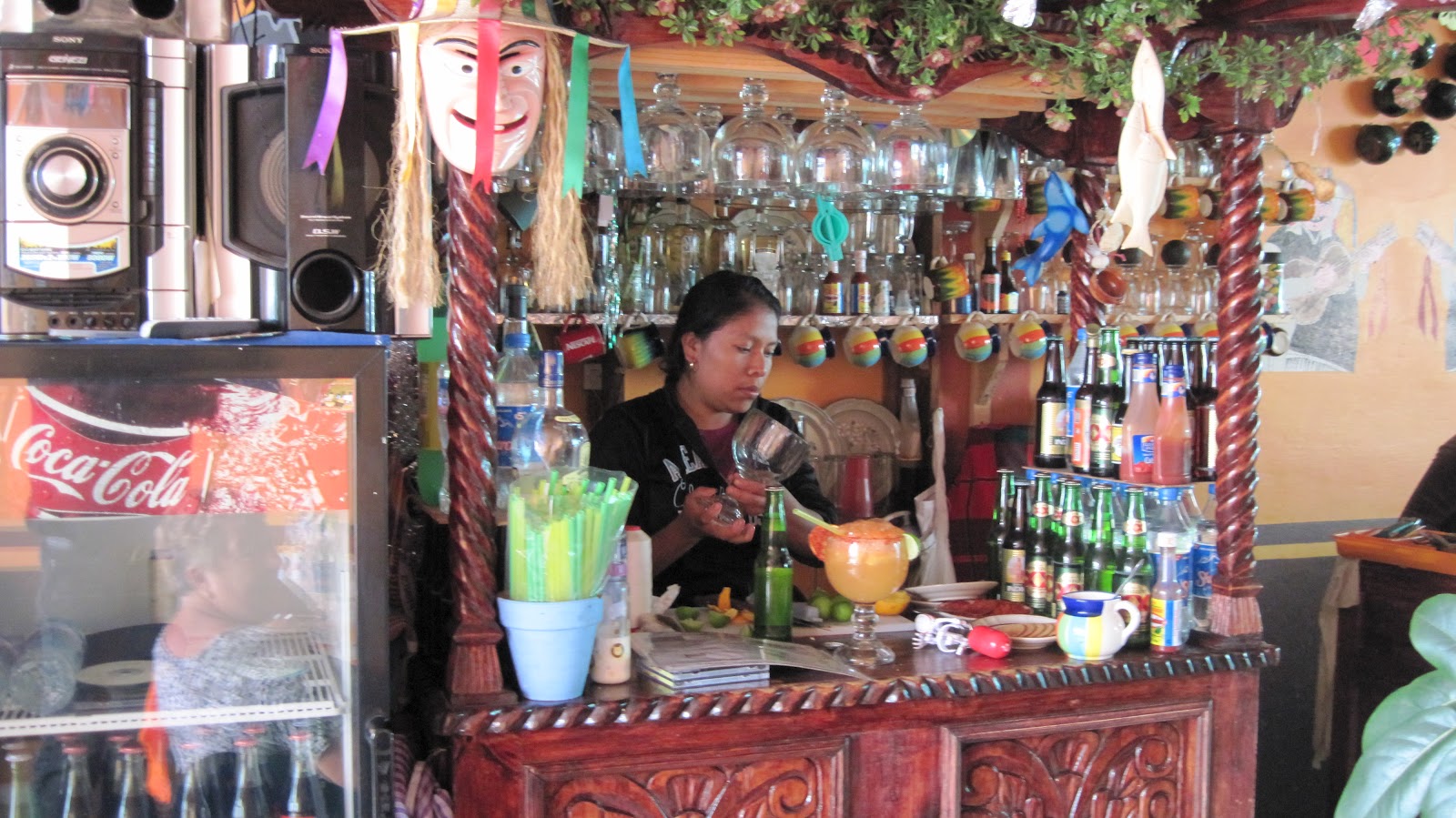
On our way down the hill, we decided to stop for a bebida (drink). I had a drink called Jarros Locos made with orange, lime, Fresca, salt and a type of chili powder that was not hot. The drink was different and delicious.
| making my special drink |
Back at the pangas, we boarded the next one out and ended up sharing the panga with a tour group from Denmark. We had an interesting chat with the tour leader who is a retired pilot and working as a freelance guide for his friend’s company. He just moved to Spain from Denmark and continues to work as a tour guide for his friend.
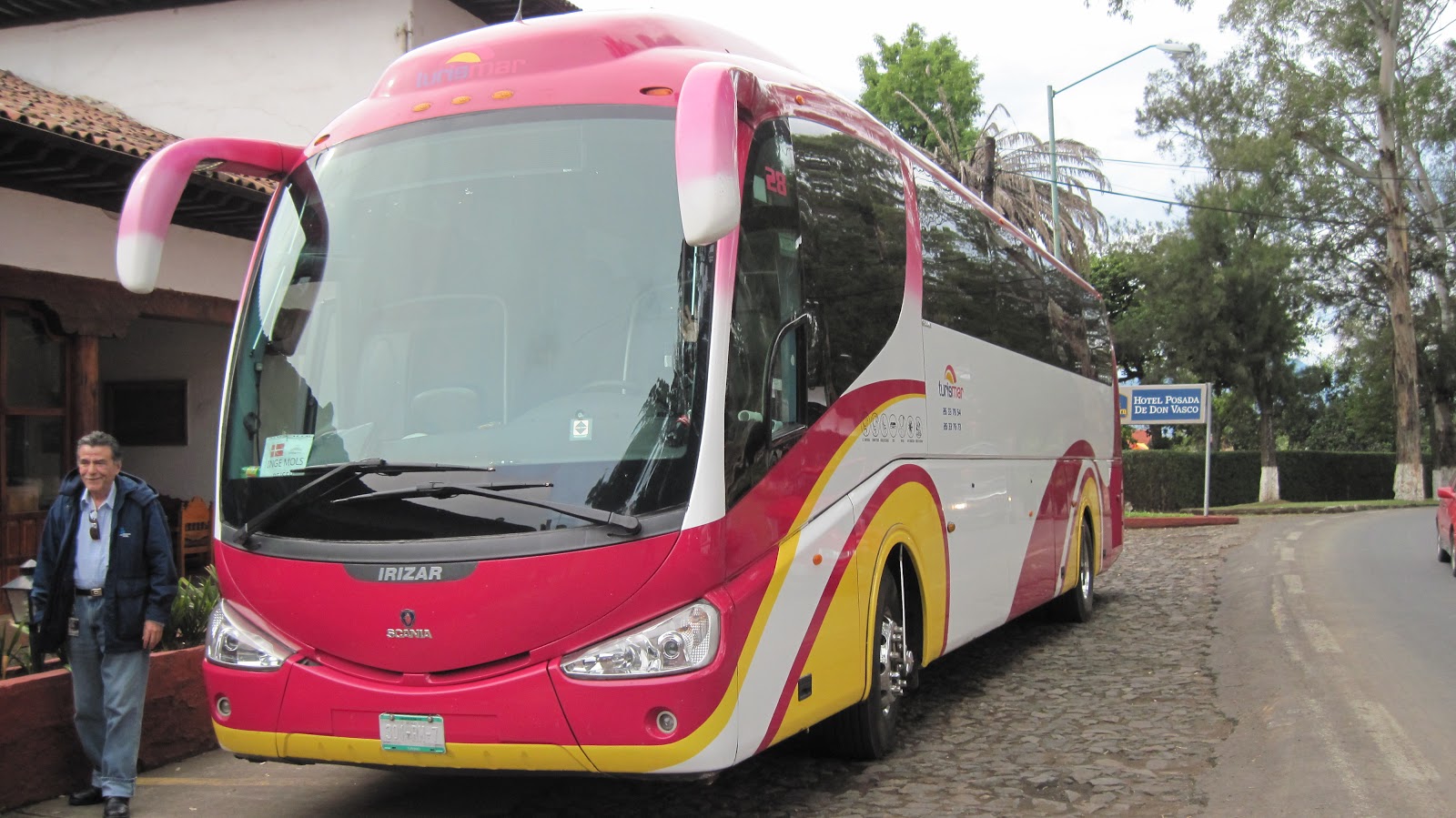
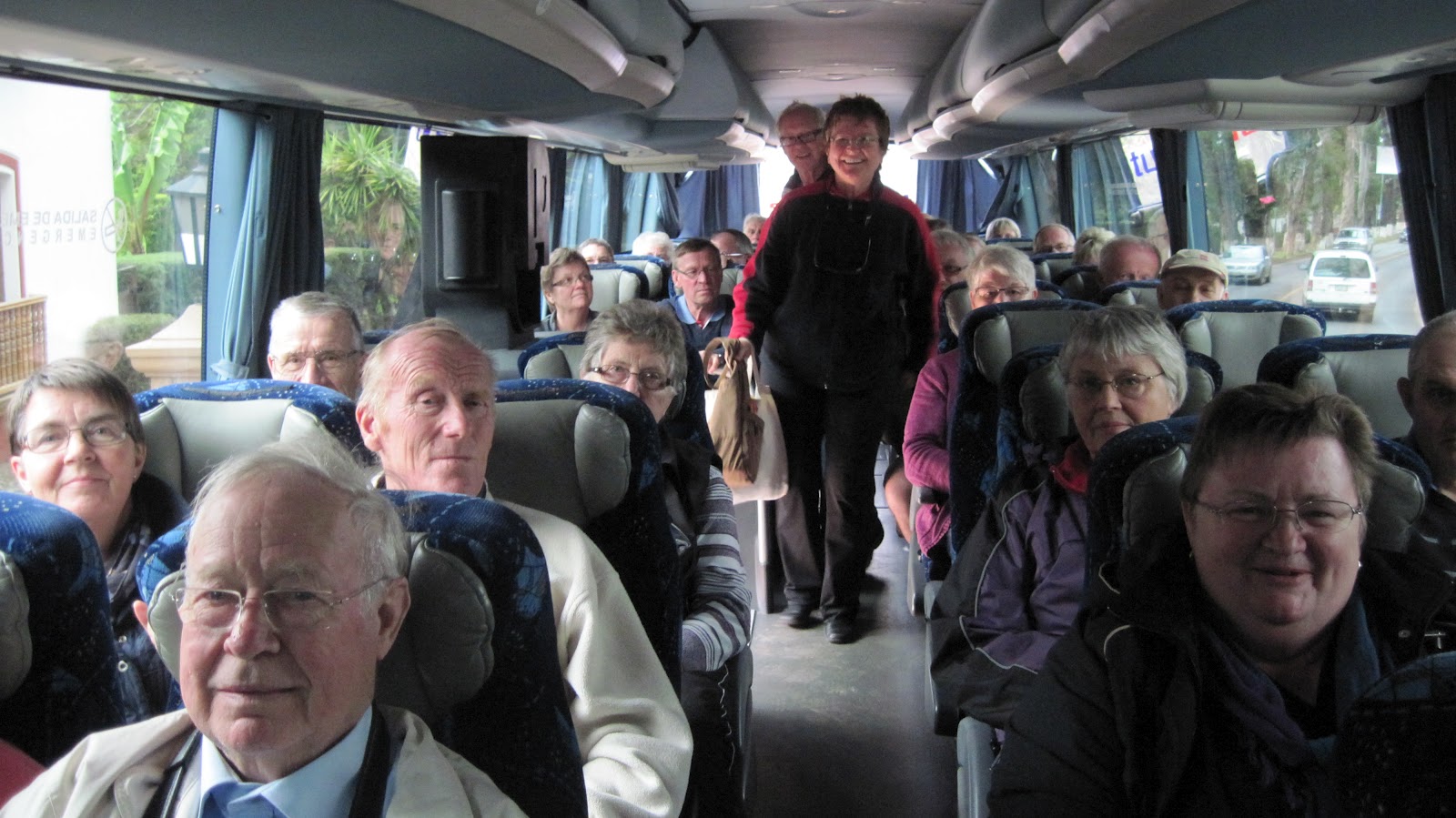
Once on land, we were trying to decide if we should take the bus or a taxi back to town when the tour guide asked us to join the group on the bus and they would take us at least part way to town. On the bus, we were pleasantly surprised when the group decided to sing for us. The song they chose – in Danish – was Auld Lang Syne. Then they sang another song for us – no idea what it was but what a nice thing for them to do. We told them we would visit them all in Denmark!
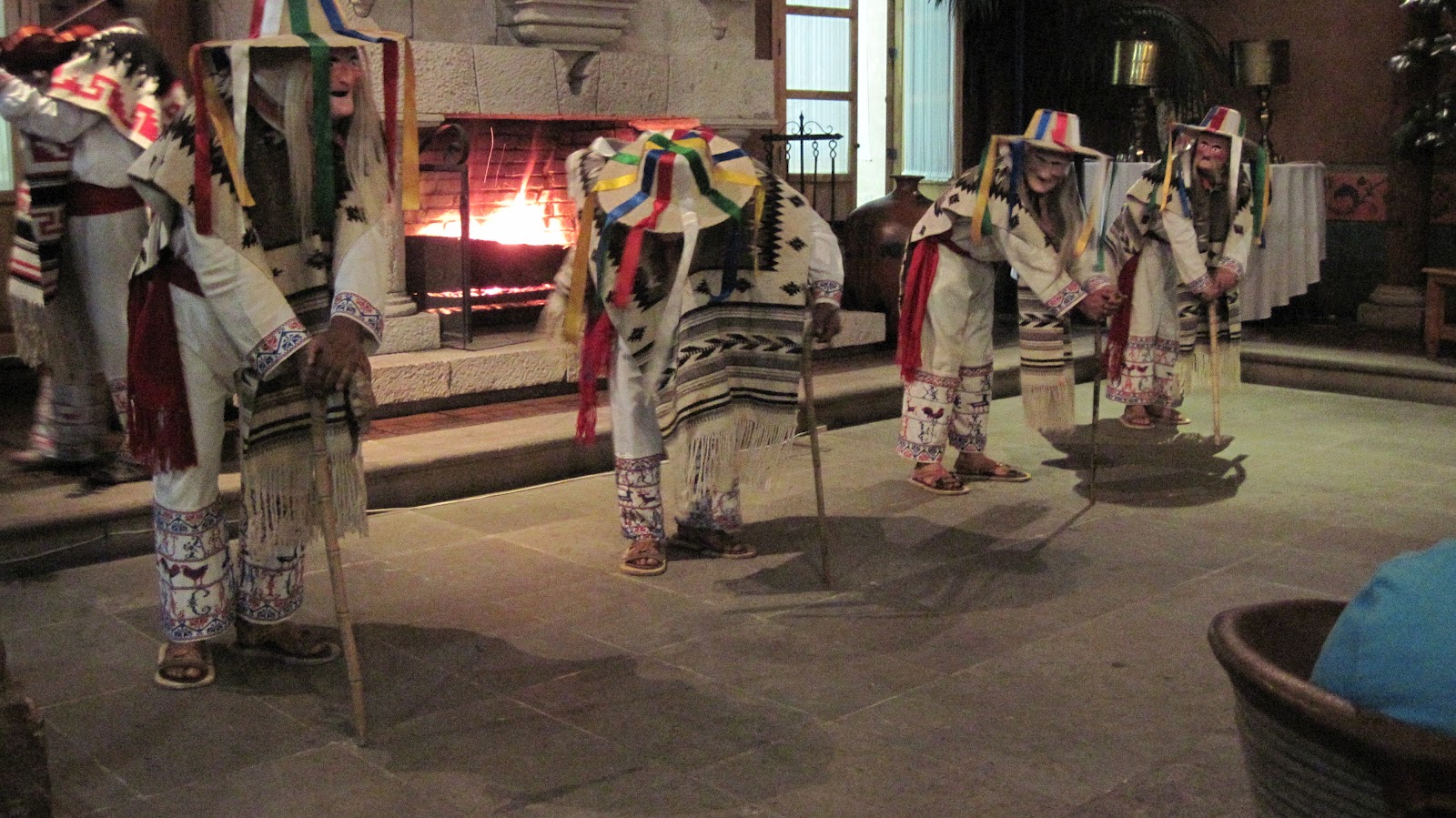
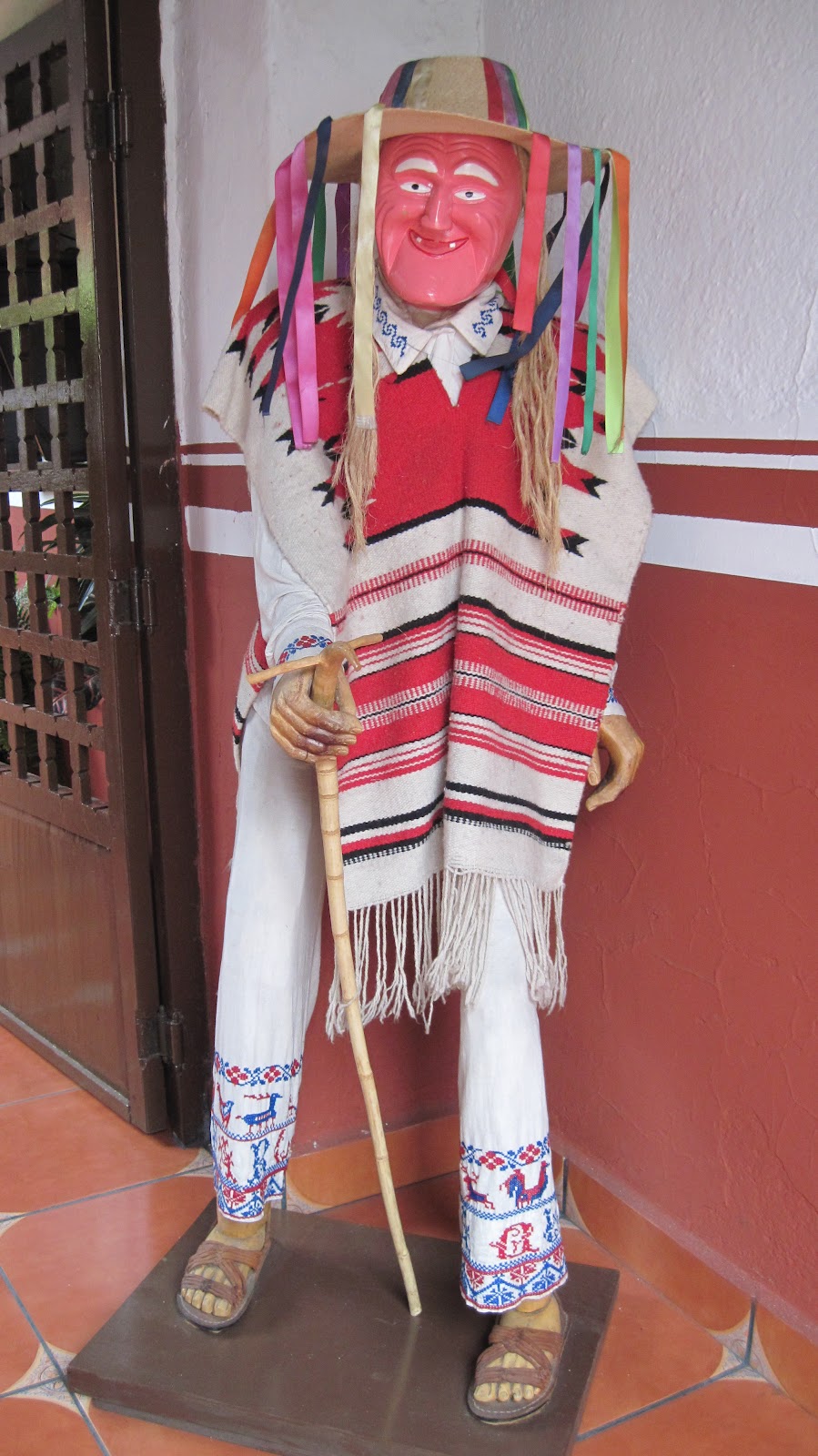
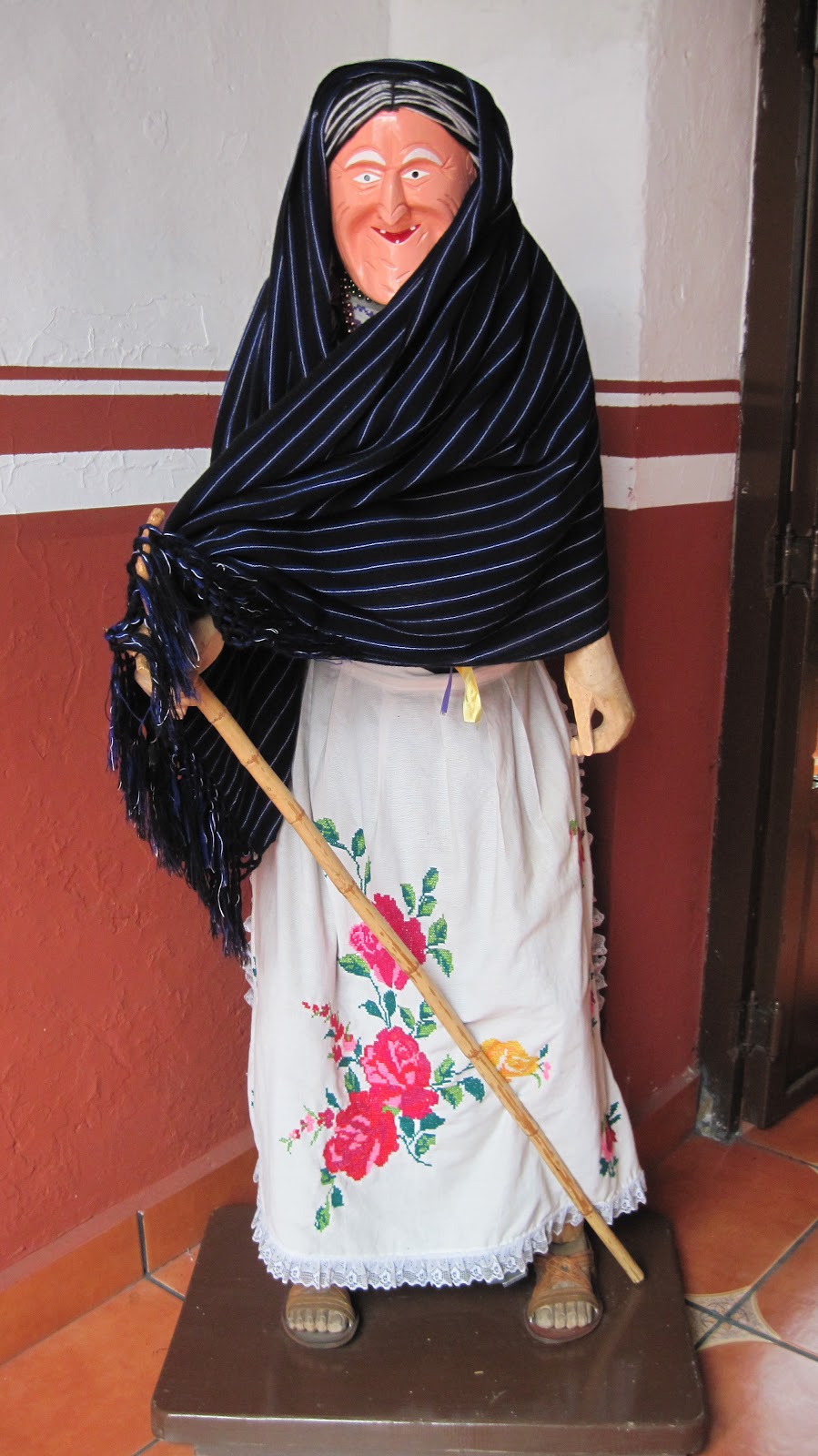
After a lovely dinner at the hotel, we were delighted to find out that the hotel had arranged entertainment. A group of four performed the El Baile de Los Veijitos or dance of the old men. The men wore muslin white pants and shirts embroidered at the legs and arms with a sash. They also wore a mask looking like an old European (pink face and white hair). This was a chance to mock the Spanish ruling class by doing a dance hunched over like old men with a cane. It was a hoot.
| self portrait of my husband! |
| ready to hand out the sandwiches & beverages before you board the bus |
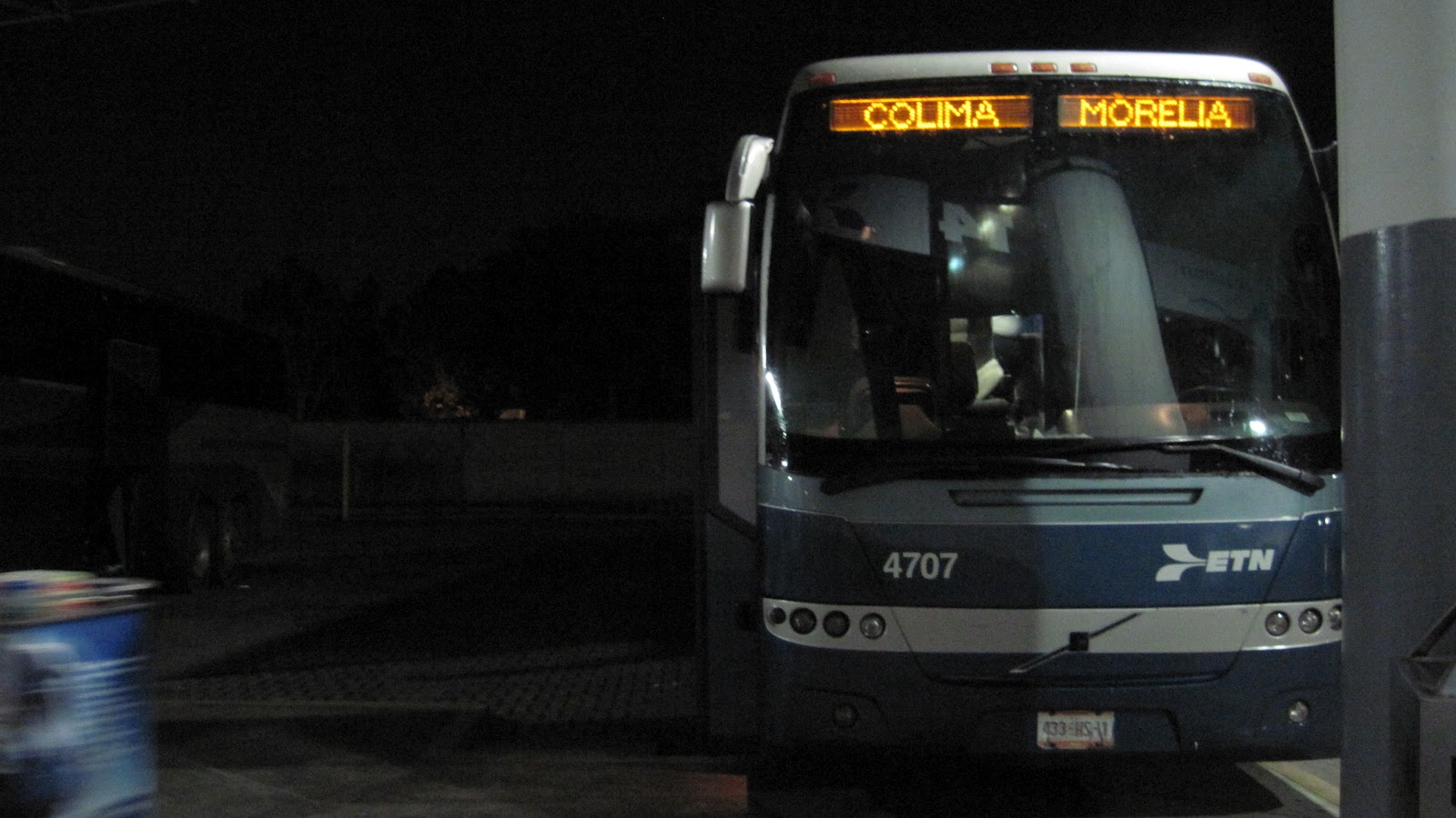
| ETN bus |
| double decker bus |
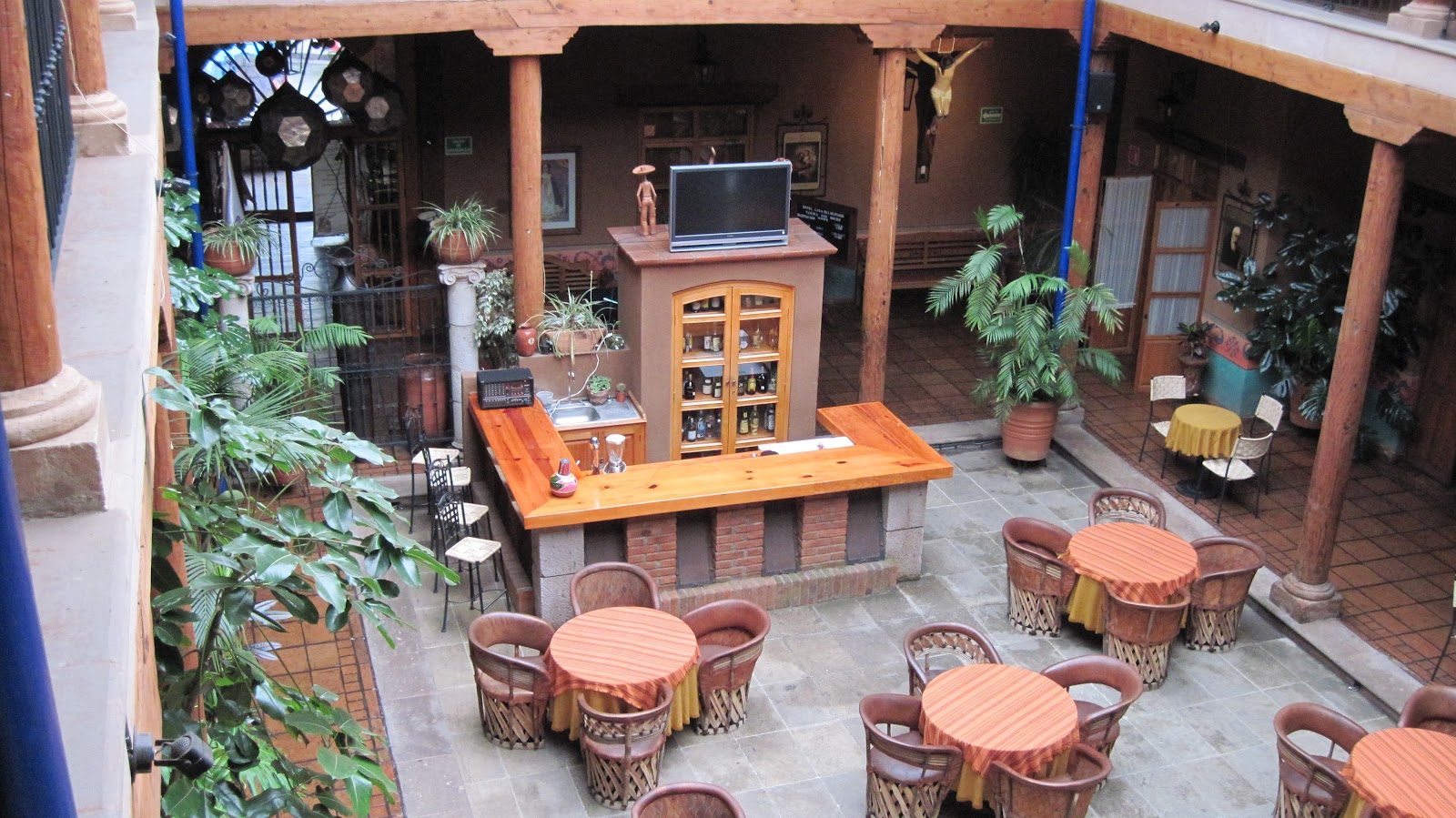
| Lobby |
| lobby |
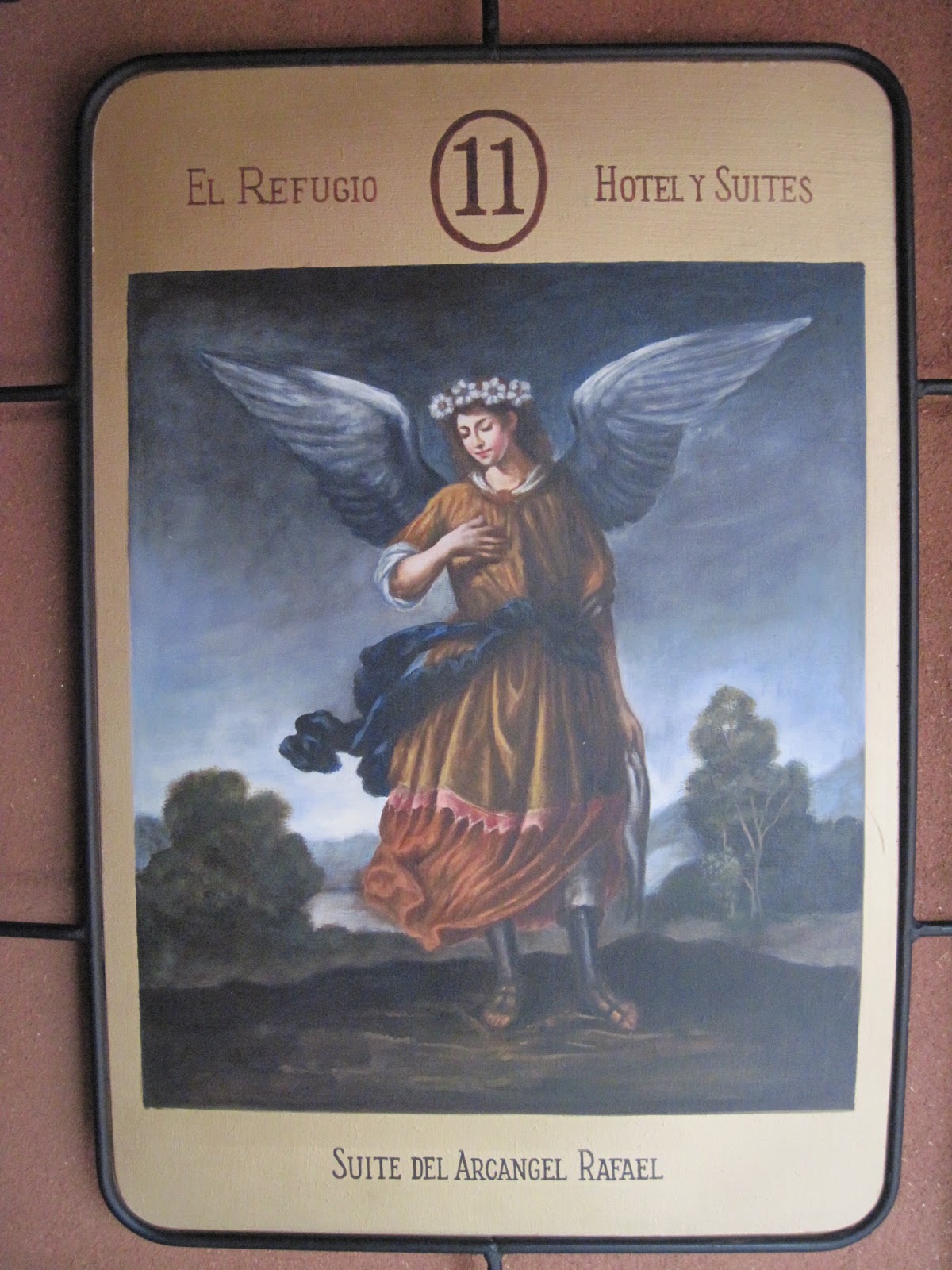
| our room number |
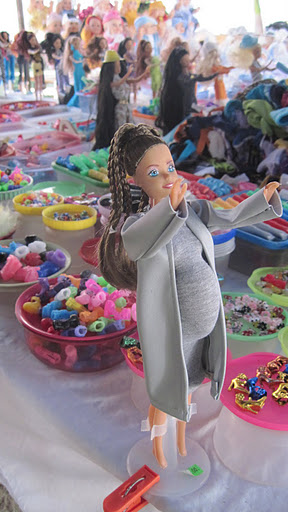
Last, but not least, the market would not be complete without a pregnant Barbie
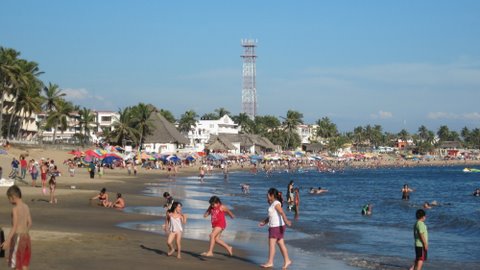
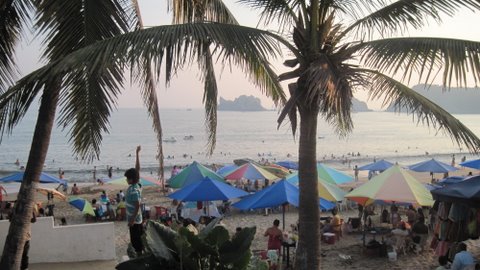
Two weeks ago, you could roll a bowling ball down the middle of the main street and not hit anyone. The beach was virtually empty except for the few Mexicans and even fewer “gringos.”
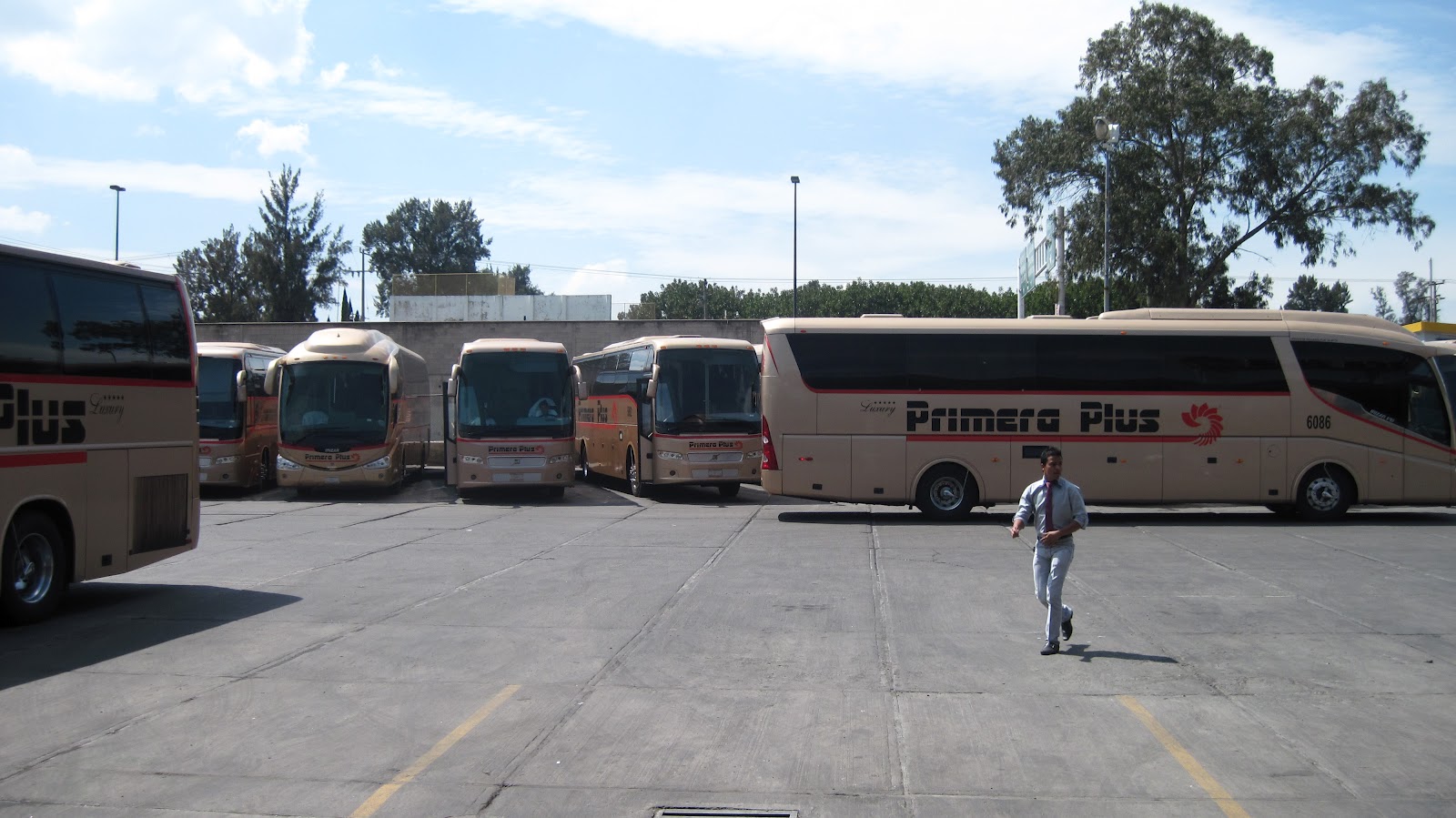
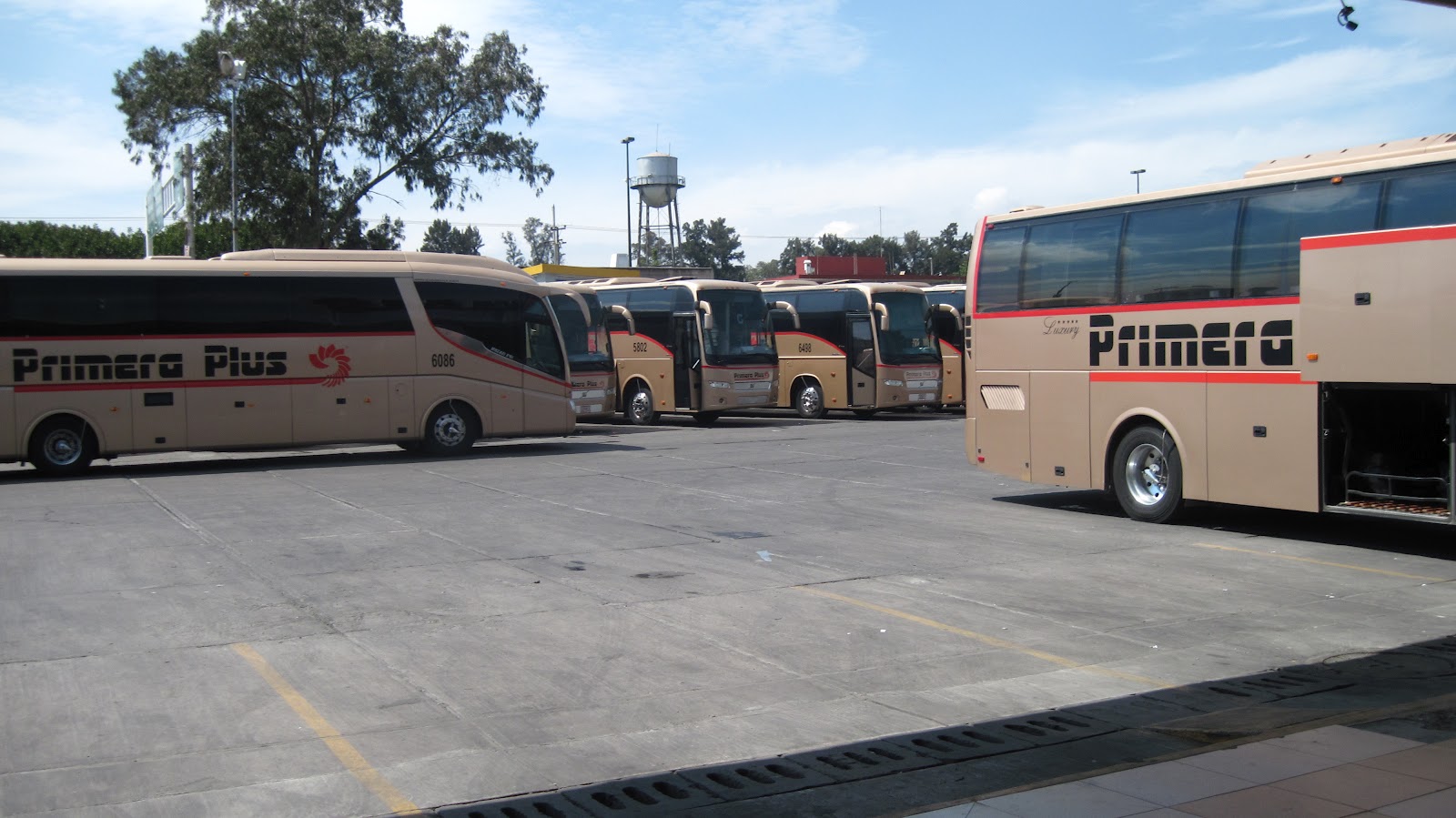
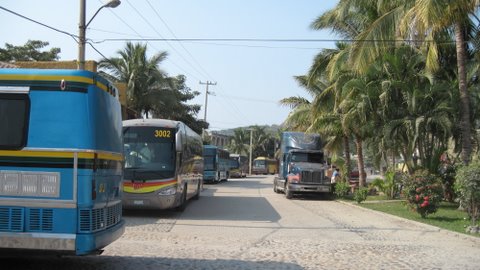
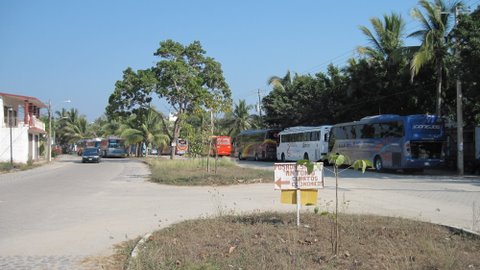
This week, the Mexican tourists have arrived by the busload for their winter holidays. The restaurants, stores, streets, and beaches are full. Buses line the streets of Melaque. The drivers sleep down below along with having their office there as well.
Mexican tourists rented two bungalows in our complex. In those two units, there were nine people. There is only one queen size bed in each unit. Those people left the next day and another family of 11 came. I think they are only renting the one unit but we noticed in the morning that two people were sleeping in the hammocks on the roof, under the palapa. It is amazing how different our cultures are and yet how similar in some aspects.
This influx of people is good for the local merchants after hurricane Jova on October 12th, 2011, devastated the area. Water and mud rose as high as 4 feet and higher in some areas. Some people lost all their belongings. Our landlords had just put in a pool and it filled with mud and water. The lower bungalows filled to about 3 feet with mud and water. They were scrambling trying to save as much as they could in the bungalows plus look after their own homes. As one of the daughters put it, “it was ugly.” By the time we arrived, you would never know that the town had suffered through a hurricane. Pictures sent to us during and after the storm showed everyone cleaning up, all with smiles on their faces. When asked how they were doing they replied that all was well, no one had died in Melaque so they were thankful. No drama here. The army was on standby and once the storm had subsided, began clearing the mud and debris from the roads and bridges and rebuilding them as necessary. The electric power company sent approximately 20 trucks before the storm hit and the men slept in their trucks so that they would be here immediately after the storm to restore power. FEMA could learn a thing or two.
For New Year’s Eve, we spent a wonderful evening with friends at a local restaurant. The food was wonderful, and the entertainer had a beautiful voice. His ten-year-old son also sang a few songs to the delight of the crowd. The dinner, entertainment, three drinks cost less than $50.00 cdn for two.
You can purchase fireworks from any merchant here. There are not any restrictions like in Canada and I wonder why no one seems to get hurt. The fireworks start before Christmas and with any luck will end soon.
After the New Year celebrations are over, everything will settle down, the Mexican tourists will head home and then the influx of gringos begin.
We have been in Melaque for two weeks now and are getting settled in nicely. There has been so much to do, buying staples, unpacking, lounging by the pool, visiting friends and discovering new places. More on that in another post.
Today I bought 1 L of milk
1 loaf bread
6 frozen potato patties
1 lb cheddar cheese
6 slices of ham – large
1 dozen eggs
8 bananas
2 lbs. sugar
TOTAL: $12.16 Cdn
Food is very inexpensive here.
We have calculated that we save over 400.00 per month being here. We suspend our cable, most of the internet fees except for email, car insurance except for storage, don’t buy gas (150.00 per month), lower the heat, and of course do not use the hot water nor as much electricity.
Our rent here is 530.00 Canadian for a 1 bedroom apartment with pool. We figure we save the rest of the rent with buying groceries here.
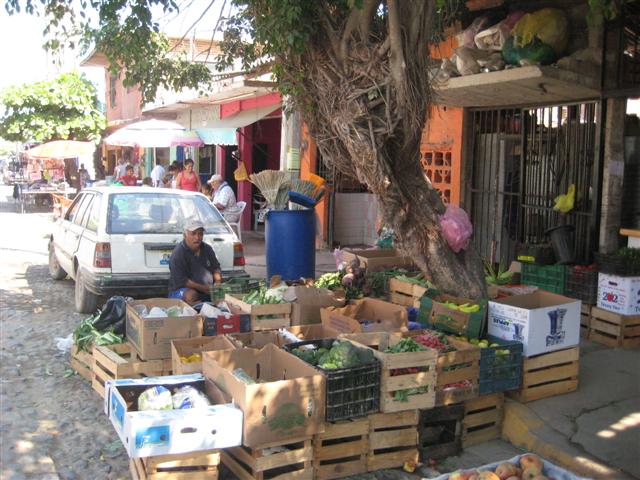
One of our favourite places to shop for vegetables. Notice that there is not a cash register in sight.